A violent collision in the main asteroid belt may have sent debris raining across the inner solar system about 800 million years ago. The event could explain a long-debated spike in lunar impacts and may have left consequences on Earth and Mars.
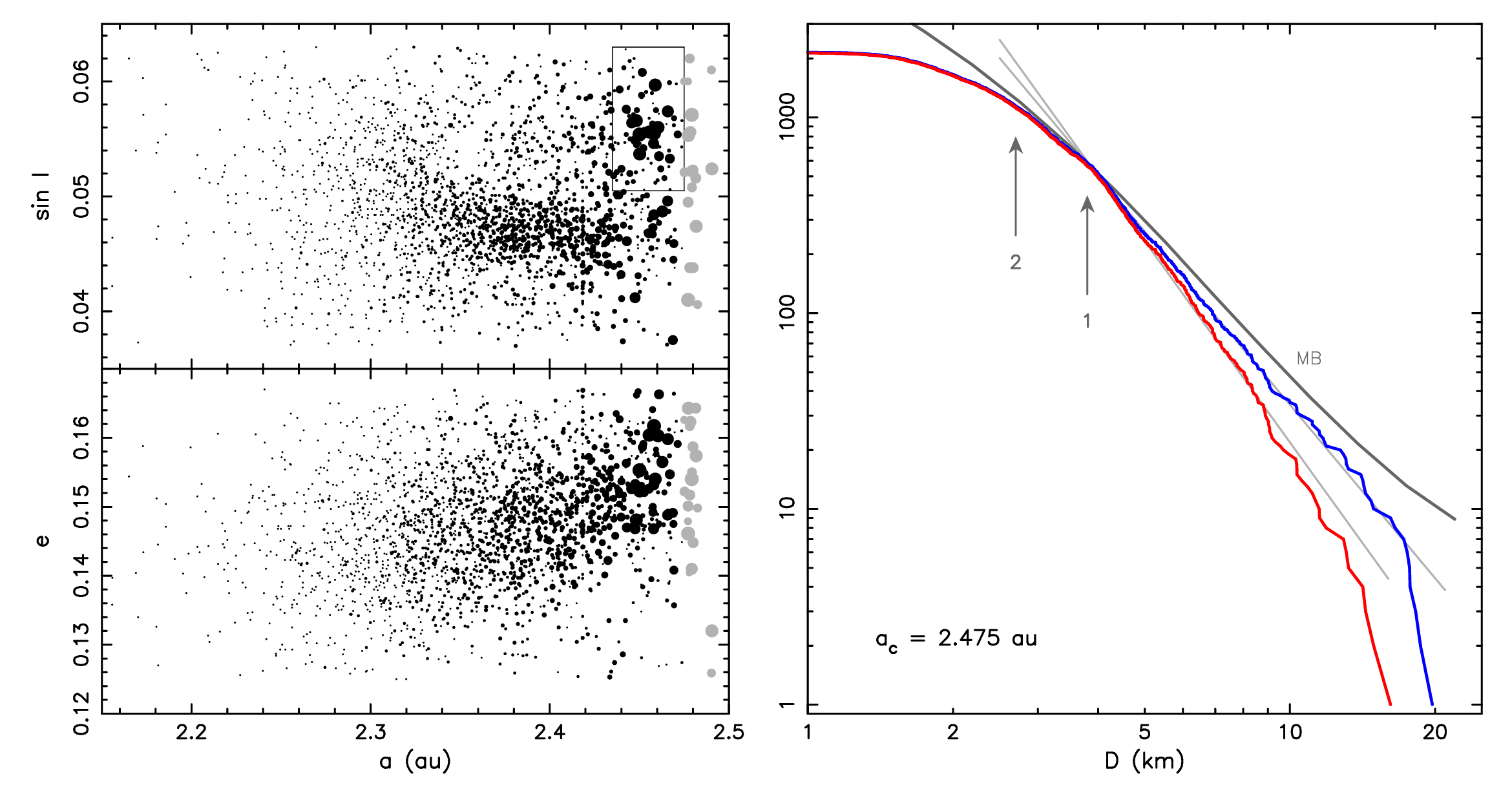
The proposed source is the Eulalia asteroid family, a group of dark, carbon-rich bodies formed when a parent object at least 100 to 200 kilometers wide shattered near a powerful orbital resonance with Jupiter.
That location mattered. The parent body broke apart beside the 3:1 mean-motion resonance, where an asteroid circles the Sun three times for every orbit Jupiter completes. The resonance acts like a gravitational escape route from the main belt.
A Southwest Research Institute-led team used collisional and orbital models to test whether the Eulalia breakup could have supplied the projectiles behind an impact surge recorded on the Moon.
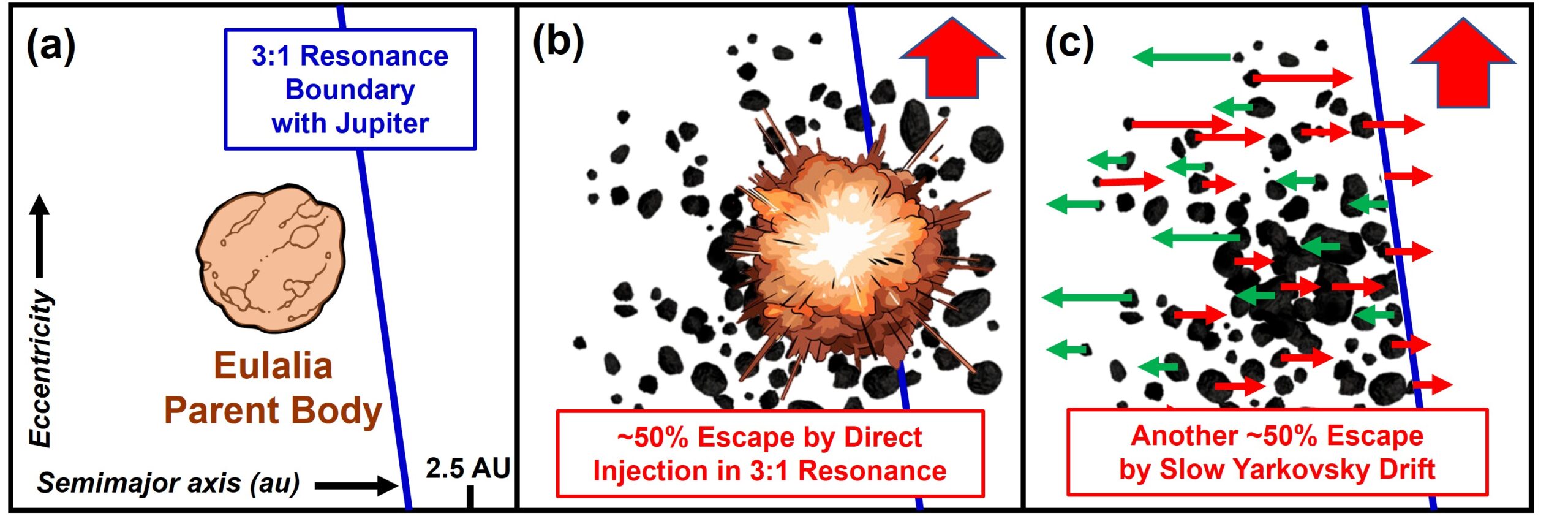
The simulations indicated that about half of the fragments entered the resonance almost immediately. Jupiter’s gravity then pushed many onto planet-crossing paths, spreading debris toward Earth, the Moon, Mars and Venus.
Another 25 percent of the surviving fragments reached the resonance over the next 100 to 150 million years. They drifted gradually through the Yarkovsky effect, a weak force caused when an asteroid absorbs sunlight and later releases that energy as heat.
“These rare events, triggered by large, well-positioned collisions in the main asteroid belt, bombard all inner solar system worlds,” said Dr. William Bottke, the study’s lead author and an executive director in SwRI’s Solar System Science and Exploration Division. “So, evidence preserved on the Moon’s static surface can be used to infer what happened on Earth and Mars in ancient times.”
Earth offers few direct records from that era. Plate tectonics, erosion, weathering and volcanism continuously erase or reshape old impact structures. Only a few dozen craters larger than 20 kilometers have been identified, and nearly all are younger than 650 million years.
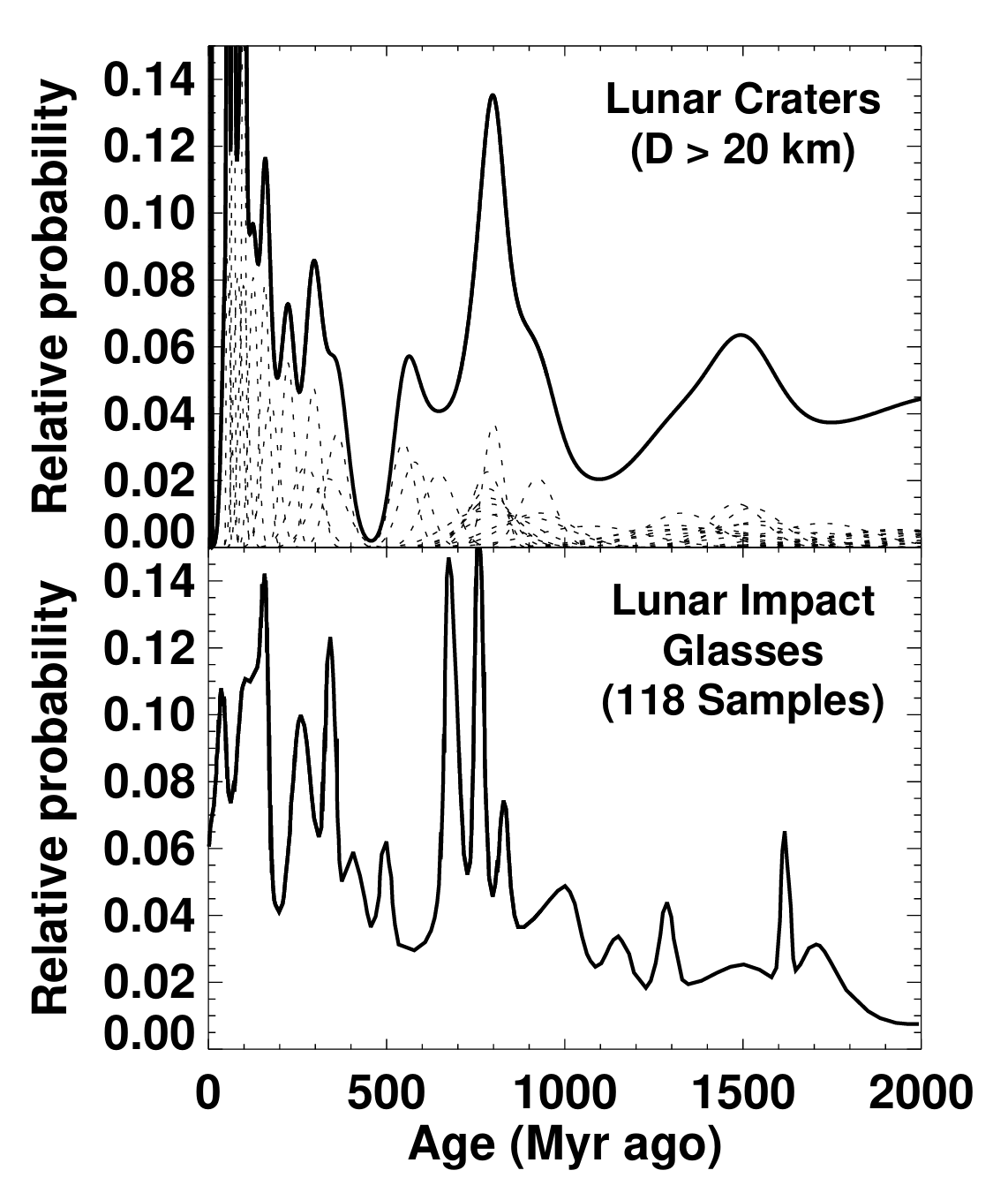
The Moon preserves a clearer archive because its surface changes slowly. Earlier work identified several large lunar craters with estimated ages near 800 million years, along with clusters of similarly aged impact glass from Apollo samples.
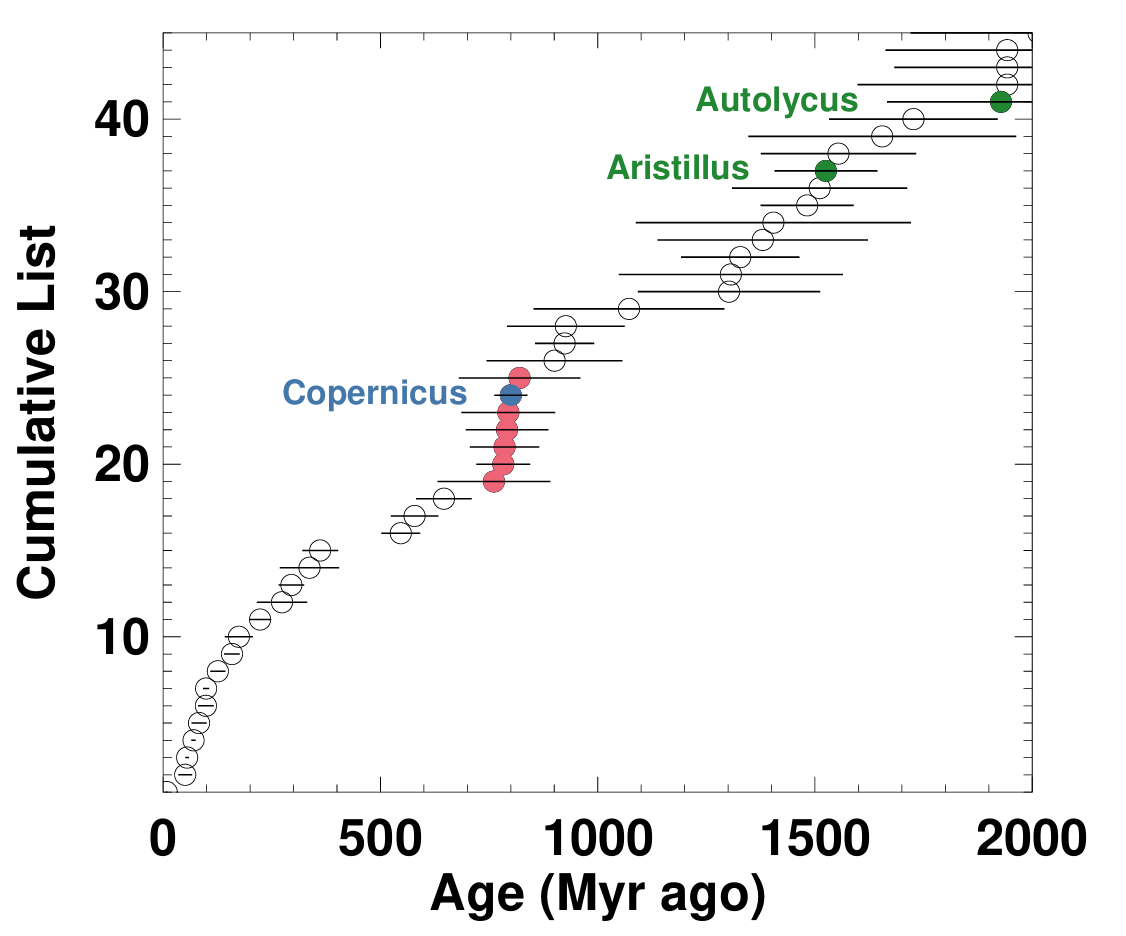
One major clue comes from Copernicus crater, a 93-kilometer-wide feature with an estimated age of about 800 million years. Material associated with one of its bright rays was collected during Apollo 12 and later dated.
Researchers also identified seven large craters with mean ages between 760 million and 820 million years. Three more had estimated ages between 900 million and 930 million years.
Lunar impact glasses strengthen the pattern. These tiny beads form when impacts melt or vaporize rock, which then cools rapidly. Samples returned from several Apollo sites contain age clusters near 800 million years.
The glasses do not all appear to come from Copernicus. Their varied compositions indicate that several separate impacts likely produced them.
Meteorites provide another possible clue. Some H, L and LL chondrites carry shock-degassing ages close to 800 million years, suggesting high-speed fragments may also have struck large asteroids during the same period.
“Our cosmic forensics team used collisional and dynamical models to link these to the formation of the Eulalia asteroid family, when a primitive carbonaceous chondrite-like object collided with another object,” Bottke said. “The location of the parent asteroid was key, it broke up on the brink of the gravitational 3:1 mean motion resonance with Jupiter.”
A general estimate suggests that for every large impact on the Moon, roughly 20 similar-sized or larger impacts occur on Earth. If the lunar evidence reflects an Eulalia-driven shower, Earth may have endured a far more intense barrage.
The timing overlaps with major changes in the late Neoproterozoic biosphere. Records from that period include shifts in carbon isotopes, widespread ocean anoxia and possible diversification among marine eukaryotes.
The researchers did not establish a direct causal link between impacts and those changes. The overlap remains a hypothesis that requires stronger geological evidence.
“The role impacts have played in shaping the origin and evolution of life in our solar system is poorly understood,” Bottke said. “The heavily cratered surface of the Moon serves as a reminder of the large impacts in Earth’s past, but so far, only the Chicxulub impact event 66 million years ago has been strongly linked to a specific effect on life, namely the mass extinction of the dinosaurs.”
Mars may also preserve signs of the event. The analysis suggests the impacts could have caused strong seismic shaking and may coincide with increased volcanic activity.
The bombardment occurred before the best-known Snowball Earth glaciations, including the Sturtian, Marinoan and Gaskiers episodes. The 800-million-year interval itself appears relatively warm, with limited evidence of large-scale glaciation.
Still, the shower’s peak broadly coincides with environmental and biological transitions that could justify further investigation.
“Given that the peak of this barrage coincides with a period of widespread cooling and major shifts in our biosphere, it is tempting to suggest that the former produced the latter,” Bottke said. “On Mars, these impacts would have triggered substantial episodes of seismic shaking and can be linked in time with a surge in volcanic activity. Together, this showcases how certain catastrophic collisions in the main belt could have had far-reaching consequences for the history of the terrestrial planets.”
The connection remains uncertain. Ancient terrestrial evidence is scarce, and some patterns in lunar glass ages may reflect sampling effects, destruction of older glass or other preservation biases.
The simulations nevertheless provide a plausible delivery mechanism. A rare collision occurred beside a resonance capable of rapidly transferring debris from the asteroid belt into the paths of the terrestrial planets.
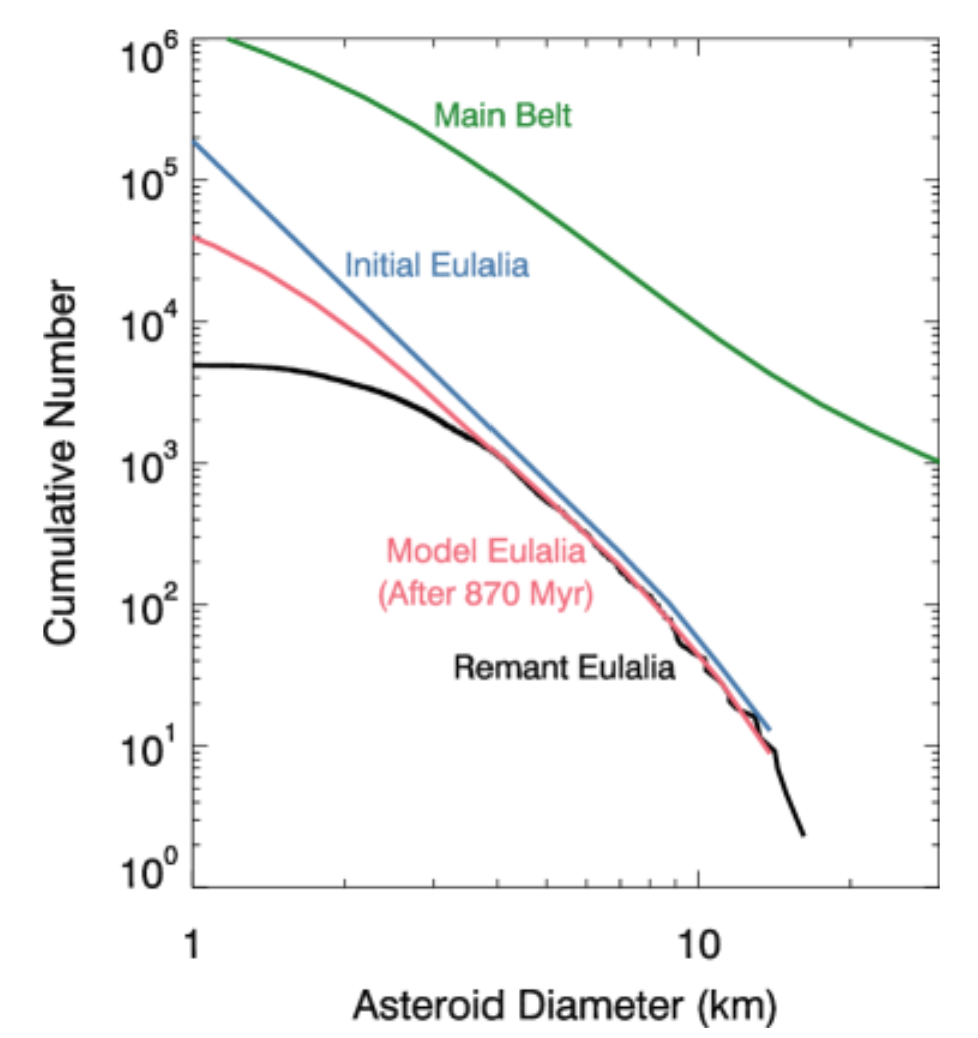
The Eulalia model gives scientists a testable source for a possible solar-system-wide impact episode. It connects a specific asteroid breakup, a known orbital resonance and a measurable sequence of lunar craters.
Future work can compare the predicted impact timing with additional lunar samples, meteorite ages and ancient terrestrial rocks. Better dating of craters on Mars and the Moon could reveal whether several worlds experienced the same bombardment.
The findings may help researchers evaluate how asteroid showers influence planetary surfaces, atmospheres and ecosystems over long periods. They also show how one collision in the main belt can alter the impact environment far beyond the asteroid belt itself.
Research findings are available online in The Planetary Science Journal.
The original story “Ancient asteroid breakup may have bombarded Earth and the Moon 800 million years ago” is published in The Brighter Side of News.
Like these kind of feel good stories? Get The Brighter Side of News’ newsletter.
The post Ancient asteroid breakup may have bombarded Earth and the Moon 800 million years ago appeared first on The Brighter Side of News.

