A three-month-old baby may already hear music as something more than a jumble of sounds.
The infant brain responds more strongly to organized songs than to the same notes played in a scrambled order. Yet the body takes longer to catch up. Clear movement tied to musical structure appears closer to the end of the first year.
Even then, babies do not yet move in time with the beat.
That gradual path emerged from a study of 79 infants aged three, six, and 12 months. Researchers recorded brain activity while cameras tracked spontaneous movement during several kinds of musical playback.
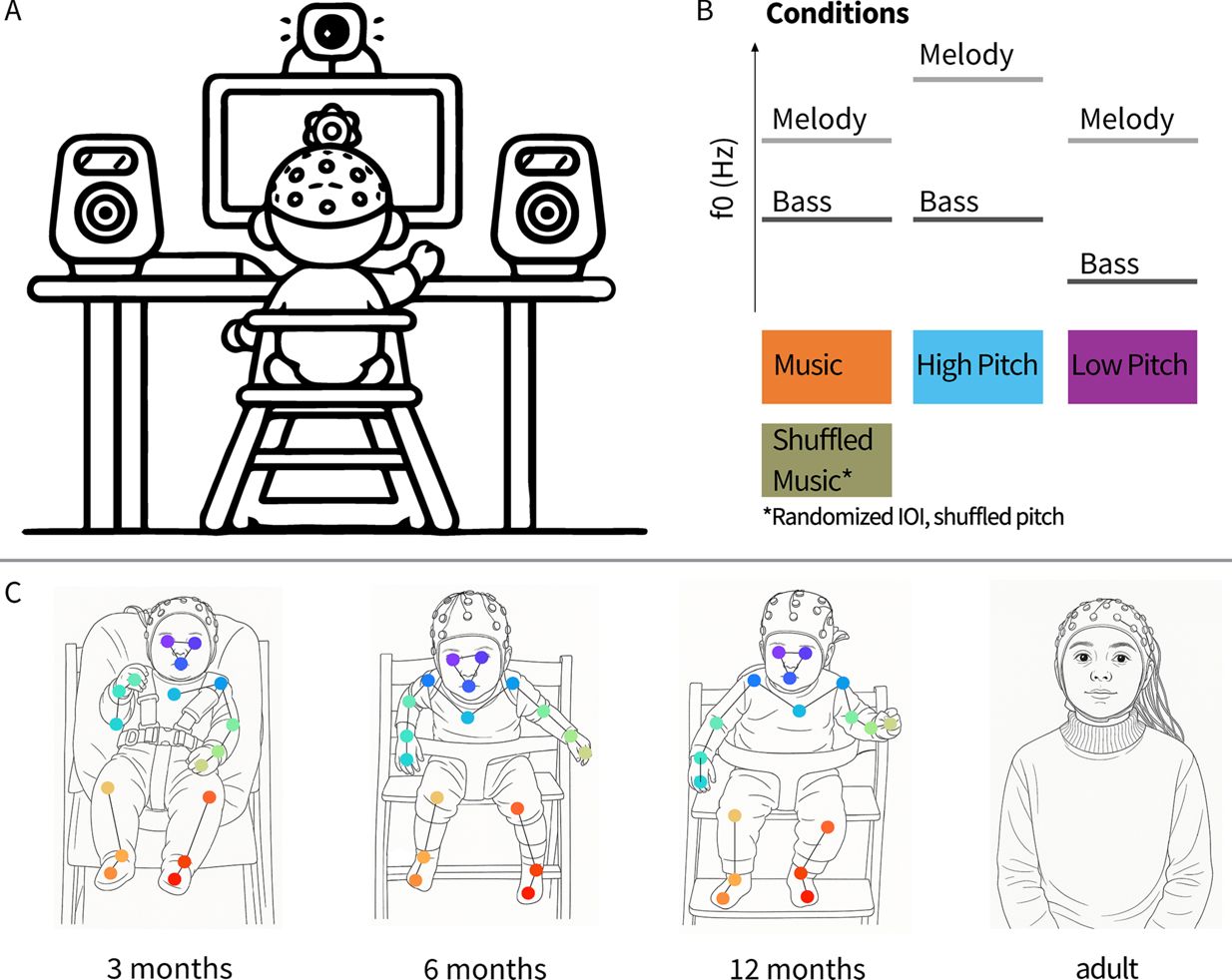
The results separate early musical development into two linked stages. Infants first process musical structure through hearing. Later, they begin expressing that awareness through rocking, swaying, clapping-like motions, and arm movements.
“Studying both the sensory and motor components of musicality in infants would give us a better understanding of how we learn to transform the perception of music into movement,” said lead author Trinh Nguyen.
Nguyen is affiliated with the Neuroscience of Perception and Action Lab at the Istituto Italiano di Tecnologia in Rome. She is also a senior research fellow at the University of Vienna.
Musicality includes the ability to hear, enjoy, and produce music. It also involves turning sound into physical action. Adults often do this without thinking. A beat begins, and a foot taps. A familiar chorus plays, and a person starts swaying.
Infants offer a chance to see how that connection begins.
The research team played instrumental sections from children’s songs. They also used shuffled versions containing similar notes but disrupted musical structure. Two more versions changed the pitch. One emphasized higher notes, while the other emphasized lower ones.
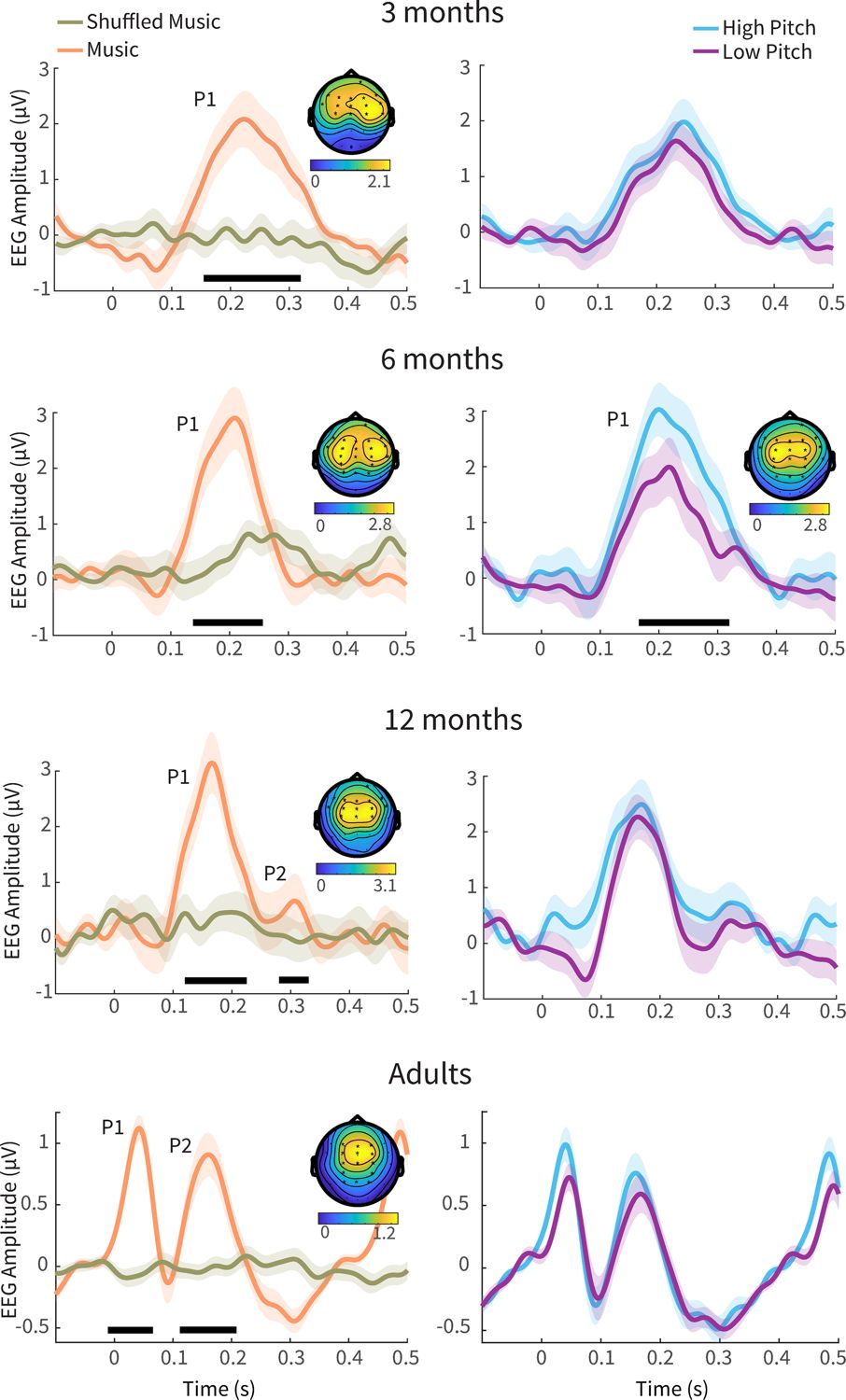
During each listening period, researchers recorded electrical brain activity with electroencephalography, commonly called EEG. They also filmed the infants for detailed movement analysis. The brain recordings focused partly on event-related potentials. These signals helped the team track the timing of neural responses to individual tones.
Researchers also measured auditory steady-state responses. Those responses reflect how the brain follows continuing patterns in sound. Across every infant age group, structured music produced stronger auditory responses than shuffled music. That pattern appeared in babies as young as three months.
The result suggests that infant brains already notice the predictability built into musical sequences. Scrambling the notes weakened that structure and changed the neural response. Musical organization may help babies anticipate what sound comes next.
Tracking infant motion presented a different challenge. Babies do not follow instructions or repeat movements on command. The researchers used DeepLabCut, an open-source video-tracking program. The software followed body positions without requiring physical markers.
They then used a method called principal component analysis. This approach reduced many small motions into 10 broader movement patterns. Those patterns included front-back rocking, side swaying, proto-clapping, leg kicking, and up-down rocking. They also included arm pedaling, foot kicking, whole-body wiggling, foot shuffling, and foot pedaling.
Lower-body movement appeared throughout the first year. Babies often kicked or moved their feet regardless of the music’s organization. A more selective pattern emerged among the 12-month-olds.
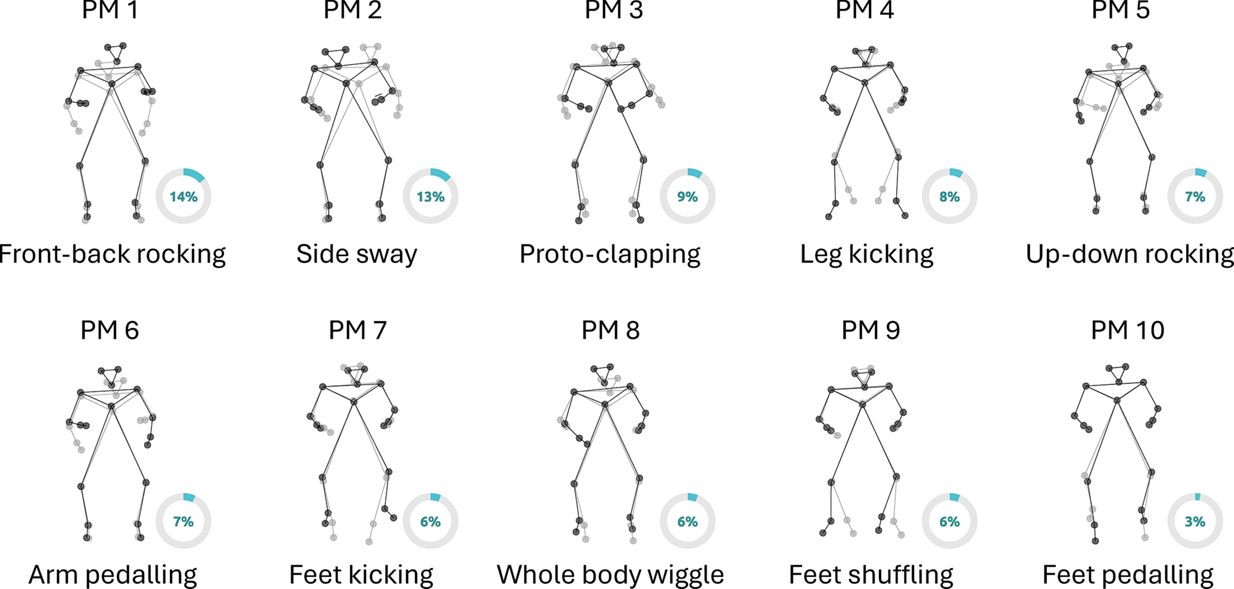
Only that group moved significantly more during organized music than during shuffled versions. The change appeared across the movement patterns as a whole. The strongest differences involved the upper body and arms. Older infants increased front-back rocking, side swaying, proto-clapping, up-down rocking, and arm pedaling.
Three-month-old and six-month-old infants did not move more during music than during shuffled music. Pitch also failed to change the total amount of movement. High and low versions produced similar movement quantities across the age groups.
“Across the first year of life, infants seem to consistently move their lower body,” Nguyen said.
They also gradually gain more complex upper-body and whole-body control while sitting, she added. That pattern became clearest among the 12-month-olds.
The contrast between brain and body responses became one of the study’s central findings. Neural sensitivity to music appeared early. Movement that clearly favored musical structure emerged months later.
This delay may reflect the demands placed on the developing motor system. Hearing a pattern does not require controlling the trunk, arms, and posture.
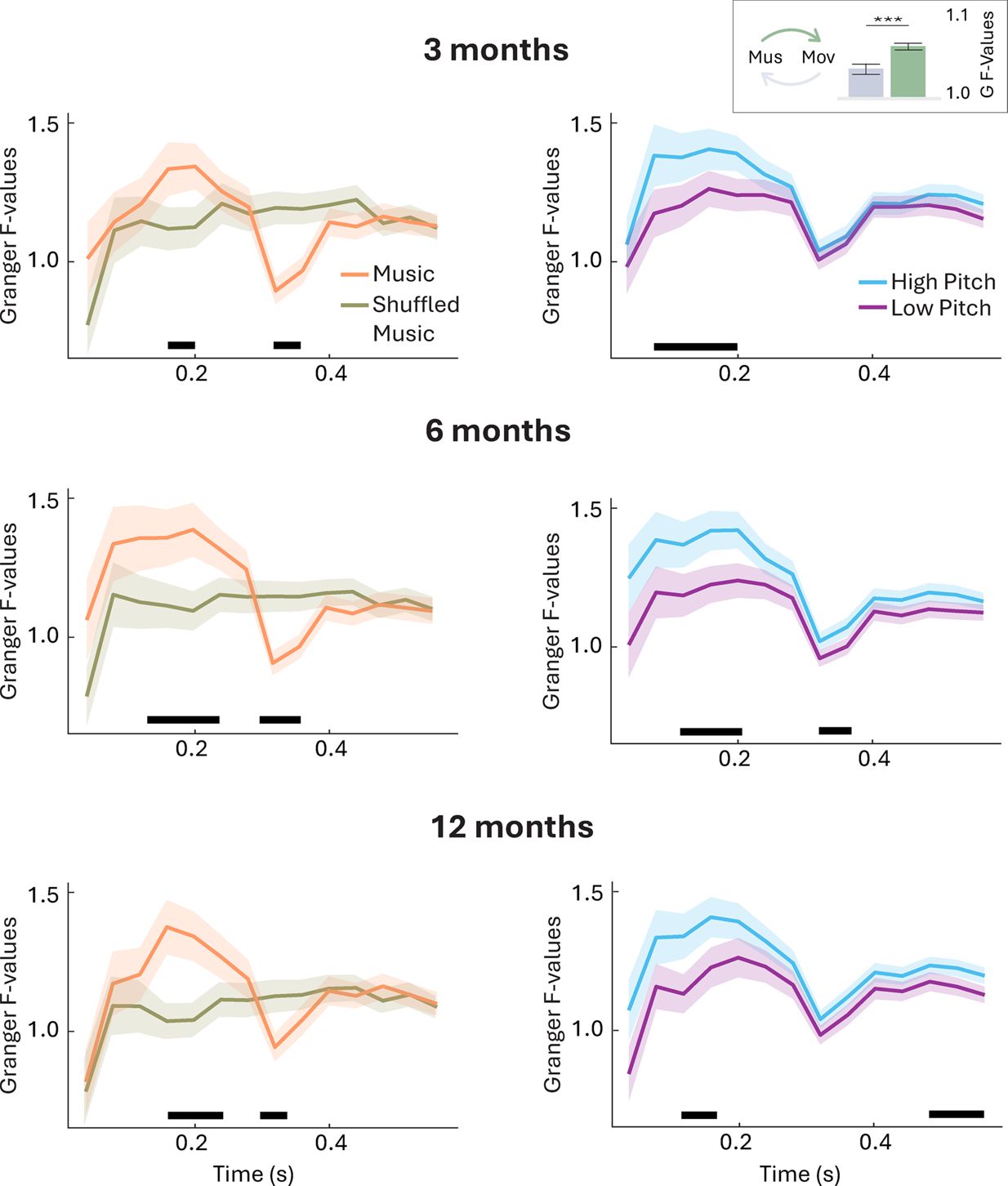
Rocking or producing a clapping-like motion requires greater physical coordination. Nguyen linked the increasing complexity to the gradual development of the dorsal auditory stream. That brain pathway may support beat perception and rhythmic coordination.
Still, the study did not establish that this pathway directly caused the observed changes.
The findings instead describe a developmental sequence. Infants hear musical order before they consistently express it through movement. That sequence was not complete by 12 months.
None of the age groups coordinated their motions with the beat. Babies sometimes moved rhythmically, but their timing did not reliably match the music. A child might rock several times during a song. However, those motions did not land consistently on the musical pulse.
This distinction matters. Moving more during music is not the same as dancing in time. The results suggest that early motor development begins with control over individual muscles. Coordinated whole-body timing comes later.
The study offers evidence that music-related movement begins during infancy. It does not claim that babies arrive with a finished sense of rhythm. Instead, the developing brain seems prepared to connect organized sound with physical response.
“We’ve shown that, much like the auditory encoding of music, moving to music emerges early in development,” said senior author Giacomo Novembre.
Novembre leads the Neuroscience of Perception and Action Lab at the Italian Institute of Technology. He said the findings may reflect a biological or early-developing tendency. That tendency could eventually support dance-like behavior.
Before 12 months, however, those responses remain limited.
The study also leaves several questions open. It focused only on the first year of life and did not track the same infants over time. Researchers still need to identify when steady beat synchronization first appears. They must also examine how experience, culture, movement ability, and repeated musical exposure shape that process.
The deeper function of music-driven infant movement also remains uncertain. Babies may move because music captures attention. Movement could support learning, social bonding, emotional regulation, or later rhythmic skill.
The current study does not choose among those possibilities. What it does provide is a combined view of hearing and movement. Few earlier studies measured both at the same time in infants.
That approach captured an important mismatch. The brain recognizes musical structure months before the body can answer with more complex movement.
The findings give developmental researchers a clearer timeline for early musical behavior. Brain responses may appear before visible movement offers any sign of musical awareness. That difference could improve future studies of hearing, movement, and sensory development. Researchers may also use music to study how perception becomes action during infancy.
The work could guide later research involving children with different motor or sensory development patterns. However, the study did not test clinical uses.
Parents should not expect young babies to match a beat. A lack of synchronized movement during the first year appears consistent with these findings. Music can still engage the infant brain long before dancing begins.
The next step will involve following development beyond 12 months. Researchers can then trace when spontaneous motion becomes controlled, timed, and recognizably dance-like.
Research findings are available online in the journal eLife.
The original story “Babies learn to ‘hear’ music and ‘dance’ within their first year” is published in The Brighter Side of News.
Like these kind of feel good stories? Get The Brighter Side of News’ newsletter.
The post Babies learn to ‘hear’ music and ‘dance’ within their first year appeared first on The Brighter Side of News.