A bladeless wind turbine does not spin. It sways. That simple change could make wind power quieter and easier to place, but engineers face a harder question: how much electricity can it produce without bending past a safe limit?
Engineers at the University of Glasgow examined that problem with computer simulations. Their paper, “Performance analysis and geometric optimisation of bladeless wind turbines using wake oscillator model,” appears in the journal Renewable Energy.
The work focuses on turbines built around a tall cylindrical mast. Wind moving around the cylinder sheds alternating vortices, creating side-to-side forces. When those forces approach the structure’s natural vibration frequency, the mast can enter “lock-in,” a state of large, sustained oscillation.
That motion can drive an alternator at the base. Unlike conventional turbines, the system needs no rotating blades, shafts, oils, or gears.
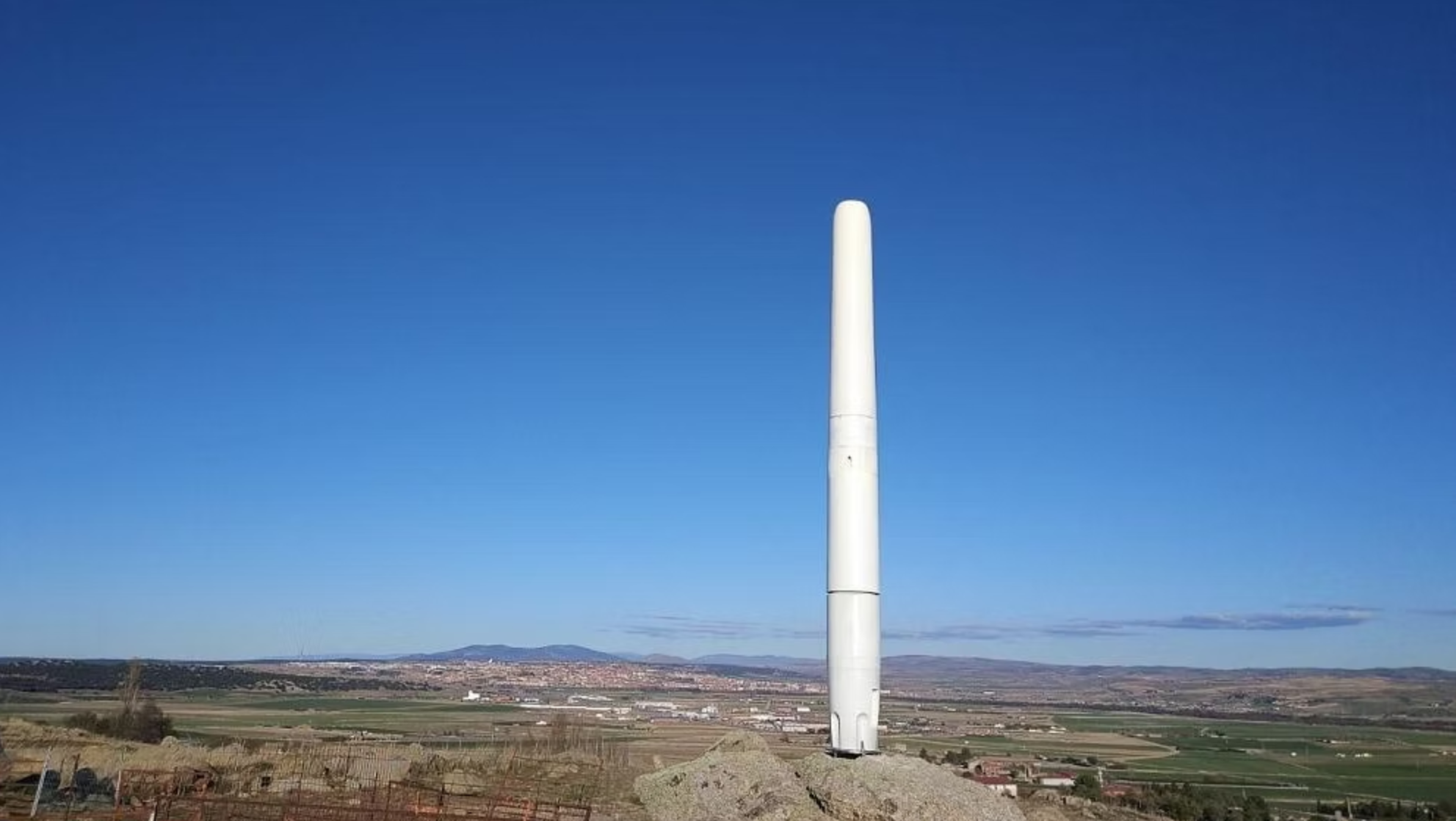
The best-known commercial effort comes from the Spanish startup Vortex Bladeless. Its upright device has drawn attention for its design and online nickname, “the Skybrator,” inspired by its shape and motion.
“Well, we engineers tend to be serious about this, but it is indeed funny and not harmful,” said Vortex Bladeless representative Jorge Piñero. “People can joke if they want, as long as they remember that this is a scientific project with many professionals and organizations behind working very hard and with passion.”
Vortex does not present the technology as a replacement for large wind farms. Traditional turbines can generate far more electricity. The bladeless concept instead targets rooftops, homes, city buildings, and off-grid sites where rotating blades may be impractical.
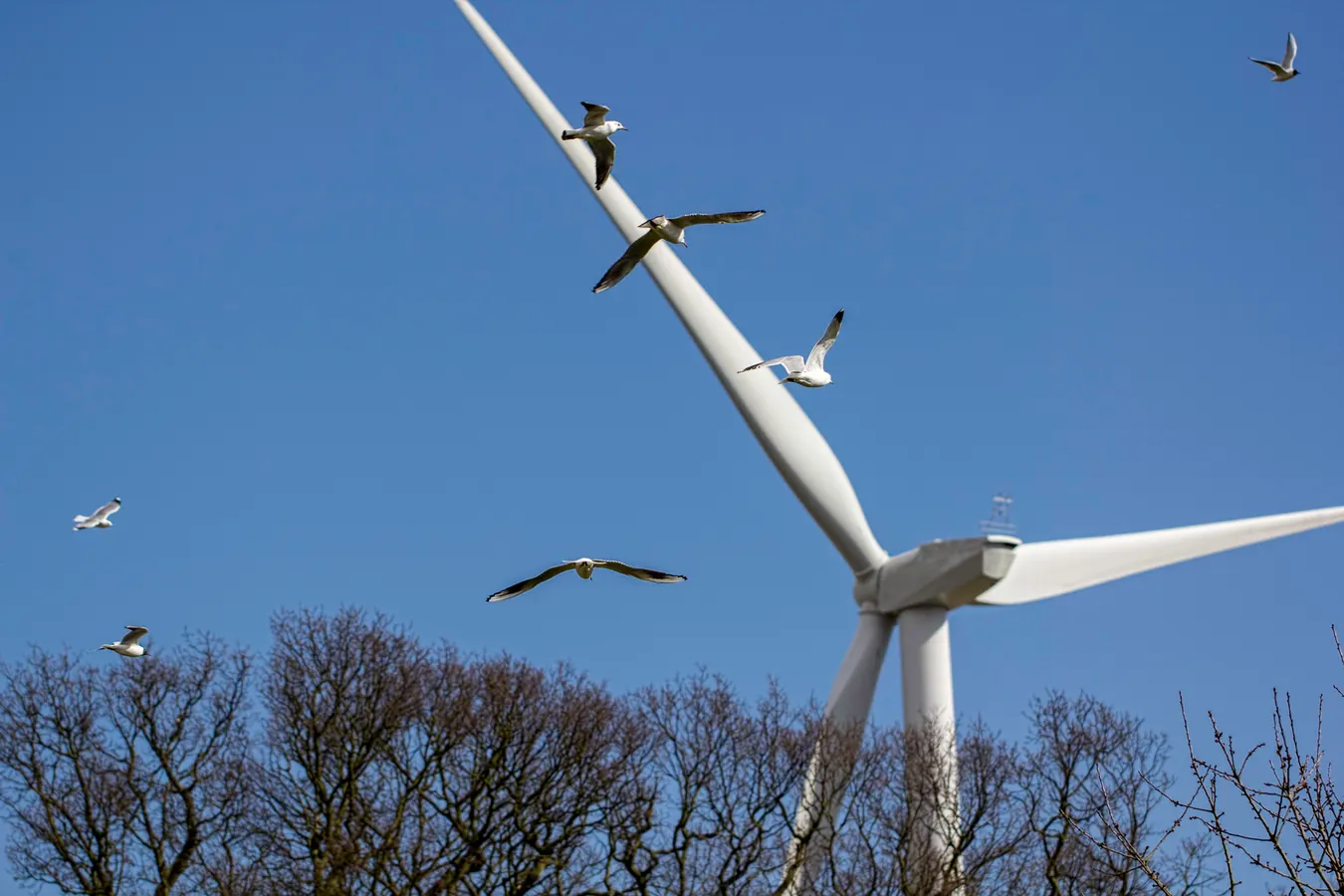
Its appeal rests on simplicity. Fewer components could reduce maintenance. The mast does not need to face one direction, and its movement produces little noise. Without spinning blades, the design also avoids the collision hazard conventional turbines can pose to birds.
Piñero said size strongly affects output. “Power grows exponentially with the size of the device. A Vortex Tacoma of 2.75 meters high could be powering a fridge, many phones, and some LED lights for an off-grid house.”
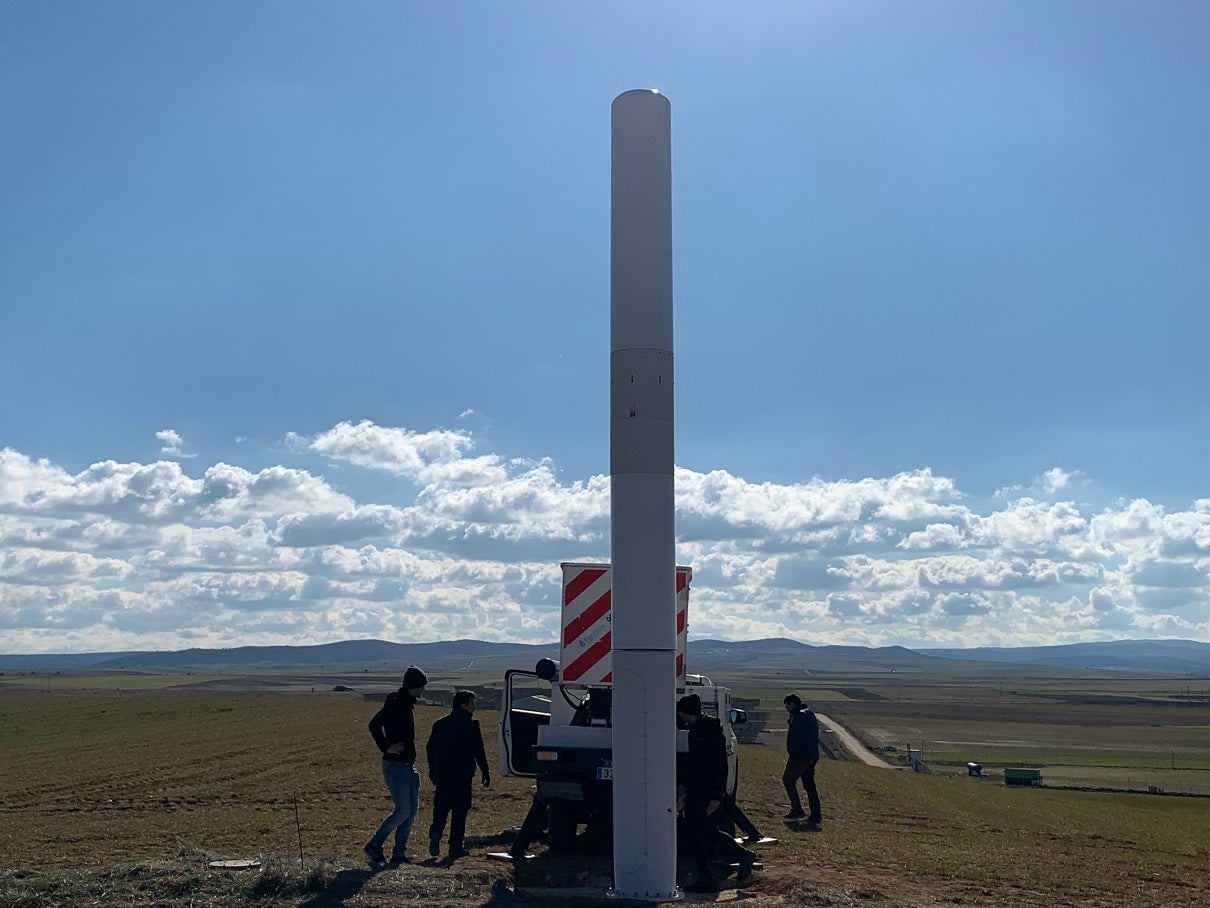
Bladeless turbines work best within a limited range of wind speeds. That range depends on lock-in, when vortex shedding approaches the turbine’s natural frequency. The resulting vibration can grow sharply and create useful mechanical power.
Designing for stronger motion can increase output and widen the operating wind range. It can also raise structural stress.
That conflict sits at the center of the Glasgow analysis. Earlier work often focused on output, efficiency, displacement, or tuning separately. The new model links the vibrating structure with the unsteady wake, allowing the team to test many mast sizes without relying entirely on costly fluid simulations.
The researchers represented the device as a rigid hollow mast attached to a flexible rod fixed at the ground. They modeled the rod’s mass and stiffness, the mast’s motion, aerodynamic forces, damping, and the changing vortex wake.
The nonlinear wake oscillator model captures the onset of lock-in while requiring much less computing power than direct airflow simulations.
The simulations covered a wide range of mast lengths and diameters. Rod-tip displacement increased with mast diameter and decreased with mast length. The wind-speed capture range also changed with mass ratio and geometry.
Power followed a clear pattern. It rose as mast diameter increased and mast length decreased. One modeled configuration produced more than 600 watts under the selected rod design and damping conditions.
That was not the best practical design.
The same geometry also created the largest bending stress at the rod’s root. The model used nylon for the rod, with a yield-stress range of 40 to 60 megapascals. The highest-output configuration exceeded the safe threshold.
The team then compared power against bending stress across safer options. The analysis indicated that reducing mast diameter could lower failure risk without causing the same steep power loss linked to other changes.
A structurally safe configuration reached a maximum modeled output of 460 watts. It also offered a wider lock-in capture range than another safe design used for comparison.
The geometry that maximized power did not maximize efficiency.
Increasing mast diameter improved both measures in the model. Mast length behaved differently. Shorter masts could capture more power because they operated at higher critical wind speeds, but they did so less efficiently. Longer masts reached the highest efficiency without delivering the greatest output.
That distinction matters because efficiency alone does not determine usable power. Available wind power rises rapidly with wind speed. A design can therefore extract more electricity while converting a smaller share of the energy passing it.
The results also show why mast-tip movement alone can mislead designers. Power depends on aerodynamic force, movement, and the phase difference between force and velocity. A long mast may show large tip movement without delivering the best energy capture.
The model has limits. Some short-mast, large-diameter combinations reached Reynolds numbers beyond the validated range of the wake-oscillator approach. Those conditions need higher-fidelity simulations. The analysis also did not test turbine arrays, atmospheric turbulence, or continuously changing winds.
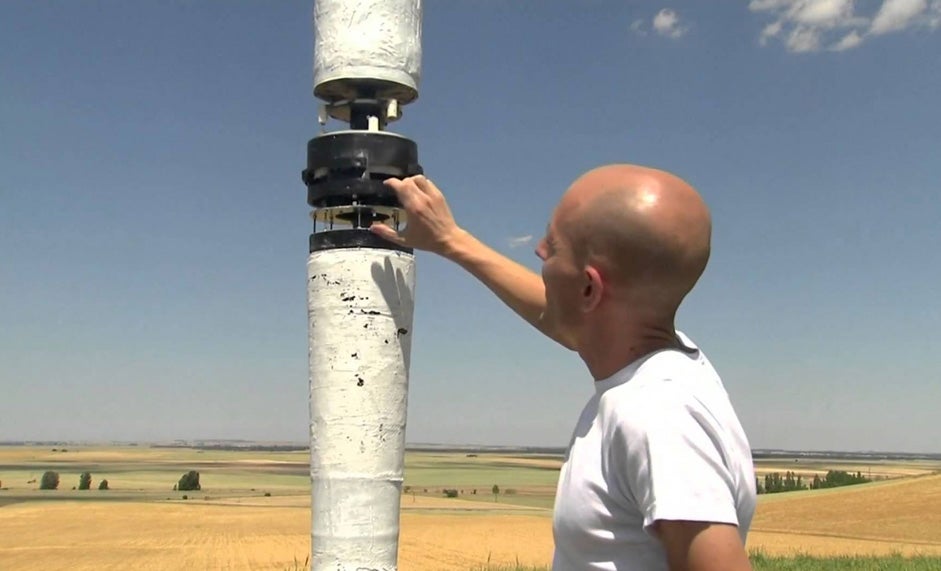
The Glasgow framework gives engineers a faster way to explore turbine geometry before building costly prototypes. It can identify designs that balance output, efficiency, operating range, and structural safety instead of optimizing one measure alone.
That could help move the technology beyond small devices producing roughly 1 to 100 watts. The paper points toward larger systems at the kilowatt scale, including possible offshore use, but larger experimental tests remain necessary.
Future work will need to examine how multiple turbines interact, how closely they can be spaced, and how turbulence changes their motion. Researchers could also test advanced materials and adjustable geometries.
Bladeless turbines still must prove they can produce useful power reliably outside controlled models and small demonstrations. The Glasgow study does not settle that question. It shows that progress depends on more than making a mast sway harder. The strongest design must also survive the motion it creates.
Research findings are available online in the journal Renewable Energy.
The original story “Bladeless wind turbine ‘skybrator’ sways to generate quiet, clean, bird-safe power” is published in The Brighter Side of News.
Like these kind of feel good stories? Get The Brighter Side of News’ newsletter.
The post Bladeless wind turbine ‘skybrator’ sways to generate quiet, clean, bird-safe power appeared first on The Brighter Side of News.

