The molecule, lipoic acid trisulfide, or LASSS, strengthened hepatocyte growth factor in laboratory experiments and reduced chemical damage to the protein in mice subjected to muscle disuse. Kyushu University researchers reported the findings in Scientific Reports.
Hepatocyte growth factor, known as HGF, normally rests in the supportive material surrounding muscle fibers. Mechanical stretching, overuse or injury releases it. HGF then attaches to c-Met receptors on satellite cells, the resident stem cells responsible for skeletal muscle repair.
That contact wakes satellite cells from a resting state. They begin dividing, developing and contributing to damaged or growing muscle fibers.
“HGF is not necessarily missing as we age,” said professor Ryuichi Tatsumi of Kyushu University’s Faculty of Agriculture. “Rather, it can be chemically altered after it is made. That led us to wonder whether a compound with strong antioxidant capacity might protect HGF, either by preventing nitration or by compensating for the functional loss it causes.”
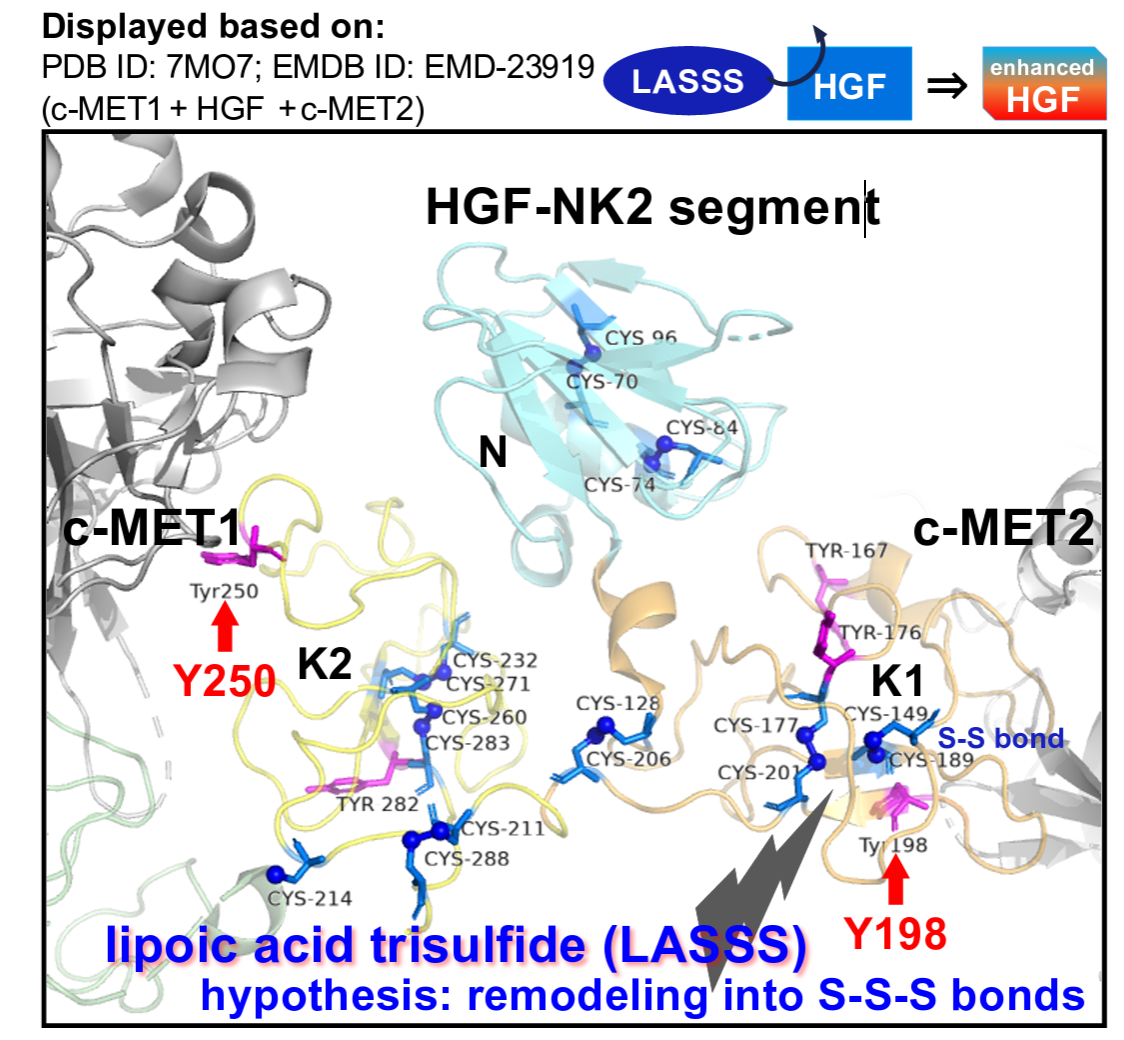
The damaging change is called nitration. It occurs when a nitro group attaches to specific parts of a protein.
Earlier work by the team found that HGF becomes nitrated at two tyrosine sites, Y198 and Y250. Both sit in regions involved in binding to the c-Met receptor.
Once altered, HGF loses much of its ability to connect with c-Met and activate satellite cells. The process has been linked to aging and muscle disuse, particularly in fast muscle fibers.
Those fibers support quick and powerful movements. Their decline contributes to weakness, impaired regeneration, fibrosis and fat accumulation within muscle.
The researchers examined two antioxidant molecules called trisulfides, which contain three consecutively linked sulfur atoms. One was glutathione trisulfide, or GSSSG. The other was LASSS.
When mixed with HGF before exposure to peroxynitrite, a molecule that causes nitration, each reduced damage at Y198 and Y250. The treatment also preserved HGF’s ability to activate cultured satellite cells.
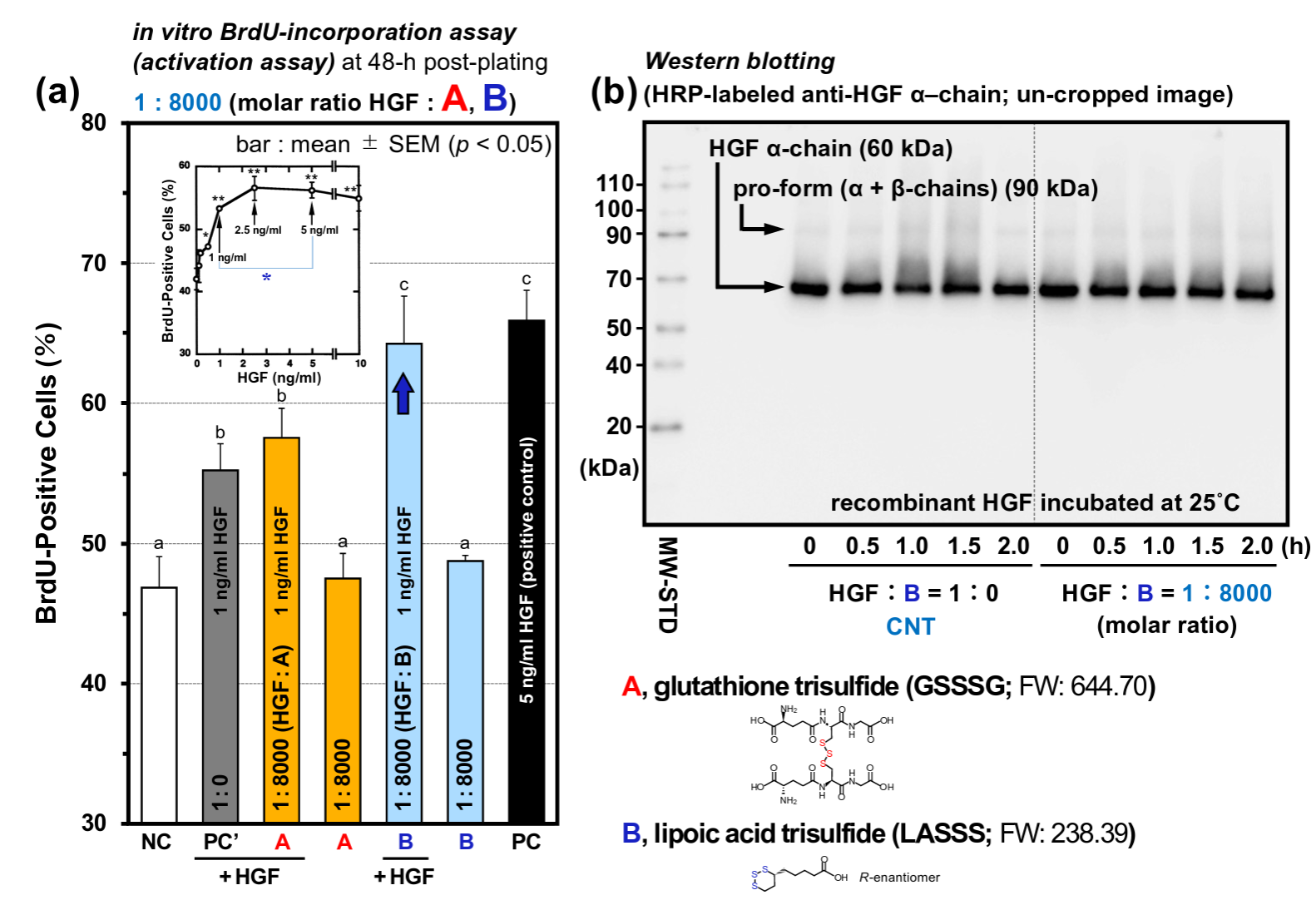
Yet neither compound fully restored receptor binding at the initial concentration.
The team doubled the amount of trisulfide relative to HGF, increasing the molar ratio from 1:4,000 to 1:8,000.
LASSS then produced an effect beyond antioxidant protection. HGF treated with the compound bound to c-Met more than twice as strongly as untreated HGF.
GSSSG did not produce the same enhancement.
“This exceeded our expectations,” Tatsumi said. “We knew trisulfides had diverse biological functions, but we never expected that simply mixing HGF with LASSS would produce such a striking effect.”
The effect remained after researchers removed free LASSS from the mixture. That suggests the compound interacted directly with HGF or chemically modified it.
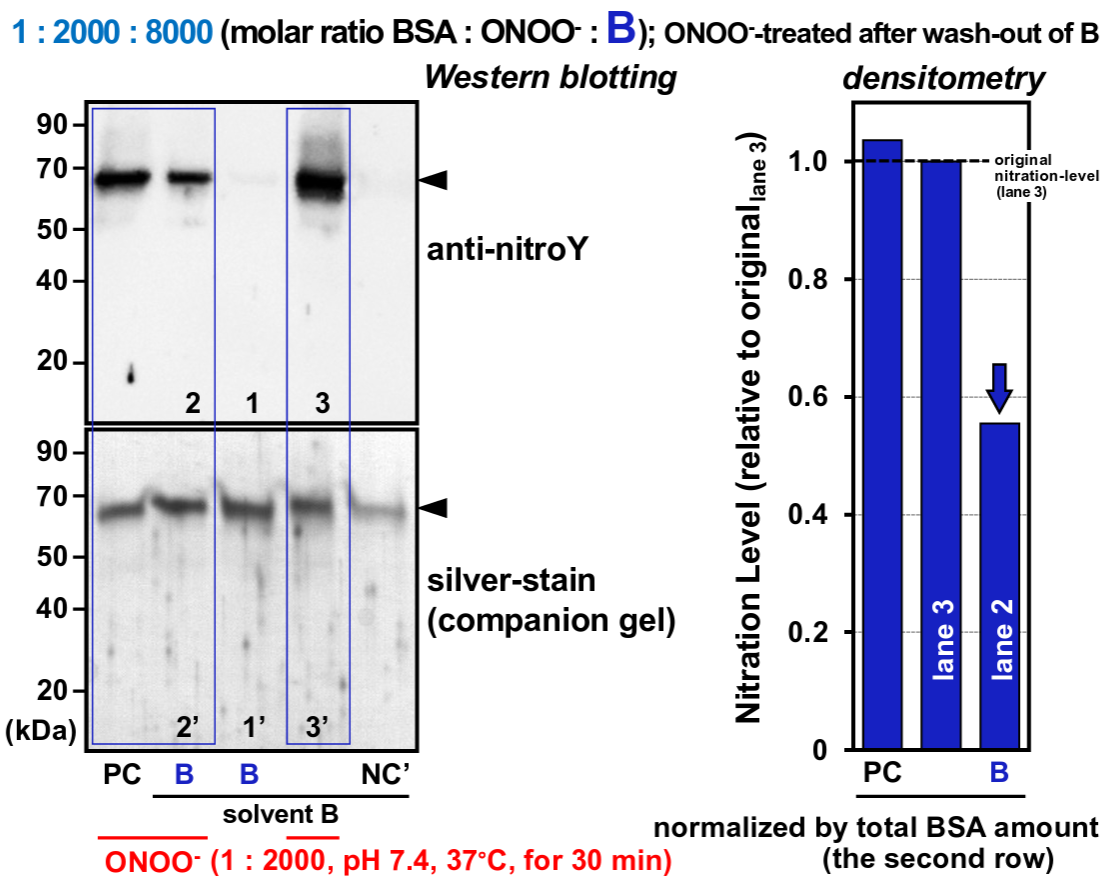
LASSS-treated HGF also resisted later nitration, especially at Y198. Ordinary lipoic acid, which contains two linked sulfur atoms rather than three, did not provide the same benefit.
“What this tells us is that LASSS does more than simply neutralize reactive molecules,” Tatsumi said. “It may interact directly with HGF and induce a subtle structural change, creating an enhanced ‘Super HGF’ form that binds c-Met more strongly and resists nitration.”
The researchers proposed that LASSS may alter disulfide bonds near Y198, changing HGF’s shape enough to improve receptor binding. The study did not identify the modified bonds or prove that mechanism.
To test whether stronger receptor binding preserved biological activity, the team exposed rat muscle satellite cells to treated HGF.
Nitrated HGF alone failed to activate the cells. HGF protected by either trisulfide at the lower ratio restored activation close to the level produced by untreated HGF.
At the higher ratio, LASSS-treated HGF activated satellite cells even at a dose below the usual optimal range. GSSSG did not create the same effect.
The enhanced form did not appear to disrupt normal HGF signaling or cause the protein to break apart. Cell markers linked to proliferation remained comparable with those produced by regular HGF.
These tests do not establish that LASSS can prevent age-related muscle loss in people or animals.
The researchers next tested the compounds in young male mice. They used tail suspension to reduce use of the hindlimbs for five days, a common model of muscle inactivity.
Before suspension, the animals received LASSS or GSSSG in drinking water for three days. Supplementation stopped when the disuse period began.
Muscles from untreated suspended mice showed increased nitration of HGF. Mice pretreated with LASSS showed substantially less damage at Y198.
GSSSG did not produce a clear protective effect in the animals, despite its performance in laboratory experiments.
The study included only three or four mice per group, depending on the experiment. It used young males rather than aging animals, and the researchers did not test whether LASSS preserved muscle strength, size or regeneration.
The soleus muscle showed a trend toward lower weight after suspension, but the difference did not reach statistical significance.
The findings identify a possible way to preserve a natural muscle-repair signal rather than replacing it. LASSS may both shield HGF from nitration and increase its ability to activate c-Met.
That combination could guide research on muscle decline during aging, prolonged bed rest or other periods of inactivity. It may also help scientists study whether chemically strengthened HGF could improve experimental HGF-based treatments.
Important questions remain. Researchers must determine exactly how LASSS changes HGF, how long the effect lasts and whether repeated exposure is safe.
Aging studies are needed before the compound can be considered a strategy for sarcopenia, frailty or impaired muscle regeneration. For now, the work offers an early biochemical and animal-model result, not evidence of a treatment for age-related muscle loss.
Research findings are available online in the journal Scientific Reports.
The original story “Breakthrough sulfur compound may slow muscle loss as we age” is published in The Brighter Side of News.
Like these kind of feel good stories? Get The Brighter Side of News’ newsletter.
The post Breakthrough sulfur compound may slow muscle loss as we age appeared first on The Brighter Side of News.