A single breath can reveal when the body has shifted toward burning fat, but reading that signal has usually required bulky laboratory equipment. A handheld detector now aims to bring the same metabolic insight into homes, clinics and everyday routines.
The smartphone-assisted device measures acetone, a volatile molecule released in breath when the body relies more heavily on fat for fuel. It delivers a result in about 90 seconds and closely matched laboratory mass spectrometry across hundreds of breath samples.
Researchers from ETH Zurich described the system in the journal Device. They designed it to detect subtle changes in fat metabolism that many consumer breath analyzers cannot reliably measure.
“If we want to make that information available to patients, we need to shrink those technologies into compact, user-friendly devices,” said senior author Andreas Güntner of ETH Zurich.
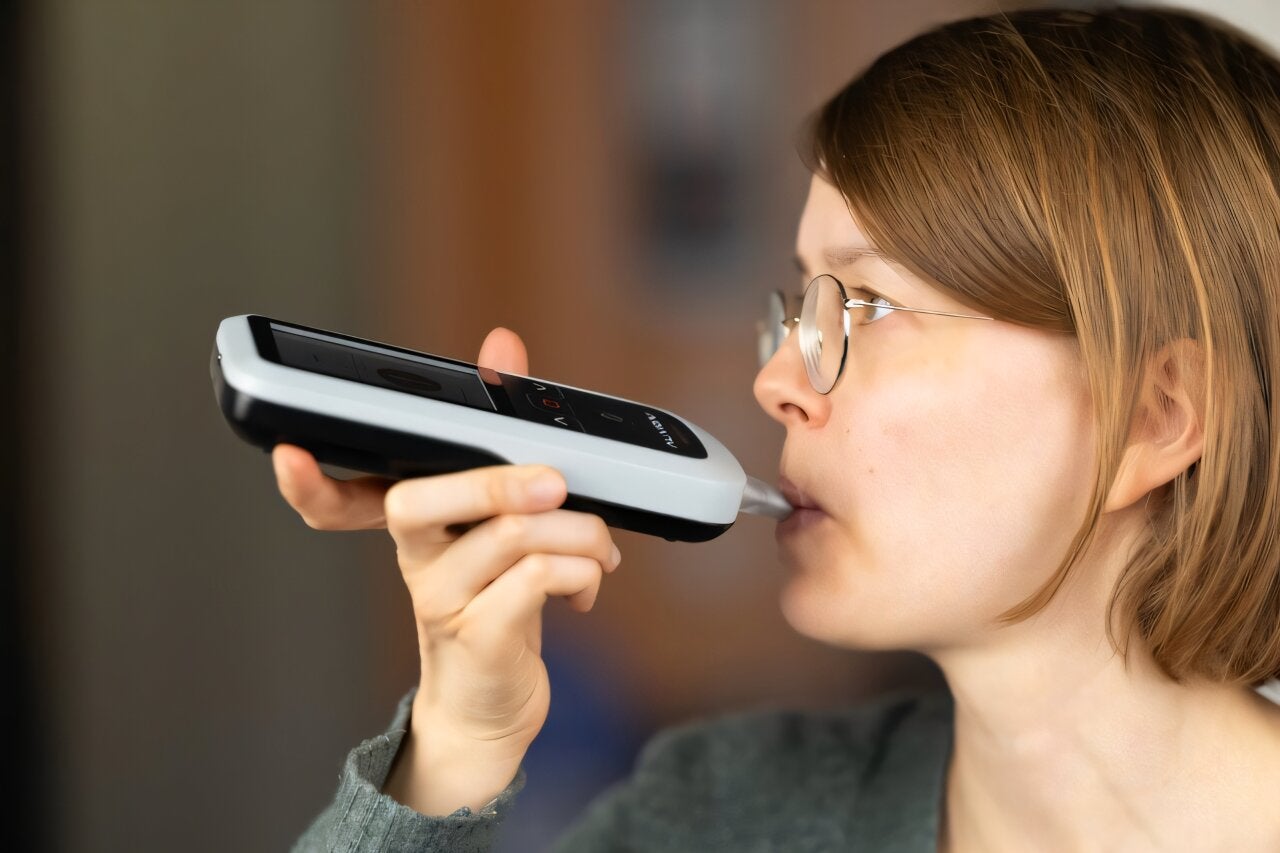
After 10 years of engineering, the team produced a portable detector that combines a chemical sensor, a molecule-separation column, controlled breath sampling and a smartphone app.
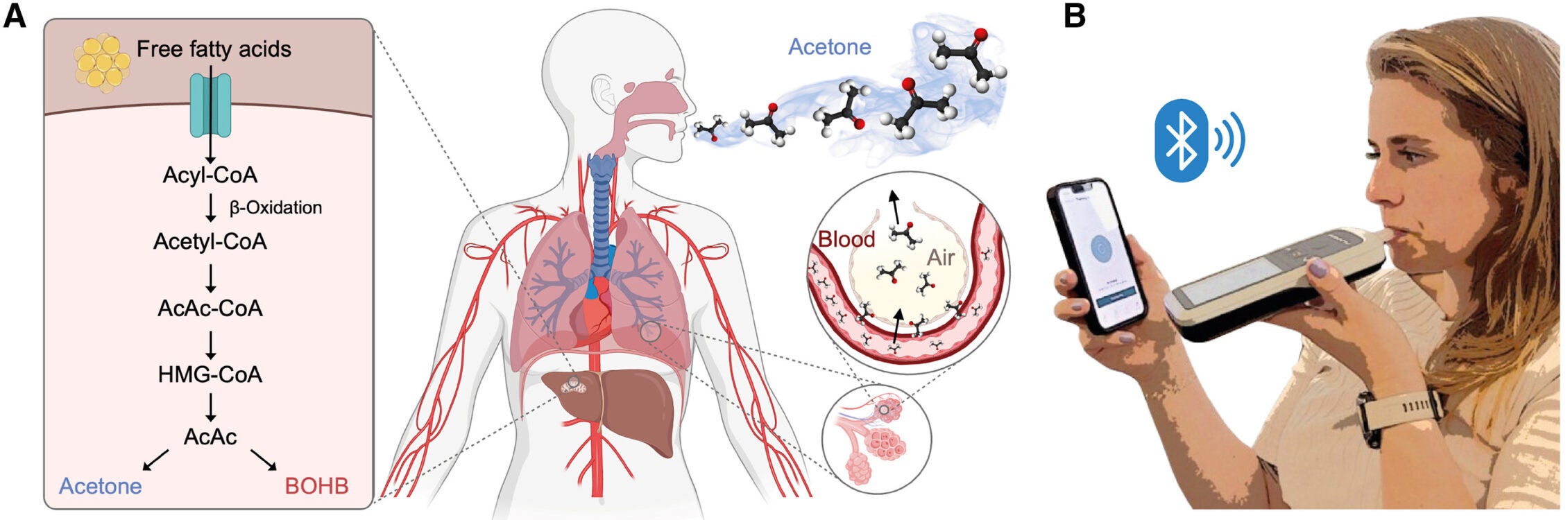
Breath acetone rises when carbohydrate availability falls and the body increases fat oxidation. In the liver, fatty acids are converted into molecules used to produce ketones.
One ketone, acetoacetate, can form beta-hydroxybutyrate, which is commonly measured in blood. It can also break down into acetone, which leaves the body through the lungs.
That makes exhaled acetone a noninvasive marker of changing fuel use. Frequent breath sampling could track how metabolism responds to meals, exercise, fasting or ketogenic diets.
Laboratory instruments can measure acetone precisely, but they are expensive and require trained operators. Many commercial breath devices work reliably only when acetone concentrations are already high.
The ETH Zurich detector uses a chemoresistive sensor. Its electrical resistance changes when acetone reaches the sensing surface.
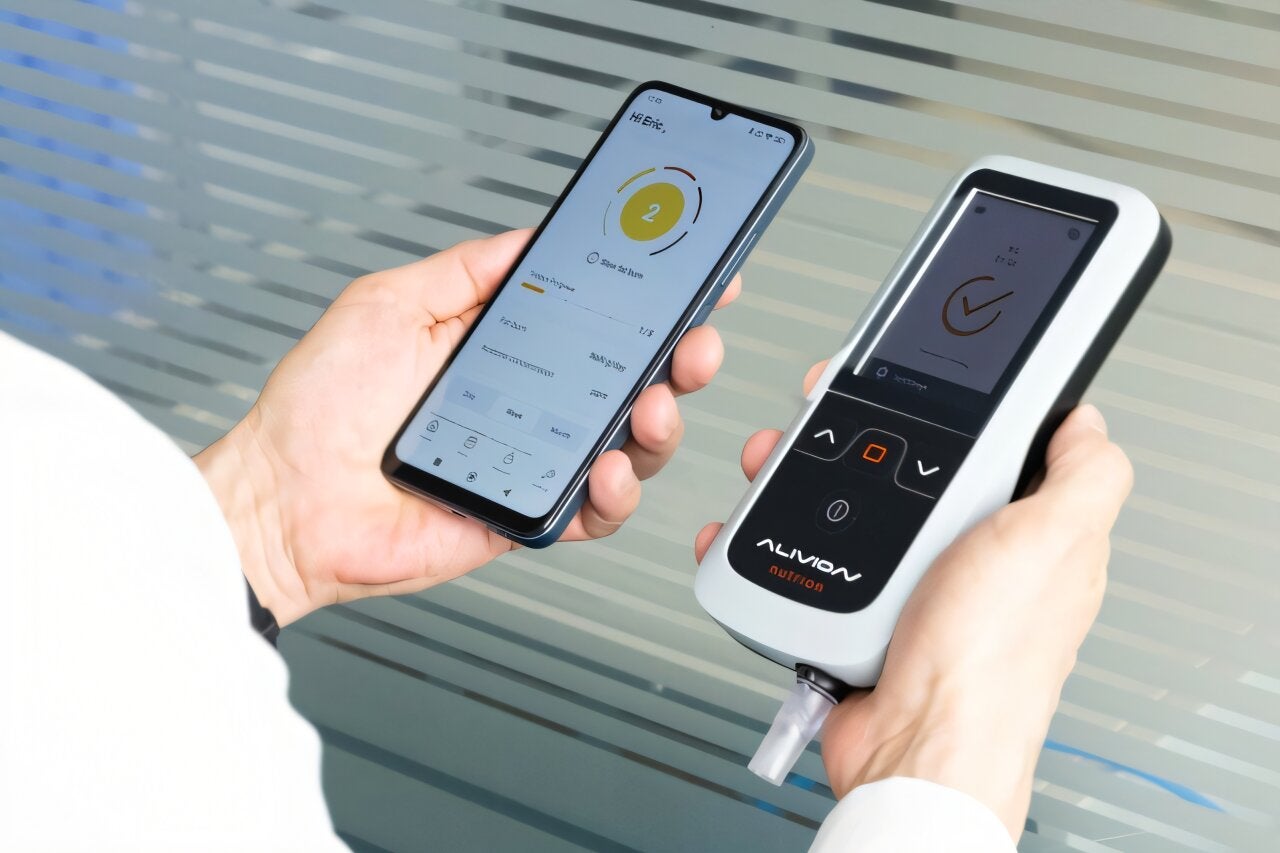
Before the sample reaches that sensor, a sorption column separates acetone from water and other compounds. This is important because breath is highly humid, and water vapor can distort measurements.
Reliable results also depend on collecting the correct part of an exhalation. Air from the final phase, known as end-tidal breath, most closely reflects compounds carried in the bloodstream.
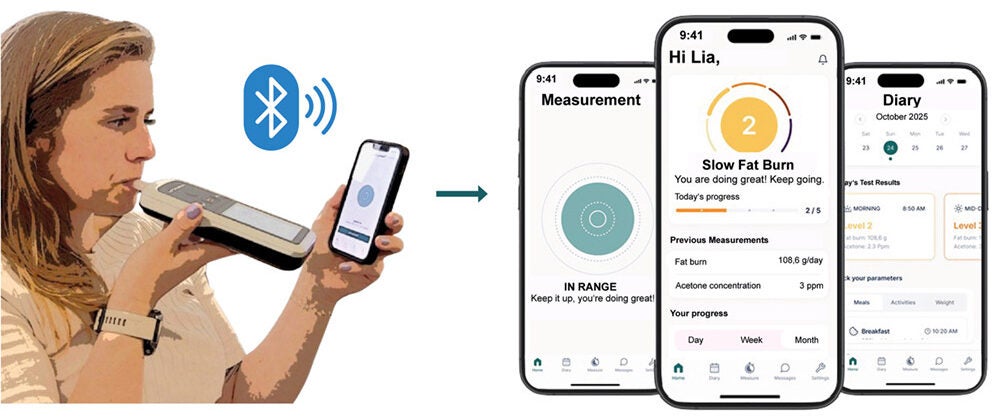
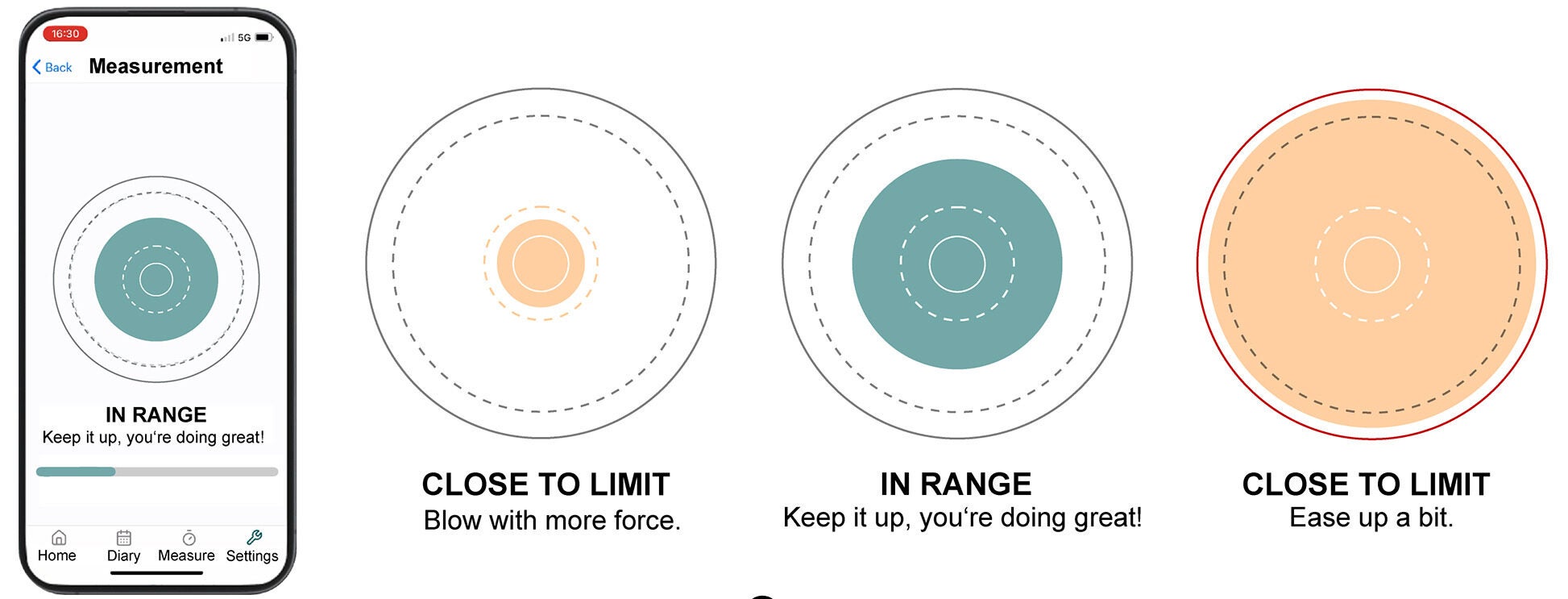
The detector uses an internal pressure sensor to guide each breath. On the connected smartphone, a circle expands or contracts as the user exhales, helping maintain the correct force and duration.
The app warns when a breath is too weak or too forceful. Built-in checks can reject poor samples or air affected by contamination.
Users first complete a vital capacity test that measures how much air they can exhale. The system then times later samples to capture the end-tidal portion without requiring a maximum breath every time.
Five consecutive exhalations from one participant produced an average acetone concentration of 0.97 parts per million, with variation of about 3 percent. That consistency showed the guided process could collect repeatable samples.
The team tested eight detectors with 12 healthy adults ages 20 to 37. The group included five women and seven men, with body mass indexes ranging from 18.5 to 25.1.
Across 312 breath samples, acetone concentrations ranged from 0.2 to 43 parts per million. The handheld readings closely matched proton transfer reaction time-of-flight mass spectrometry, a laboratory reference method.
The correlation between the two approaches reached 0.995. Regression analysis also showed strong agreement across the tested metabolic range.
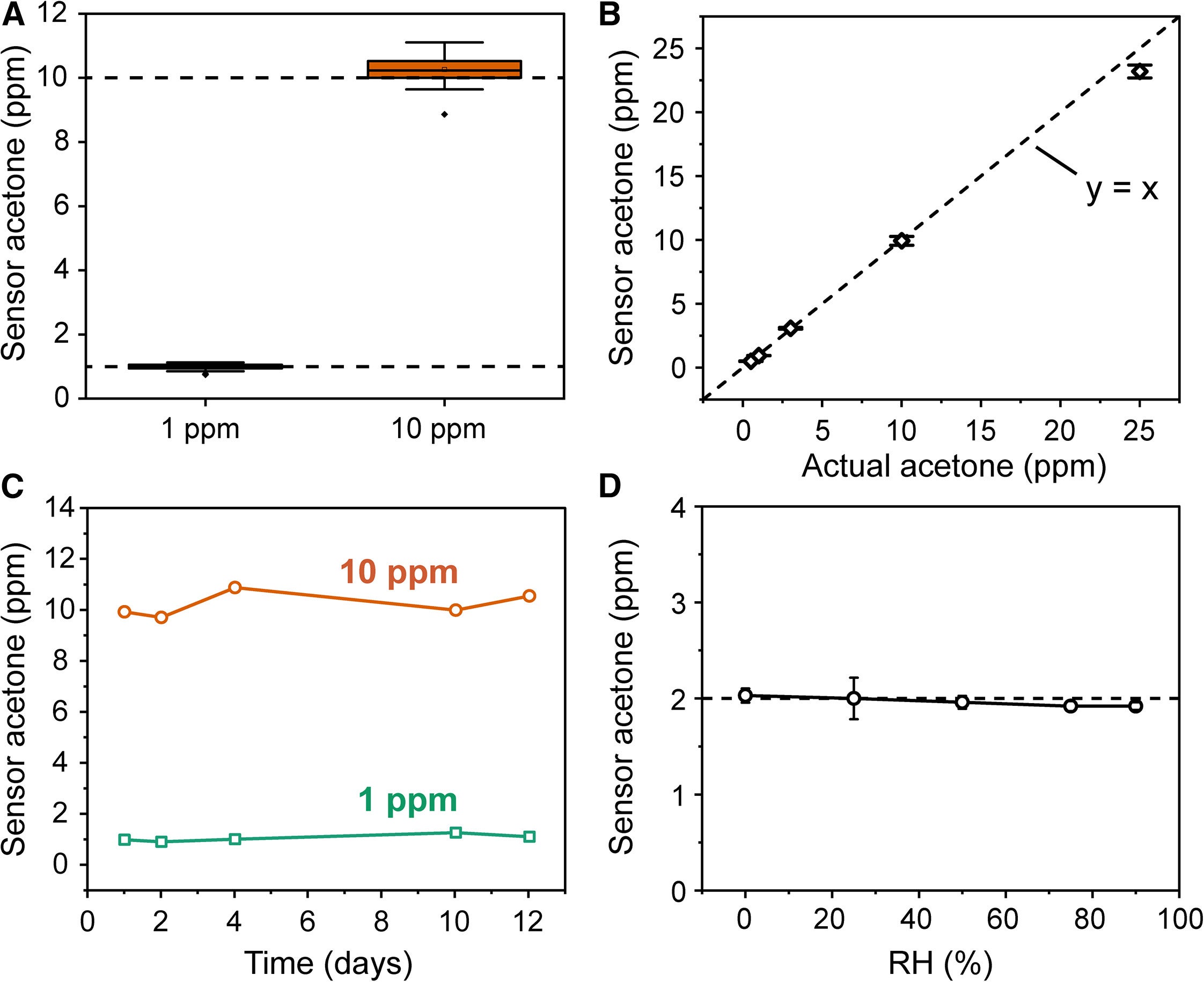
At 10 parts per million, the detector had a bias of 0.42 parts per million, or 4.2 percent. Its precision at that concentration was 10 percent.
Tests using calibrated gases showed little variation among devices. One detector operated for more than eight months without clear performance decline after repeated exposure to humid breath.
The researchers also found no systematic drift during a 12-day period following one calibration. Their results support recalibrating the device every one to two weeks during routine use.
The researchers next tested whether the detector could follow rapid metabolic changes caused by exercise and food.
They monitored breath acetone during four conditions: light exercise followed by a carbohydrate-rich meal, intense exercise followed by the same meal, intense exercise followed by a fat-rich ketogenic meal, and intense exercise followed by fasting.
After light exercise and a high-carbohydrate meal, acetone remained at or below 0.8 parts per million. Blood ketones also stayed low.
Following intense exercise, acetone began rising during recovery and reached about five times its earlier concentration before the next meal.
A carbohydrate-rich meal caused the level to fall. A fat-rich meal kept it elevated, while fasting allowed it to continue rising.
Blood beta-hydroxybutyrate followed similar patterns. Interstitial glucose behaved differently because it reflects available glucose rather than ketone production.
“These findings show that we have the high performance needed for applications such as clinical studies, where you really want to distinguish these slight differences in fat metabolism,” said first author Simone Hersberger of ETH Zurich.
The detector also captured large differences among individuals. After intense exercise and a fat-rich meal, some participants reached 11 to 15 parts per million. Others peaked between about 3 and 5.
Three participants used the system during three one-week dietary phases: their usual diet, a ketogenic diet and intermittent fasting with time-restricted eating.
Breath acetone remained relatively low during the habitual diet and increased in all three people during the ketogenic phase. Peak levels ranged from about 7 to 39 parts per million.
After participants switched to intermittent fasting, acetone fell and stabilized between roughly 0.7 and 2.7 parts per million.
The detector followed these daily changes closely when compared with mass spectrometry. It also revealed differences in fat use that continuous glucose monitoring did not distinguish as clearly.
The study involved only healthy adults, however. Larger and more diverse groups will be needed to establish how well the technology works in children, older adults and patients with metabolic conditions.
The detector could support clinical studies that require frequent metabolic measurements outside specialized laboratories. Researchers may be able to follow responses to fasting programs, ketogenic diets, exercise plans or weight-loss treatments over days and weeks.
Home measurements could also help clinicians examine metabolic flexibility, or how effectively a person’s body switches between carbohydrates and fat.
ETH Zurich spin-off Alivion AG has commercialized the analyzer as Nutrion. The device is being used in epilepsy studies and by people tracking fat metabolism for weight loss or athletic performance.
“Now it’s really time to spread it out into clinical trials and answer questions such as the effectiveness of different fasting therapies by providing personalized guidance,” Güntner said.
“We’re really moving toward health care solutions that, in the future, you won’t need to go to the hospital for anymore. You’ll be able to do them at home.”
Research findings are available online in the journal Device.
The original story “Handheld breath detector reveals when the body starts burning fat” is published in The Brighter Side of News.
Like these kind of feel good stories? Get The Brighter Side of News’ newsletter.
The post Handheld breath detector reveals when the body starts burning fat appeared first on The Brighter Side of News.