Astronomers warn that a bright band of satellites could one day cross the twilight sky, brighter than every star and planet. These proposed orbital data centers and space mirrors may turn Earth into an artificial ringed planet.
More than a million data-center satellites have been proposed, alongside plans for tens of thousands of mirrors designed to redirect sunlight toward Earth. If the largest constellations move forward, many spacecraft would occupy similar dawn-dusk orbits exposed to sunlight for long periods.
Those orbits follow the terminator, the shifting boundary between day and night. From the ground, satellites sharing that plane could appear as a concentrated band after sunset and before sunrise.
“If you were to look up at night, they would be all in one plane, really close together, going in the same direction,” said Hugh Lewis, a professor of astronautics at the University of Birmingham. “The impact on the night sky would be absolutely catastrophic.”
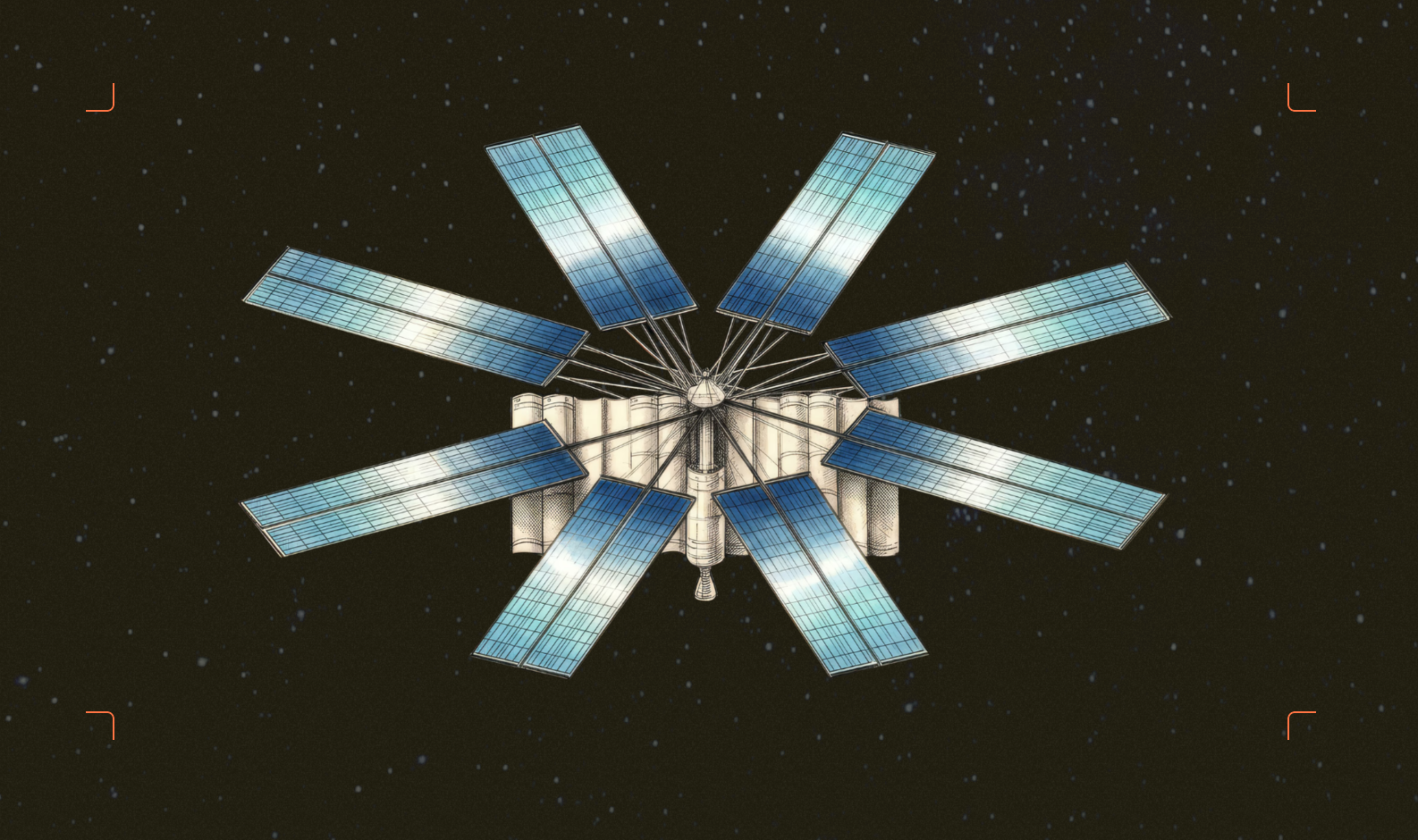
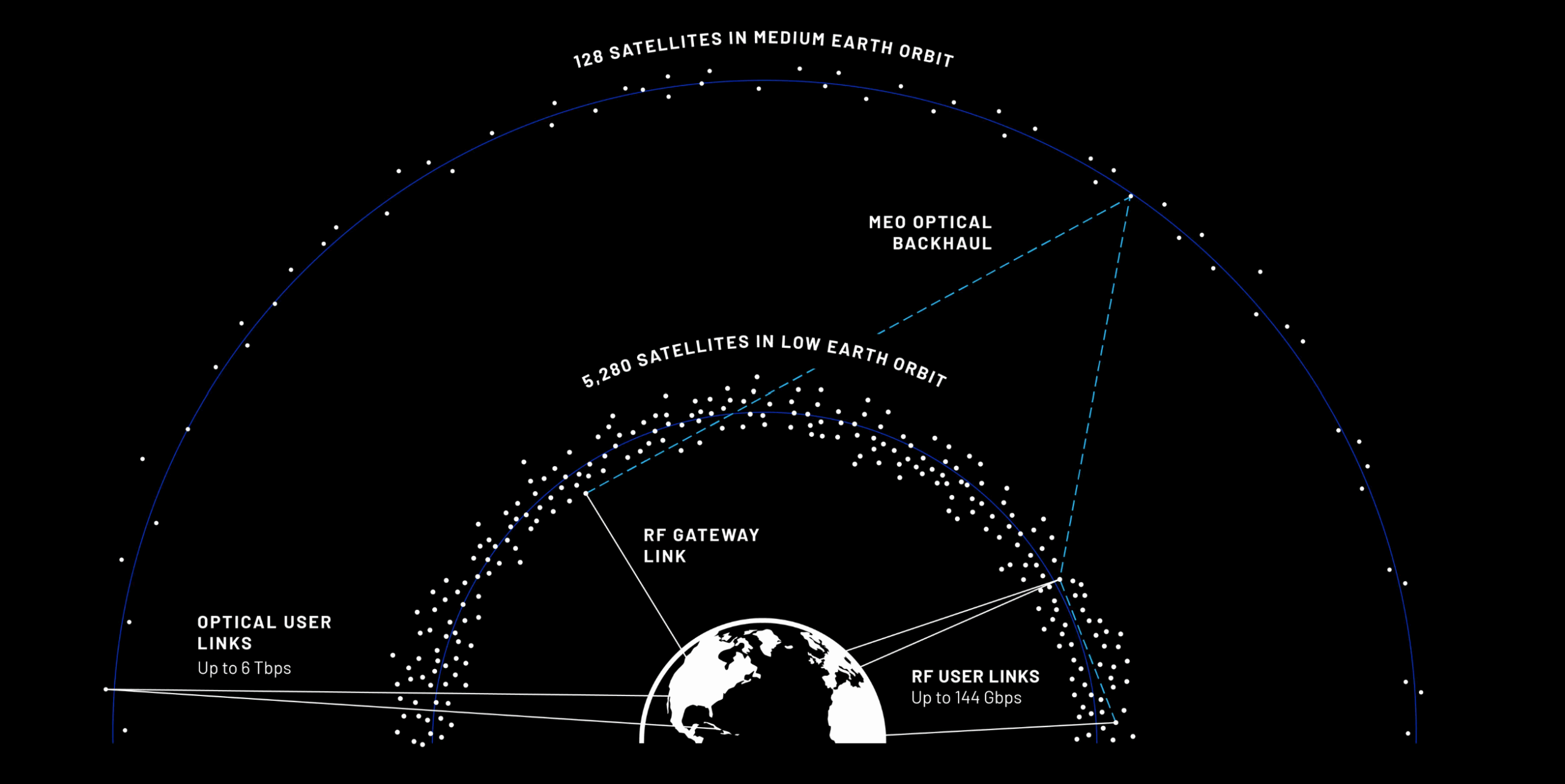
SpaceX has asked the Federal Communications Commission for authority to operate as many as one million satellites for orbital computing. Other companies, including Blue Origin and Cowboy Space, have outlined space-based data-center systems.
The attraction is constant solar power. Ground data centers consume large amounts of electricity and require extensive cooling. Operators argue that orbital facilities could capture sunlight almost continuously while moving computing infrastructure away from crowded land and strained power grids.
Yet constant sunlight dictates where many satellites must fly. A dawn-dusk, sun-synchronous orbit keeps a spacecraft near the boundary between illuminated and dark parts of Earth. Unlike constellations spread across many planes, a huge concentration in related orbits could produce a bright, organized structure.
Samantha Lawler, an astronomer at the University of Regina, worked with colleagues to model several proposed systems. Their visualizations suggest visible satellites could outnumber stars and sweep overhead twice daily.
“[The ring] would pass overhead at the same time every night,” Lawler said. “That means its effect would be worse during winter time than the summer time.”
Near the equator, some proposed patterns could resemble an X. Farther north or south, observers might see separate bands rising during morning and evening twilight.
The modeling relies on public filings rather than final spacecraft designs. It has not undergone peer review, leaving the exact brightness uncertain. The concern remains that enormous constellations in related orbits would concentrate reflected sunlight into predictable regions of the sky.
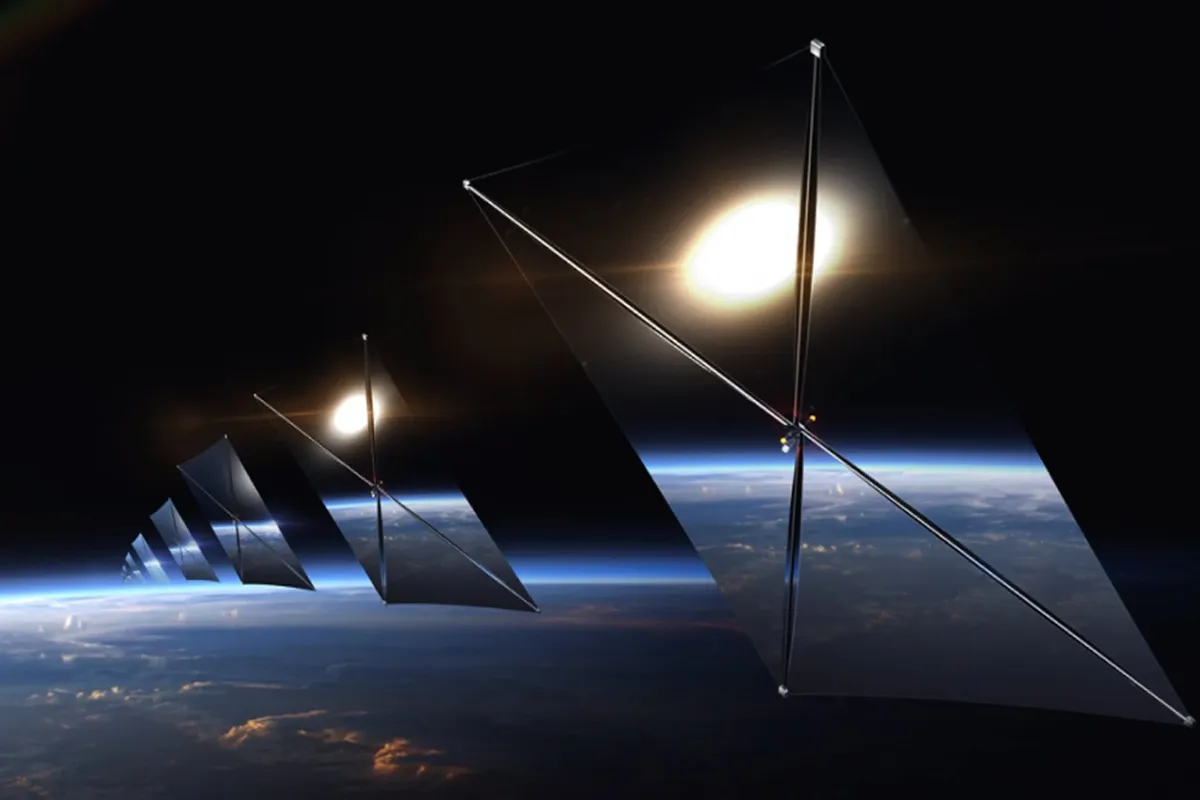
Reflect Orbital has proposed 50,000 mirror satellites that would redirect sunlight after dusk. The company says the service could extend solar generation, illuminate work sites and assist disaster response.
On July 9, 2026, the FCC authorized the company’s Eärendil-1 demonstration mission. The spacecraft would carry an 18-by-18-meter reflector and create a beam about 5 kilometers wide on the ground.
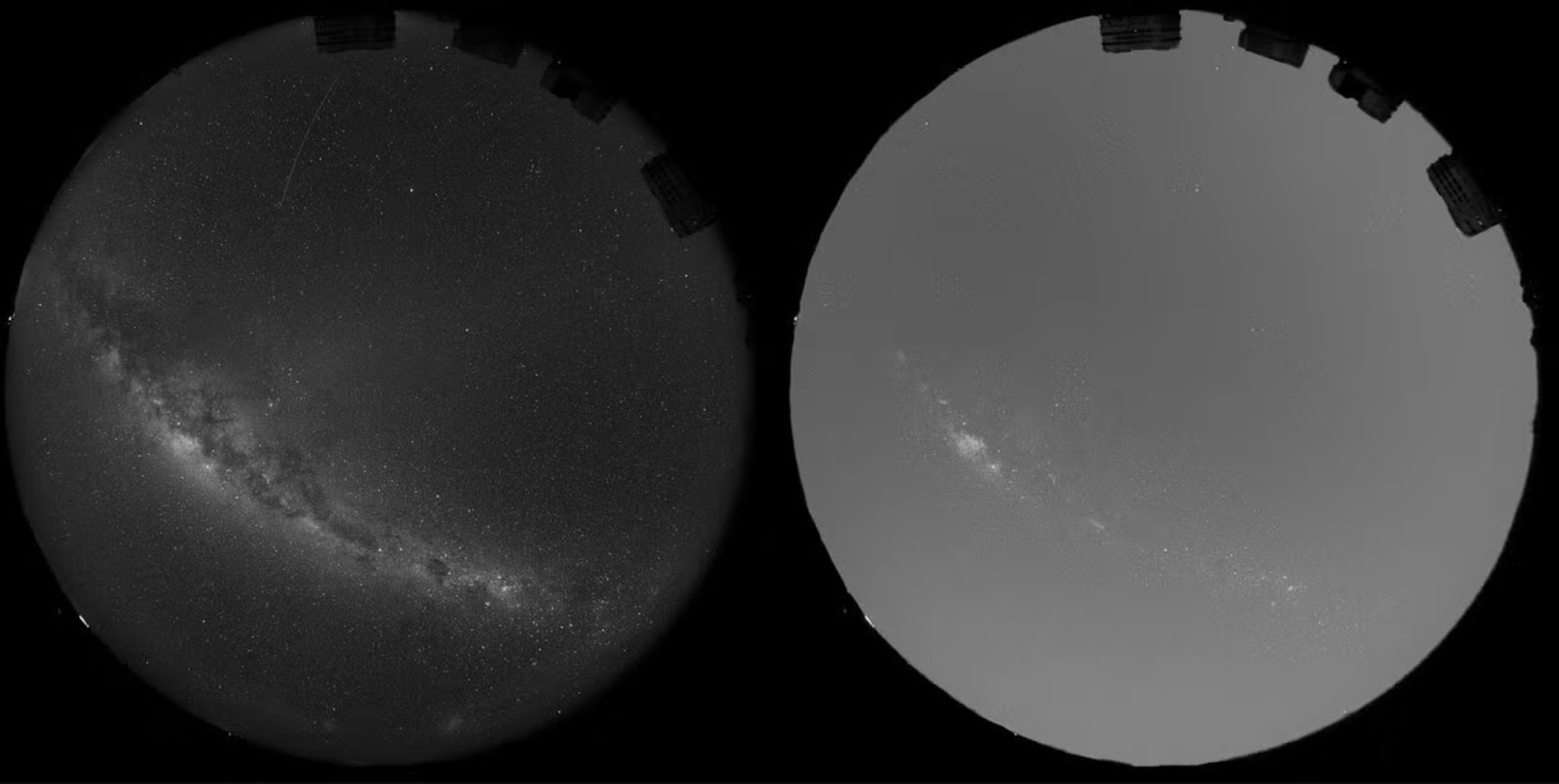
The full constellation would be far more consequential. European Southern Observatory modeling found that 50,000 mirrors could make the overall night sky three to four times brighter. Each satellite could appear about as bright as Venus when it was not directing its beam toward an observer.
The scattered glow would not vanish when the spacecraft dropped below the horizon. Lawler said their light could continue brightening the atmosphere for up to two hours, similar to lingering twilight after sunset.
That matters because twilight is vital for finding near-Earth asteroids and observing objects near the sun’s apparent position. Bright trails and elevated background light can erase faint targets or reduce usable time on expensive telescopes.
“We could do a lot less science for the same cost, and many science cases, including the search for dangerous near Earth asteroids, would be seriously compromised,” Lawler said.
The American Astronomical Society opposed the Reflect Orbital authorization. It warned that reflected sunlight could harm sensitive instruments, distract pilots and drivers, or endanger people looking through some telescopes.
The FCC said optical astronomy falls outside the rules governing its review. Astronomers argue that this leaves a regulatory gap because no other American agency routinely evaluates satellite applications for effects on the visible night sky.
“The FCC is the only agency that’s regulating American satellite launches,” Lawler said. “But if the FCC says that this is not their problem, then whose problem is it?”
Reflect Orbital says it is commissioning independent research, measuring possible effects and consulting the scientific community. Astronomers remain doubtful that a vast mirror network could operate without overwhelming observations.
“If we have mirrors in orbit, astronomy is over,” Lawler said.
Orbital data centers also carry environmental costs beyond light pollution. Space does not cool computers automatically. With no surrounding air or water to carry heat away, spacecraft must release waste heat through large radiators, potentially filled with circulating fluids such as ammonia.
Launching those computers, solar arrays and radiators would require repeated heavy-lift rocket flights. Rocket exhaust deposits carbon dioxide, soot and other compounds at altitudes where their effects can differ from pollution near the ground.
Hardware also faces radiation, which degrades solar panels and can alter stored computer data. Failed equipment would be difficult to repair. Satellites eventually re-entering the atmosphere could release metals and other materials whose environmental effects remain uncertain.
More spacecraft would increase collision risks in already crowded orbital regions. A major impact could create debris that strikes other satellites, producing a cascade known as Kessler syndrome.
Environmental organizations have asked federal regulators to conduct broader reviews of orbital data-center proposals. They argue that applications have not fully addressed emissions, re-entry pollution, light contamination or the cumulative effects of launching constellations containing hundreds of thousands of spacecraft.
These proposals force governments to weigh computing capacity and solar power against astronomy, orbital safety and atmospheric effects before constellations reach enormous scale.
Independent brightness tests of demonstration satellites could give regulators firmer evidence than company projections alone. Environmental reviews could also account for launches, cooling hardware, failures and re-entry instead of treating orbital operations as pollution-free.
Clear international rules may determine whether the night sky remains a shared natural environment or becomes infrastructure controlled by a small number of companies. Once hundreds of thousands of bright spacecraft are deployed, reversing their effect would be far harder than evaluating it beforehand.
The original story “Millions of planned satellites could create a bright artificial ring around Earth making the night sky 4 times brighter” is published in The Brighter Side of News.
Like these kind of feel good stories? Get The Brighter Side of News’ newsletter.
The post Millions of planned satellites could create a bright artificial ring around Earth making the night sky 4 times brighter appeared first on The Brighter Side of News.