Machines can now recognize faces, read signs, and guide cars through busy streets. Yet even the most advanced systems still struggle with a simple challenge. Changing light can confuse them. A bright headlight or a deep shadow can blur details that humans see with ease.
A new study led by researchers at Penn State offers a promising solution. The team has developed a tiny device that adjusts to light much like the human eye. Their findings suggest that future cameras and robots could see more clearly in complex environments.
The breakthrough centers on a component called a photomemristor. This small device can sense light and store information at the same time. More importantly, it can change how it responds based on its surroundings.
Artificial vision systems rely on sensors and algorithms to interpret the world. These systems often perform well under stable lighting. However, real environments rarely stay consistent.
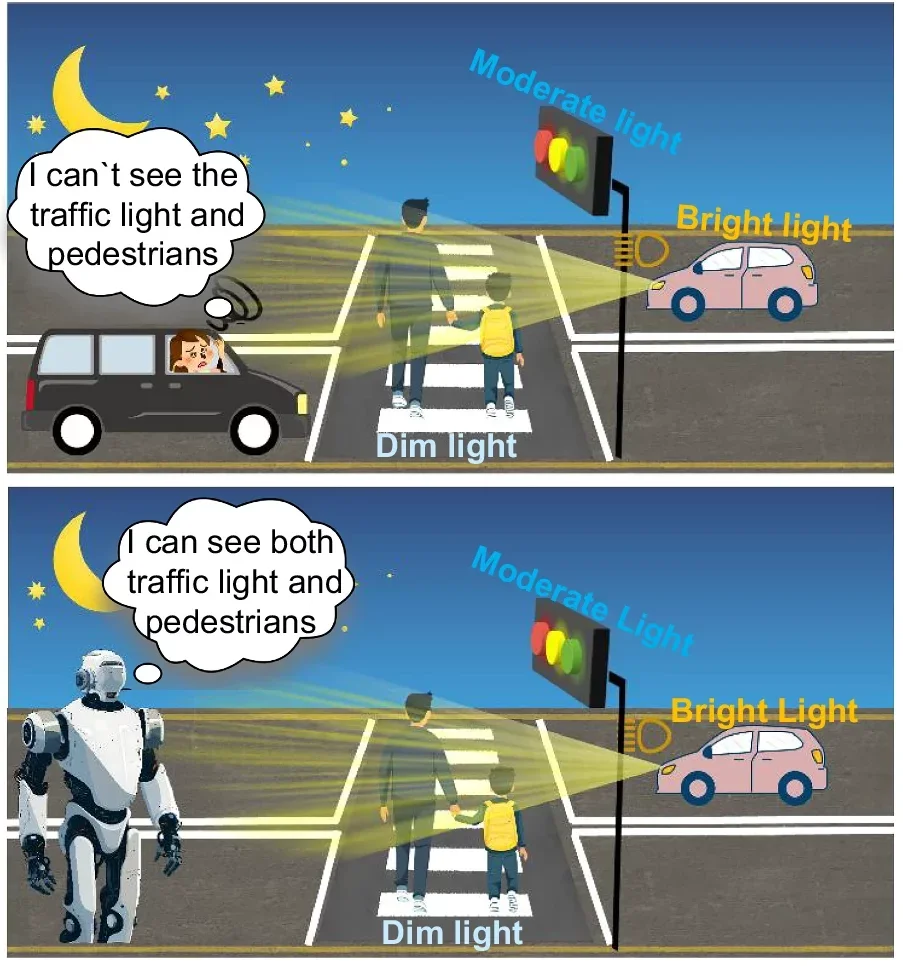
A nighttime road offers a clear example. A dark sky surrounds bright headlights and streetlights. For a human, the eye quickly adjusts. For a machine, this mix can overwhelm its sensors.
“Self-driving cars are exposed to a mixture of light levels in use,” said Larry Cheng, associate professor at Penn State. “It can be difficult for an artificial optical system to distinguish details, like the glow of a red light, in these mixed lightning conditions.”
Traditional systems are usually tuned for a single lighting condition. This limits their ability to adapt when brightness changes suddenly.
The human eye solves this problem through a delicate balance. Specialized cells called rods and cones respond differently to light.
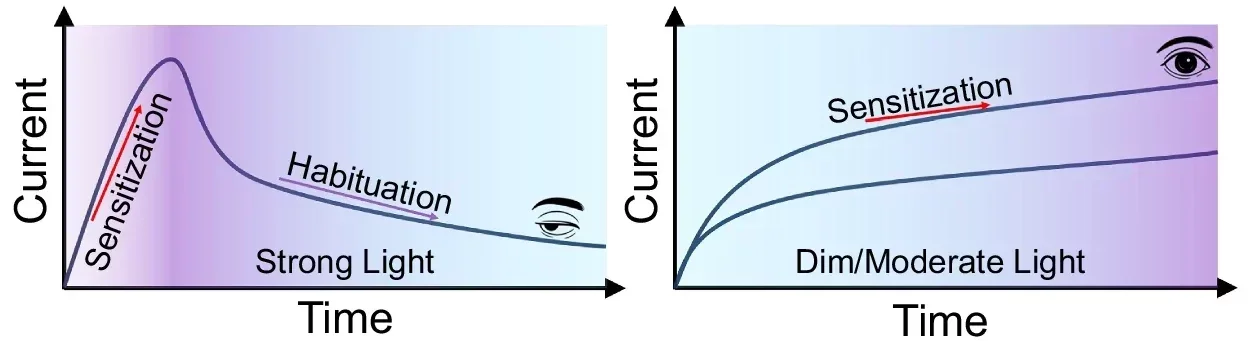
In dim settings, rods help detect faint details. In bright light, these cells temporarily lose sensitivity while cones take over. This shift allows clear vision across a wide range of conditions.
The research team aimed to recreate this behavior in a machine. Instead of relying on complex software, they turned to materials that respond naturally to light.
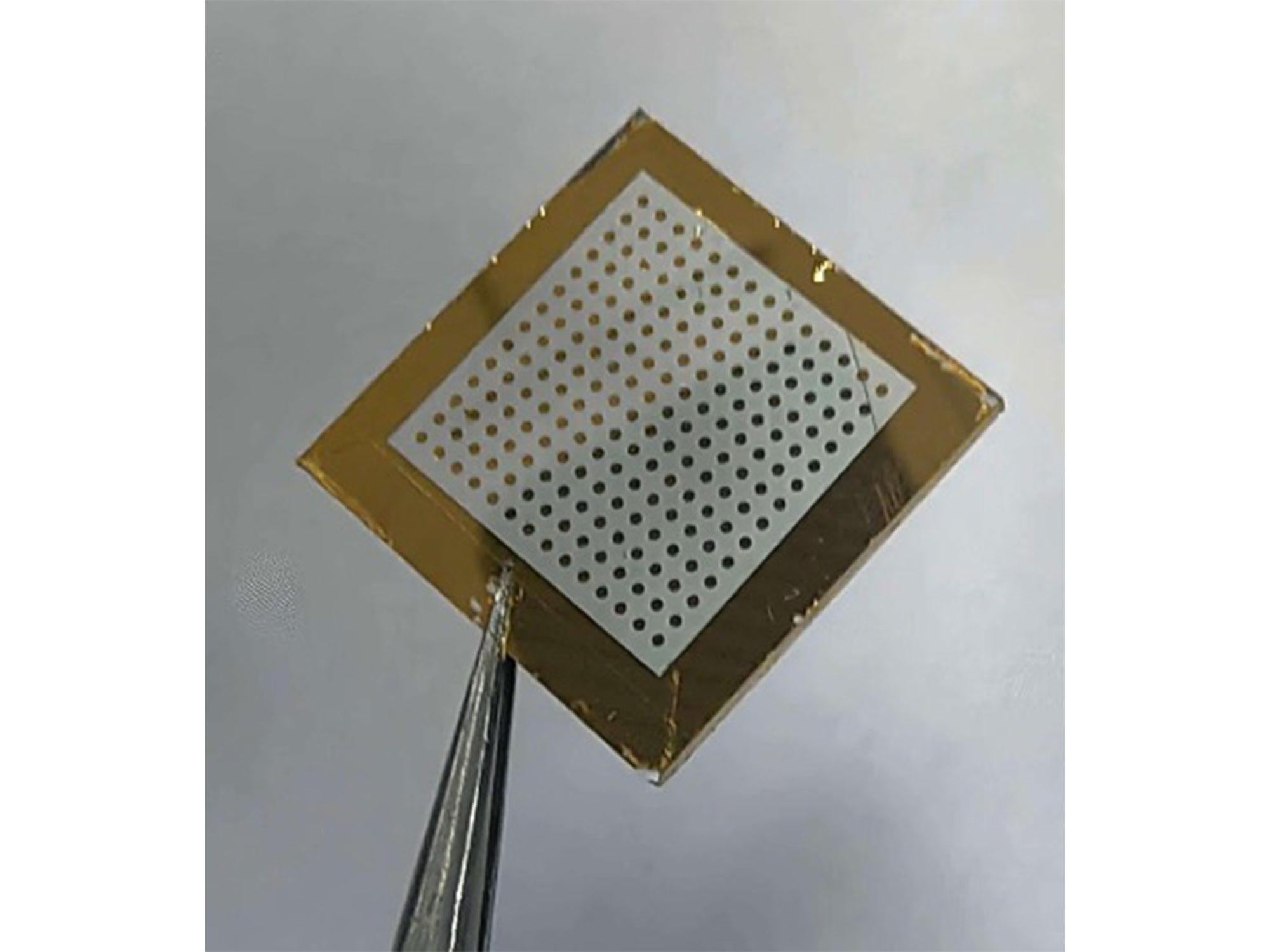
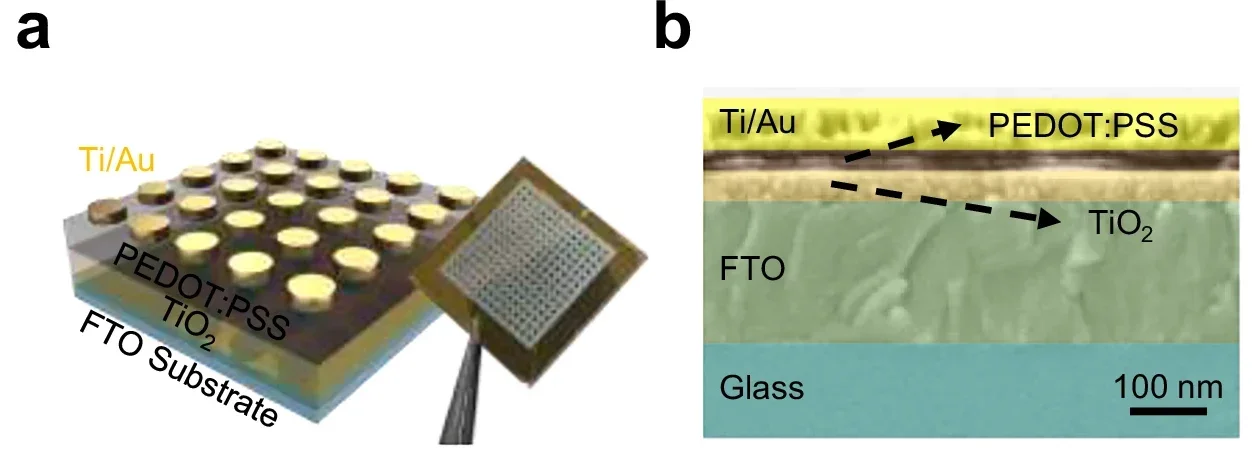
Their design uses two main components. One is titanium oxide, a compound that captures light and converts it into an electrical signal. The other is a flexible polymer known as PEDOT:PSS.
Together, these materials create a system that adjusts itself without external control.
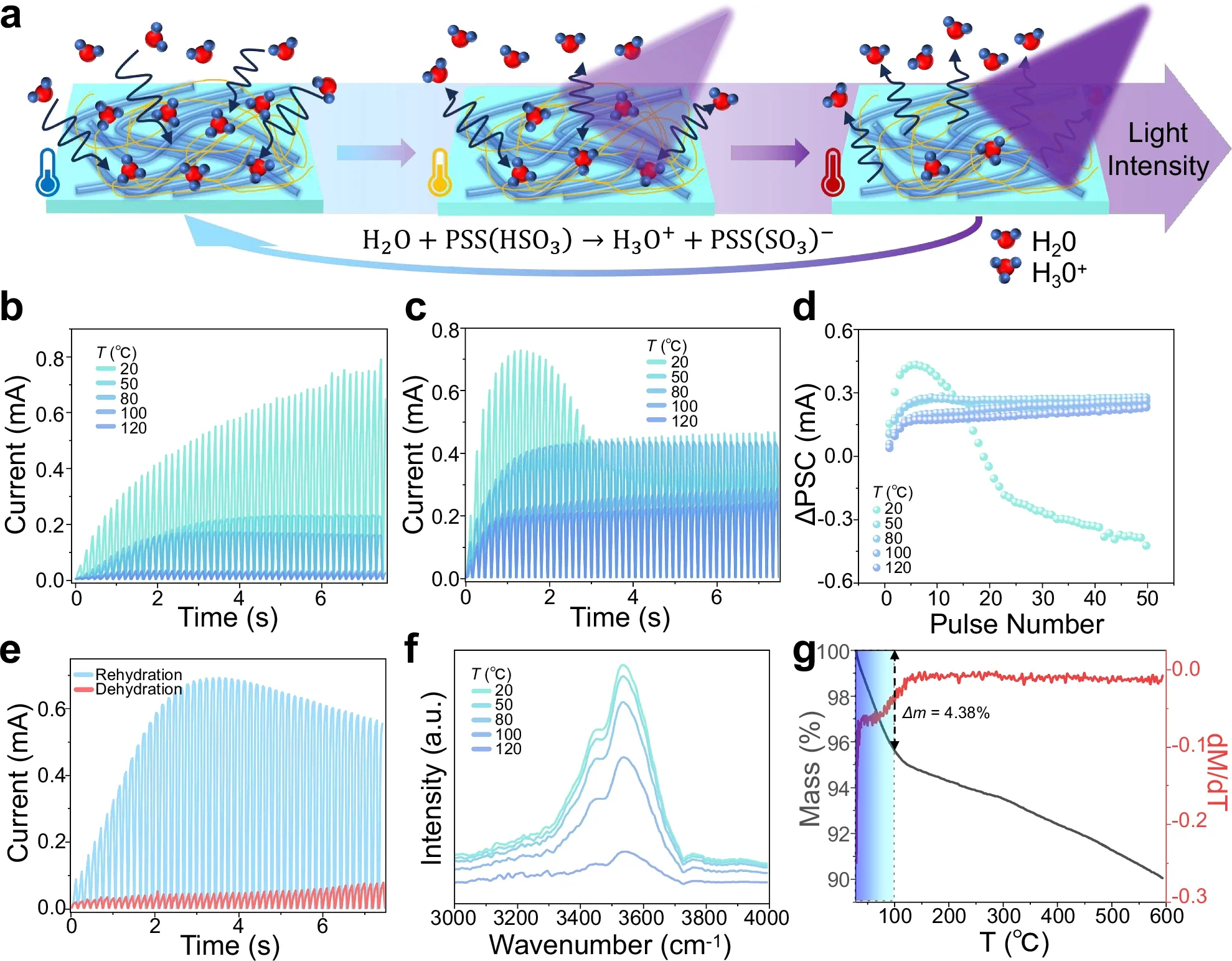
The key to the device lies in how it interacts with water. The polymer layer can absorb moisture from the air or release it depending on light levels.
In darker conditions, the material absorbs water. This increases its electrical conductivity and boosts sensitivity. The device becomes better at detecting faint signals.
In bright conditions, the opposite happens. Heat from the light drives water out of the material. This reduces conductivity and lowers sensitivity.
“This key design difference allows us to dynamically adapt to changing light conditions,” Cheng said. “By mimicking the way the eye works, we can create photomemristors that work much more reliably.”
This process happens quickly and automatically. The device adjusts in seconds, without the need for additional programming.
To evaluate the new design, researchers exposed the devices to different levels of ultraviolet light. The results showed strong and consistent performance.
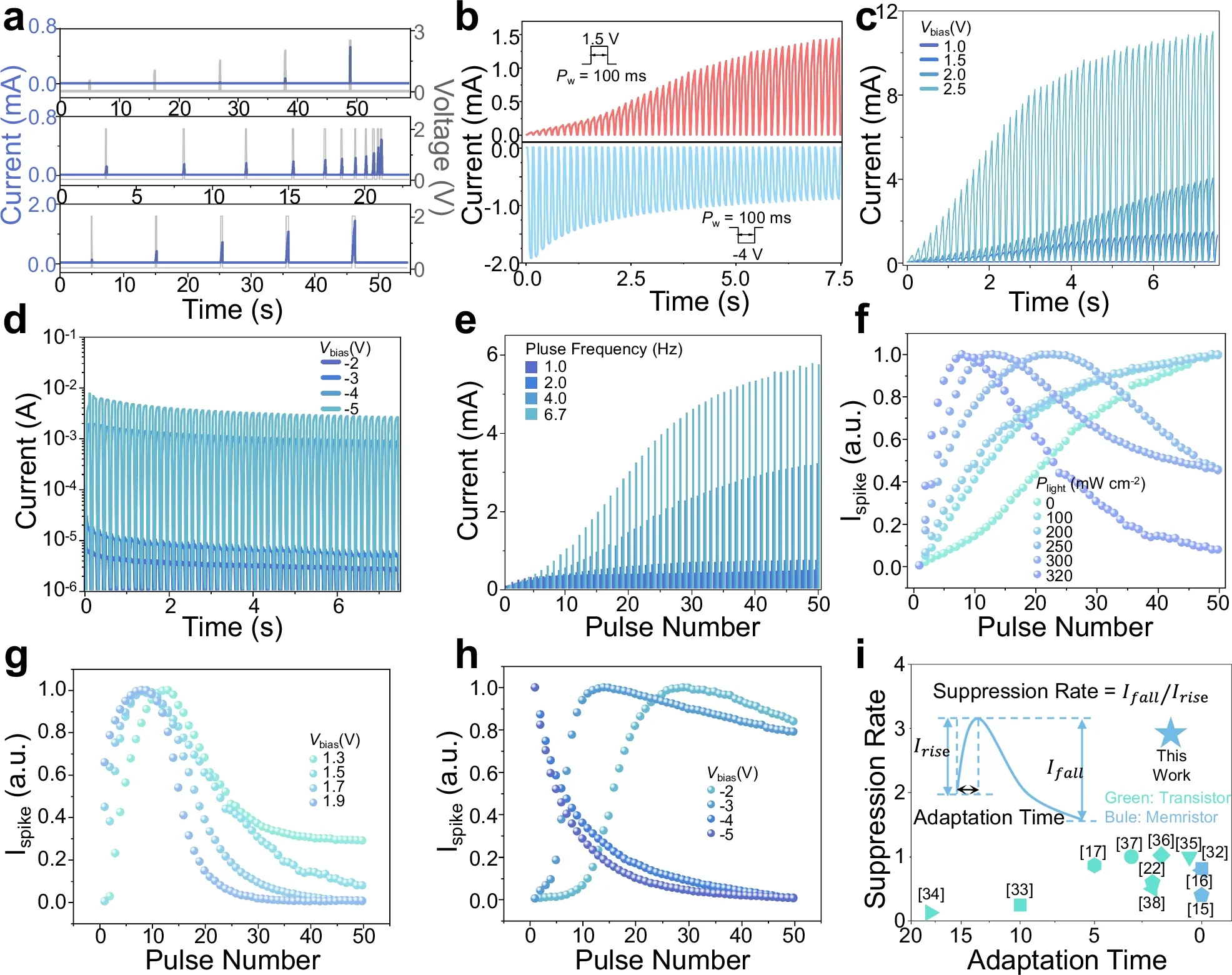
The photomemristors accurately measured light intensity across a wide range of conditions. They also remained stable under varying humidity levels, which is critical for real-world use.
Each device is extremely small, measuring about half a millimeter across. Despite its size, it can be combined with others to form larger sensing systems.
By arranging multiple devices into an array, the team created a simple artificial vision system.
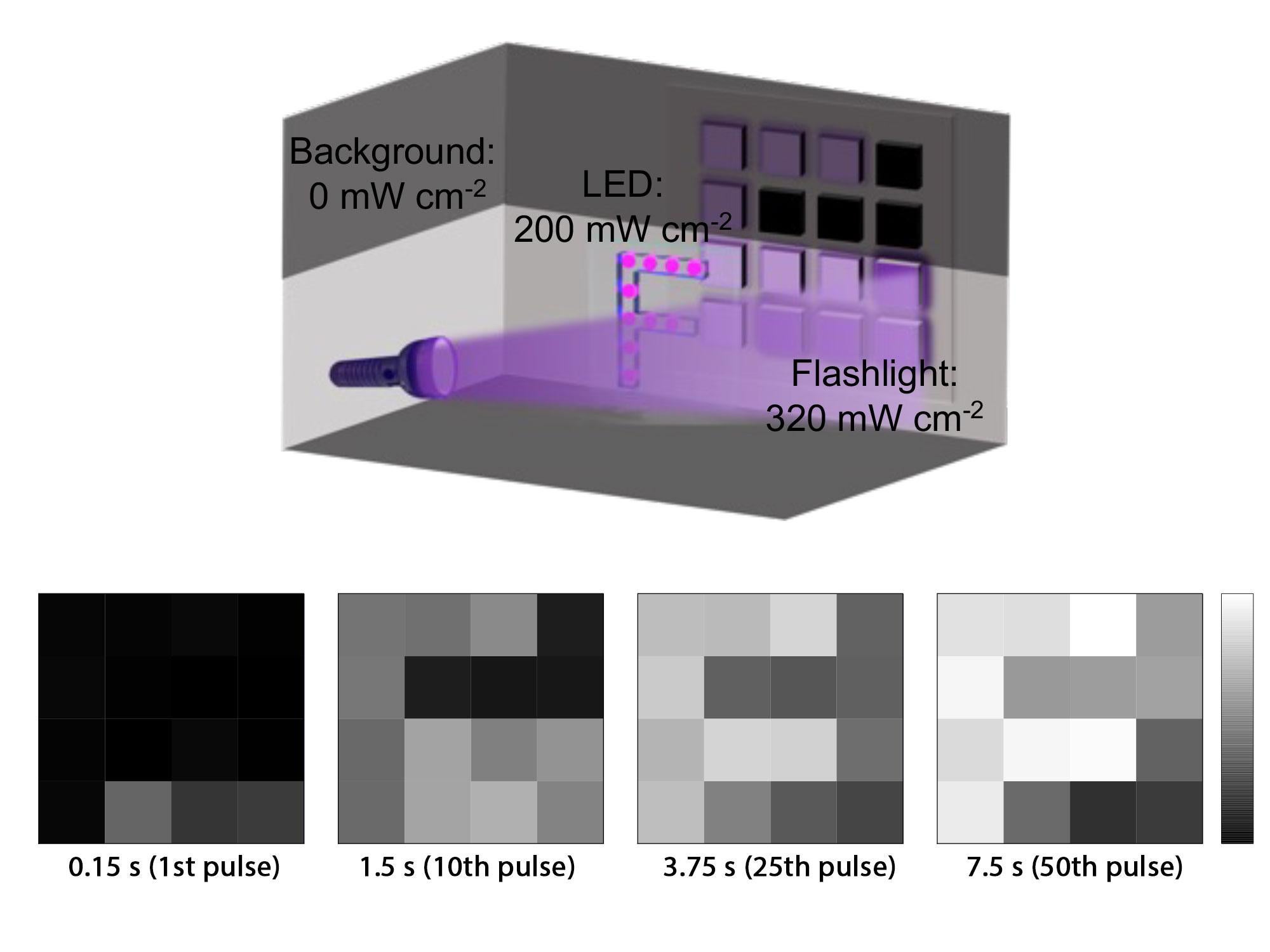
The researchers paired a four-by-four array of photomemristors with a neural network. This setup mimics how the brain processes visual information.
To test the system, they displayed a pattern of lights shaped like the letter “F.” The background brightness varied from dim to intense.
At first, the system struggled to identify the pattern. However, as the devices adapted to the lighting, accuracy improved quickly.
After just seven training rounds, the system identified the letter with more than 95 percent accuracy. This result highlights the benefit of adaptive sensing.
“Our eyes are more adaptive to differing lighting conditions, but that adjustment can take 20 to 30 minutes,” Cheng said. “These photomemristors can adapt to lighting conditions much faster.”
One of the most important advantages of this technology is speed. Traditional systems often rely on software corrections that take time and energy.
The new approach builds adaptation directly into the hardware. This reduces the need for extra processing and allows faster responses.
The device also mimics how neurons handle information. It can strengthen or weaken its response based on repeated signals. This behavior supports learning and pattern recognition.
As a result, machines using this technology could process visual data more efficiently than before.
The impact of this development could extend across many fields. In autonomous vehicles, improved vision could enhance safety. Cars could better detect objects in shadows or glare.
Robots working in factories or warehouses could also benefit. They often operate in environments where lighting changes quickly.
The technology may even help people. Researchers believe it could support new tools for those with visual impairments. Artificial optical systems could assist in interpreting the environment.
“In the far future, we could see this technology being applied to help visually impaired persons see with the help of artificial optics,” Cheng said.
The team is also exploring ways to combine visual sensing with touch. This could lead to systems that interpret multiple types of information at once.
The researchers plan to expand their work into larger and more complex systems. They aim to integrate multiple sensors into a single platform.
They also hope to reduce power use, making the technology more efficient for everyday applications.
A provisional patent has already been filed, signaling strong interest in future development.
The study represents a step toward machines that perceive the world more like humans. By blending material science with biology, the team has opened a new path for artificial vision.
This research could reshape how machines interact with the world. By improving how systems handle changing light, it may reduce errors in critical applications such as self-driving vehicles. Safer navigation in complex environments could save lives and increase public trust in automated systems.
In robotics, adaptive vision could allow machines to work more effectively in unpredictable settings. This may improve efficiency in manufacturing, logistics, and service industries. Robots could operate with greater independence and accuracy.
The technology also offers benefits for energy efficiency. Because adaptation occurs within the device itself, systems may require less computational power. This could lower energy use in large-scale AI systems.
In healthcare, advanced visual sensing could improve diagnostic tools and assistive devices. For individuals with vision loss, future systems may provide real-time support in understanding surroundings.
Research findings are available online in the journal Nature Communications.
The original story “New artificial eyes could bring human-level vision to robotics and self-driving cars” is published in The Brighter Side of News.
Like these kind of feel good stories? Get The Brighter Side of News’ newsletter.
The post New artificial eyes could bring human-level vision to robotics and self-driving cars appeared first on The Brighter Side of News.