A drone spinning above the ground can become difficult to separate from the scenery behind it. Northwestern University engineers have turned that visual weakness into the defining feature of a new aircraft called Phantom Twist.
The drone does not rely on camouflage paint, transparent shells or optical systems that bend light. Instead, its entire body rotates as fast as 25 times per second. At that speed, the human eye no longer sees a clear machine.
What remains is a pale, ghostlike blur.
The design uses motion blur, the familiar effect that makes a fast fan or propeller appear transparent. By spreading the drone’s components apart and keeping the full structure in motion, the team reduced the sharp edges and stationary forms that normally make a flying robot easy to notice.
Northwestern researchers recently presented the work at the Robotics: Science and Systems 2026 conference in Sydney, Australia.
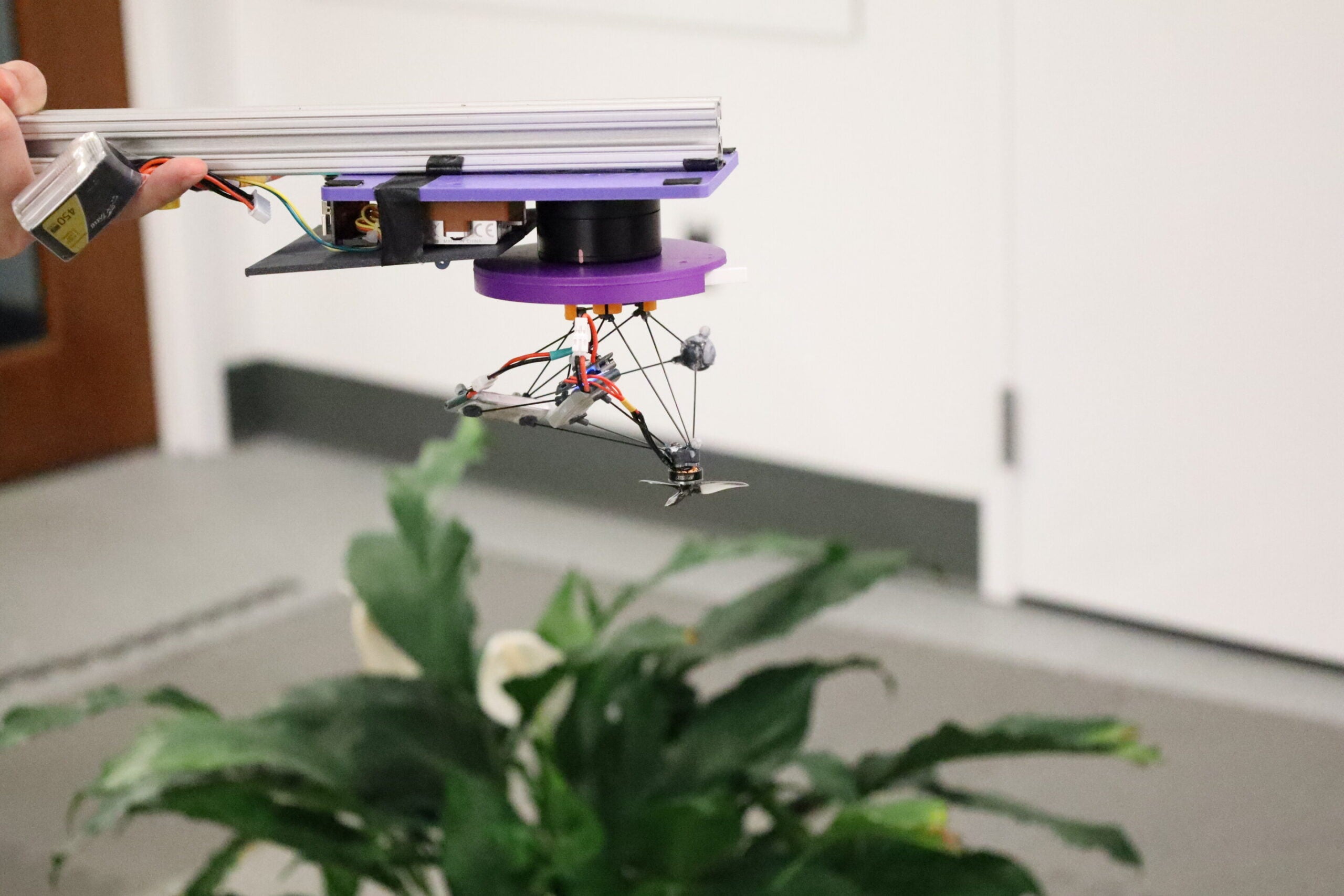
“Most efforts to hide drones focus on making them look like their surroundings,” said Northwestern’s Michael Rubenstein, who led the work. “Instead, we asked whether we could design the drone itself around the way humans perceive motion. This idea of low visibility through persistent motion is something few people have explored.”
Rubenstein is an associate professor of computer science and mechanical engineering at Northwestern’s McCormick School of Engineering.
The drone’s shape differs sharply from a conventional quadcopter. A standard model has four spinning propellers attached to a body that remains largely still. Even when the blades blur, the frame remains clearly visible.
Phantom Twist uses one motor and one propeller. The propeller rotates in one direction, while the rest of the drone turns in the opposite direction.
“For a typical quadrotor drone, the propellers are spinning, but the robot is stationary,” Rubenstein said. “So, you still see its body. For our drone, the whole thing is rotating, so there are no stationary parts.”
That continuous movement changes how the aircraft appears. Its batteries, circuit board, counterweight and other opaque pieces no longer hold fixed positions in a viewer’s field of vision. Instead, they sweep repeatedly across the background.
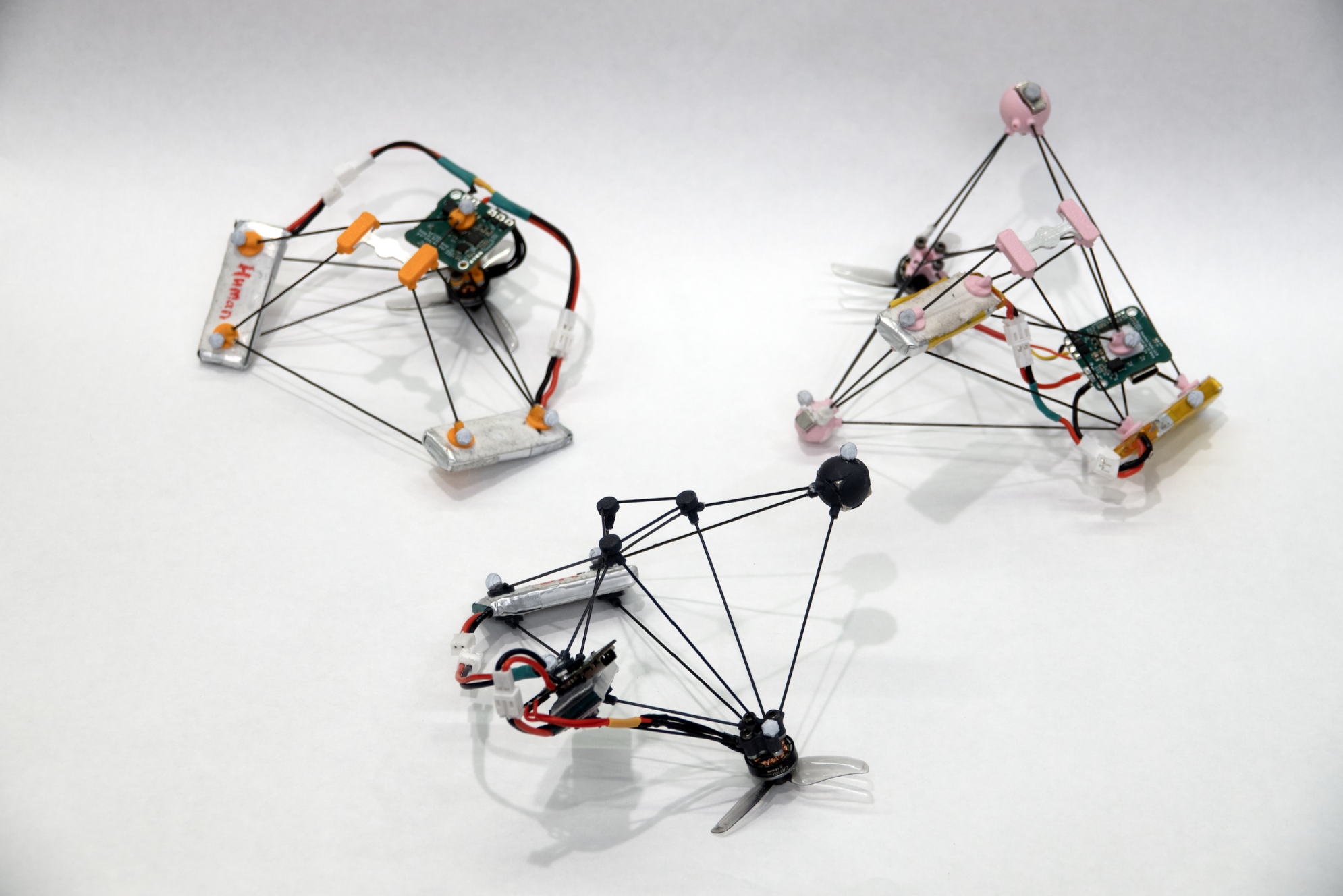
The engineers did not settle on the final arrangement through trial and error alone. They began with a computational model that generated about 20,000 possible drone configurations capable of stable flight.
Artificial intelligence and optimization algorithms then rearranged the major components. The process tested different positions for the motor, propeller, circuit board, counterweight and batteries.
The goal involved two competing demands. The drone had to remain stable enough to fly, but it also needed to appear faint from nearly every viewing direction.
After identifying promising configurations, the team simulated each one while it spun in flight. Those images were placed over 100 real-world backgrounds to test how well the drone blended into different scenes.
A perception model approximating human vision then scored each design. Configurations that remained obvious received higher visibility scores. Those that blended into the background received lower scores.
The researchers kept the 500 least visible designs. An optimization algorithm repeatedly shifted their components to reduce visibility even further.
“The design process was fully automated,” Rubenstein said. “Then, when we were confident that a drone met all our criteria, we built it.”
The final arrangement spreads the drone’s parts across different heights and angles. It also leaves large gaps between them.
Those gaps matter because closely packed components would overlap as the aircraft rotated, creating a darker and more recognizable shape. Separating the parts allows more of the background to remain visible through the spinning structure.
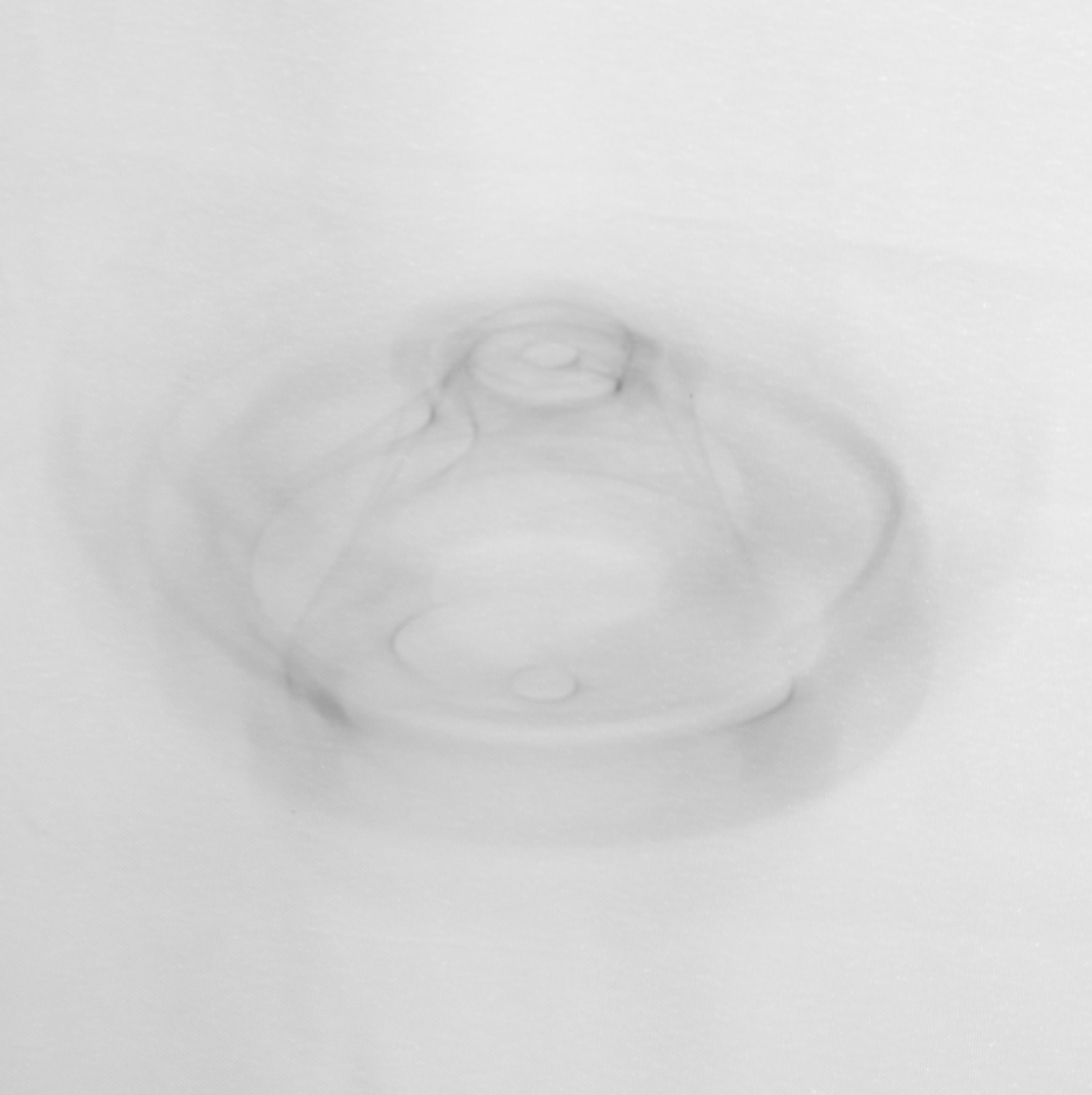
As the drone turns, its few solid components become visually averaged with whatever lies behind them. The aircraft appears more like a faint cloud than a defined object.
According to the team’s visibility metric, Phantom Twist is about 10 times less visually perceptible than a conventional quadcopter.
“The human eye takes time to accumulate signals, roughly analogous to the exposure time of a camera,” said Northwestern’s Emma Alexander, an assistant professor of computer science. “When an object spins quickly, we perceive it as blurring out and losing distinct features. Because this new drone is almost entirely transparent, its few opaque components are visually averaged with the background for an overall appearance of a slight haze.”
The project’s coauthors also include Northwestern assistant professor Sam Kriegman and postdoctoral researcher David Matthews. Jingxian Wang, a Ph.D. graduate from Rubenstein’s laboratory, and Chen Yu, a Ph.D. student in Kriegman’s laboratory, are the study’s co-first authors.
The drone is not truly invisible. Its wires and support rods can still be seen, especially under favorable lighting or from certain angles.
It also remains easy to hear. The propeller produces audible noise, meaning the aircraft could attract attention even when its shape becomes hard to distinguish.
Those limits separate Phantom Twist from fictional invisibility. The design reduces visual perception rather than eliminating every sign of the machine.
The researchers plan to explore more transparent materials and quieter propulsion systems.
A less noticeable aircraft could prove useful when the act of observation changes what is being observed. Drones used near nesting birds or other wildlife can cause animals to scatter or behave differently.
People also may change their actions when they see a drone overhead. That reaction can complicate surveys, inspections and other tasks intended to record normal conditions.
Phantom Twist could eventually support wildlife monitoring, wetland surveys and inspections of aging infrastructure with less visual disruption. Its main advance is not that it vanishes completely, but that it treats perception itself as an engineering constraint.
Rather than hiding a familiar drone after it has been built, the Northwestern team designed the machine around what the eye fails to resolve.
The original story “New Phantom Twist drone spins so quickly that it virtually disappears” is published in The Brighter Side of News.
Like these kind of feel good stories? Get The Brighter Side of News’ newsletter.
The post New Phantom Twist drone spins so quickly that it virtually disappears appeared first on The Brighter Side of News.

