Skin often shows damage only after deeper changes have already taken hold. Fine lines, thinning, and loss of strength appear late, long after the earliest shifts begin. New research suggests those first changes happen at a level far too small to see, hidden within the structure of collagen itself.
A study by researchers at Hiroshima University and international partners reveals that collagen begins to lose its internal organization before any visible damage appears. The findings point to a new way to detect early tissue changes, long before the skin shows clear signs of aging or injury.
Collagen forms the backbone of skin strength. It creates a dense, layered network that allows skin to stretch, bend, and return to shape. This network is not random. It follows a precise pattern, built from fibers that twist in a consistent direction.
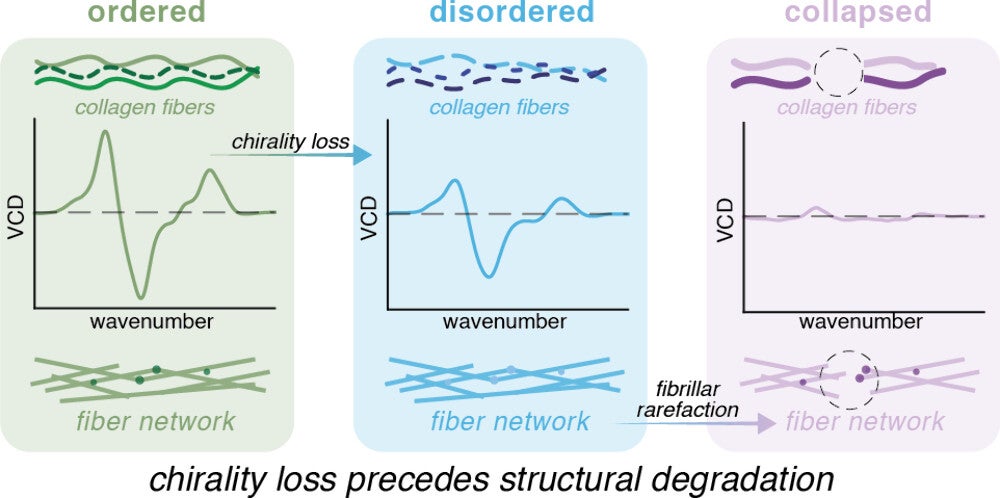
That twisting pattern is known as chirality, or structural handedness. When collagen fibers align with this pattern, they create a stable and flexible system. This organization supports both strength and movement.
“One way to think about our findings is that conventional imaging methods can show the ‘bricks’ of a collagen structure, but they may miss subtle changes in how those bricks are arranged,” said Ali Haider, a graduate research fellow at Hiroshima University. “It’s similar to detecting changes in the arrangement of words and sentences in a book before any pages appear damaged or missing.”
For years, scientists have relied on imaging tools that detect visible changes in collagen. These include thinning fibers or breaks in the network. However, those signs appear late in the process. By the time they show up, deeper changes have already taken place.
To uncover these early changes, researchers used a new combination of tools. They paired advanced optical imaging with techniques that measure how collagen interacts with light.
These methods included synchrotron radiation vacuum ultraviolet circular dichroism and multi dimensional quantum cascade laser vibrational circular dichroism. Together, they allowed scientists to examine both the presence of collagen and how well its structure remained organized.
The approach made it possible to study the same piece of tissue at multiple levels. Researchers could measure how much collagen existed while also tracking how well its internal structure held together.
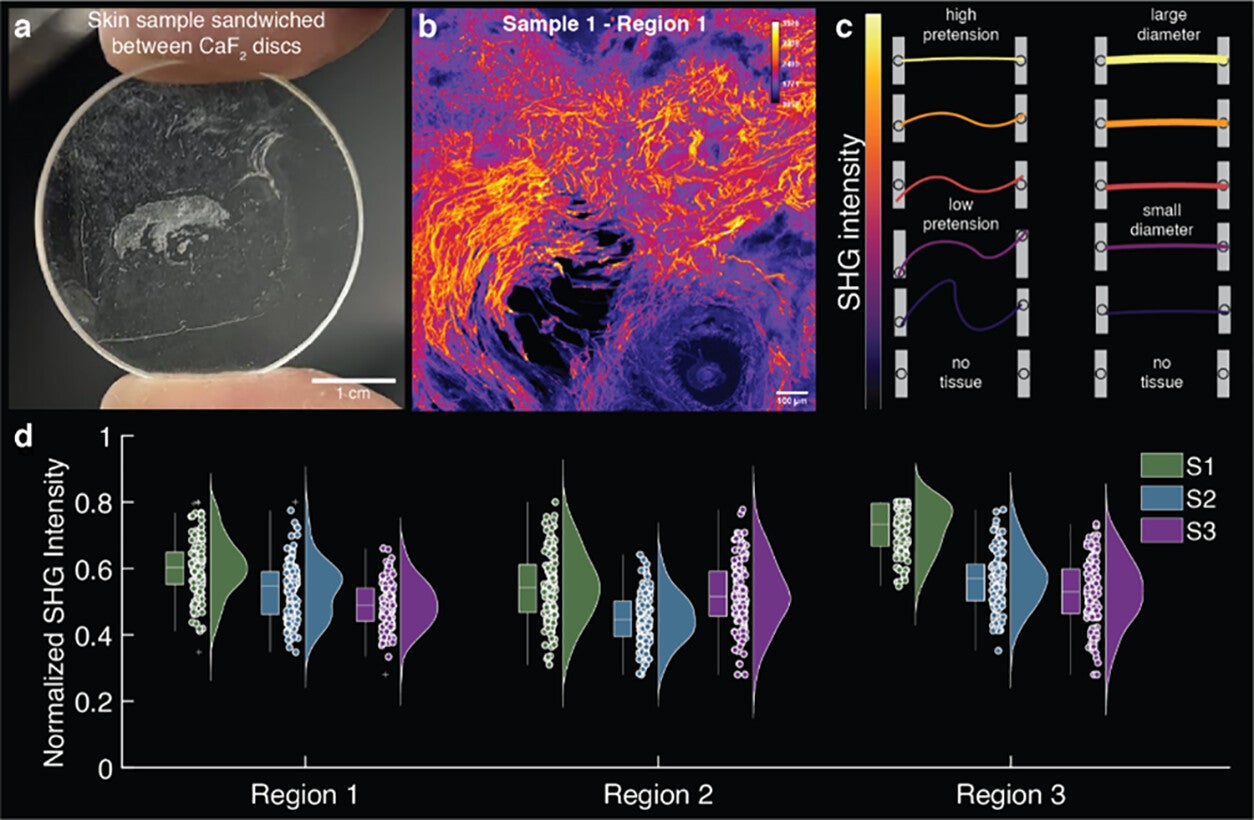
“The key message of this paper is that collagen should not be viewed only as a visible fiber network but as a hierarchical material whose function depends on organization across multiple length scales,” said Katsuya Inoue, a professor involved in the study. “Our study shows that advanced correlative methods can reveal changes in this hidden organization that are not apparent from morphology alone.”
The study analyzed human skin samples that showed no major visible damage. At first glance, collagen appeared intact across all samples.
However, deeper analysis revealed a different story. While collagen remained present, its internal organization had already begun to break down.
In the healthiest sample, collagen showed strong and consistent structural signals. The fibers worked together as a coordinated system.
In the second sample, the pattern became uneven. Some regions still showed strong organization, while others weakened. This suggested that the system was starting to lose coordination.
By the third sample, the changes were more severe. Collagen remained present, but its structure had become fragmented. Fibers no longer acted in unison.
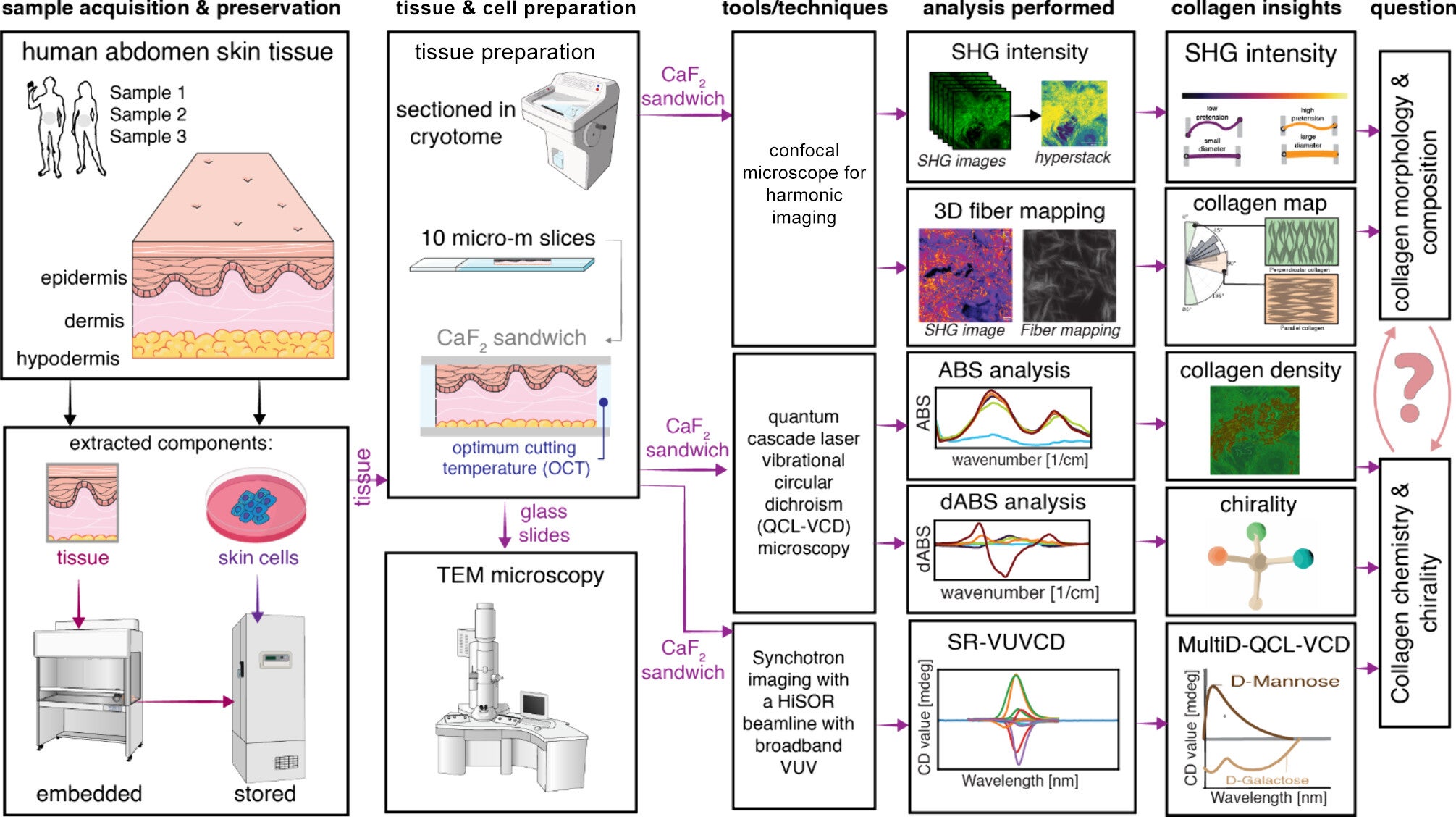
This finding is important. It shows that early tissue change does not begin with collagen loss. It begins with a loss of structural order.
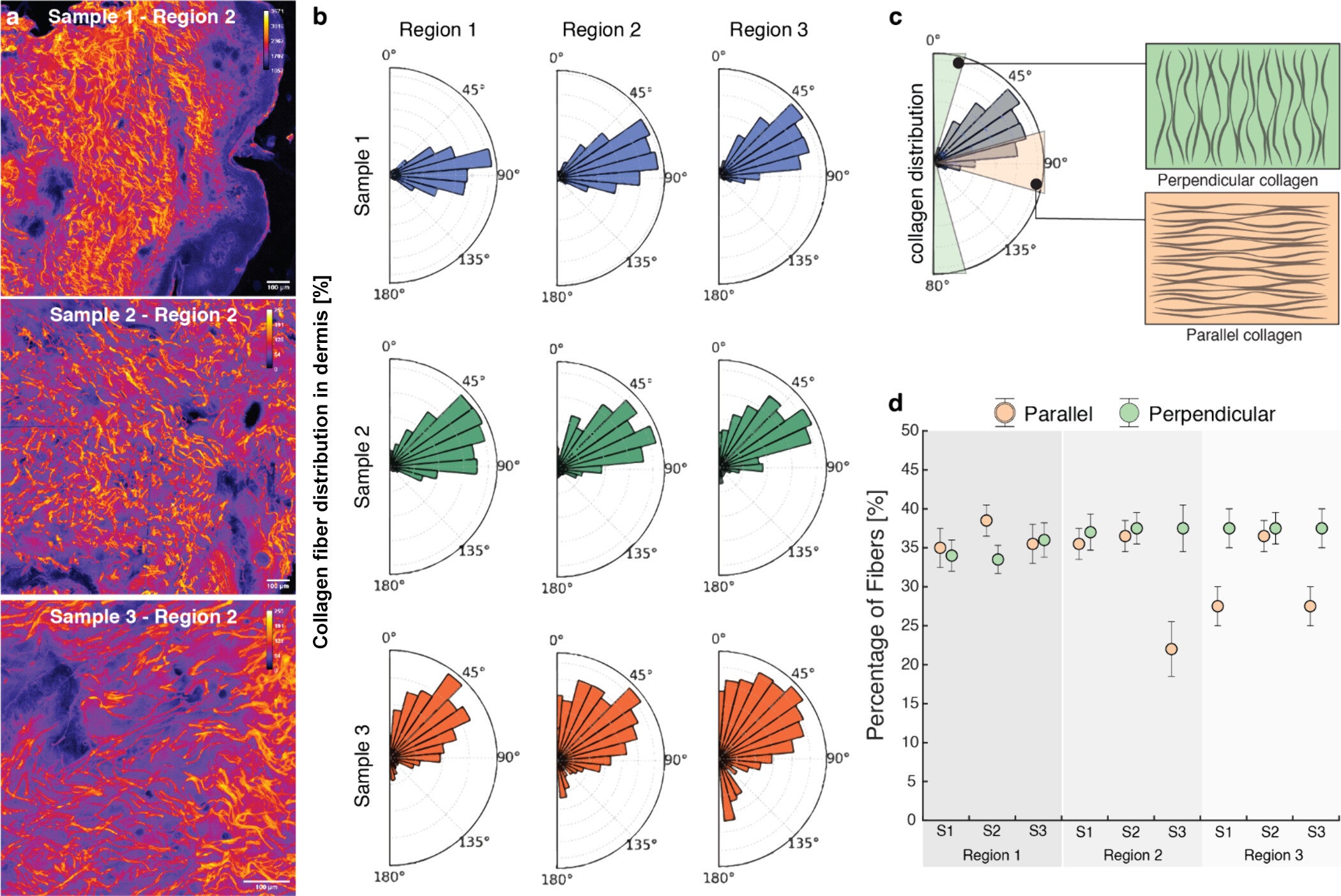
The research also tracked how collagen fibers were oriented. In healthy tissue, fibers are arranged in multiple directions. This balance allows skin to handle stress from different angles.
In the earliest sample, about 35 percent of fibers ran perpendicular to the surface, while about 37 percent ran parallel. This balance created a stable and flexible network.
In later samples, this balance began to shift. Certain directions became more dominant, while others weakened. In the most altered sample, one direction accounted for nearly 45 percent of fibers, while another dropped below 30 percent.
This imbalance can affect how skin responds to pressure and movement. A less balanced network may become weaker and less adaptable.
Another key change involved how fibers crossed and interacted. In early stages, collagen fibers intersect in a controlled way. These crossings help distribute force and maintain stability.
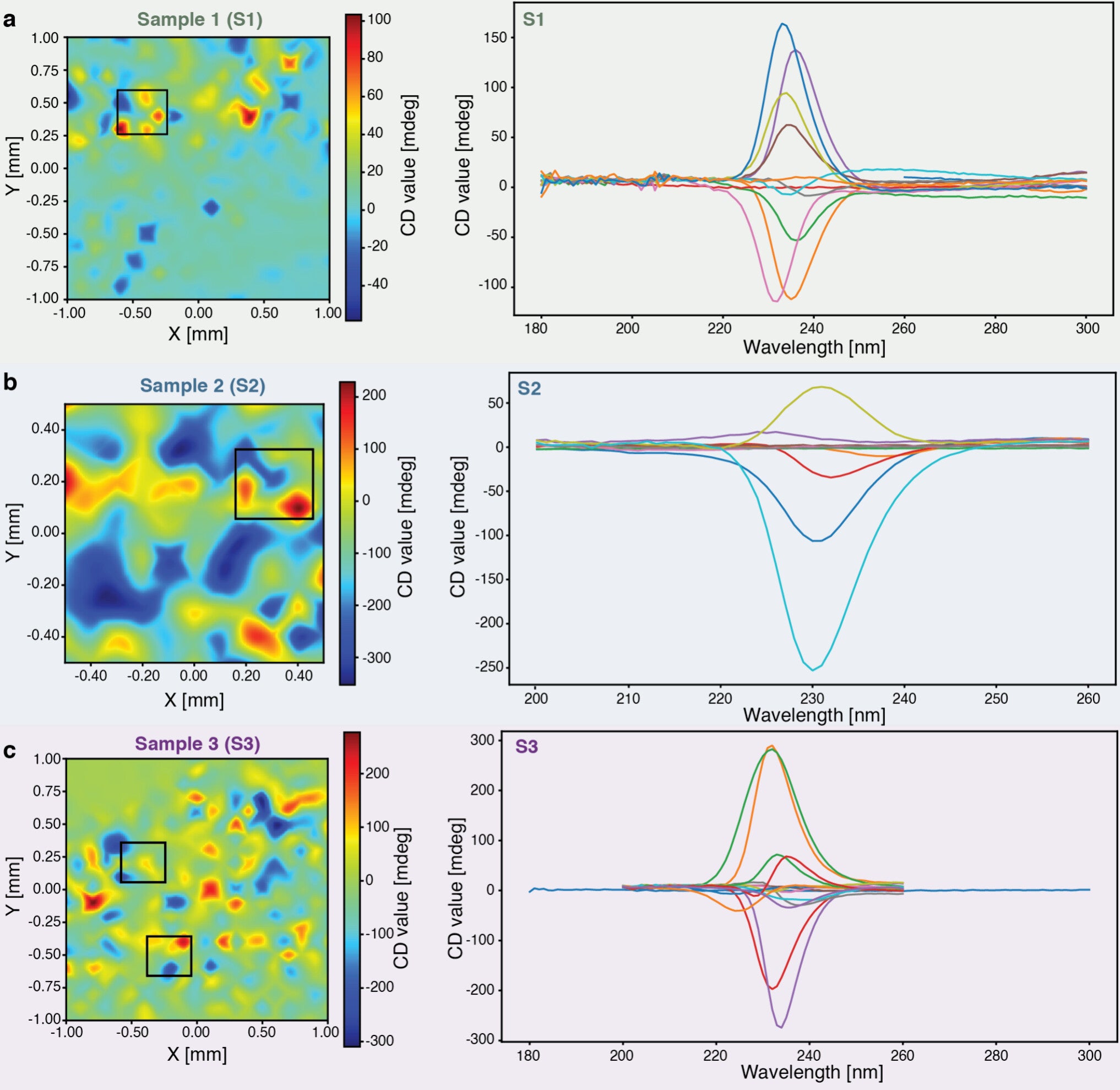
As structural order declined, the number of crossings increased sharply. The network became more tangled, a state researchers describe as microentanglement.
At first, this may help stabilize the tissue. Over time, however, it can lead to breakdown. The network becomes less efficient and more prone to damage.
The study found that crossing density increased nearly threefold between early and intermediate samples. This suggests that entanglement is a major step in the transition from healthy to damaged tissue.
One of the most striking findings is that collagen can remain in place even as its function declines.
Infrared measurements showed that collagen protein was still present across all samples. However, the signals that reflect structural coordination weakened significantly.
In some areas, collagen appeared normal in standard imaging but showed reduced structural organization when analyzed with advanced methods.
This mismatch highlights a key limitation in current diagnostics. Traditional tools may miss early damage because they focus on quantity rather than organization.
The findings suggest a new sequence for how tissue changes over time. First, collagen loses its internal coordination. Next, fibers become more tangled and less balanced. Finally, the network begins to break down and lose material.
This model challenges the idea that tissue damage begins with visible loss. Instead, it shows that deeper changes happen first, long before the surface reveals them.
By detecting these early shifts, researchers may be able to identify problems sooner and intervene earlier.
This work could change how scientists and doctors assess tissue health. By focusing on structural organization, it may become possible to detect damage before it becomes visible.
In medicine, this approach could improve early diagnosis of skin conditions and guide treatments that aim to preserve tissue strength. It may also support better monitoring of wound healing, allowing doctors to track recovery at a deeper level.
The findings could influence the design of new biomaterials. Engineers may use this knowledge to create materials that mimic natural collagen structure more closely, improving performance in medical implants and regenerative therapies.
In research, the study provides a framework for examining other tissues. Many biological systems rely on precise organization across multiple scales. Understanding how this organization breaks down could lead to advances in fields beyond dermatology.
Ultimately, this approach shifts attention from what is visible to what lies beneath. It offers a way to detect change earlier, respond sooner, and better understand how living systems maintain their strength.
Research findings are available online in the journal ACS Nano.
The original story “New study finds that skin damage begins before visible aging appears” is published in The Brighter Side of News.
Like these kind of feel good stories? Get The Brighter Side of News’ newsletter.
The post New study finds that skin damage begins before visible aging appears appeared first on The Brighter Side of News.