For centuries, homing pigeons have amazed people with their ability to return home across vast distances. Even when released in unfamiliar places, these birds often find their way back with remarkable precision. Scientists have long known that pigeons and many other birds rely on Earth’s magnetic field as part of their navigation system. Yet one major question remained unanswered: How do they actually sense it?
A new study suggests the answer may lie in an unexpected place. Instead of the eyes, beak or brain, researchers have identified iron-rich immune cells in the liver that appear to act as part of an internal magnetic compass.
The discovery offers what scientists describe as the strongest evidence yet for a previously unknown mechanism of magnetic sensing in animals. It also reveals a surprising connection between the immune system and perception.
“We didn’t expect immune cells to act like sensors for magnetic fields at all. Our results reveal a previously unknown mechanism for magnetic perception in animals,” said Prof. Christian Kurts, Director of the Institute of Molecular Medicine and Experimental Immunology at the University Hospital Bonn and one of the study’s co-senior authors.
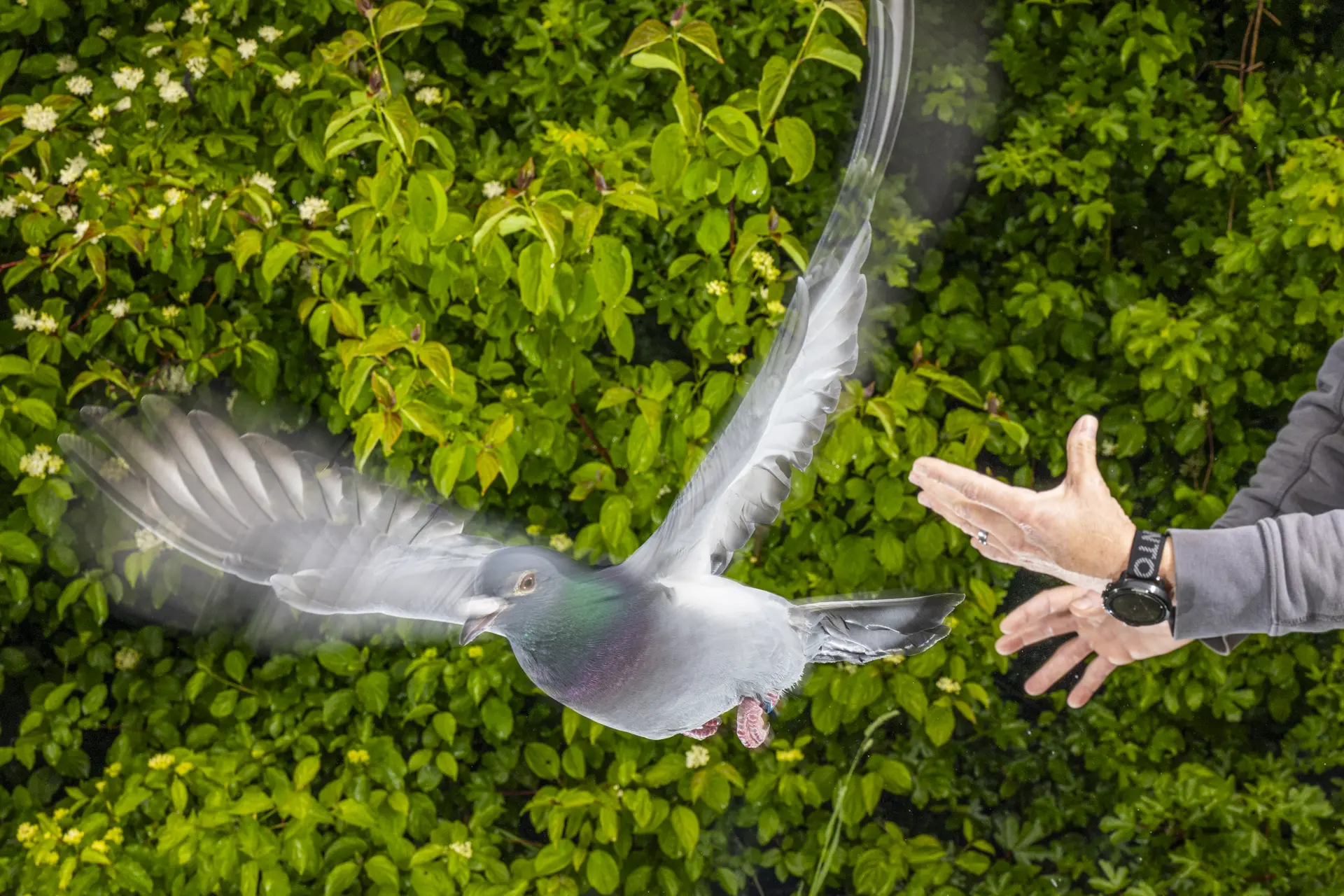
“What looks like a ‘gut feeling’ in bird navigation may actually have a physical basis,” added Prof. Martin Wikelski, Director at the Max Planck Institute of Animal Behavior and the study’s other co-senior author.
Animal navigation remains one of biology’s most fascinating puzzles. Migratory birds travel thousands of kilometers with astonishing accuracy. Homing pigeons routinely return to their lofts after being released far from home.
Scientists know birds use several navigation tools. They rely on landmarks, odors and the position of the sun. They also use Earth’s magnetic field, especially when visual cues disappear.
For decades, researchers proposed several explanations for magnetic sensing. One theory suggested birds could detect magnetic fields through light-sensitive proteins in their eyes. Another proposed tiny magnetic particles in the beak acted like compass needles.
Neither explanation fully accounted for the evidence.
The new research took a different approach. Instead of focusing only on traditional sensory organs, scientists examined tissues throughout the body for magnetic properties.
The research team included immunologists from the University of Bonn and University Hospital Bonn, physicists from the University of Duisburg-Essen and ornithologists from the Max Planck Institute of Animal Behavior.
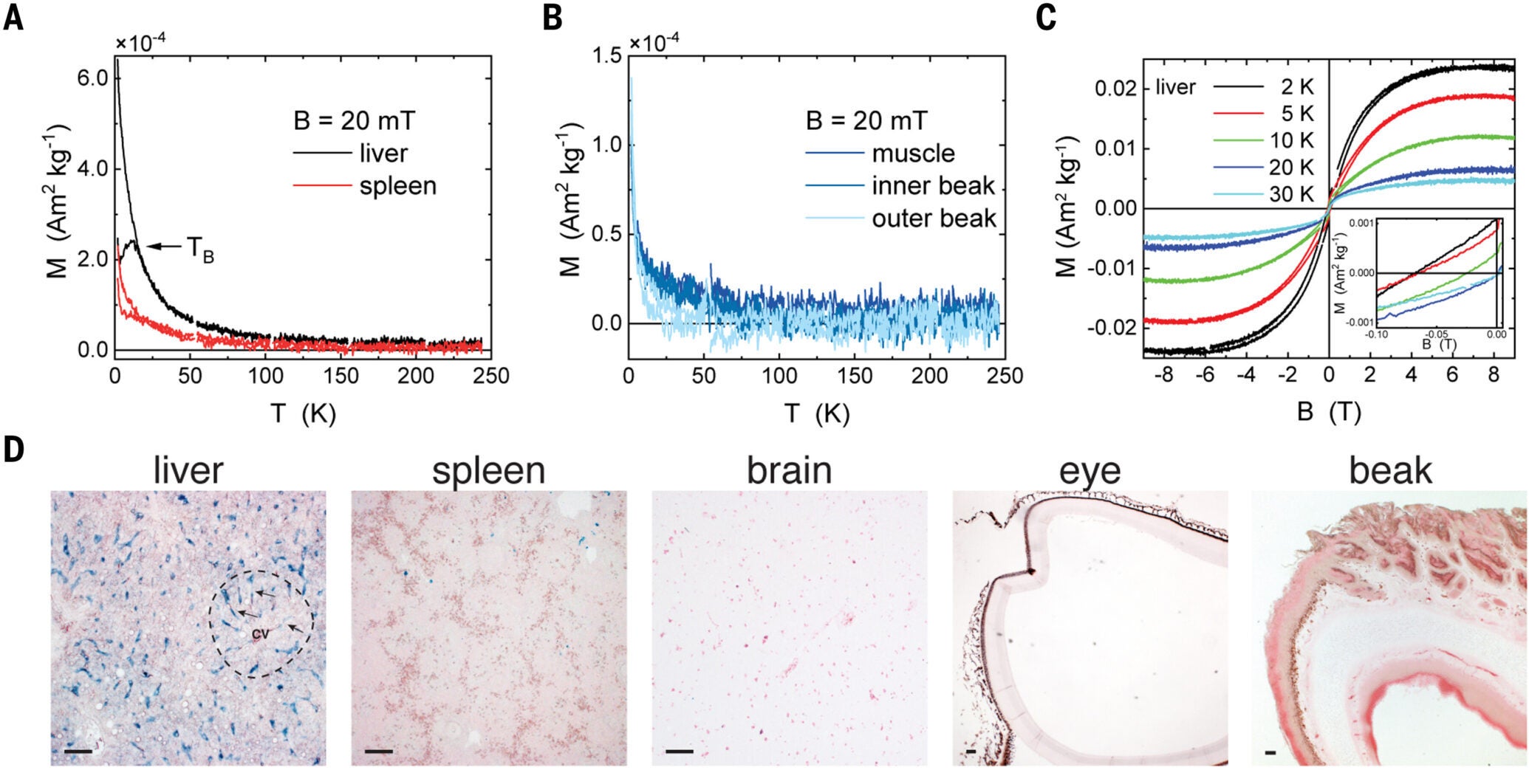
To identify potential magnetic tissues, they examined the eyes, beak, brain, liver and spleen of pigeons. Using specialized magnetic measurements and cell-sorting techniques, they searched for tissues that reacted strongly to magnetic fields.
“We had some clues that the liver and spleen have magnetic properties, because they break down red blood cells and so store much iron in the body,” said first author Dr. Clivia Lisowski, who led the immunological portion of the study.
The results were striking.
Of all tissues tested, the liver showed the strongest magnetic response by a wide margin. Researchers found large numbers of iron-rich cells concentrated within the organ.
“Iron is crystallized in oxide nanoparticles making the cells superparamagnetic and reactive to magnetic fields. We found by far the strongest magnetic response in liver tissue,” said Prof. Ulf Wiedwald from the University of Duisburg-Essen.
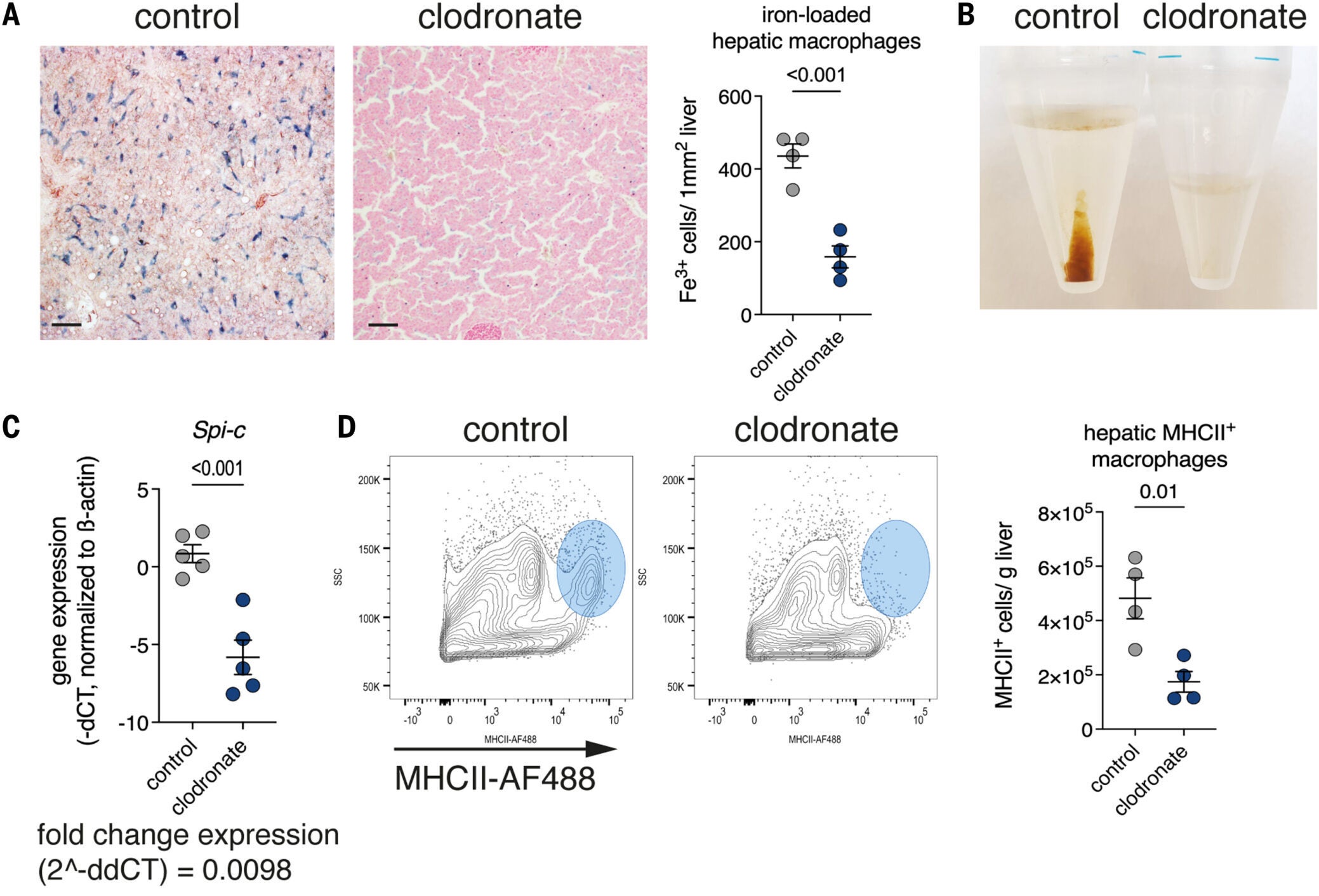
Further analysis revealed that the magnetic cells were macrophages, a type of immune cell.
Macrophages help remove old or damaged red blood cells. During this process, they collect and store iron from hemoglobin. The iron becomes packed into ferritin, a protein capable of holding thousands of iron atoms.
The researchers discovered that these iron-filled macrophages behaved like tiny magnets. Because of their iron content, they displayed what scientists call superparamagnetic properties, meaning they respond strongly to magnetic fields.
The team confirmed the identity of the cells using genetic analysis, immune markers and laboratory testing. The macrophages also demonstrated their normal immune functions, including engulfing foreign material.
This finding suggested the cells might serve two purposes: supporting immunity while also contributing to magnetic sensing.
Finding magnetic cells was only the first step. The crucial question was whether they actually influenced navigation.
To answer that, researchers conducted real-world homing experiments.
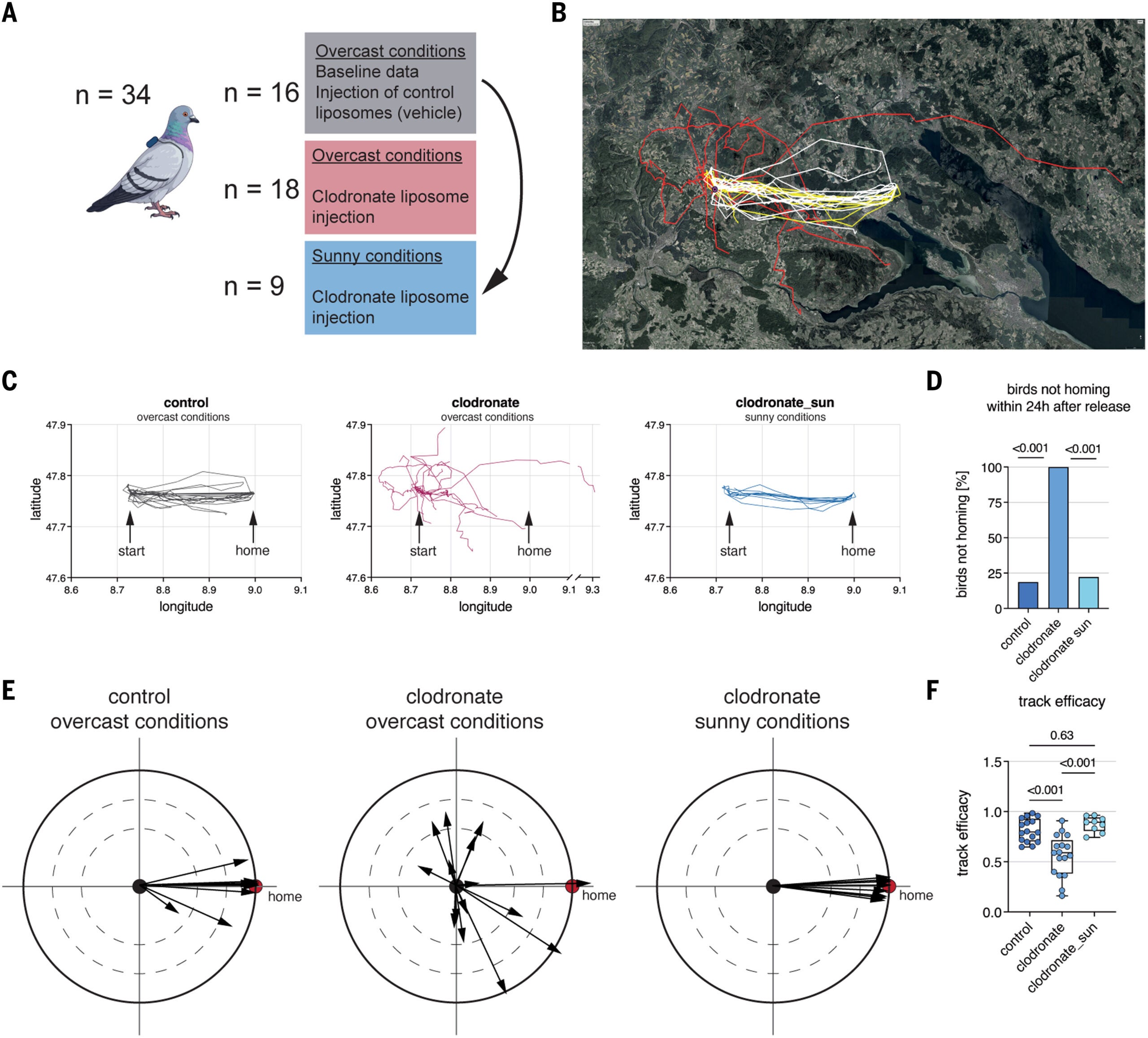
Thirty-four pigeons trained to return to their aviary near Konstanz, Germany, participated in the tests. The birds had successfully completed multiple training flights over a distance of approximately 19 kilometers.
Researchers then removed the liver macrophages using a treatment called clodronate, which selectively eliminates these immune cells.
The results were dramatic.
When the birds were released under heavily overcast skies, conditions that blocked the sun and polarized light cues, the pigeons lacking macrophages lost their sense of direction.
Control birds performed normally. All 16 returned home within about 70 minutes.
None of the 18 pigeons missing liver macrophages returned home on the same day.
Instead, they flew in scattered directions and showed little sign of coordinated navigation.
The story changed when sunlight became available.
Once cloud cover cleared, the macrophage-depleted pigeons successfully found their way home. Additional tests conducted under sunny conditions showed that treated birds navigated just as effectively as untreated pigeons.
This result revealed something important.
The birds were still healthy. Their flight ability remained intact. Their vision appeared normal. They simply lost access to one navigation system when the magnetic cues could no longer be processed.
The findings suggest pigeons rely on multiple navigation tools. When solar information is available, they can use it. When the sun disappears, they appear to depend much more heavily on magnetic information provided by the newly identified liver cells.
The researchers next investigated how information from the liver could reach the nervous system.
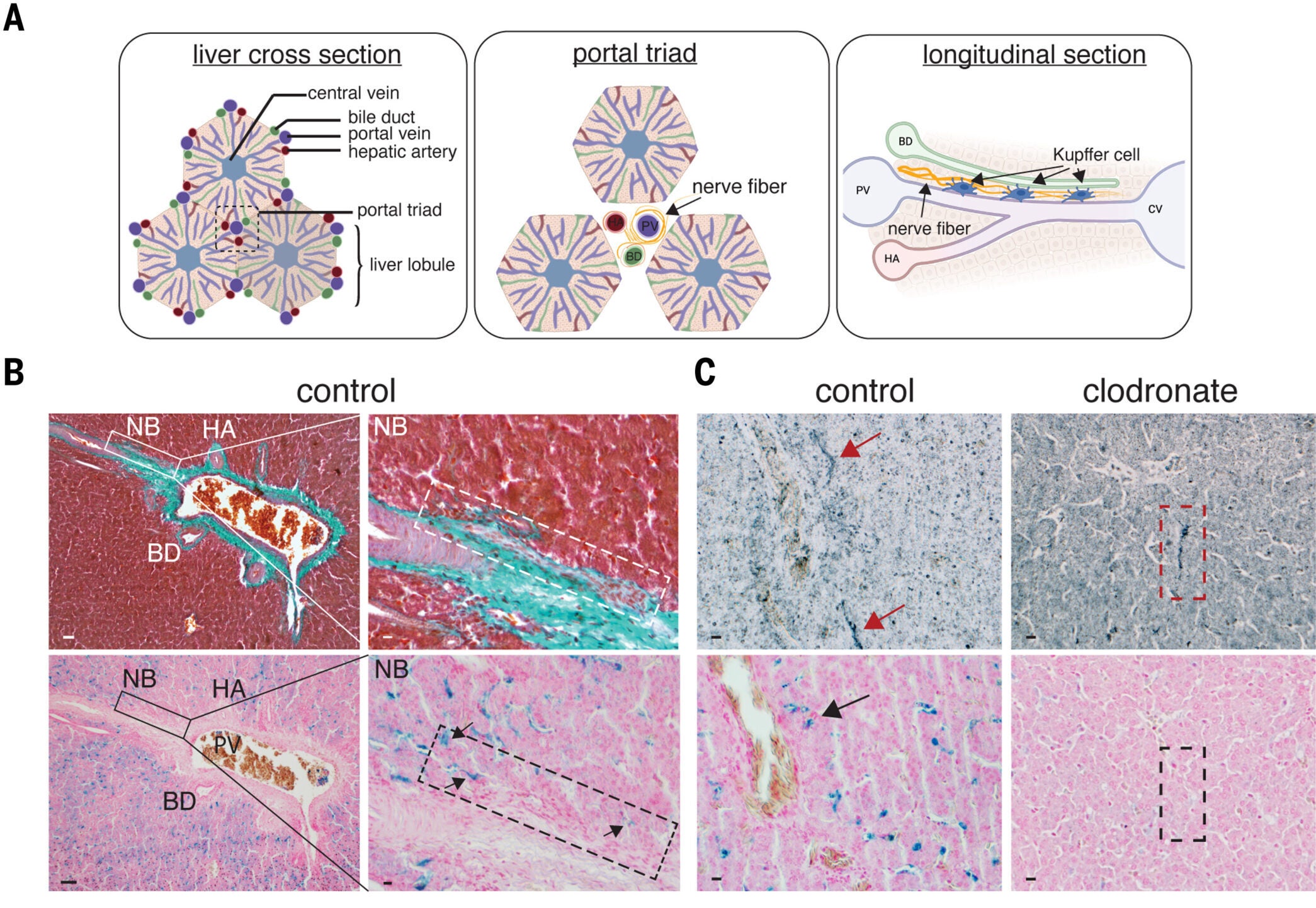
Using electron microscopy and advanced imaging techniques, they found that the iron-rich macrophages sit extremely close to nerve fibers within the liver.
In some cases, the distance between macrophages and nerves measured less than two micrometers.
The nerve structures remained intact even after macrophages were removed. This suggests the navigation problems resulted from losing the magnetic cells rather than damaging the nerves themselves.
Lisowski said: “These findings provide the first concrete evidence of how the Earth’s magnetic field can be perceived within the body and passed on to the brain to guide movement.”
The researchers propose that magnetic information may travel through autonomic nerves and eventually reach brain regions involved in orientation and navigation.
The discovery challenges long-held assumptions about how animals interact with their environment.
Traditionally, scientists viewed immune cells primarily as defenders against disease. This study suggests they may also participate in sensory functions.
The researchers believe ferritin-bound electrons inside macrophages may collectively respond to Earth’s magnetic field. Large populations of these cells could generate signals strong enough to activate nearby nerve fibers.
Many questions remain unanswered. Scientists still need to determine exactly how the signals are processed once they reach the brain.
The findings may also extend beyond birds.
Some animals, including sharks and other marine species, navigate effectively in environments where visual cues are limited. Researchers now wonder whether similar mechanisms might exist elsewhere in nature.
“Animal navigation is one of the most fascinating phenomena in nature,” said Wikelski. “If immune cells are part of how birds sense direction, it would fundamentally change how we understand navigation.”
This discovery could reshape scientific understanding of animal navigation and sensory biology. For decades, researchers searched for magnetic sensors primarily in the eyes, beak and brain. Finding evidence in immune cells opens an entirely new area of investigation.
Future research may explore whether similar iron-rich immune cells contribute to navigation in other animals, including migratory birds, marine species and nocturnal creatures. Understanding these mechanisms could improve conservation efforts by helping scientists predict how animals respond to changes in Earth’s magnetic environment.
The findings also strengthen growing evidence that immune cells do more than fight disease. They may participate in communication with the nervous system and influence behavior in ways scientists are only beginning to understand. In the long term, this work could inspire new research into how biological systems detect and process physical signals from the environment.
Research findings are available online in the journal Science.
The original story “Pigeons may use magnetic immune cells to find their way home” is published in The Brighter Side of News.
Like these kind of feel good stories? Get The Brighter Side of News’ newsletter.
The post Pigeons may use magnetic immune cells to find their way home appeared first on The Brighter Side of News.

