A pair of entangled photons traveled between Evanston and downtown Chicago through a fiber already packed with conventional internet traffic. Despite that hostile environment, their shared quantum state survived with more than 94 percent fidelity.
The 24.4-kilometer test used installed metropolitan fiber connecting Northwestern University’s Evanston campus with the StarLight International/National Communications Exchange Facility in Chicago. The same cable carried two 800-gigabit-per-second data channels and enough optical power to represent a fully loaded commercial link.
The experiment, published in Optica Quantum, marks the first entanglement distribution between remote nodes over deployed fiber carrying modern commercial telecommunications traffic. It suggests future quantum networks could use existing communications infrastructure rather than requiring separate fiber across entire cities.
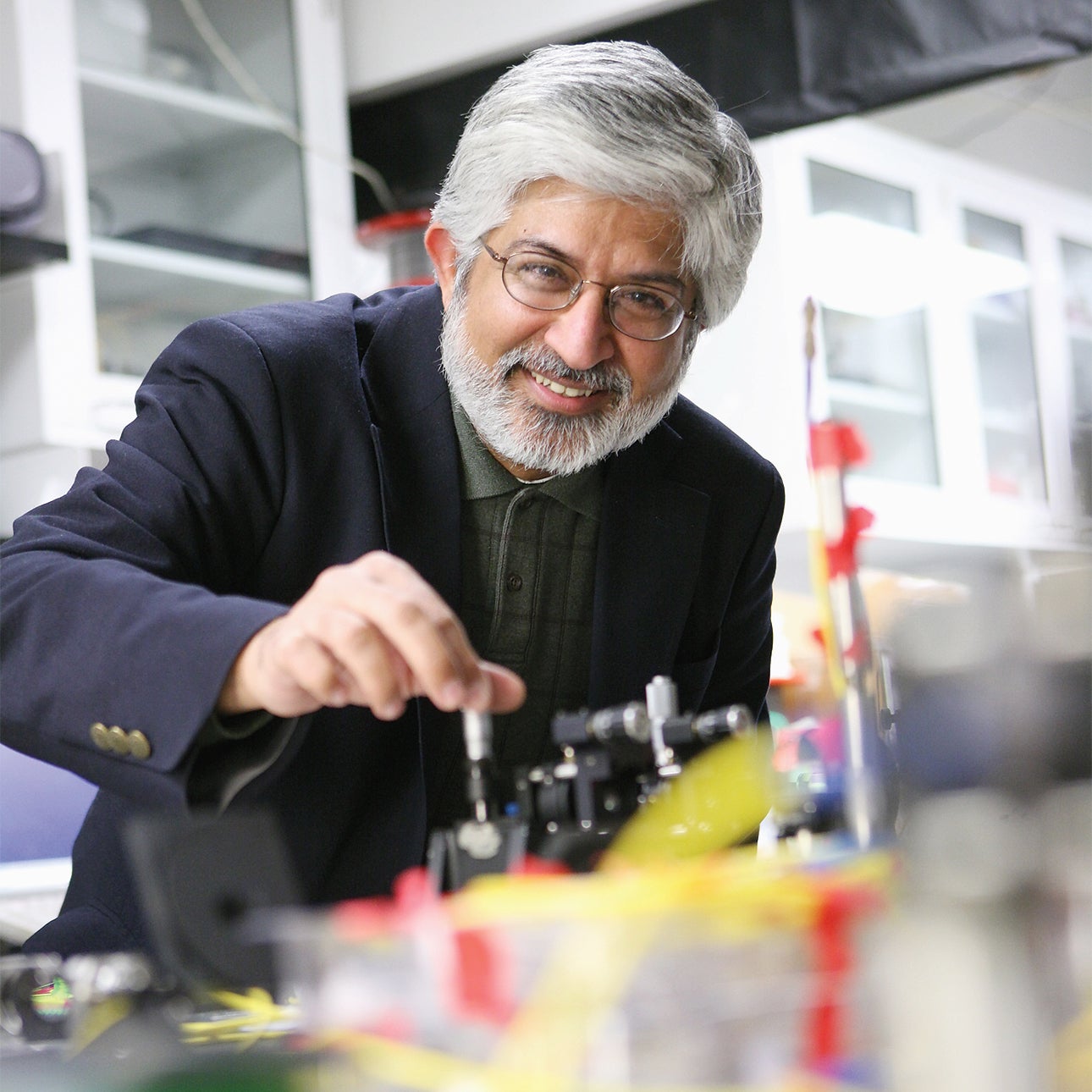
“Quantum signals are very, very tiny compared to classical signals,” said Prem Kumar, the study’s senior author and a professor at Northwestern’s McCormick School of Engineering. “It’s like an ant traveling through a path filled with elephants. Our results show that photons can survive the journey and remain entangled.”
Conventional internet systems encode information in bits represented by zeros and ones. Quantum networks use quantum states, including qubits, that can behave in ways unavailable to ordinary computing systems.
Entanglement links the quantum states of two particles, even when they are separated. That relationship can support quantum teleportation, which transfers quantum information without moving the original physical carrier across the full distance.
Standard optical communications send signals containing millions of photons. Quantum communications can depend on single photons, so noise from powerful classical light can easily overwhelm them.
Kumar’s group previously tested a protection strategy in the laboratory. The researchers placed quantum photons in a quieter wavelength range and used narrow filters to reject noise from ordinary data traffic. That work included teleportation through 30 kilometers of laboratory fiber carrying high-speed communications.
The team generated pairs of polarization-entangled photons in Evanston. One photon from each pair remained there, while its partner entered the deployed fiber and traveled to Chicago.
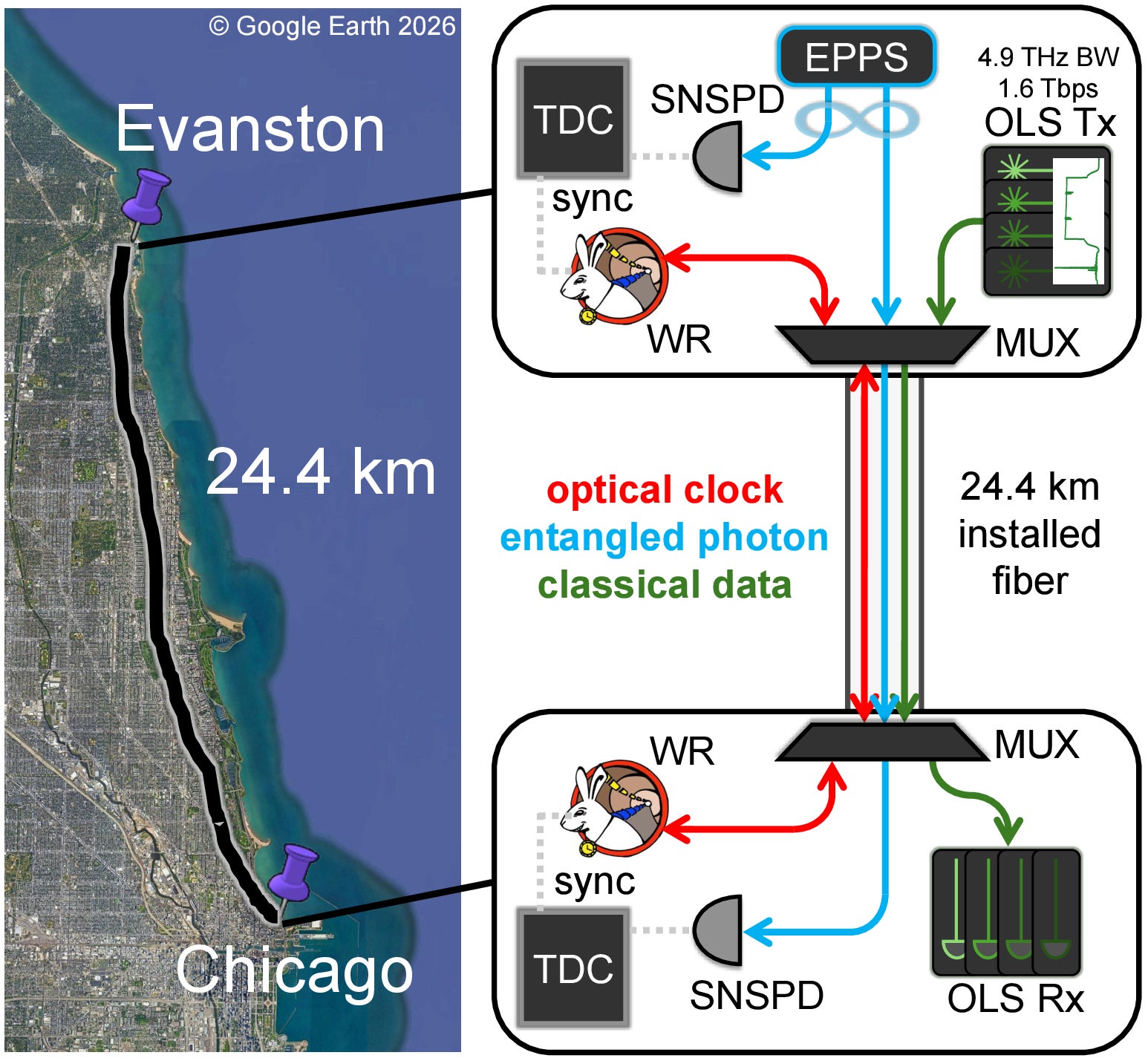
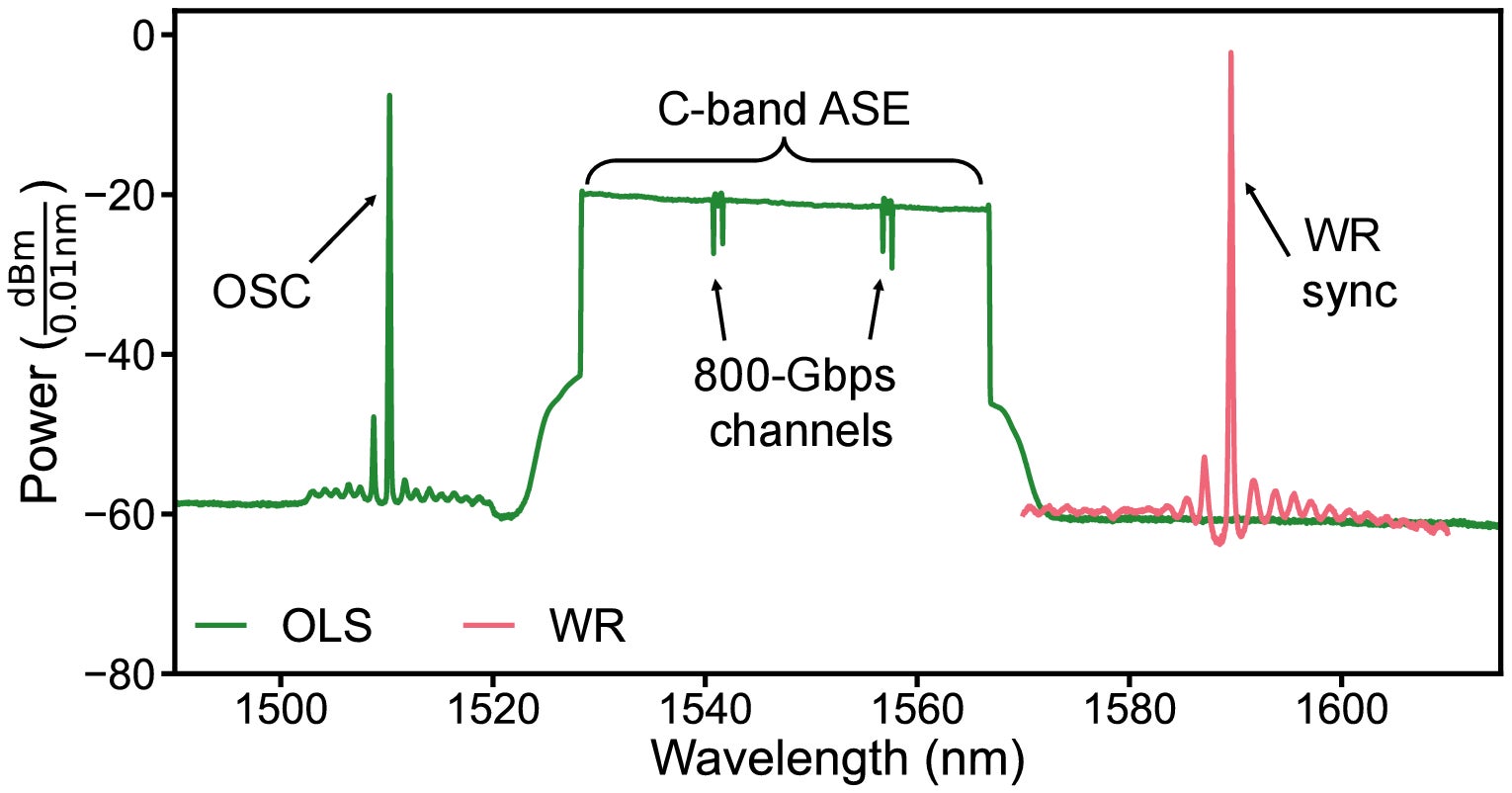
The traveling photon used a wavelength of 1,290 nanometers in the optical O-band. Conventional telecommunications traffic occupied the C-band, where commercial systems commonly operate.
That separation matters because intense classical light produces spontaneous Raman scattering inside fiber. The scattering creates stray photons that can be mistaken for quantum signals.
Measurements showed that lower O-band wavelengths offered less scattering noise. Moving the quantum channel from 1,310 to 1,290 nanometers reduced noise, although the shorter wavelength experienced slightly more transmission loss.
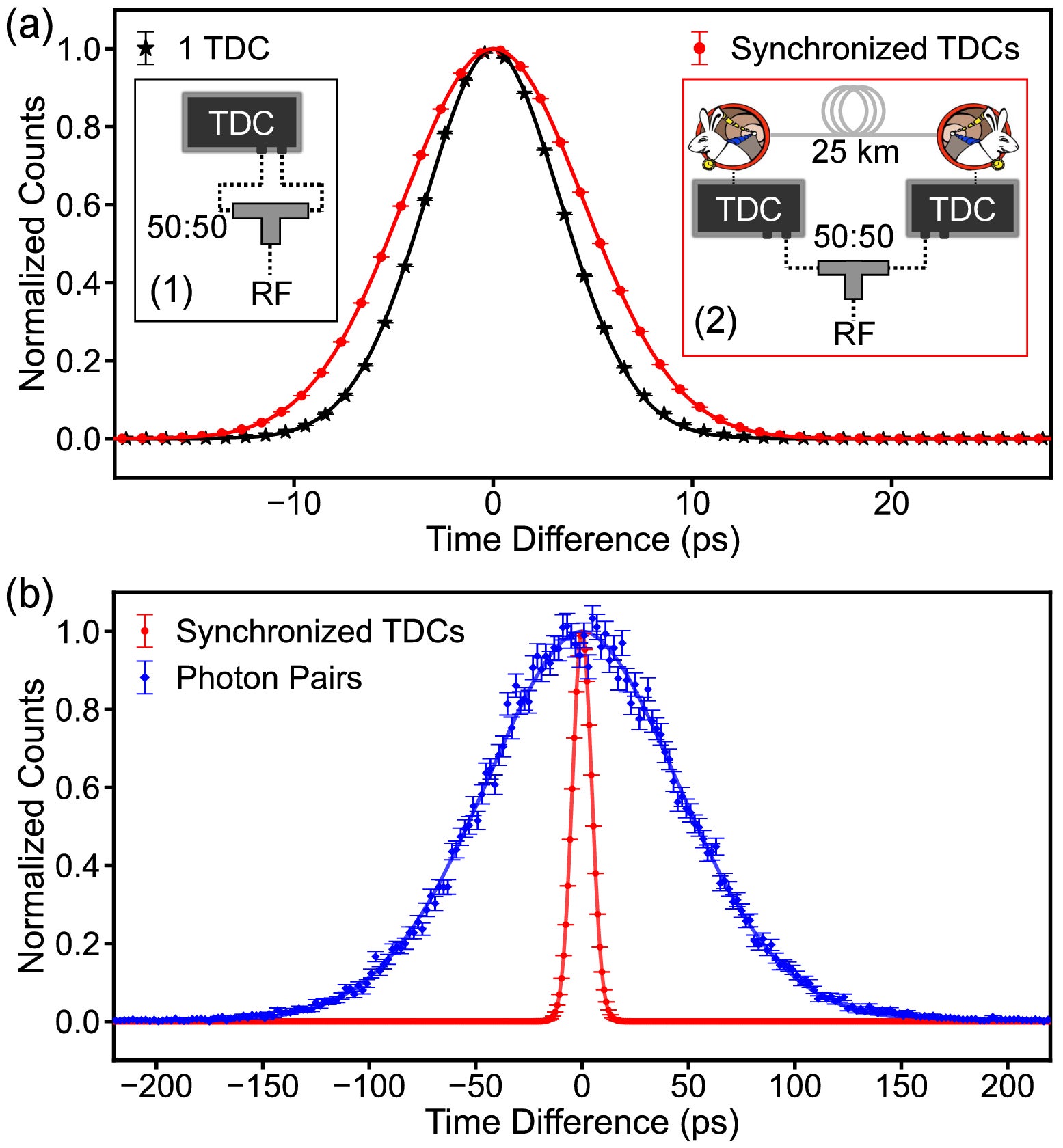
The researchers used narrow spectral filters to remove most remaining noise. They also limited detections to a 300-picosecond time window, excluding photons that arrived outside the expected interval.
The classical system carried 1.6 terabits per second through two 800-gigabit channels.
“The fiber carried enough power to potentially transmit 36 terabits-per-second of classical data,” Kumar said. “That’s roughly equivalent to 20 million YouTube videos streaming simultaneously through a single fiber.”
Because scattering depends on optical power and wavelength rather than data rate, capacity could rise above 36 terabits per second without increasing the effect on the quantum channel.
Detecting entangled pairs at separate locations required both measurement stations to share an exceptionally precise clock. The team used White Rabbit, an optical timing system based on established networking protocols.
A synchronization signal traveled through the same fiber in the L-band. Its wavelength was placed far from the quantum channel to limit additional scattering.
Tests showed the synchronization system contributed about 3 picoseconds of timing jitter. The complete entangled-photon coincidence peak measured about 46 picoseconds, well within the 300-picosecond detection window.
That precision allowed detectors in Evanston and Chicago to match photons from the same pair in real time.
The researchers compared the quantum state with the classical system switched off and switched on. Two-photon interference remained strong in every tested polarization basis.
Quantum state measurements produced fidelity above 94 percent relative to the intended entangled state. The signal transmitted alongside internet traffic also closely matched the one measured over dark fiber without conventional communications.
The result does not yet demonstrate teleportation between the two sites. It completes the first required stage by distributing entanglement across the metropolitan link.
“We crossed a major bridge, showing we can do entanglement distribution,” Kumar said. “But there are two steps in teleportation. First, you need to distribute entanglement. Then, you need to transfer information. Each step is progressively more complicated and difficult, but we are showing that it’s possible.”
The team plans to attempt teleportation between remote nodes while the same fiber carries commercial traffic. Future tests also need to address longer distances, continuous operation and automatic correction for changes in polarization and photon arrival times.
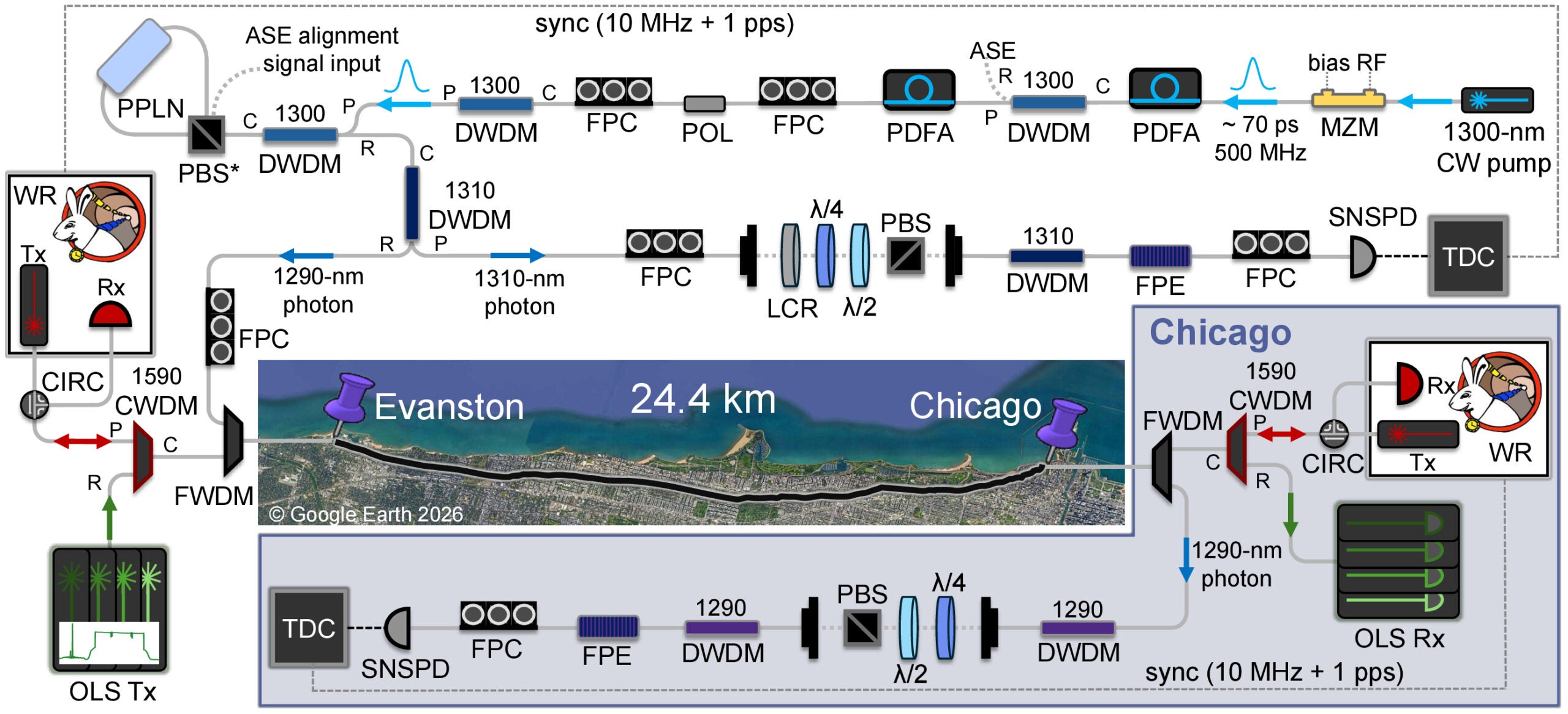
The installed fiber remained stable during the several-hour experiment. Researchers manually adjusted timing and polarization between measurement sets. A functioning network would need automated systems to maintain performance over longer periods.
Sharing fiber could lower one of the largest barriers to practical quantum networking. New metropolitan fiber is expensive, and available cables are already in high demand.
The experiment shows that careful wavelength selection, narrow filtering and precise synchronization can protect entanglement without shutting down high-capacity classical traffic. Telecommunications providers could potentially add quantum channels to existing wavelength-division networks while preserving ordinary services.
Longer links will face additional loss, especially in the O-band. Even so, reduced Raman noise may make this arrangement more reliable than placing quantum and classical channels closer together.
By bringing entanglement distribution into an active communications exchange, the work moves quantum networking beyond isolated laboratory demonstrations. It provides a practical test of how fragile quantum states might travel through the infrastructure that already carries the modern internet.
Research findings are available online in the journal Optica Quantum.
The original story “Scientific breakthrough brings quantum entanglement to existing telecom networks” is published in The Brighter Side of News.
Like these kind of feel good stories? Get The Brighter Side of News’ newsletter.
The post Scientific breakthrough brings quantum entanglement to existing telecom networks appeared first on The Brighter Side of News.