Mars may react differently when trouble arrives from two directions at once. A solar particle storm and a planet-wide dust storm overlapped in 2018, and temperatures rose in the lower atmosphere where Martian weather unfolds.
The unusual warming appeared during only one of five long-lasting solar energetic particle events examined by researchers from Lancaster University, the University of Leicester and the Instituto de Astrofisica de Andalucia-CSIC in Granada, Spain.
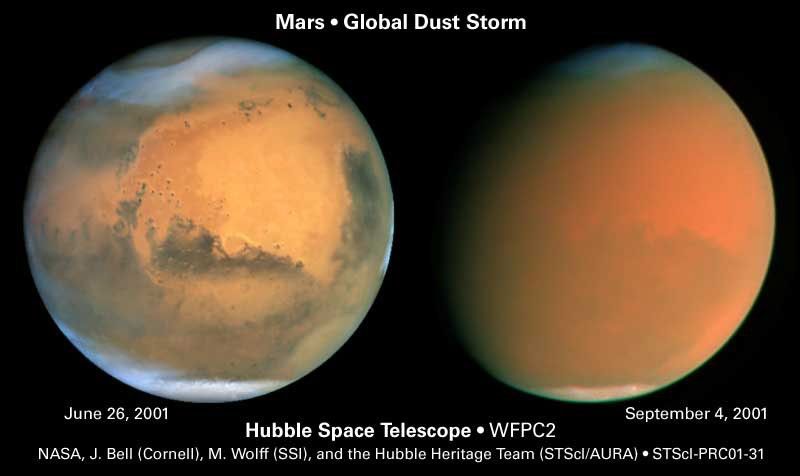
That event occurred in June 2018, while a global dust storm spread across Mars. The same storm blocked sunlight from NASA’s Opportunity rover, which sent its final signal on June 10 and never responded again.
The findings, presented at the Royal Astronomical Society’s National Astronomy Meeting in Birmingham, raise a new possibility. Space weather and dust storms may sometimes combine to influence conditions much lower in the Martian atmosphere than scientists expected.
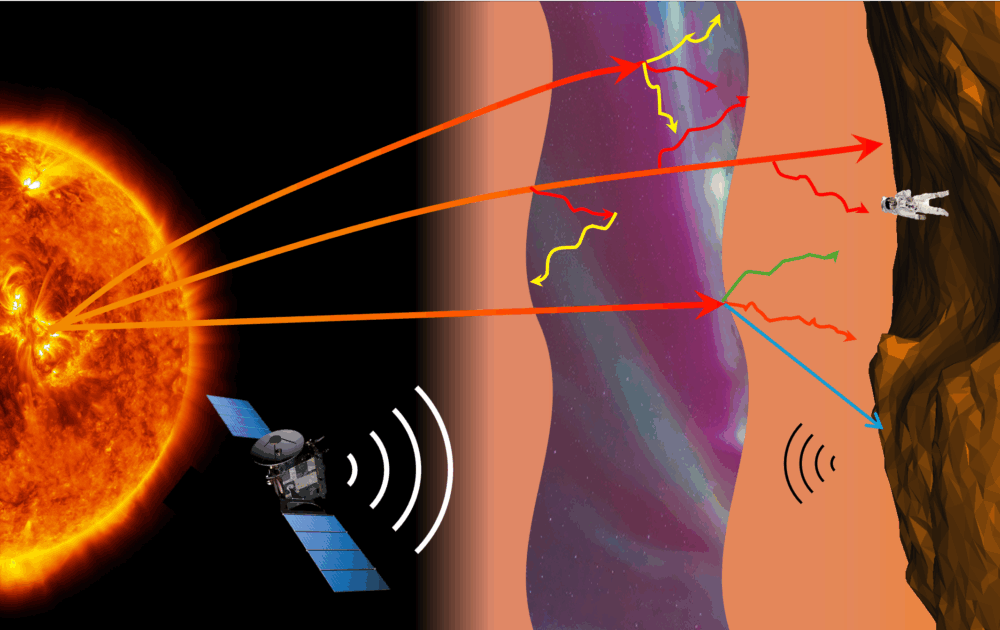
Solar energetic particle events happen when solar flares and coronal mass ejections release fast-moving charged particles into space. Mars is especially exposed because it has a thin atmosphere and no strong global magnetic field like Earth’s.
Previous work has shown that these particles can disturb the planet’s upper atmosphere. They can trigger ionisation, produce diffuse aurorae, interfere with radio signals, increase surface radiation and speed atmospheric loss into space.
Their role in the lower atmosphere remains far less clear.
The team examined five extended particle events to see whether they changed temperatures where Martian weather develops. Four showed no clear heating. The fifth stood apart.
“We expected that these highly energetic particles might have some effect on temperatures in Mars’ lower atmosphere, but in four of the five events we studied we found no clear evidence of heating,” said lead researcher Lana Williams, a PhD researcher at Lancaster University.
“The one exception occurred while a global dust storm was expanding across the planet.”

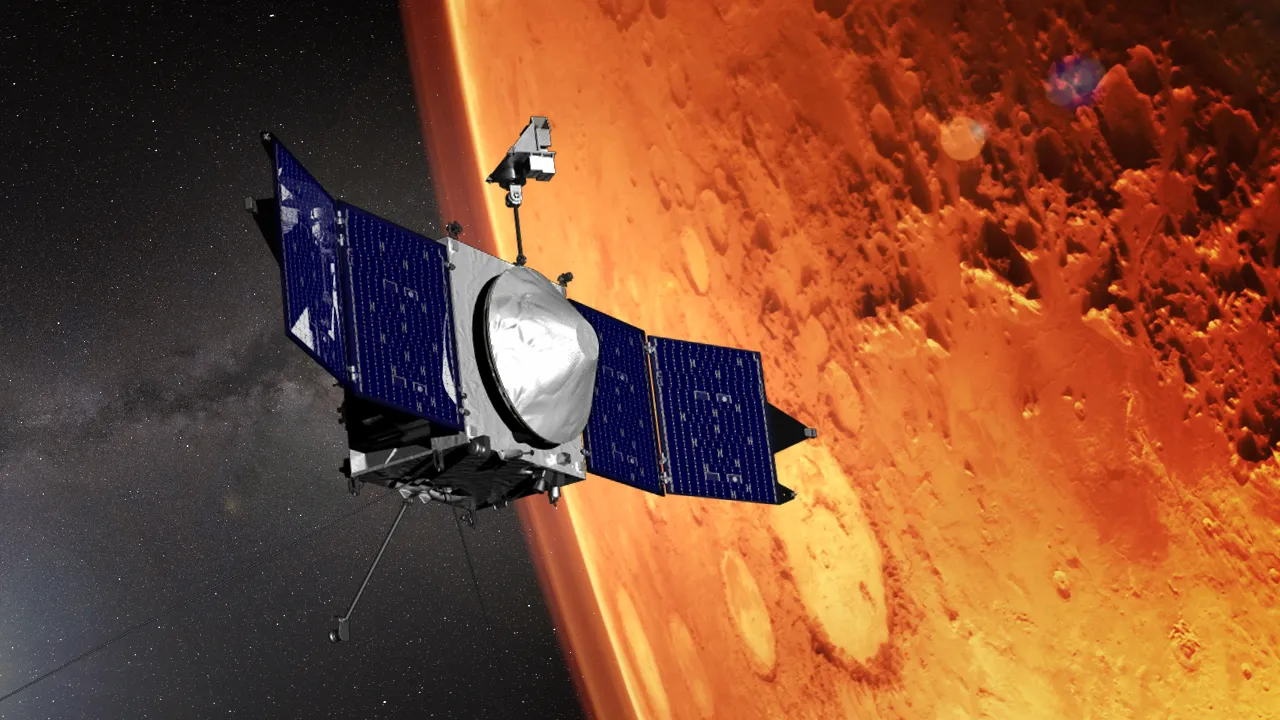
The analysis combined measurements from NASA’s Mars Atmosphere and Volatile EvolutioN spacecraft, known as MAVEN, and the European Space Agency’s Trace Gas Orbiter.
MAVEN observed how the Sun and solar wind interacted with the upper atmosphere. The Trace Gas Orbiter measured the composition and structure of the atmosphere at lower levels.
Researchers compared those observations with expected temperature profiles from the Mars Climate Database. They examined conditions before, during and after each solar particle event.
Dust storms already have a known warming effect. Suspended dust absorbs sunlight and heats parts of the atmosphere.
But the temperature pattern seen during the June 2018 overlap did not look typical for a dust storm. The team concluded that the storm alone could not clearly explain it.
That did not prove the solar particles caused the extra warming. The researchers found only one overlapping event, which leaves open the possibility that another factor influenced the atmosphere.
Dust storms were not part of the original investigation. The team noticed the global storm only after heating appeared during one particle event and not the other four.
That difference led them to examine what made the June 2018 episode unusual.
“Dust storms were not originally part of our investigation, so finding one happening at the same time as the heating was unexpected,” Williams said. “It suggests that Mars’ atmosphere and weather may respond to several events acting together, rather than each source of heating operating independently.”
The overlap matters because solar activity and dust storms are usually studied separately. If they interact, atmospheric models that treat them as isolated influences could miss important changes.
The lower atmosphere is where winds, dust movement and weather systems develop. Unexpected heating there could change how scientists interpret temperature readings collected during periods of intense solar activity.
Still, the evidence remains tentative.
The astronomers stressed that one observation cannot establish cause and effect. More cases must be recorded before researchers can know whether the same combination repeatedly produces unusual warming.
Mars lacks the protections that limit many solar effects on Earth. Its atmosphere is much thinner, and the planet has no strong global magnetic field to deflect charged particles.
That exposure helps explain why solar storms can affect the Martian upper atmosphere so strongly. The new work asks whether those disturbances can reach lower levels under certain conditions.
A large dust storm may alter how energy moves through the atmosphere. At the same time, energetic particles may change atmospheric chemistry or heating at higher levels. The study does not establish a mechanism linking the two.
Instead, it identifies a pattern that future observations can test.
The June 2018 storm offers a dramatic example because it grew into a planet-wide event. It darkened the surface enough to end the mission of the solar-powered Opportunity rover after nearly 15 years of exploration.
The same storm now carries another scientific importance. It may have created the conditions that allowed a solar particle event to produce a detectable lower-atmospheric response.
Understanding combined solar and dust-storm effects could improve models of Martian temperatures and weather. Better models would help scientists distinguish ordinary dust heating from more unusual atmospheric changes.
That distinction may become important when interpreting future spacecraft observations during periods of strong solar activity. It could also help researchers decide when simultaneous measurements from several instruments are most valuable.
The result does not yet show that solar storms regularly alter Martian weather. It points to a narrower possibility: under certain conditions, space weather and dust storms may interact in ways that neither event produces alone.
Future SEP events that overlap with major dust storms will provide the clearest test. Repeated heating would strengthen the case for an interaction. A lack of similar results would suggest that another factor shaped the 2018 event.
Either outcome would sharpen understanding of a planet whose atmosphere remains active, exposed and more complicated than it first appears.
Research findings are available online at EGU26.
The original story “Solar storms may alter the weather on Mars, study finds” is published in The Brighter Side of News.
Like these kind of feel good stories? Get The Brighter Side of News’ newsletter.
The post Solar storms may alter the weather on Mars, study finds appeared first on The Brighter Side of News.