Daylight saving time does more than alter clocks. The spring loss of one hour may also raise the risk of retinal disease, while the fall return to standard time appears to have the opposite effect.
A nationwide Northwestern Medicine analysis examined insurance claims from more than 18 million patients. The researchers focused on retinal vascular diseases, disorders that damage blood vessels in the retina and can threaten vision.
The findings, published in Scientific Reports, linked the spring transition with a roughly 20 to 30 percent higher risk of proliferative diabetic retinopathy and neovascular age-related macular degeneration during the following month.
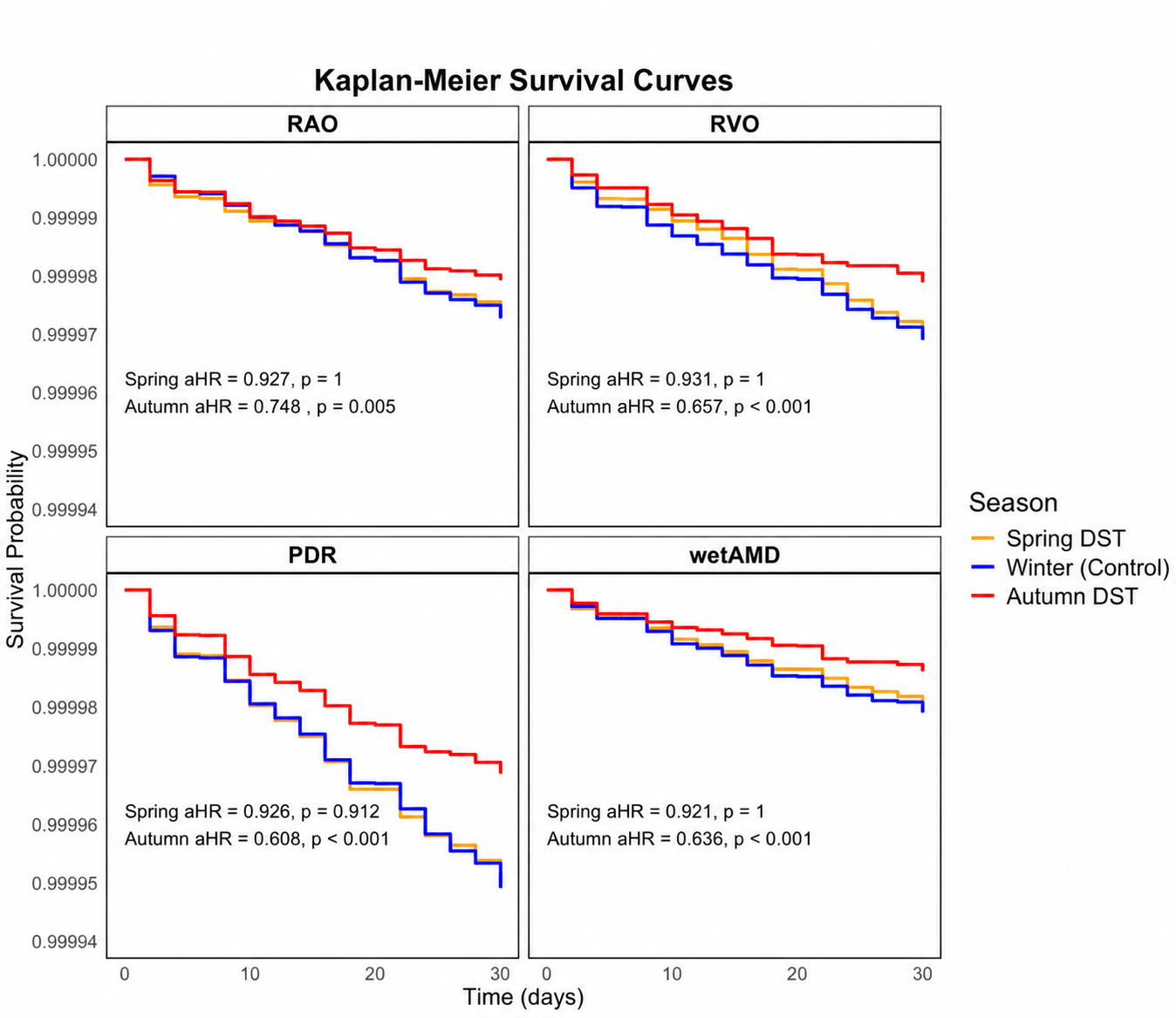
After the fall clock change, when people gain an hour, patients had a roughly 20 to 40 percent lower risk across four retinal conditions.

“Our study suggests gaining an hour of sleep may be protective against disease risk,” said lead author Dr. Rukhsana Mirza, professor of ophthalmology and medical education at Northwestern University Feinberg School of Medicine. “Even one hour of change can impact a patient’s health and perhaps patients who are reporting new symptoms in the period after a change in time, specifically in the spring, may warrant closer evaluation.”
Seasonal time changes can disrupt circadian rhythm, the body’s roughly 24-hour internal clock. That system helps regulate sleep, hormones, body temperature and other essential functions.
Previous research has connected spring clock changes with higher rates of heart attack and stroke. That prompted the team to ask whether similar stress might appear in the retina.
“We have seen how daylight saving time transitions, particularly the spring transition when we lose an hour of sleep, are associated with increased rates of heart attack and stroke,” Mirza said. “This led us to ask if these similar effects would be happening in the retina, which is one of the most metabolically active tissues in the body and contains some of the body’s most complex microvascular networks.”
The researchers used the Merative MarketScan Commercial Database. Their final population included 12,640,343 unique patients ages 18 to 64 who met all requirements. The median age was 42.2 years, and 56.2 percent were women.

The team examined new diagnoses after clock changes in 2013 and 2014. A 12-month lookback helped exclude patients whose disease had already been diagnosed.
Researchers measured diagnoses during the week and month after each spring and fall transition. They compared those periods with control dates in January and July.
After adjustments for age, sex, tobacco history, cardiovascular conditions, sleep disorders and previous retinal disease, the strongest spring pattern involved proliferative diabetic retinopathy.
Compared with the summer control period, the spring transition was associated with a 45 percent higher risk within one week and a 34 percent higher risk over one month.
The spring change was also associated with a 24 percent higher risk of neovascular age-related macular degeneration over one month. No significant spring association appeared when researchers used the winter control period.
Compared with the summer control, the fall shift was associated with a 16 percent lower risk of retinal vein occlusion and a 17 percent lower risk of proliferative diabetic retinopathy over one month.
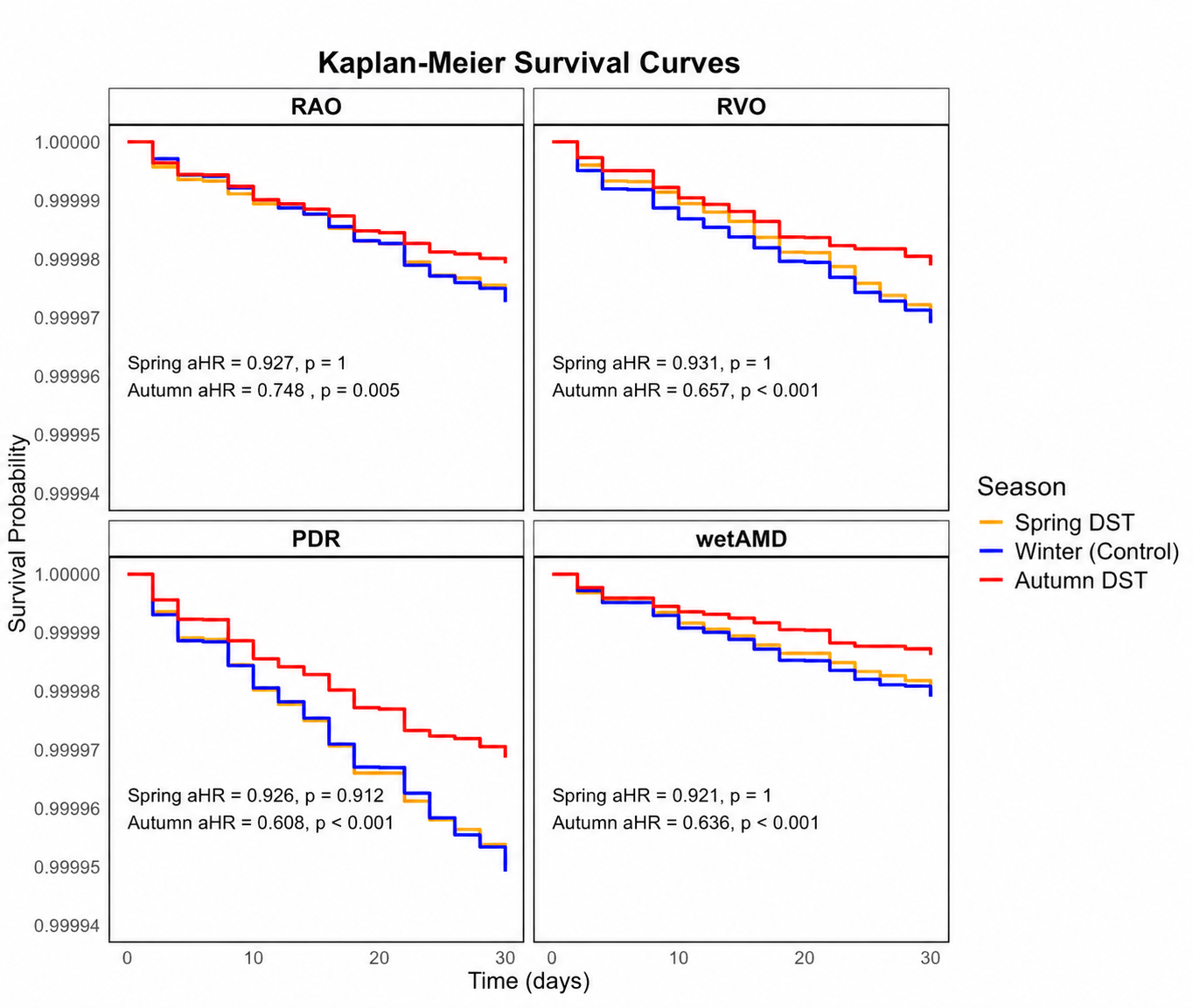
Against the winter control, the fall transition was associated with lower one-month risks across all four diseases. The reductions included 25 percent for retinal artery occlusion, 34 percent for retinal vein occlusion, 39 percent for proliferative diabetic retinopathy and 36 percent for neovascular age-related macular degeneration.
“I think that relationship was pretty interesting, and it makes a lot of sense,” said Dr. Kyle Chan, a resident physician in Feinberg’s ophthalmology department and co-first author. “There’s been literature showing that losing an hour’s sleep and circadian misalignment can cause inflammatory responses and metabolic derangements, and there’s also been some literature suggesting that getting an hour’s sleep in the context of daylight saving might be protective.”
Most significant changes appeared over one month rather than one week. The authors said retinal blood vessel changes may need weeks to become detectable.
The study did not prove that clock changes caused retinal disease. The authors instead identified associations and discussed several possible mechanisms.
Sleep loss and circadian misalignment can increase nervous system activity, inflammatory signaling and blood pressure. Those changes could affect the retina’s microvascular network.
Short sleep has also been associated with insulin resistance and poorer glucose control. These effects could contribute to proliferative diabetic retinopathy after the spring transition.
Expected risk factors included older age, hypertension, high cholesterol, cardiovascular disease and previous retinal disorders.
Diagnosed sleep disorders, including sleep apnea and insomnia, were not linked to greater risk after the clock changes. Chronic disruption may affect the body differently from an abrupt one-hour shift, or treatment may reduce short-term stress.
The analysis covered commercially insured adults ages 18 to 64. The findings may not apply to older adults, uninsured patients, publicly insured populations or people outside the United States.
Researchers had only two years of summer comparisons and one year of winter comparisons. Claims data could identify diagnoses but could not reveal the biological mechanism behind them.
The database also lacked detailed information about geography, weather, light exposure, activity, race and socioeconomic status. A small share of patients lived in regions that do not observe daylight saving time.
Chan said longer studies using other databases are needed to determine whether the pattern holds.
The findings may support closer attention to new visual symptoms after the spring clock change, especially among patients with diabetes, macular degeneration, cardiovascular disease or previous retinal problems.
They also offer researchers a new way to study how short-term circadian disruption affects small blood vessels. Future work could connect ophthalmology with sleep medicine, neurology and cardiovascular research.
The study does not establish a new screening schedule. It does suggest that sleep disruption and timing may deserve consideration when higher-risk patients report sudden vision changes after clocks move forward.
Research findings are available online in the journal Scientific Reports.
The original story “Spring daylight saving time shift linked to higher risk of retinal disease” is published in The Brighter Side of News.
Like these kind of feel good stories? Get The Brighter Side of News’ newsletter.
The post Spring daylight saving time shift linked to higher risk of retinal disease appeared first on The Brighter Side of News.

