A recent study published in the journal Japanese Psychological Research suggests that a woman’s waist-to-bust ratio plays a larger role in how Japanese men perceive her physical attractiveness than her waist-to-hip ratio. The findings provide evidence that cultural background and media exposure might shape physical preferences more strongly than universally evolved biological instincts.
Tomohiro Suzuki, a professor at Wayo Women’s University and author of the book The Psychology of Clothing and Personal Adornment as a Survival Technique, led the research. He initiated the study to test the idea that certain body proportions are universally appealing regardless of geography.
“How we judge physical appearance varies a lot depending on the era and culture,” Suzuki said. “That’s true not just for fashion and make-up, but for body shape as well. Thinness is celebrated in some cultures, but not in others.”
Physical attractiveness is often linked to specific body proportions. Two of the most commonly studied measurements are the waist-to-hip ratio and the waist-to-bust ratio. The waist-to-hip ratio is calculated by dividing the circumference of the waist by the circumference of the hips. A lower number indicates a narrower waist relative to the hips.
In evolutionary psychology, a lower waist-to-hip ratio is often viewed as an indicator of youth and reproductive health. The evolutionary perspective proposes that observers subconsciously use the waist-to-hip ratio as a cue for a potential partner’s reproductive potential. For example, some evolutionary psychologists argue that an hourglass shape provides a reliable indicator of youth and a lack of previous pregnancies.
Past studies in Western nations often report that a waist-to-hip ratio of 0.7 is perceived as the most attractive. “But when it comes to body proportions, there’s been this long-standing idea that a Waist-to-Hip Ratio of 0.7 is the universal ideal,” Suzuki added.
The waist-to-bust ratio works similarly, calculated by dividing the waist measurement by the bust measurement. A lower value indicates a larger bust relative to the waist. Past research on these proportions often relied on edited photographs or simple line drawings. These methods can create unnatural body shapes by adjusting the width of a figure without properly calculating realistic circumferences.
“The thing is, when we looked closely at the tools used in past studies, we noticed some issues,” Suzuki explained. “Many weren’t created carefully enough, or they ignored how body types differ from region to region. In short, the results of those studies might have just been driven by the flaws in their testing tools.”
When previous researchers adjusted circumferences using basic computer software, they often created unstable body parameters. Adjusting a hip measurement based solely on a front-facing waist measurement can distort the entire body image. This instability makes it difficult to tell if a participant prefers a specific proportion or simply prefers the overall body size that resulted from the digital editing.
Additionally, many studies conducted in non-Western countries have used body silhouettes based on Caucasian body types. Because body shapes and skeletal structures vary across different ethnic groups, using Western body models might not accurately capture attractiveness standards in other parts of the world.
“So in our research, we built a new tool based on actual body measurement data and tailored to the Japanese context,” Suzuki said. “We wanted to get a truly accurate picture of how people in Japan perceive and evaluate body image.”
In Japan, cultural discussions of beauty often prioritize overall body size and thinness over specific curvy shapes. Japanese culture also tends to favor smaller buttocks compared to the preferences observed in some Western and Latin American cultures. The researchers also wanted to distinguish between two specific types of appeal: aesthetic attractiveness (general visual beauty) and sexual attractiveness (a more specific physical draw).
To ensure realistic body proportions, the researchers used measurement data from actual Japanese women in their twenties, provided by a Japanese clothing company. They used this data to create three-dimensional simulation models, which were then projected into two-dimensional silhouette images. By using a simulation model built from objective body measurement data, the current study avoided the artificial distortions seen in previous research.
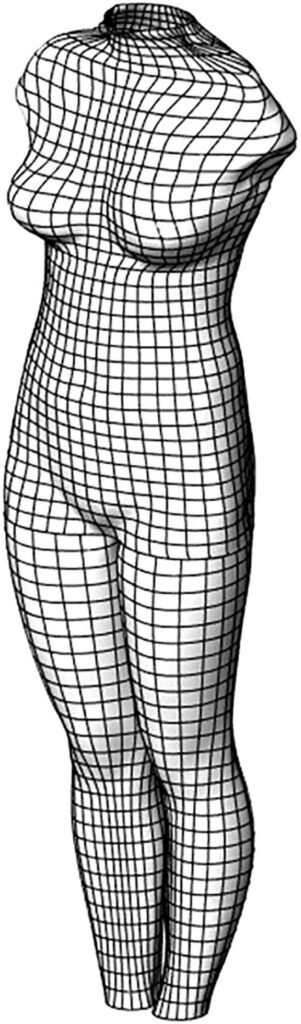
The authors specifically controlled for body mass index, keeping all the silhouettes within a standard, healthy range of 20 to 22. Body mass index is a standard medical calculation based on height and weight used to categorize a person’s overall body size. The researchers manipulated the silhouettes to represent four different waist-to-hip ratios and four different waist-to-bust ratios. The values for both ratios were set at 0.6, 0.7, 0.8, and 0.9, resulting in a total of sixteen unique body silhouettes.
The sample consisted of 398 Japanese men ranging in age from 20 to 59 years old. The average age of the participants was approximately 40 years old. The researchers evenly distributed the participants across four age decades to ensure a balanced sample. Each participant viewed the sixteen silhouettes in a randomized order. They rated each image on a six-point scale for both aesthetic attractiveness and sexual attractiveness.
The analysis showed that the waist-to-hip ratio had almost no effect on how the men rated the silhouettes. Variations in the waist-to-hip ratio did not yield statistically significant changes in visual beauty or sexual appeal. This finding contrasts with older Western studies that heavily emphasize the hip measurement as a universal standard of beauty.
“I was really surprised that our findings didn’t support the widely accepted belief that a WHR of 0.7 is the most attractive,” Suzuki told PsyPost. “Instead, we found that Waist-to-Bust Ratio (WBR) had a much stronger impact on attractiveness ratings than expected, which really brought home just how profound cultural influence can be.”
Instead of the hip measurement, the waist-to-bust ratio strongly influenced the attractiveness ratings. Silhouettes with a waist-to-bust ratio of 0.6 and 0.7 received the highest scores for both aesthetic and sexual attractiveness. As the waist-to-bust ratio increased to 0.8 and 0.9, the attractiveness scores dropped. For aesthetic appeal, the drop between 0.7 and 0.8 represented a moderate effect size, showing a noticeable decline in preference.
The patterns for sexual attractiveness mirrored those of aesthetic attractiveness. The lowest ratio of 0.6 edged out 0.7 by a small margin in sexual appeal. However, both lower ratios heavily outperformed the higher ratios of 0.8 and 0.9. The researchers noted that these preferences remained consistent across all age groups of the men who participated.
The preference for a 0.6 waist-to-bust ratio in this sample points to a potential distortion in modern beauty standards. A woman with a standard waist measurement of 65 centimeters would need a bust circumference of about 108 centimeters to achieve a 0.6 ratio. This specific body proportion is extremely rare in the actual Japanese population.
Because these extreme proportions are uncommon in natural populations, the strong preference for them suggests an environmental influence. Exposure to exaggerated body shapes in fiction, animation, and digital media might warp baseline expectations for physical attractiveness.
“First, I hope people realize that what’s considered an ‘attractive’ body shape varies widely across cultures,” Suzuki explained. “In fact, ideal beauty is largely shaped by cultural context rather than a fixed universal rule.”
“Second, I’d love for readers to look beyond just the findings and take an interest in how science reaches these conclusions,” Suzuki added. “Specifically, how the measurement tools we use can shape what we discover.”
These findings apply specifically to body shapes within an average weight range. The attractiveness ratings for different proportions might shift if the silhouettes depicted thinner or heavier body types. Previous research indicates that overall body mass often interacts with specific measurement ratios in complex ways.
The study only analyzed the preferences of male participants evaluating female body shapes. Generalizing these patterns to how women perceive other women’s bodies, or how women evaluate male bodies, requires different experimental designs. Future studies could incorporate female participants to see if their aesthetic judgments align with or diverge from the male participants’ ratings.
Testing these variables with accurately modeled silhouettes from various other ethnic groups would help determine where cultural preferences end and universal biological instincts begin. Researchers also need better methods to isolate aesthetic beauty from sexual appeal. These two forms of attractiveness often blend together in self-reported surveys, making it difficult to measure one without the influence of the other.
“Moving forward, I aim to more broadly explore how people evaluate physical appearance, and how they actively manage or try to control their own looks,” Suzuki said. “Ultimately, I hope to uncover the deeper psychological meaning that physical appearance holds for us in our everyday lives, and how it impacts our psychological well-being.”
The study, “Influence of Waist-to-Hip Ratio and Waist-to-Bust Ratio on Attractiveness of the Female Body Among Japanese: Using Figural Stimuli Based on Objective Measurements,” was authored by Tomohiro Suzuki, Taizo Kishimoto, and Hiroshi Imai.

