The Sun does not ease quietly from one activity cycle into the next. Its most violent space weather appears to stop abruptly, and that sudden change may offer an unusually early glimpse of what comes next.
A new forecasting method uses the number of sunspots present at this “switch-off” point to estimate the strength of the following solar cycle. Researchers say the approach could predict peak activity six or seven years in advance.
Their first projection for Solar Cycle 26 points to a moderate cycle, with a peak sunspot number of about 100 to 120. That would make it similar to, or weaker than, the current Solar Cycle 25.
The estimate remains highly uncertain. The switch-off point for Cycle 25 is still about two years away, so the team must currently rely on projections rather than direct observations.
“The Sun doesn’t gently go to sleep and then gently wake up again,” said Sandra Chapman, professor of physics and director of the Centre for Fusion, Space and Astrophysics at the University of Warwick.
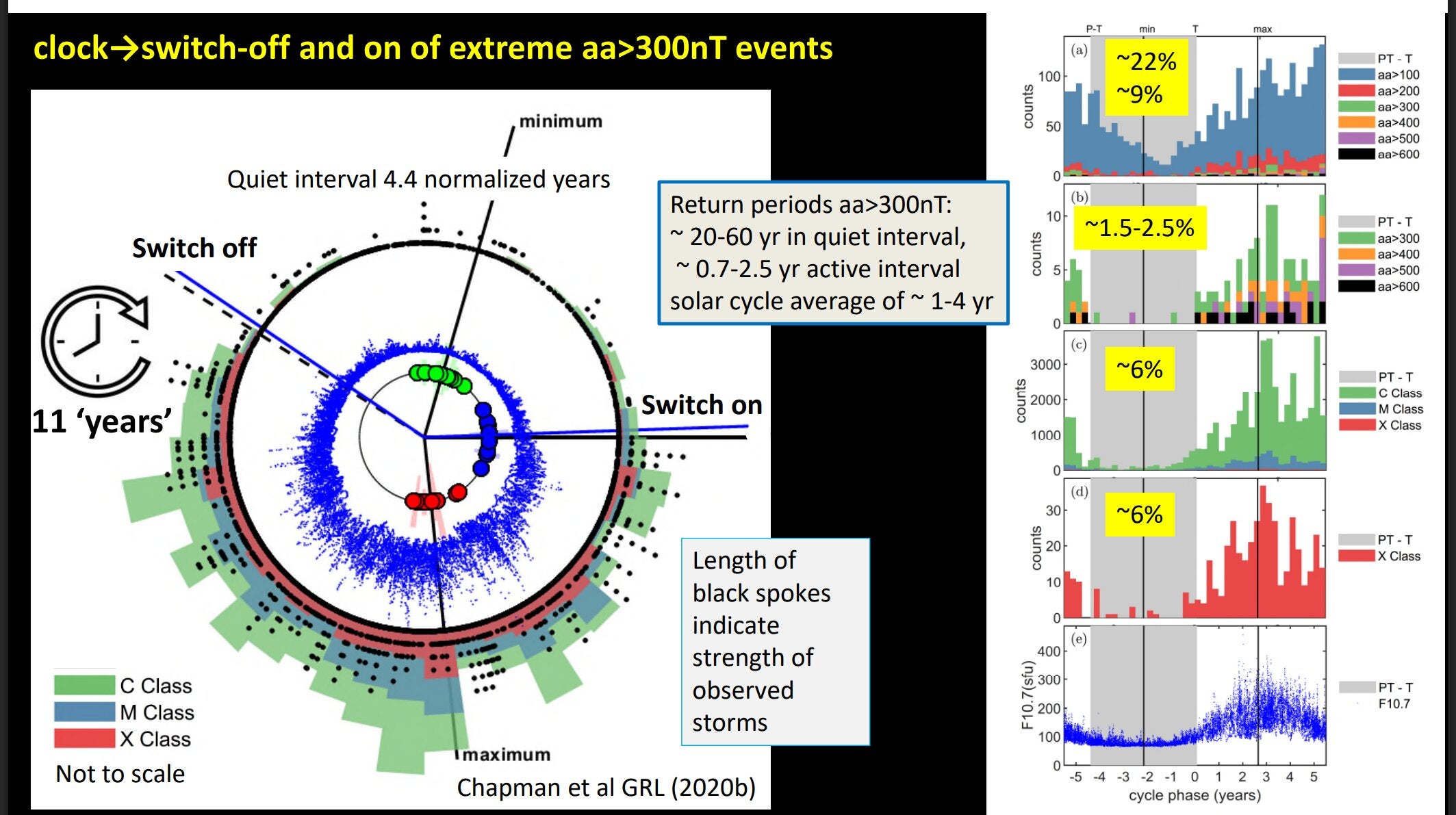
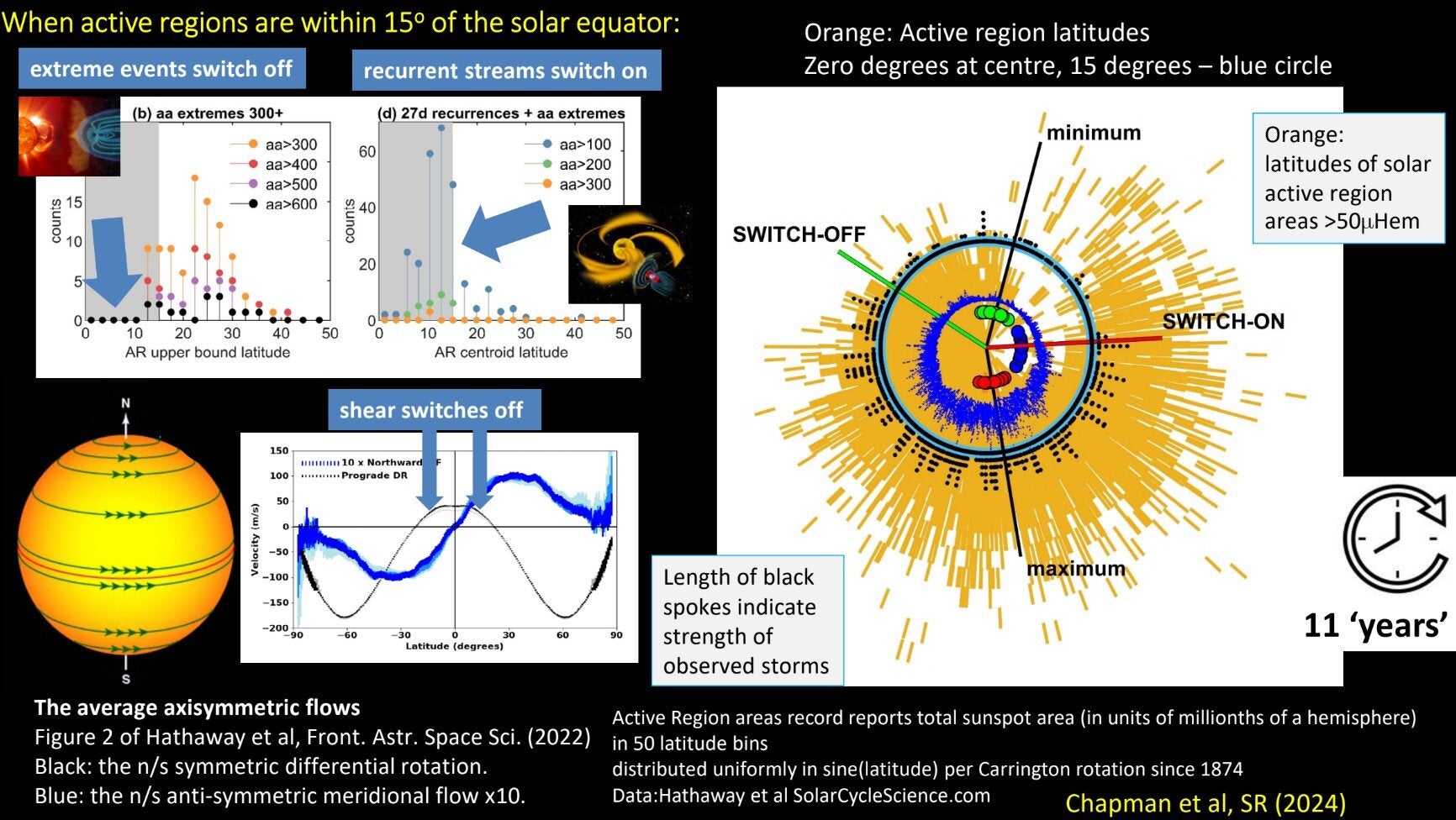
“Instead, we’ve discovered that the most extreme space weather switches off quite suddenly at a specific point in every solar cycle. By identifying that point, we’ve found a new way to predict how active the next solar cycle is likely to be.”
Chapman is presenting the research at the Royal Astronomical Society’s National Astronomy Meeting in Birmingham.
The Sun follows a cycle lasting roughly 11 years. During that period, its magnetic field reverses polarity while the number of visible sunspots rises and falls.
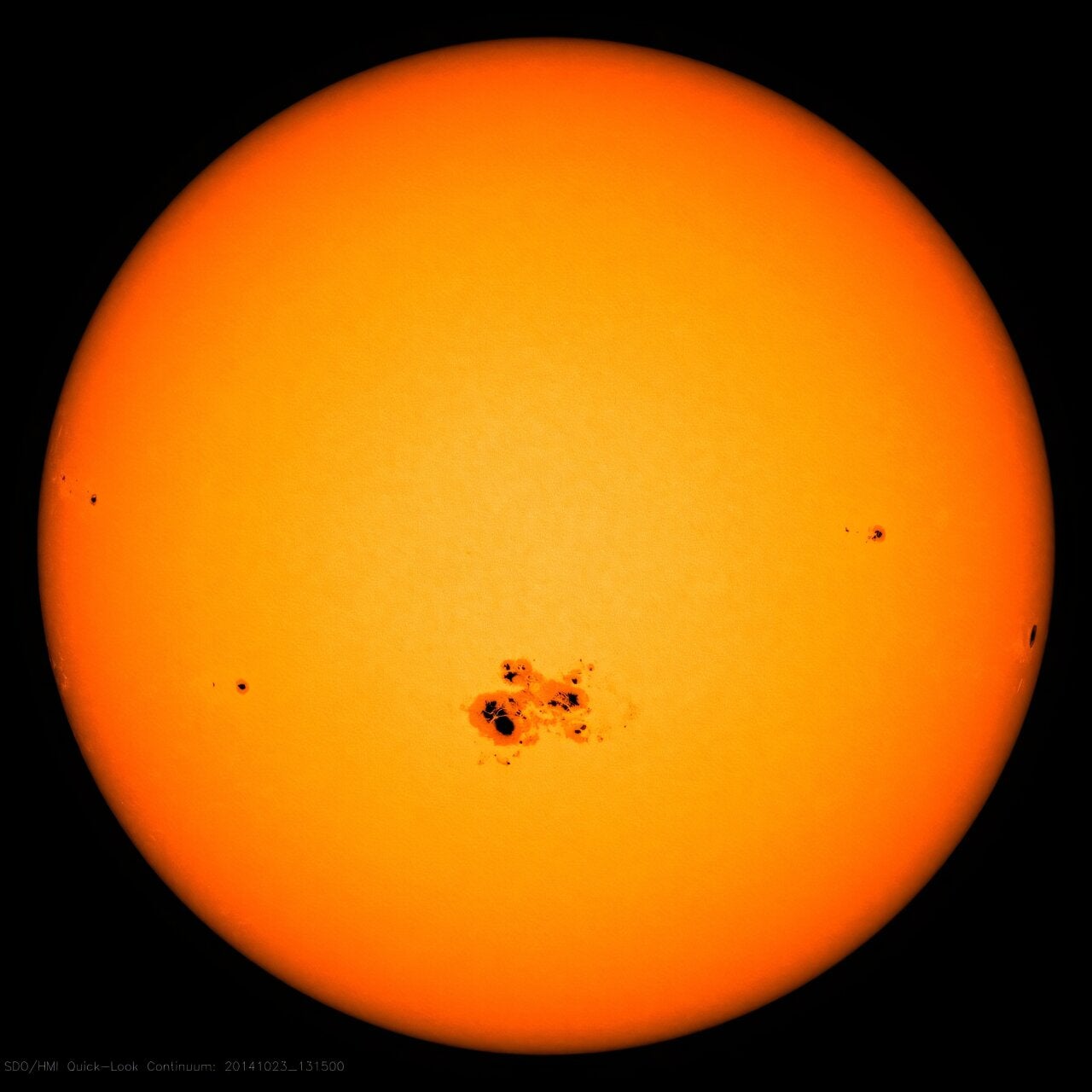
Sunspots are dark, magnetically active regions on the solar surface. They can produce solar flares and coronal mass ejections, which send energy and charged particles into space.
When those eruptions reach Earth, they can disturb satellites, communications, navigation systems, and electrical grids. They can also create auroras far beyond their usual polar regions.
Astronomers have recorded sunspots for centuries, but each solar cycle behaves differently. Some are long, others short. Their intensity also varies widely.
That inconsistency makes forecasting difficult. Many current methods cannot provide a reliable estimate until the Sun reaches solar minimum, the quiet period between two cycles.
Chapman’s method seeks an earlier warning by focusing on a different moment.
It builds on her previously developed “sunclock,” which maps irregular solar cycles onto a standardized clock. That work revealed a clear dividing point when the most extreme space weather stops.
The new analysis connects the number of sunspots at that moment with the maximum number during the next cycle. A higher or lower count at switch-off appears to offer information about the next peak.
That relationship could extend the forecasting window by several years. Instead of waiting until solar minimum, astronomers could estimate the next cycle’s strength shortly after the previous cycle’s most extreme activity ends.
“We’re about two years away from the switch-off point for the current Solar Cycle 25,” Chapman said. “At the moment, we have to estimate where that point will be, but once we reach it we can use observations alone to make a much more precise prediction for Solar Cycle 26.
“That will still give us around seven years’ warning of how strong the cycle is likely to be.”
For now, the projected peak of 100 to 120 sunspots remains only an early forecast. The eventual cycle could still prove weaker or stronger.
The method also identifies a stage when the magnetic field responsible for the next cycle should become established. That timing may help scientists study the solar dynamo, the process that generates the Sun’s magnetic field.
Understanding that process remains one of the central challenges in solar physics. The Sun’s magnetic behavior drives the sunspots, flares, eruptions, and storms that shape space weather near Earth.
The approach previously indicated that Solar Cycle 25 would be stronger than many earlier forecasts suggested.
That prediction matched the intense activity seen as Cycle 25 approached solar maximum. The period produced powerful storms and widespread auroral displays.
Britain experienced several major solar storms in 2024. The most notable occurred from May 10 through May 13, when a cluster of large sunspots produced extreme geomagnetic activity.
Those storms were the strongest to affect Earth in more than two decades. They triggered vivid northern lights across the United Kingdom, reaching as far south as Devon and Cornwall.
The displays offered a striking example of how solar activity can create visible effects far from the Sun. The same events also underscored the importance of understanding storms that can disrupt modern technology.
Earlier and more accurate forecasts would not identify the exact date of an eruption years ahead. Instead, they would help describe the broader level of activity expected during an upcoming cycle.
A seven-year warning about the likely strength of a solar cycle could help satellite operators, power-grid managers, communications providers, and navigation services prepare for periods of greater risk.
The forecast could also guide long-term planning for spacecraft and other systems exposed to solar radiation and geomagnetic disturbances.
For scientists, the switch-off point offers a new marker for studying how one solar cycle gives way to another. It may clarify when the Sun’s magnetic system begins building the conditions that shape future activity.
The method still needs to be tested when Cycle 25 reaches its actual switch-off point. Once that happens, the team expects to replace estimates with observations and produce a more precise forecast for Cycle 26.
That moment will determine whether the new approach can deliver both a long lead time and the accuracy needed for practical space-weather planning.
The original story “Sunspots could predict dangerous solar storms seven years in advance” is published in The Brighter Side of News.
Like these kind of feel good stories? Get The Brighter Side of News’ newsletter.
The post Sunspots could predict dangerous solar storms seven years in advance appeared first on The Brighter Side of News.

