The strangest thing about the quietest room on Earth is not how little you hear when you step inside. It is how much suddenly seems to come from within.
At Orfield Laboratories in Minneapolis, an anechoic chamber absorbs 99.99% of sound. Its background noise level sits around negative 9.4 decibels, below the threshold of human hearing. Visitors enter expecting peace. What many get instead is something closer to confrontation. A heartbeat can seem booming. Breathing turns harsh and mechanical. Some people notice ringing in their ears. Others feel uneasy, even disoriented. Most do not stay long.
That reaction points to a deeper scientific puzzle. Silence has long carried a simple reputation as the soothing opposite of noise. Yet physics and neuroscience suggest the reality is far more complicated. Silence is not just an empty backdrop. Under the right conditions, it can change what the brain notices, how the mind behaves, and possibly how neural systems organize themselves.
And in the strictest sense, it may not truly exist at all.
Richard Feynman liked to explain hard physics with plain, almost playful clarity. One of his core ideas was that everything is made of atoms in constant motion. That principle cuts straight to the heart of what sound is.
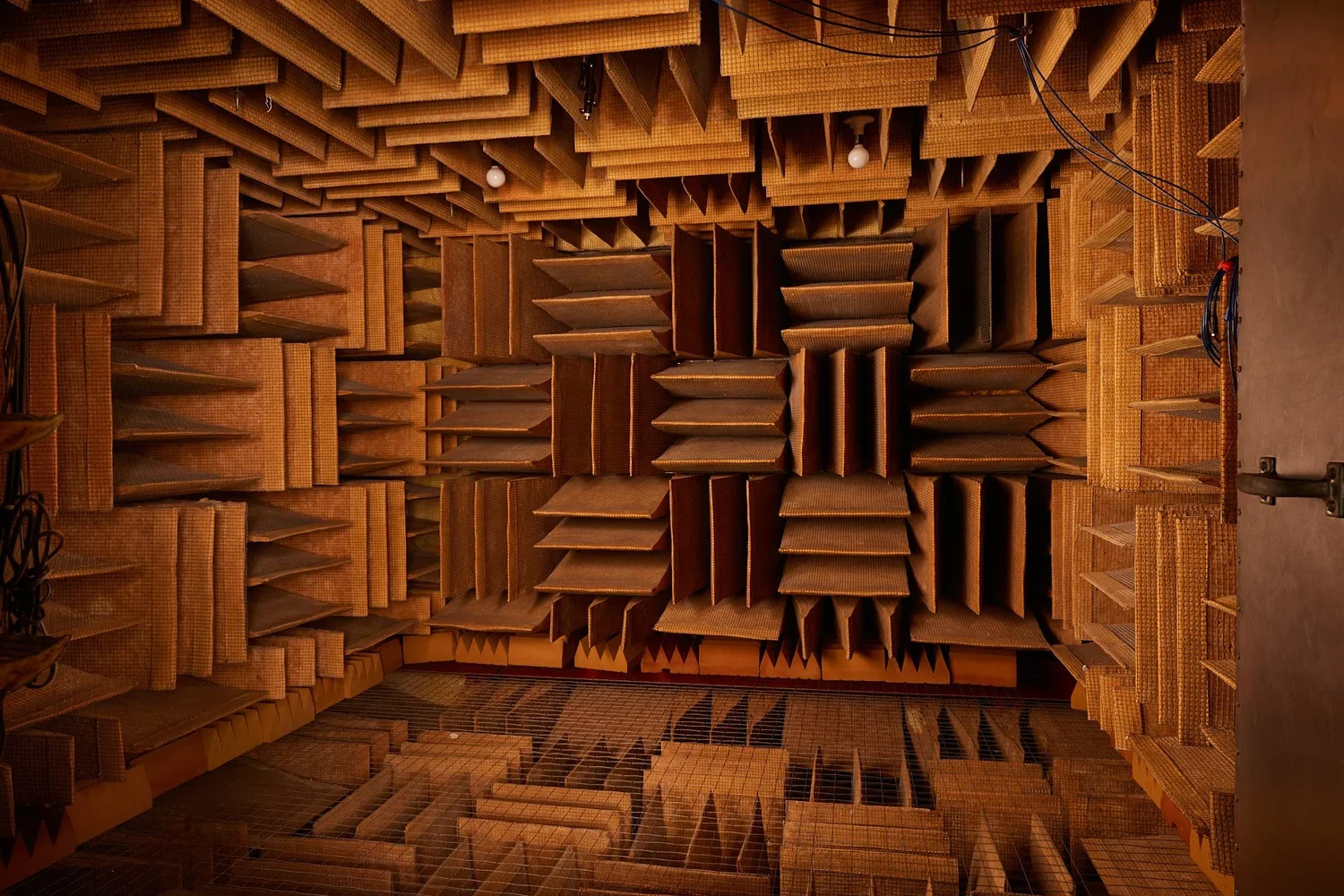
Sound is not a thing drifting through space. It is movement passed from molecule to molecule. Vibrations create pressure waves, those waves reach the ear, and the brain turns them into speech, music, engines, footsteps, or wind against a window.
Without vibrating matter, there is no sound.
The problem is that matter never completely stops moving. In ordinary conditions, atoms and molecules continue jiggling from thermal energy. Even still air is full of microscopic collisions. Physics leaves little room for a perfectly silent world unless everything reaches absolute stillness at the atomic level, something thermodynamics does not allow under normal circumstances.
Quantum physics makes the point even sharper. Even vacuum space is not truly empty, because fluctuating quantum fields remain. The universe is never fully still.
That changes the meaning of silence. It stops being an absolute condition and becomes a relative one, a drop in sensory input rather than its total disappearance.
Oddly, that drop can have dramatic effects on the brain.
For much of modern neuroscience, the brain was treated like a task-driven machine. When a person focused on something, activity rose. During rest, researchers assumed it would fade. That picture began to collapse in the early 2000s when neuroscientist Marcus Raichle used functional MRI to examine what happened when people were no longer working on an assigned task.

Instead of quieting down, parts of the brain became more active.
Raichle identified what is now known as the default mode network, or DMN. When outside demands ease up, the brain often turns inward. Memory retrieval grows stronger. Self-reflection deepens. The mind begins moving through old conversations, imagined futures, unresolved worries, fragments of identity, and possible next steps. Rest, in other words, does not mean inactivity.
It means a different kind of work.
The finding mattered because the brain is expensive tissue. Though it makes up only a small share of body weight, it uses about 20% of the body’s energy. A system that consumes that much power is unlikely to be an evolutionary leftover. Quiet seems to give that internal machinery room to operate.
One of the more intriguing clues came from a 2013 experiment at Duke University. Regenerative biologist Imke Kirste was studying how different sounds affected mice. Her team exposed animals to music, white noise, recordings of mouse pups, and silence, which was meant to function as the control condition.
Silence turned out to be the standout.
After two hours of quiet a day, the mice developed new cells in the hippocampus, a region closely linked to learning, memory, and spatial navigation. That was not what the researchers expected. The silent condition had been treated as the absence of stimulation, not as something biologically active in its own right.
Kirste later suggested that periods without competing sensory demands may encourage internal processing. The brain, freed from constant outside input, may redirect resources toward organization, adaptation, and memory consolidation.

That does not mean silence regenerates the human brain. The study involved mice, and translating rodent results into human neuroscience always requires caution.
Still, the work added to a growing shift in thinking. Quiet no longer looked like simple emptiness. It began to resemble a distinct biological state.
That matters in a world that rarely stops making noise.
Human beings did not evolve amid endless alerts, traffic, and layered media. Earlier environments had sound, certainly, but it was intermittent: moving water, animal calls, wind, storms, footsteps, rustling leaves. Modern life often replaces that pattern with uninterrupted stimulation. Phones buzz. Notifications flash. Stores pipe in music. Podcasts fill commutes. Even downtime comes with earbuds.
True quiet has become unusual.
Researchers increasingly suspect that this constant sensory load may interfere with the brain’s reflective mode. If attention is always being tugged outward, there may be fewer openings for memory integration, long-form thought, and inward processing.
Yet many people seem uneasy when that opening finally appears.
Sit alone in a quiet room for a few minutes and the mind often begins replaying what distraction had kept at bay. Old embarrassments return. Anxieties sharpen. Unfinished conversations resume. Thoughts that were once buried under noise become impossible to ignore. That may help explain why the Orfield chamber feels so unsettling. Remove enough external input and internal activity rises into awareness.
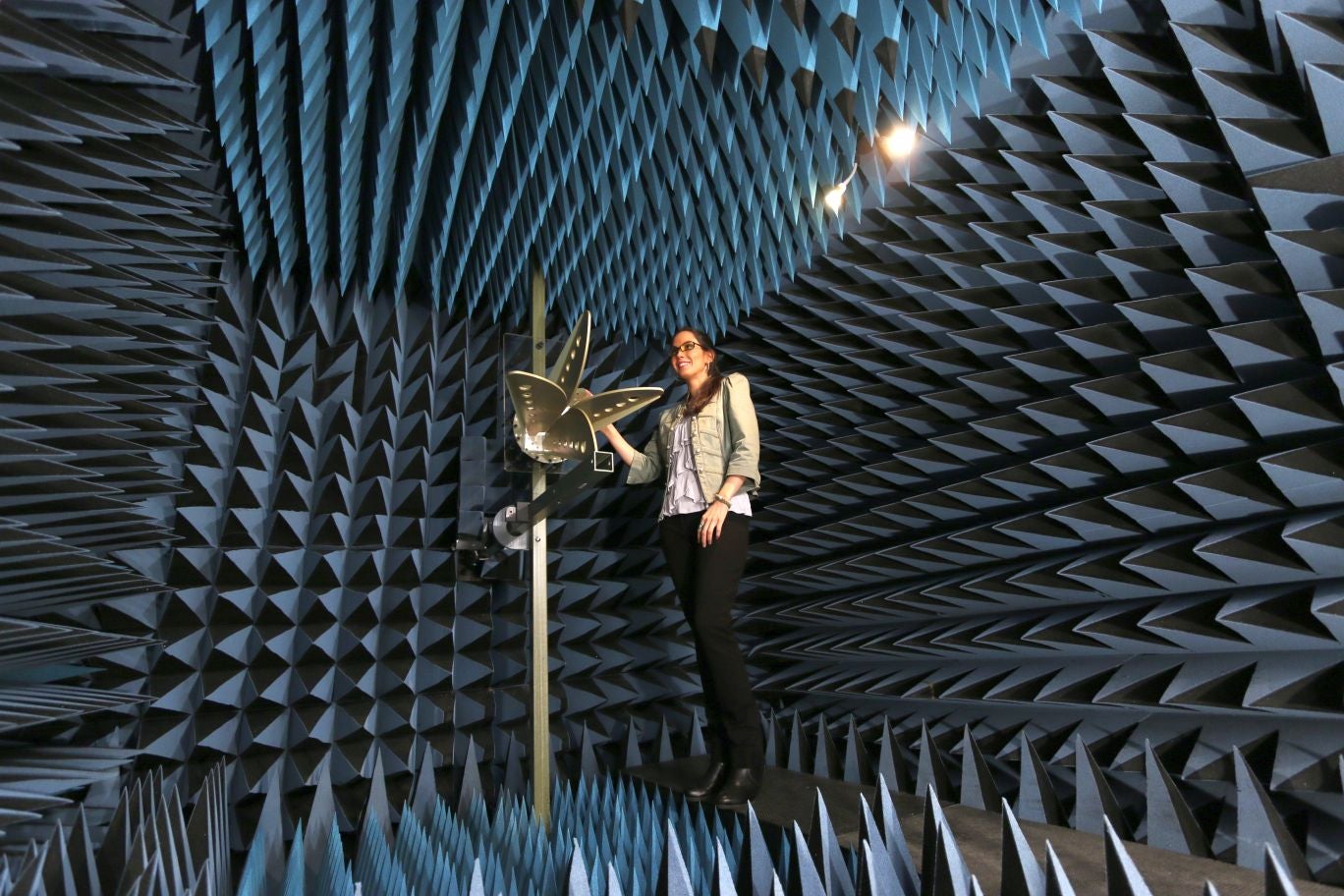
Anechoic chambers add another layer to that discomfort. Without echoes, the brain loses acoustic cues it normally uses to understand space. Some people report balance problems. Others experience mild hallucinations during longer exposure. The body becomes harder to place because humans rely on reflected sound more than they realize.
Silence, in that setting, does not feel empty. It feels alien.
It can also feel intensely physical. Breathing seems amplified. Small joint movements stand out. Heartbeats become hard to escape. The nervous system, deprived of familiar environmental signals, may begin generating or magnifying its own patterns. The mind starts filling the void.
That helps explain an old human habit. Long before scanners and decibel measurements, people treated quiet contemplation as serious work. Writers, mathematicians, physicists, and religious practitioners carved out silence because it helped them think. Modern neuroscience offers a possible reason. The default mode network appears closely tied to autobiographical memory, future planning, creativity, and abstract thought. In quiet, the brain may link distant ideas and turn scattered experiences into something more coherent.
Not every quiet moment helps. Inward focus can also feed rumination and anxiety. Mental health matters. Setting matters. Context matters.
Even so, the evidence suggests silence is not passive.
It changes the conditions under which the brain operates.
The original story “This is what 10 minutes of silence does to your brain” is published in The Brighter Side of News.
Like these kind of feel good stories? Get The Brighter Side of News’ newsletter.
The post This is what 10 minutes of silence does to your brain appeared first on The Brighter Side of News.

