A prosthetic arm that fits perfectly in the morning can turn uncomfortably tight by afternoon. Exercise, heat and the natural swelling of a limb can throw off the fit within hours, and for many amputees, that daily unpredictability is reason enough to stop wearing a bionic hand altogether. It is a small mechanical problem with a large human cost.
Almost 24 million people worldwide live with the loss of an arm or hand. Even in wealthy countries, only about half of them have ever tried a prosthesis, and roughly 35 to 40 percent of those who do end up abandoning the device. Rejection rates are highest among children, whose bodies keep changing shape as they grow.
In lower-income countries, the picture is starker. Researchers estimate that only 10 percent of people with upper limb loss ever get the chance to try a prosthetic device at all, a gap far wider than the one seen in wealthier nations.
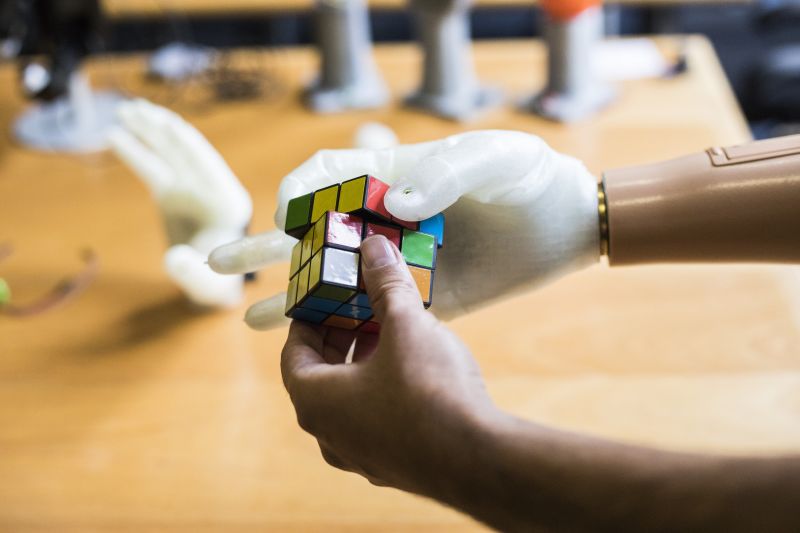
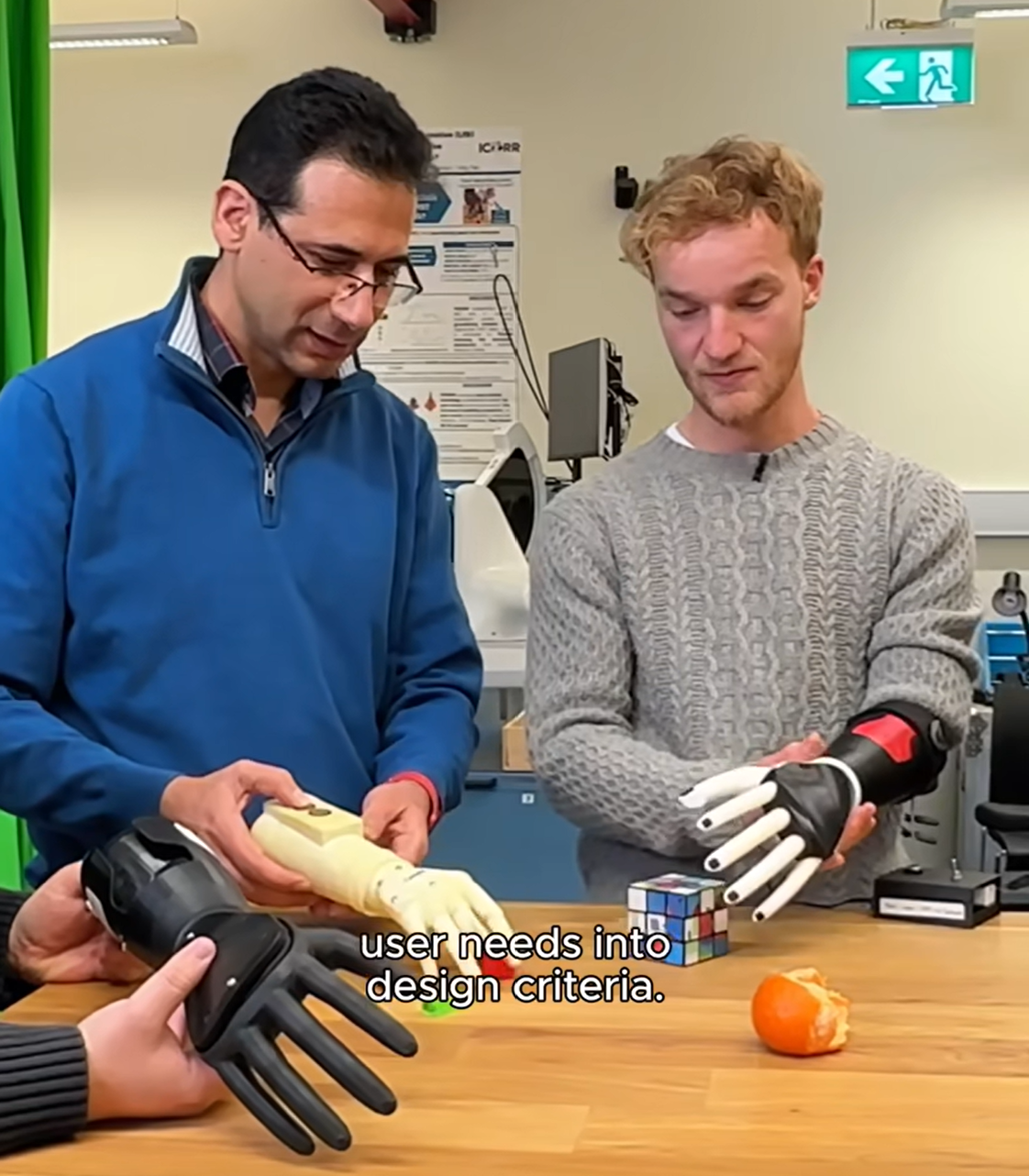
Dr Alireza Mohammadi, a senior research engineer from the University of Melbourne, wanted to understand why so many prosthetic hands end up unused. Rather than starting with a new design, he and his team began with sixty interviews, talking to amputees, clinicians and suppliers to map out exactly where existing devices were falling short for the people who depend on them.
That research became the starting point for a company the team later founded, called Meablex, built specifically to tackle the technical problems users kept describing during those conversations.
Materials mattered as much as electronics. “Bionic hands are typically made out of rigid and heavy materials like metal and therefore can be hazardous if there’s a malfunction,” Dr Mohammadi said. “Our next-generation prosthetics are much safer as we use lightweight soft robotic materials and advanced 3D-printing technologies.”
One of the most consistent complaints centered on the socket, the part that connects a person’s residual limb to the bionic hand. Most commercially available sockets are not adjustable, which becomes a problem the moment a limb changes shape.
Limbs shift for all sorts of reasons: growth, exercise, temperature, activity levels, or the ordinary swelling and shrinking that happens over the course of a single day. A socket built for one moment does not necessarily fit the next.
“If someone exercises while wearing a fitted prosthetic socket, their residual limb may temporarily expand due to increased blood flow, causing the socket to become too tight,” Dr Mohammadi said. “As current sockets are not adjustable, the prosthetic will need to be refitted. For growing children, the challenge is even greater as they need to have their fitted sockets regularly replaced to accommodate changes in their body shape over time. This costly process can take several months and during this time the child can’t use their bionic hand.”
Meablex’s answer was to design a socket the wearer can adjust manually, in real time, rather than waiting weeks or months for a clinician to refit it from scratch.
That kind of on-the-spot control could matter most for children, whose sockets currently need repeated, costly replacement as their bodies grow. It also addresses the everyday version of the problem: temporary swelling from exercise, warm weather or simply a long day.
It is a direct response to what amputees and clinicians described in those early interviews.
Most prosthetic arms today rely on electromyography, or EMG, sensors that pick up the electrical activity produced when a person contracts muscles in their residual forearm. A machine learning model then interprets that activity to work out what hand movement the user intends to make, translating muscle signals into motion.
The trouble is that EMG signals are sensitive to sweat, electrode placement and even small changes in how snugly the socket fits. Any one of those factors can scramble the signal and make the hand harder to control, sometimes in the middle of an ordinary task.
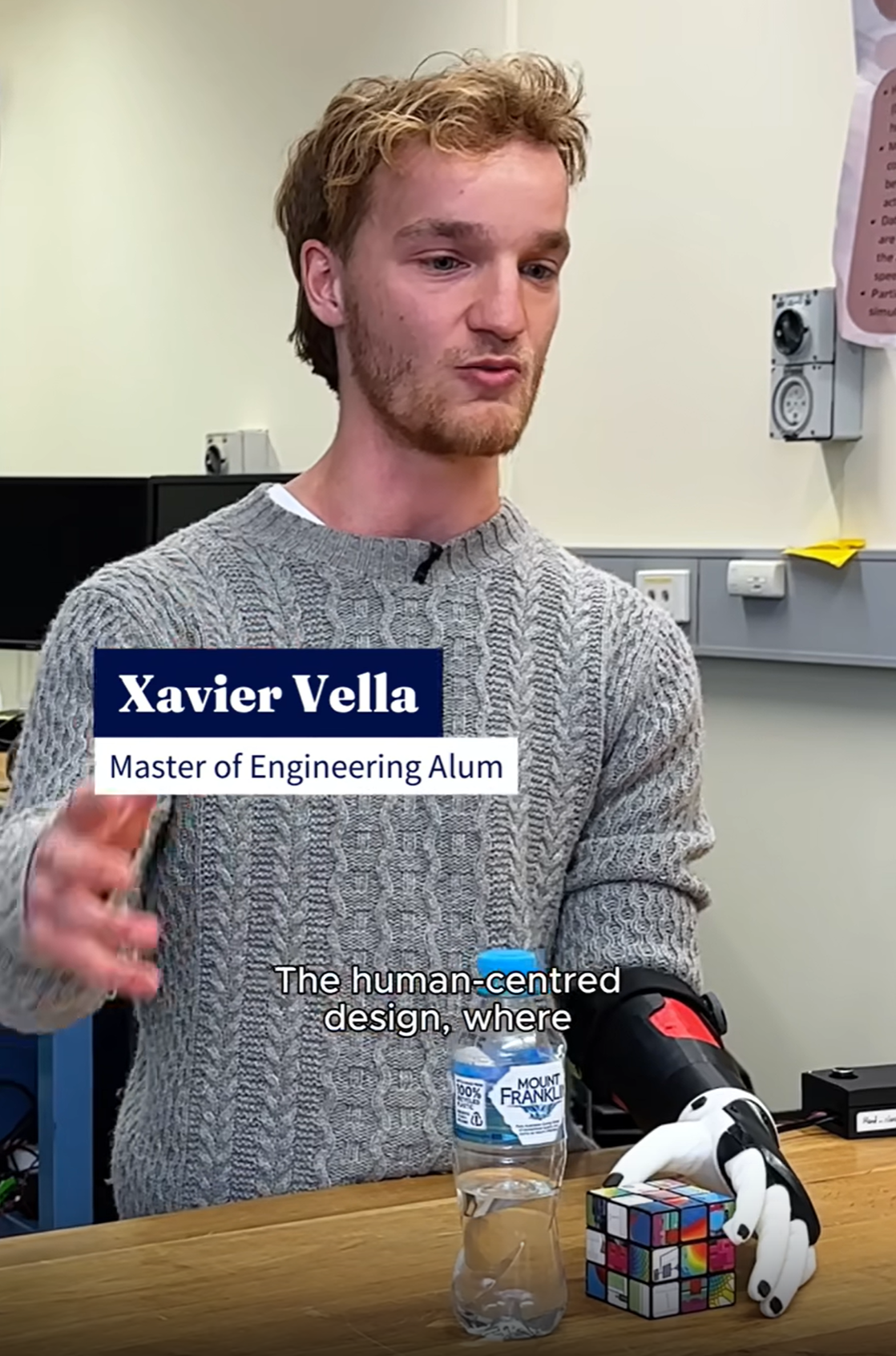
Meablex has built a different kind of control system aimed at holding up better in everyday conditions. “Our system uses magnetic sensors designed to be less affected by sweat than skin-surface electrical sensors,” said Dr Mohammadi. “Our technology combines a lightweight 3D-printed prosthetic hand with a new sensorised socket that detects subtle muscle movement, rather than relying only on traditional electrical muscle signals.”
Clinical trials are due to begin later this year. If they proceed as planned, the team is aiming for a commercial launch in early 2027, once clinical validation and regulatory approval are complete.
Professor Thas Nirmalathas, Dean of the Faculty of Engineering and Information Technology, said the project showed how engineering can be applied directly to health and wellbeing. “From identifying the problem, to engaging with the community and now to being on the cusp of trialing an innovative state-of-the art fully integrated bionic arm, the team is set to transform the lives of amputees globally,” Professor Nirmalathas said.
The work recently received a boost of $470,000 through Australia’s Economic Accelerator (AEA) Ignite program, funding intended to support the next stage of development, clinical validation and commercialisation ahead of the planned trials.
If the adjustable socket performs as intended in clinical trials, it could reduce the frequent, costly refitting process that currently sidelines many prosthetic users, particularly children who outgrow their sockets every few months and lose access to a working hand in the meantime.
A magnetic sensing system that holds up better against sweat could also make bionic hands more dependable during exercise or a long day of ordinary activity, conditions that currently disrupt EMG-based control and push some users toward abandoning their devices.
Clinical trials will test whether these changes hold up in real-world conditions, and regulatory approval will determine how soon the technology reaches amputees who currently go without any prosthetic option, including in lower-income regions where access remains far more limited.
The original story “University of Melbourne start-up has developed a new, cutting-edge bionic prosthetic” is published in The Brighter Side of News.
Like these kind of feel good stories? Get The Brighter Side of News’ newsletter.
The post University of Melbourne start-up has developed a new, cutting-edge bionic prosthetic appeared first on The Brighter Side of News.