A weathered piece of dinosaur skull has filled a continental gap in the history of long-clawed predators. Acquired by London’s Natural History Museum in 1924, the fossil belongs to a newly named species that lived on what is now the Isle of Wight about 120 million years ago.
The animal, Invictibellatrix amberina, is the first megaraptoran described from Europe. A UCL-led team identified it through detailed anatomical comparisons, CT scanning and evolutionary analyses. Their findings appear in Royal Society Open Science.
The discovery adds a relatively small predator to a group whose later members included giants. It also strengthens the case that megaraptorans spread widely before becoming prominent carnivores across southern continents. Precisely how they traveled, however, remains an interpretation of an incomplete fossil record.
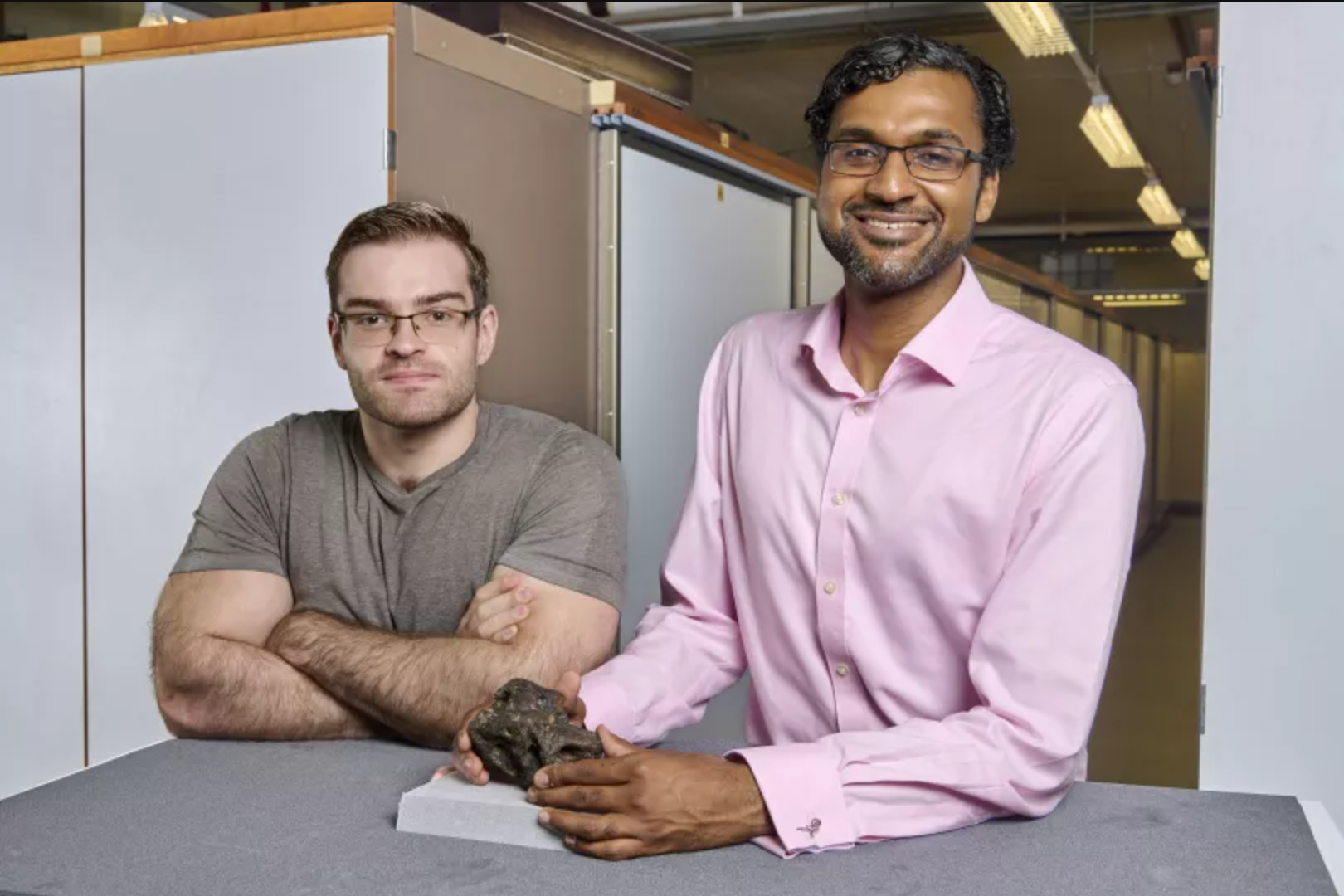
The specimen is a partial braincase, the bony structure surrounding the brain. Amateur paleontologist Reginald Walter Hooley recovered it at the foot of cliffs at Sudmoor Point, near Brook. It came from the Wessex Formation, a fossil-rich sequence of Early Cretaceous rocks.
The museum purchased the specimen in May 1924. Although it had never received a formal anatomical description, it was not entirely untouched. A physical cast of its internal cavity was made soon after acquisition, providing an early record of structures now examined digitally.
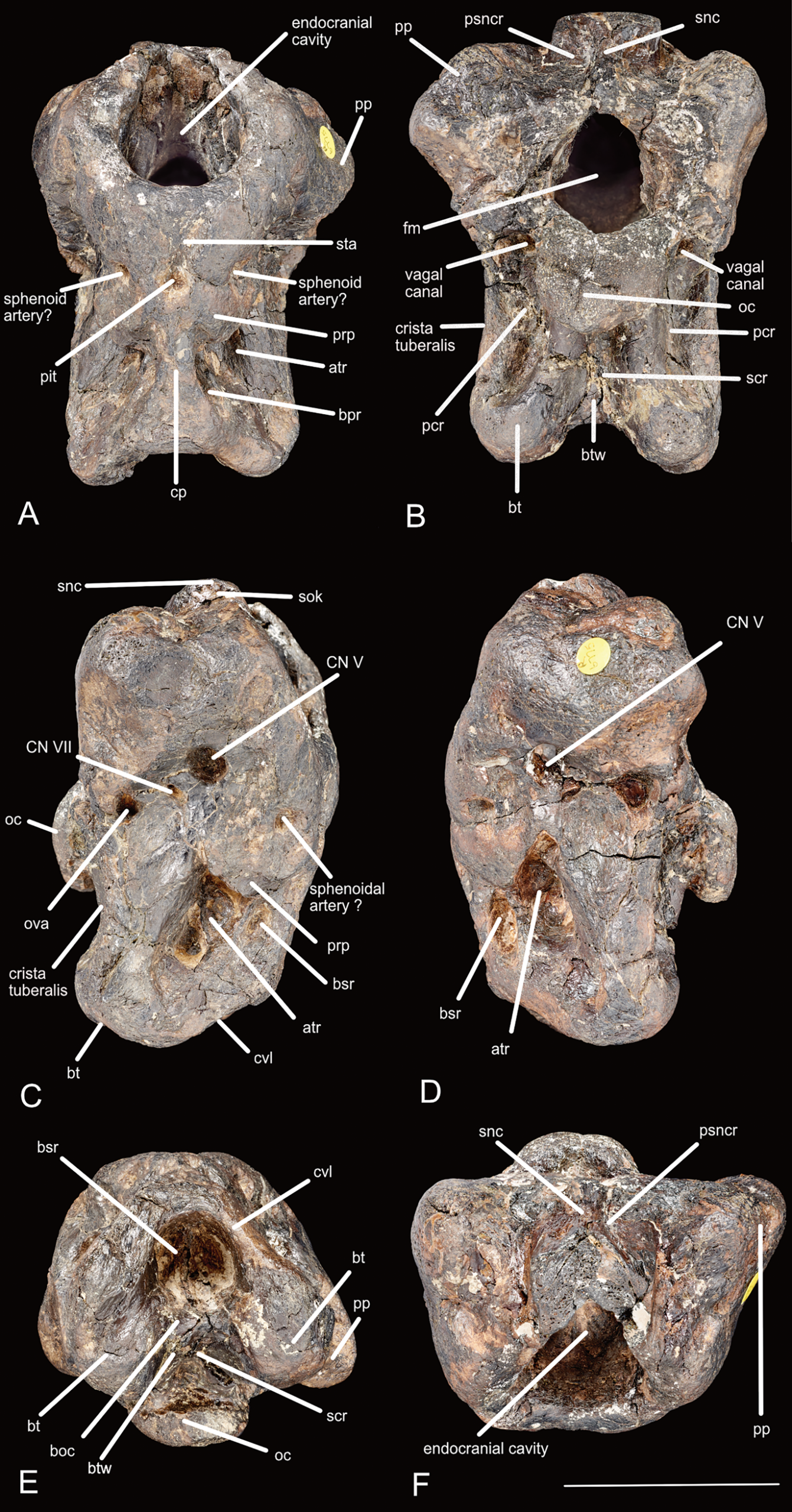
For the new study, micro-CT scanning revealed internal details without cutting apart the fossil. Researchers separated bone from surrounding rock in the scans and reconstructed the surviving braincase in three dimensions. They also digitally filled its internal cavity to produce an endocast.
That endocast represents the space inside the skull, rather than a preserved brain. The fossil lacks its forebrain region, and parts of the inner ear were too poorly preserved to reconstruct accurately. Even so, the remaining anatomy supplied information that external inspection alone could not provide.
Naming a dinosaur from an incomplete skull requires more than spotting a single unusual feature. The team compared the specimen with numerous meat-eating dinosaurs, including spinosaurs, tyrannosaurs and other megaraptorans. The identification rests on a distinctive combination of structures.
These include an hourglass-shaped crest at the back of the braincase and characteristic recesses in several bones. The opening through which the spinal cord passed is vertically oval. Its proportions relative to the skull’s neck joint also helped distinguish the specimen from other groups.
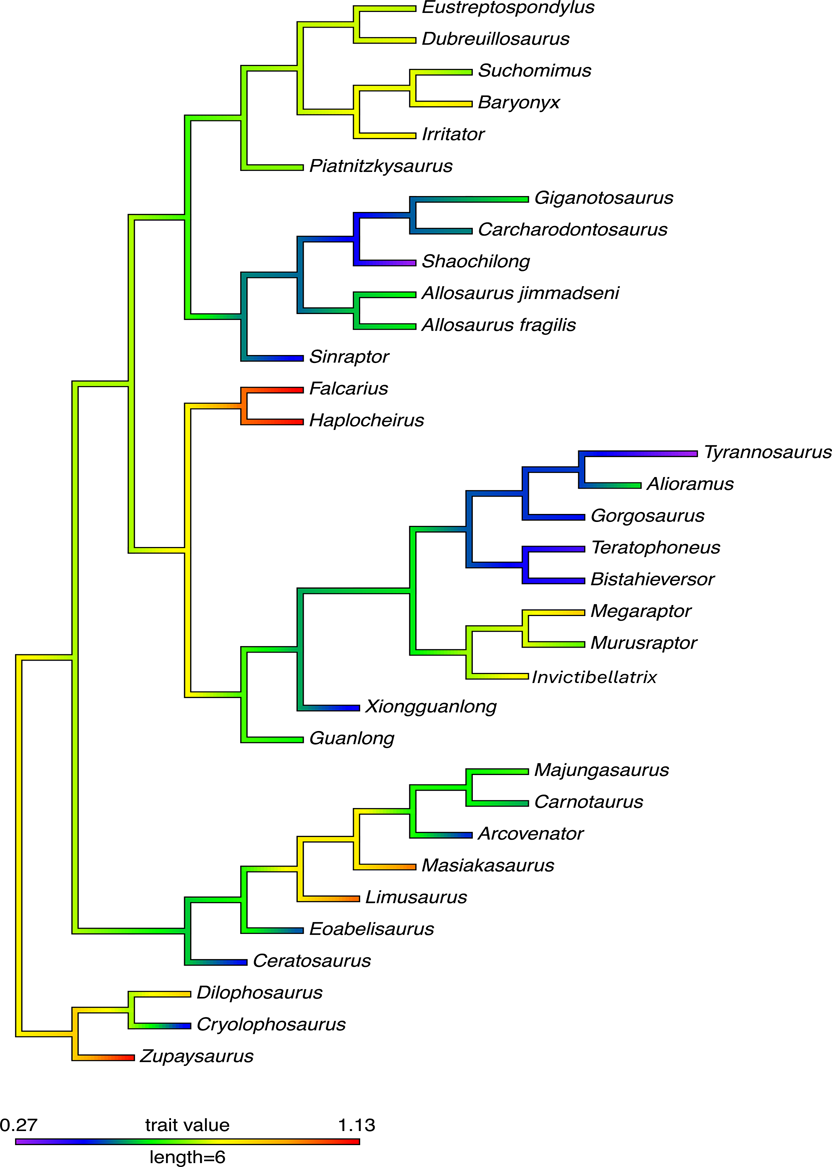
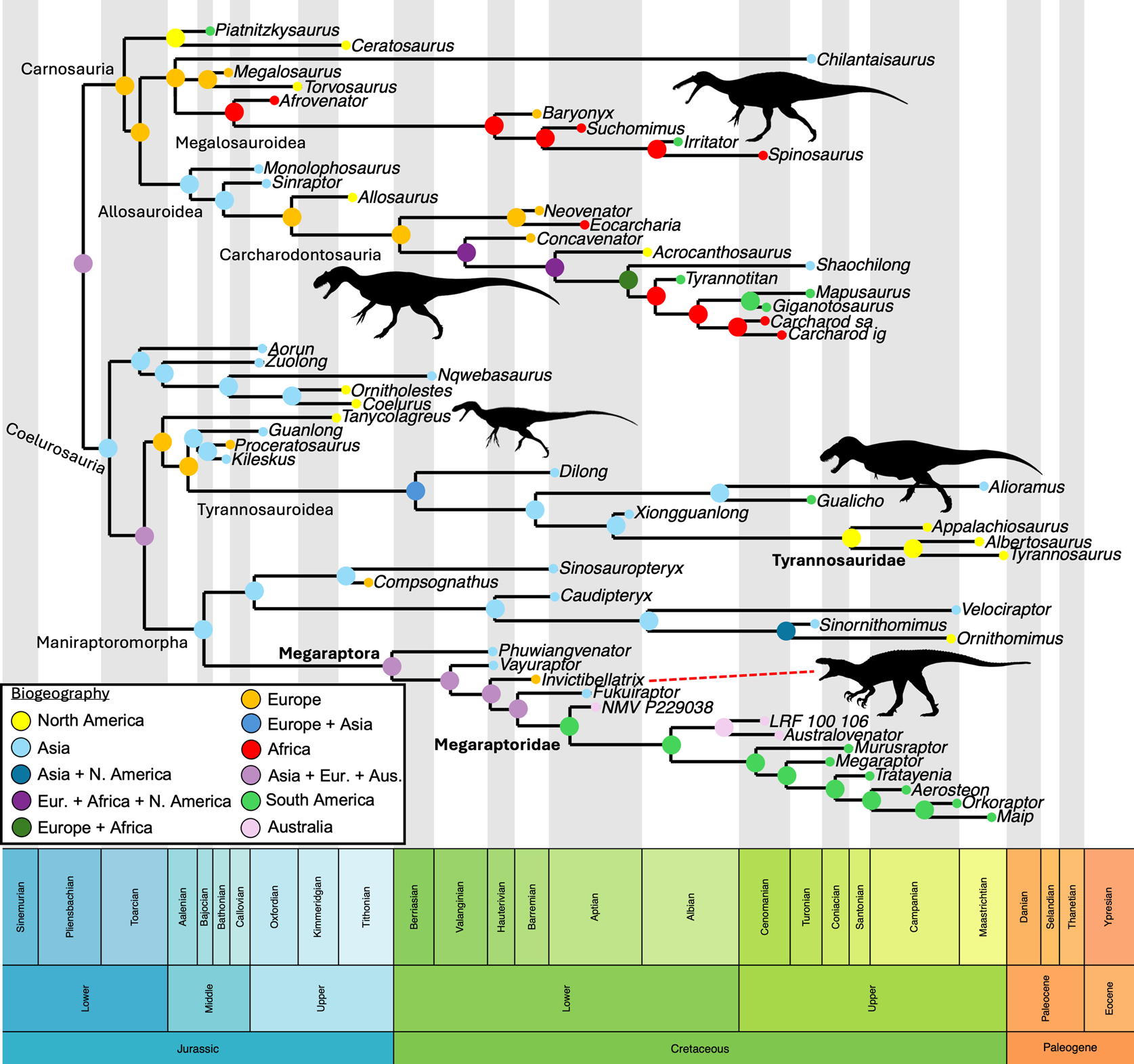
Computer analyses placed Invictibellatrix within Megaraptora across different datasets and analytical approaches. Its exact position within that group varied, illustrating the limits of a fragmentary specimen. Nevertheless, the researchers consistently recovered a megaraptoran identity.
The skull bones are extensively fused, suggesting the animal was unlikely to have been a juvenile or subadult. That matters because young dinosaurs can differ anatomically from adults. The authors argue that the specimen’s distinctive features are unlikely to be explained simply by its growth stage.
The study also highlights the value of braincases in evolutionary comparisons. Such features make up only a small fraction of the anatomical traits in some dinosaur datasets. More detailed descriptions could add useful evidence for groups whose relationships remain difficult to resolve.
Megaraptorans were two-legged carnivores known for powerful forelimbs and enlarged, curved hand claws. Their slender skulls contrasted with the heavily built heads of large tyrannosaurs. The new species appears to represent one of the group’s smaller members.
Lead author Cassius Morrison, of UCL Earth Sciences, estimated its length at three to four meters. He suggested it stood just over 1.5 meters tall, likely had feathers, and may have carried claws 10 to 20 centimeters long. These reconstructions draw on related dinosaurs, rather than preserved limbs or feathers from this specimen.
Morrison proposed that it ate small dinosaurs, lizards and mammals. Its estimated size suggests it was not the dominant predator in its ecosystem. Much later, southern megaraptorans such as Argentina’s Maip macrothorax reached approximately nine to ten meters long.
The group’s relationship with tyrannosaurs remains debated. This study supports a placement within Tyrannosauroidea, but other analyses favor alternative positions. The authors therefore deliberately avoid presenting the broader evolutionary placement of megaraptorans as settled.
Before this identification, European fossils had not securely documented the group’s presence there. Invictibellatrix supplies that missing geographic occurrence. Its age also places it alongside early megaraptorans known from Asia, helping establish their broad Early Cretaceous distribution.
The team modeled past geographic ranges using evolutionary trees, fossil ages and changing connections between landmasses. Different analyses produced different reconstructions of the group’s origins. The authors favored a scenario in which an Asian population spread into Europe around 130 million years ago.
In that interpretation, Europe provided a route toward Africa and the southern landmass of Gondwana. The fossil supports the plausibility of this corridor, but it does not preserve a migration itself. Nor does it establish that every competing dispersal route can be ruled out.
The models also suggest later regional extinctions reduced the group’s northern distribution while southern populations persisted and diversified. Why that happened remains unresolved. Gaps in sampling, especially across Africa and Antarctica, complicate attempts to separate genuine absence from missing evidence.
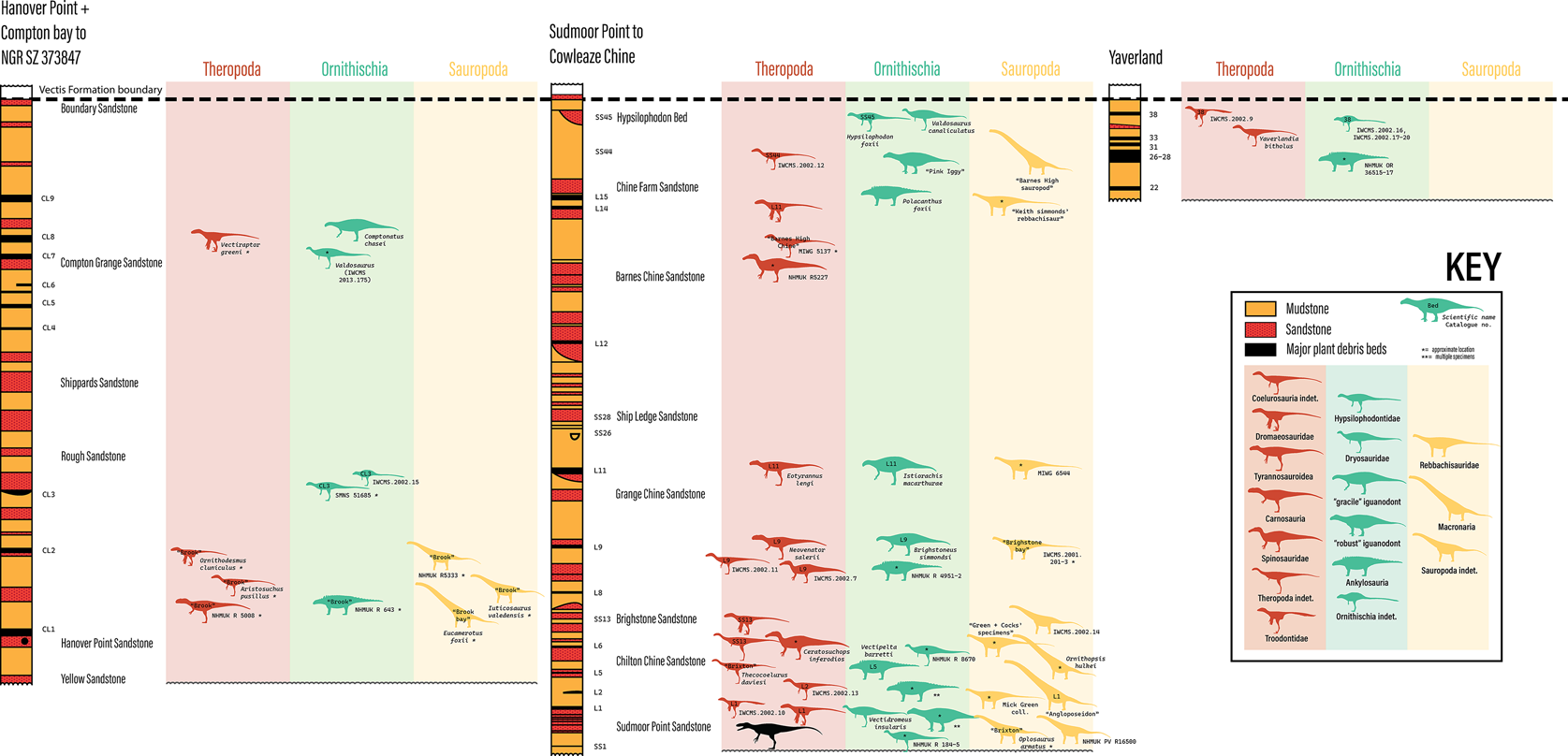
The animal inhabited a landscape very different from the modern island. The Wessex Formation records floodplains with seasonally dry conditions, conifers and ferns. Plant-debris deposits indicate episodes of flash flooding, while charcoal points to recurring wildfires.
The fossil’s exact original layer is unknown because it was collected below a cliff. Researchers consider the lower plant-debris beds exposed at Sudmoor Point its most likely source. This uncertainty limits how precisely it can be matched with other animals from the formation.
Invictibellatrix combines Latin words meaning “unconquered female warrior,” honoring the group’s later rise to apex-predator roles. The name does not establish the fossil animal’s sex. Amberina refers to amber in the Wessex Formation’s plant-debris beds.
“Work like this shows the exceptional value of working with historical museum collections where there are still many discoveries to be made,” said senior author Paul Barrett. The Natural History Museum paleontologist emphasized the continuing surprises among Isle of Wight fossils. Here, a specimen collected generations ago has expanded both a dinosaur group’s known range and the questions surrounding its history.
These studies explore related predators, their anatomy and the evolving picture of Cretaceous dinosaur diversity.
A New Megaraptoran Dinosaur (Dinosauria, Theropoda, Megaraptoridae) from the Late Cretaceous of Patagonia: Describes Murusraptor, whose preserved skull anatomy provides important comparisons with the new European species. (PLOS ONE, 2016)
New spinosaurids from the Wessex Formation (Early Cretaceous, UK) and the European origins of Spinosauridae: Describes two other Isle of Wight carnivores and examines their evolutionary and geographic relationships. (Scientific Reports, 2021)
The osteology and affinities of Eotyrannus lengi, a tyrannosauroid theropod from the Wealden Supergroup of southern England: Provides a detailed account of another Wessex Formation predator and a framework for comparing theropod relationships. (PeerJ, 2022)
A large Megaraptoridae (Theropoda: Coelurosauria) from Upper Cretaceous (Maastrichtian) of Patagonia, Argentina: Introduces Maip macrothorax and investigates the large body sizes attained by later South American megaraptorans. (Scientific Reports, 2022)
Latest Cretaceous megaraptorid theropod dinosaur sheds light on megaraptoran evolution and palaeobiology: Adds anatomical evidence from a late-surviving Patagonian member of this poorly understood predator group. (Nature Communications, 2025)
Research findings are available online in the journal Royal Society Open Science.
The original story “100-year-old museum fossil identified as Europe’s first known megaraptoran dinosaur” is published in The Brighter Side of News.
Like these kind of feel good stories? Get The Brighter Side of News’ newsletter.
The post 100-year-old museum fossil identified as Europe’s first known megaraptoran dinosaur appeared first on The Brighter Side of News.


Leave a comment
You must be logged in to post a comment.