Salt Lake City became the center of a global race against age-related decline as XPRIZE announced 20 finalist teams pursuing treatments designed to help people stay stronger, sharper and healthier for longer.
Ten of those finalists, spanning the United States, South Korea, Japan and China, were named Milestone 2 Awardees. Each receives $1 million, along with access to clinical testing resources, as the $101 million XPRIZE Healthspan competition moves toward human trials and its 2030 finale.
The seven-year competition began in 2023 with more than 600 applicants. Teams are being challenged to develop treatments that restore muscle, cognitive and immune function in adults ages 50 to 90 by at least 10 years. XPRIZE has also set a more ambitious target of 20 years, with improvements occurring within one year or less of treatment.
The competition ultimately offers a grand prize of up to $81 million, one of the largest incentive prizes tied to a single health breakthrough.

As teams move into clinical testing, much of the scientific evaluation will run through the Stein Institute for Research on Aging at the University of California San Diego.
The institute will serve as the competition’s Central Laboratory and Biorepository, creating standardized procedures for trials conducted by different teams around the world. It will also store biological samples, analyze them and provide blinded results for XPRIZE judges.
“Being selected as the central hub for the world’s most ambitious effort to extend human healthspan is an extraordinary honor,” said Anthony Molina, PhD, professor of medicine at UC San Diego School of Medicine and scientific director of the Stein Institute. “Our 43-year legacy in the science of aging, combined with a fully integrated geroscience laboratory to support major international efforts uniquely positions us to ensure that the ten finalist teams receive the highest-quality, standardized data needed to demonstrate a decade-long extension of healthspan.”
UC San Diego will distribute common clinical-trial procedures, specimen-handling guidelines and laboratory methods. Its biorepository will centrally store blood, tissue and other samples while maintaining chain-of-custody controls.
Scientists there will also conduct genomics, epigenomics, proteomics, metabolomics and cellular-aging analyses. Those techniques examine different layers of biology, ranging from genes and proteins to metabolism and changes linked with aging.
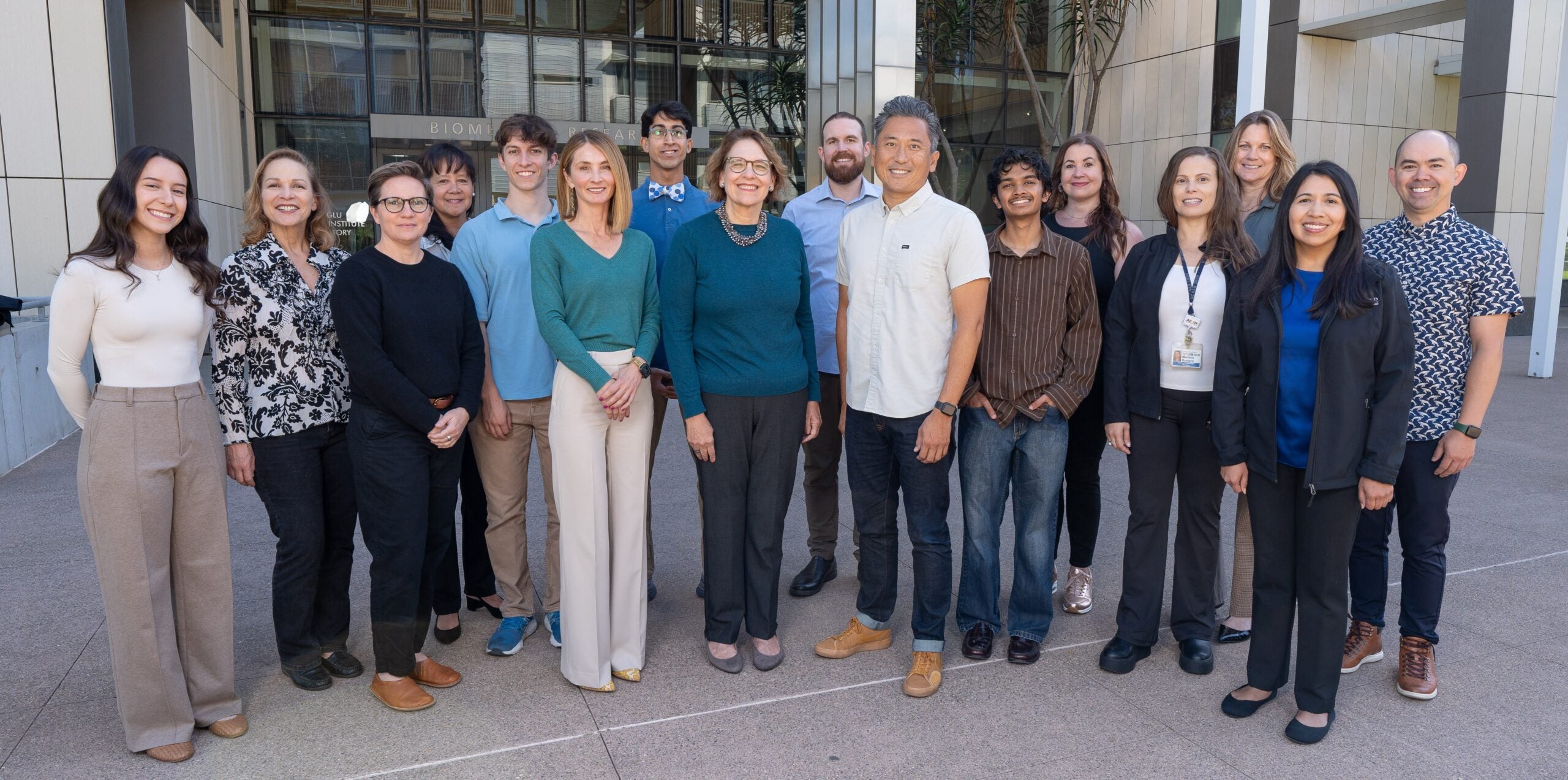
“The central laboratory is the scientific backbone of this competition,” said Michael Corley, PhD, associate professor of medicine at UC San Diego School of Medicine. “By providing a single, gold-standard platform for sample collection, multi-omics analysis and data integration, UC San Diego will set the benchmark for how we measure biological aging and will accelerate the translation of breakthrough therapies into clinical practice.”
The University of Utah’s Data Coordinating Center will also help validate the science produced by competing teams.
Among the Milestone 2 Awardees is a team from the Icahn School of Medicine at Mount Sinai, which is advancing a clinical trial called NYC-Vita.
The project is evaluating lifestyle and pharmaceutical interventions designed to improve immune function and support healthier aging. The team emerged from an international group of semifinalists announced in May 2025 and received $1 million to continue its work.
NYC-Vita brings together researchers in immunology, neuroscience, metabolism, imaging and clinical investigation.
“We are honored to continue this journey with XPRIZE Healthspan and collaborate with innovators worldwide who are working to transform healthy aging,” said Miriam Merad, MD, PhD, NYC-Vita team lead. “Earning a place among the finalists reflects the promise of our scientific approach and the dedication of our multidisciplinary team.”

“The NYC-Vita clinical trial is part of Mount Sinai’s broader Healthspan Program, bringing together biomedical research and clinical care to address one of today’s most significant health care challenges,” said Zahi Fayad, PhD, director of the program.
The team plans to continue the trial while seeking additional collaborators and philanthropic support.
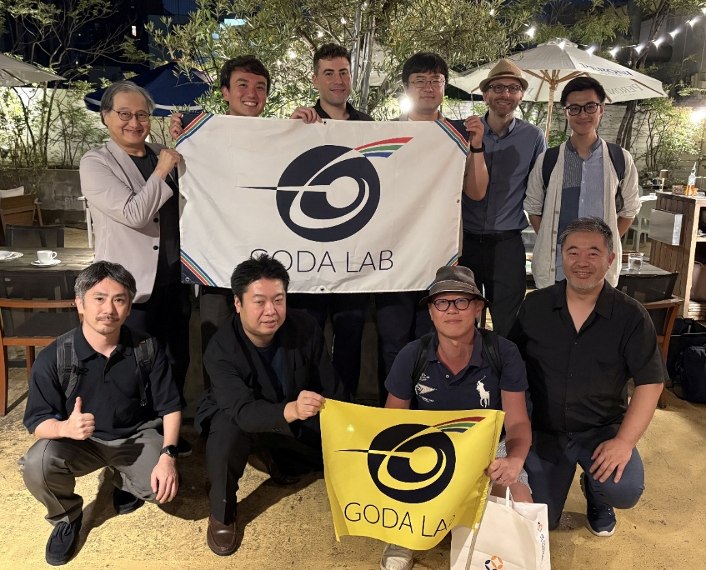
Another Milestone 2 Awardee is a Japanese team led by Professor Keisuke Goda of the SiRIUS Institute of Medical Research and Graduate School of Medicine at Tohoku University, working with the University of Tokyo’s Department of Chemistry.
Goda’s laboratory has developed what it calls “super exosomes,” engineered versions of tiny particles that cells naturally use to transport biological material.
The team chemically modifies the surface of exosomes with lanthanide ions. According to the researchers, the modification greatly improves their ability to target senescent cells.
Senescent cells are damaged or aging cells that have stopped dividing but remain in the body. They can contribute to aging and age-related disease.
Once the engineered exosomes attach to those cells, they can deliver molecular cargo such as growth factors or genetic material directly to aging tissue.
In preclinical experiments involving several groups of aged mice, the treatment produced statistically significant improvements in frailty, physical performance and several other measures associated with aging. The researchers also reported an excellent safety profile.
Using accepted cross-species lifespan scaling, the team estimated that the overall effect would correspond to more than 15 healthy human years. That estimate, however, comes from animal experiments rather than human clinical results.
The team hopes to show that the technology can extend healthy human lifespan by at least 10 years, the benchmark needed to compete for the XPRIZE grand prize.
“Advancing to the XPRIZE Healthspan finals is an important milestone, but our ultimate goal is to translate this technology into therapies that allow people to lead healthy, independent, and active lives longer,” Goda said. “We look forward to validating this approach in human clinical studies and bringing its benefits to society.”
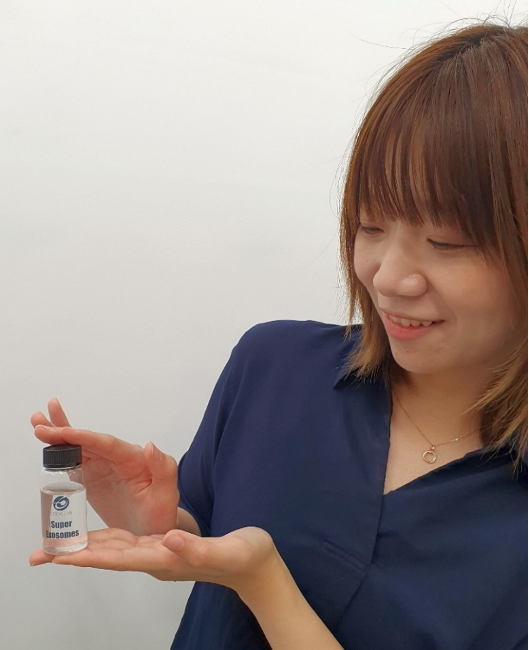
The team also sees possible uses for its platform in preserving cognitive, muscular and immune function, along with hair regeneration, skin rejuvenation and reproductive medicine. It plans to commercialize the technology through NanoTitan.
Coordinated clinical trials involving the Milestone 2 Awardees are scheduled to begin in 2026 through 2029 with support from the UC San Diego central laboratory.
That testing will determine whether approaches that produced promising laboratory or preclinical results can deliver measurable benefits in people. Standardized sampling and analysis are intended to make results from different teams easier to compare.
XPRIZE plans to announce the winners in 2030. Until then, the finalists face the central challenge of the competition: showing that an intervention can produce a large, measurable improvement in muscle, cognitive and immune function within a relatively short treatment period.
The 10 XPRIZE Healthspan Milestone 2 Awardees, each receiving $1 million, are:
These 10 were selected from the 20 finalists based on scientific rationale, scalability, accessibility and readiness for the clinical-trial phase.
Competition details are available online at XPrize.
The original story “$101 million XPRIZE Healthspan competition advances 20 teams to finals with UCSD named as testing hub” is published in The Brighter Side of News.
Like these kind of feel good stories? Get The Brighter Side of News’ newsletter.
The post $101 million XPRIZE Healthspan competition advances 20 teams to finals with UCSD named as testing hub appeared first on The Brighter Side of News.


Leave a comment
You must be logged in to post a comment.