A fragmentary jaw has filled a conspicuous gap in Ethiopia’s rich record of human evolution. The roughly 2.6-million-year-old fossil places Paranthropus in the Afar region for the first time, more than 1,000 kilometers north of its previously known northern limit.
The discovery comes from Mille-Logya, where ancient sediments preserve evidence of changing environments and several early hominins. A team led by University of Chicago paleoanthropologist Zeresenay Alemseged reports the finding in Nature. Their analysis combines comparisons of jaw anatomy with micro-CT scans of structures hidden inside the fossil.
The specimen changes where this distinctive group of human relatives is known to have lived. It also challenges explanations that treated its absence from northeastern Ethiopia as a biological restriction. A missing fossil, the authors argue, had been mistaken for a missing population.
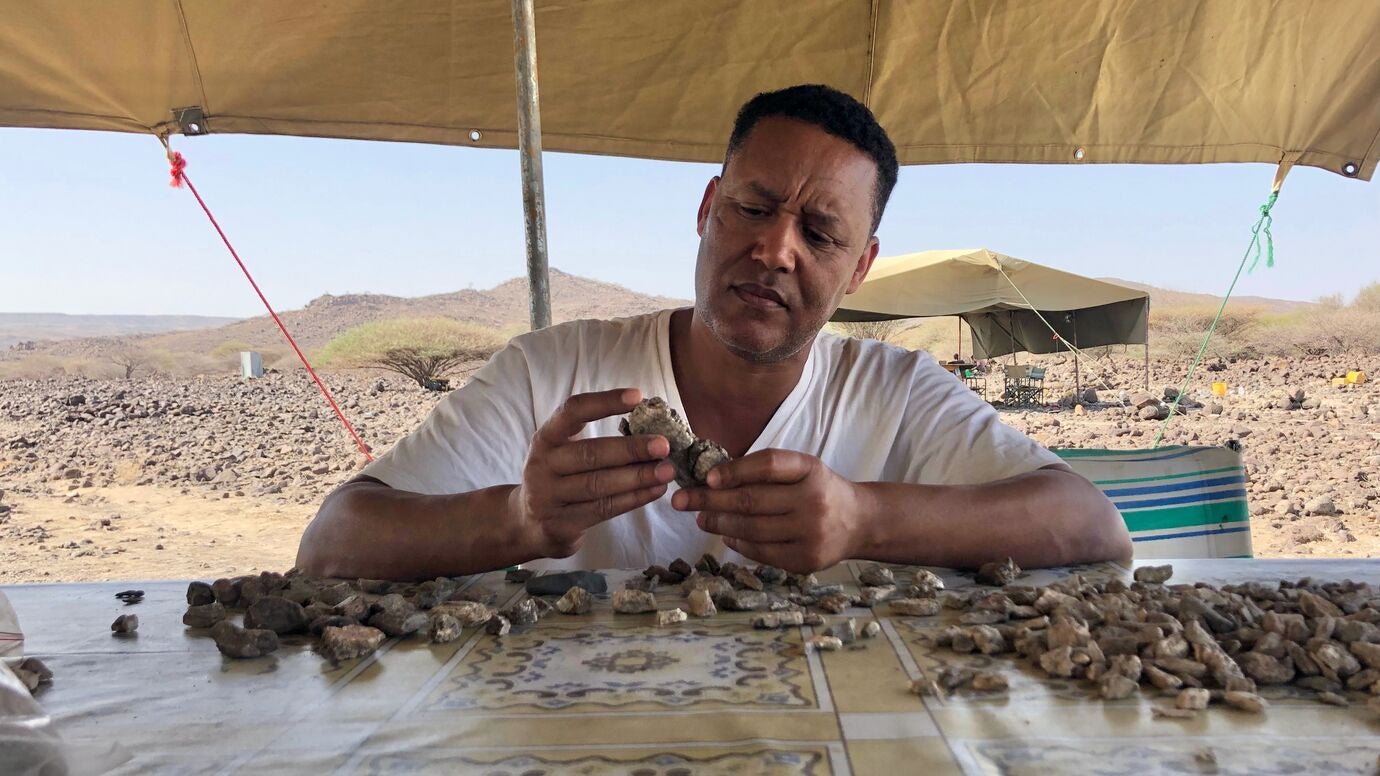
The Afar sedimentary basin documents approximately six million years of hominin evolution. Its fossils include members of Ardipithecus, Australopithecus and Homo, the genus that includes modern humans. Hundreds of remains had revealed a diverse history, but none had been identified as Paranthropus.
That absence attracted attention because Paranthropus appeared elsewhere across eastern and southern Africa. Before this discovery, Konso in southern Ethiopia marked its northernmost documented occurrence. Some explanations proposed that dietary specialization or competition with Homo prevented a farther northern distribution.
Paranthropus is recognizable for its powerful chewing anatomy. Members generally had large molars, thick enamel and substantial jaws, alongside facial adaptations associated with strong chewing muscles. Those features helped inspire the familiar “nutcracker” nickname.
The nickname also encouraged a narrow picture of its feeding habits. The new discovery adds evidence against treating the genus as confined to a limited geographic setting. Its northern presence requires researchers to reconsider what environments early Paranthropus could occupy.
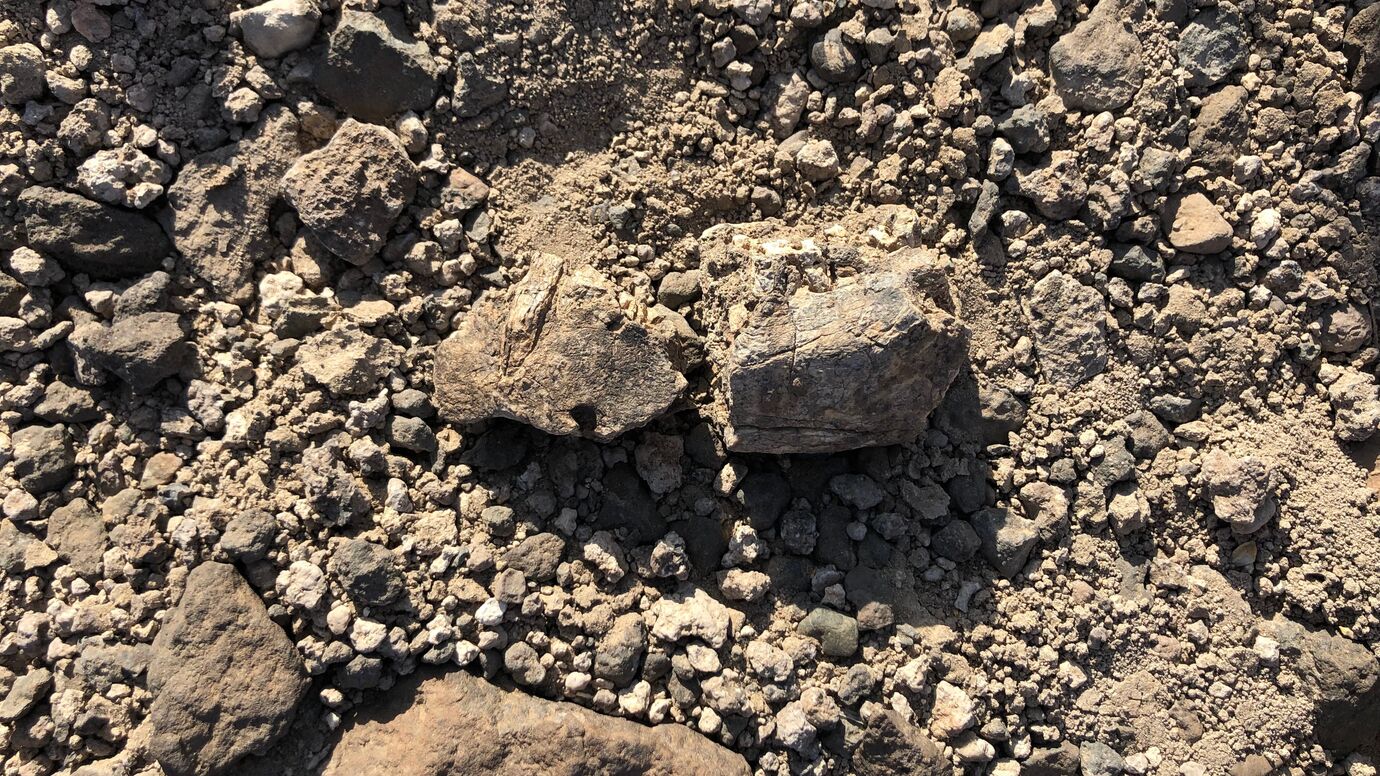
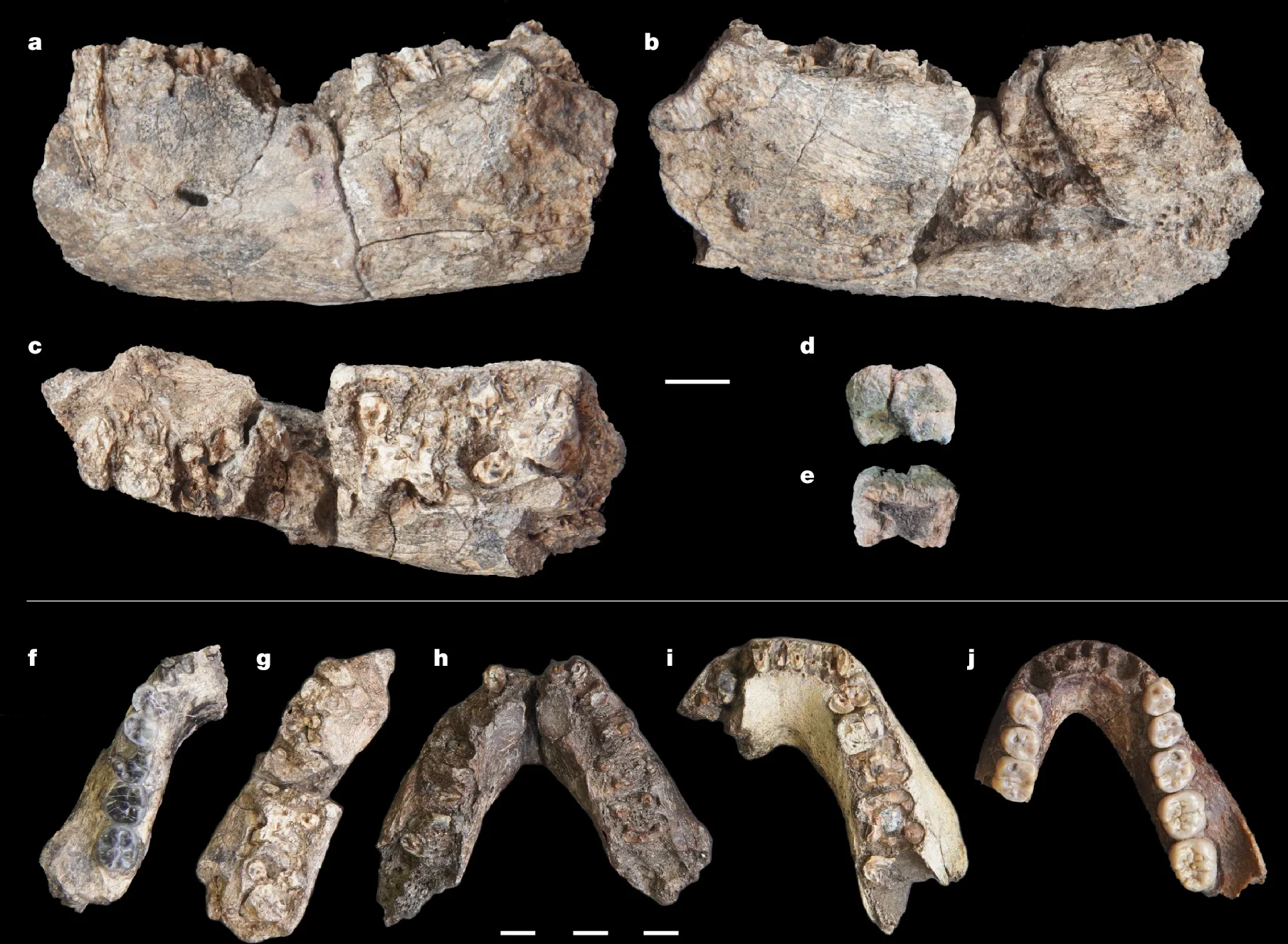
The specimen, designated MLP-3000, was found during a paleontological survey on January 19, 2019. It consists of part of the left lower jaw and an associated partial molar crown. Several tooth roots remain preserved, although much of the chewing surface is missing.
The team recovered fragments and examined them using detailed anatomical comparisons and high-resolution scanning. Substantial deposits around the roots and pronounced wear on the molar indicate an older individual. The fossil preserves enough internal structure to support comparisons beyond its weathered outer surface.
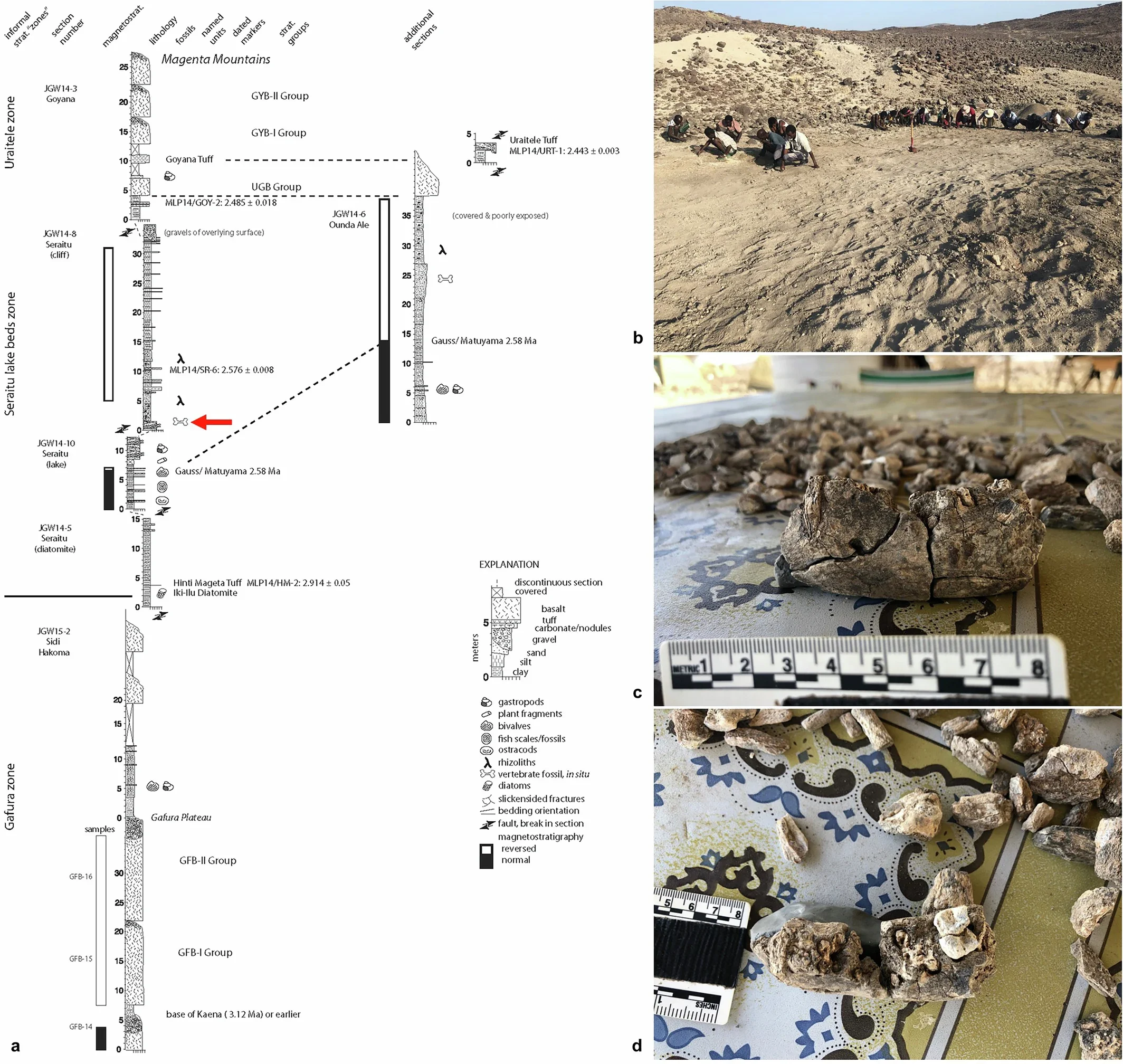
Its age comes from the geological context rather than a direct measurement of the jaw itself. It originated in the Seraitu lake beds, within a sequence bounded by dated volcanic units. Those broader boundaries place the deposit between approximately 2.9 and 2.5 million years ago.
Additional volcanic and magnetic markers support an age estimate of roughly 2.6 million years. The authors therefore describe MLP-3000 as one of the earliest securely dated Paranthropus fossils. It is not necessarily the oldest specimen attributed to the genus.
The dating also places it within an important interval of regional change. Mille-Logya preserves sediments from roughly three to 2.4 million years ago, a period poorly sampled in many African fossil sequences. That record helps connect individual finds to a broader environmental history.
The jaw is particularly broad relative to its height, a form consistent with robust chewing anatomy. Its second molar roots are also exceptionally broad. Comparisons with early Homo and Australopithecus helped distinguish that combination from other known hominins.
Micro-CT scans exposed additional detail in the premolar roots. One premolar preserves a complex arrangement containing five root canals, a configuration the authors had not previously seen described. Internal features supplied evidence that would be difficult to assess from the surface alone.
Together, the traits support attribution to Paranthropus. However, the specimen combines characteristics rather than matching a simple anatomical template. Some resemble the early species Paranthropus aethiopicus, while others are associated with Paranthropus boisei.
It also retains features resembling Australopithecus afarensis, including relatively thin enamel on the preserved molar. That finding matters because the genus’ familiar thick-enamel description does not capture every feature of this early specimen. The analysis identifies Paranthropus without announcing a new species.
The mixture complicates a straightforward account of how aethiopicus developed into boisei. Some jaw features associated with later representatives were already present around 2.6 million years ago. More fossils are needed to establish how those traits emerged across the lineage.
The fossil’s location is the clearest change to the geographic record. Paranthropus now extends from northeastern Ethiopia through other eastern African sites to southern Africa. That distribution spans environments with different animal communities and vegetation.
At Mille-Logya, changes in associated mammals point toward increasingly open conditions through time. Younger deposits contain more bovids, while horses become more common relative to pigs. Previous geological and faunal work connected these shifts with environmental change in the basin.
Other Paranthropus sites preserve evidence of wetter, more wooded settings. The authors interpret this environmental spread as evidence for greater early dietary and behavioral flexibility than some earlier explanations allowed. Geographic breadth, however, does not reveal the particular foods consumed by the Mille-Logya individual.
The wide early distribution also raises questions about origins. Paranthropus may have expanded rapidly after appearing, or its earlier history may remain undiscovered. The new jaw does not resolve whether all fossils grouped within the genus belong to one evolutionary lineage.
Homo was already known from Mille-Logya, including a molar dating to approximately 2.5 million years ago. Elsewhere in the Afar, Homo remains extend back about 2.8 million years. Paranthropus therefore joins a regional record containing several hominin groups during this broad interval.
That pattern supports a more diverse evolutionary landscape. It does not establish direct encounters between particular individuals or identify competition over specific foods. The paper still allows that later competition with Homo may have narrowed Paranthropus’ ecological opportunities.
The immediate finding is firmer: Paranthropus reached the Afar, and its apparent absence reflected an incomplete fossil record. Further discoveries can test how it lived alongside other hominins. For now, one partial jaw has changed the map against which those questions are asked.
“The new discovery gives us insight into the competitive edges that each group had, the type of diet they were consuming, the type of muscular and skeletal adaptations that they had, whether they were using stone tools or not — all parts of their adaptation and behavior that we are trying to figure out,” Alemseged told The Brighter Side of News. “Discoveries like this really trigger interesting questions in terms of reviewing, revising, and then coming up with new hypotheses as to what the key differences were between the main hominin groups.”
These resources explore early hominin distributions, changing environments and the evidence used to reconstruct ancient diets.
New discoveries of Australopithecus and Homo from Ledi-Geraru, Ethiopia: Describes additional Afar fossils that illuminate hominin diversity before 2.5 million years ago. (Nature, 2025)
Expanded geographic distribution and dietary strategies of the earliest Oldowan hominins and Paranthropus: Examines fossils, stone tools and dietary evidence from Nyayanga, Kenya, extending the context for early Paranthropus. (Science, 2023)
Fossils from Mille-Logya, Afar, Ethiopia, elucidate the link between Pliocene environmental changes and Homo origins: Establishes the geological and environmental framework for the research area where the jaw was discovered. (Nature Communications, 2020)
Isotopic evidence for the timing of the dietary shift toward C4 foods in eastern African Paranthropus: Uses carbon isotopes to investigate changes in Paranthropus diets in Ethiopia’s Lower Omo Valley. (Proceedings of the National Academy of Sciences, 2020)
Early Homo at 2.8 Ma from Ledi-Geraru, Afar, Ethiopia: Reports an early Homo jaw that helps place the Afar discovery within the regional evolutionary timeline. (Science, 2015)
Research findings are available online in the journal Nature.
The original story “2.6-million-year-old jaw fossil challenges long-held ideas about early hominins” is published in The Brighter Side of News.
Like these kind of feel good stories? Get The Brighter Side of News’ newsletter.
The post 2.6-million-year-old jaw fossil challenges long-held ideas about early hominins appeared first on The Brighter Side of News.


Leave a comment
You must be logged in to post a comment.