A woman who lived near the Pyrenees around 30,000 years ago carried evidence of connections reaching far beyond her region. Most of her ancestry resembled that of western European hunter-gatherers. Another component linked her to populations associated with central and eastern Europe, revealing a more connected Ice Age landscape than earlier genetic evidence suggested.
An international team led by the University of Vienna reported the findings in Science Advances. Researchers combined new genetic data from three people with previously published genomes and human DNA recovered from Spanish cave sediment. Together, those sources show that long-distance genetic exchange could occur without replacing a region’s existing population ancestry.
The study concerns people associated with the Gravettian, an archaeological culture widespread across Europe roughly 34,000 to 25,000 years ago. Similar tools, artworks and burial practices had already suggested extensive contacts. The new evidence helps connect that cultural picture with the biological histories of people who lived through the period.
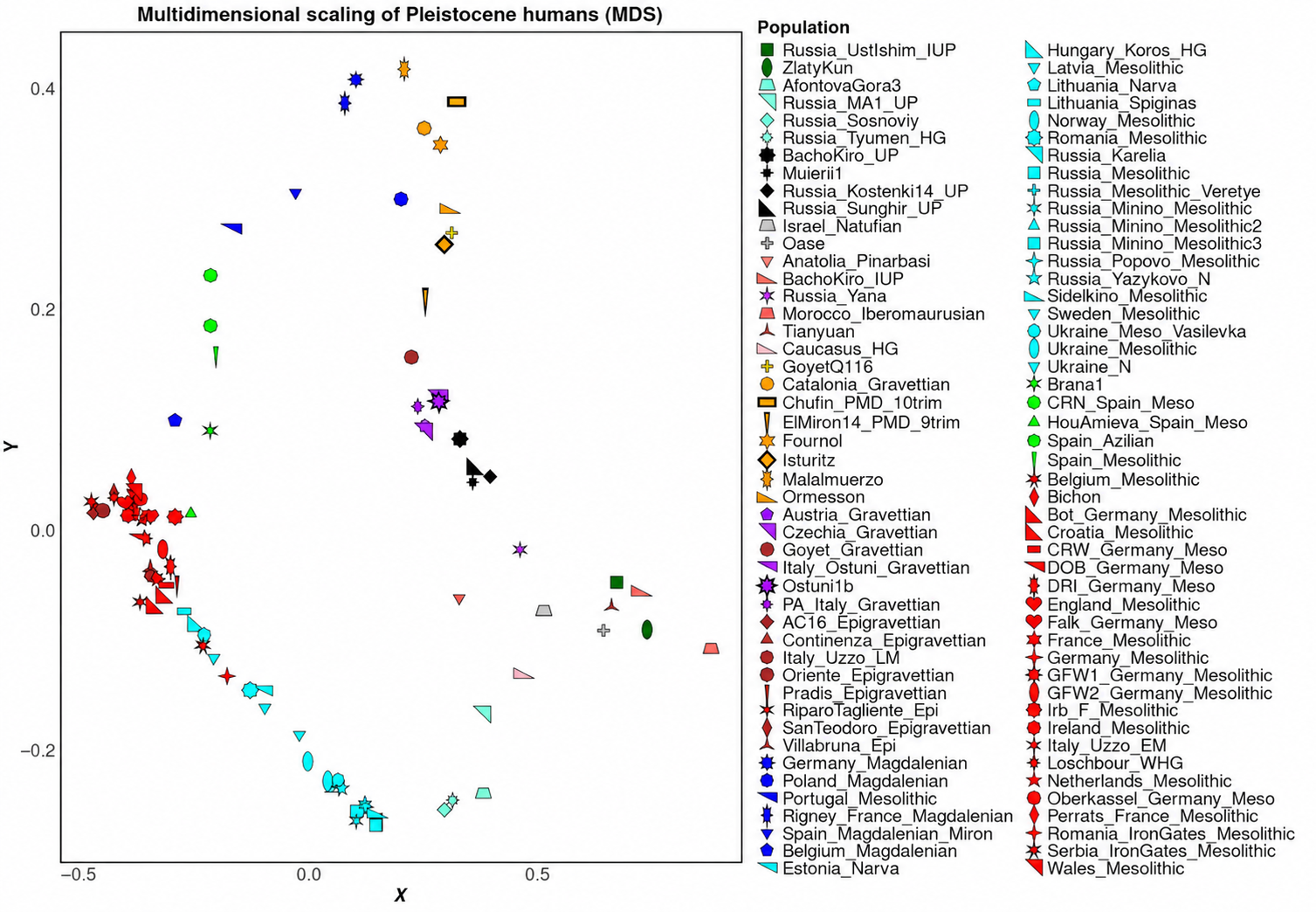
Earlier genomic studies identified two broad ancestry groups among Gravettian populations. One, called Fournol, predominated in western and southwestern Europe. The other, named Věstonice, included people from central Europe and Italy, despite cultural similarities across their territories.
Those groupings never meant complete separation. Previous work had found mixed ancestry in later Gravettian individuals from Goyet Cave in Belgium. However, evidence for comparable connections farther southwest remained limited, partly because suitable human remains are scarce.
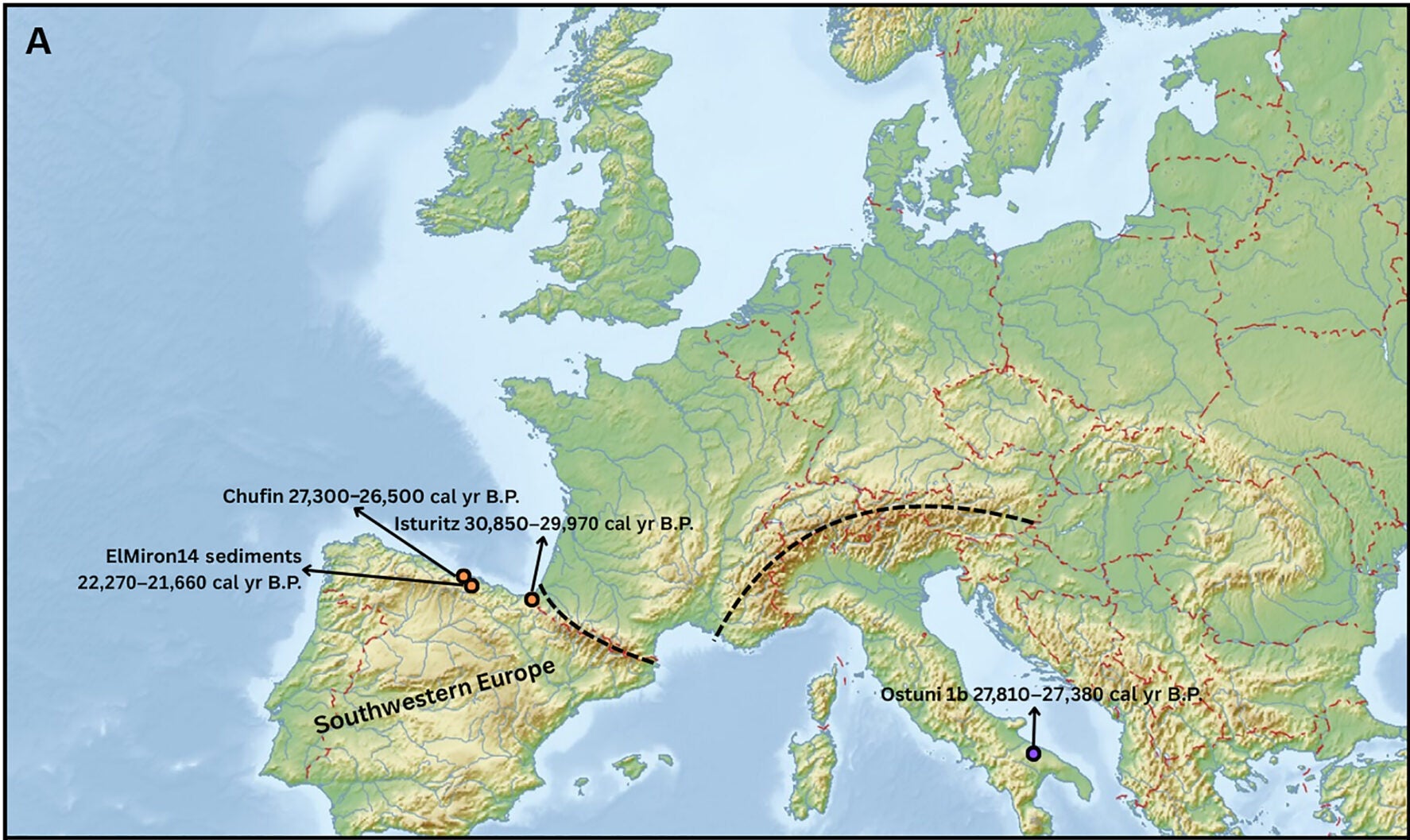
The newly studied woman came from Isturitz Cave in southwestern France. Her remains yielded what the researchers describe as southwestern Europe’s oldest genome-wide dataset from a modern human. The team recovered information at more than 454,000 variable positions in her DNA, providing a substantial basis for ancestry comparisons.
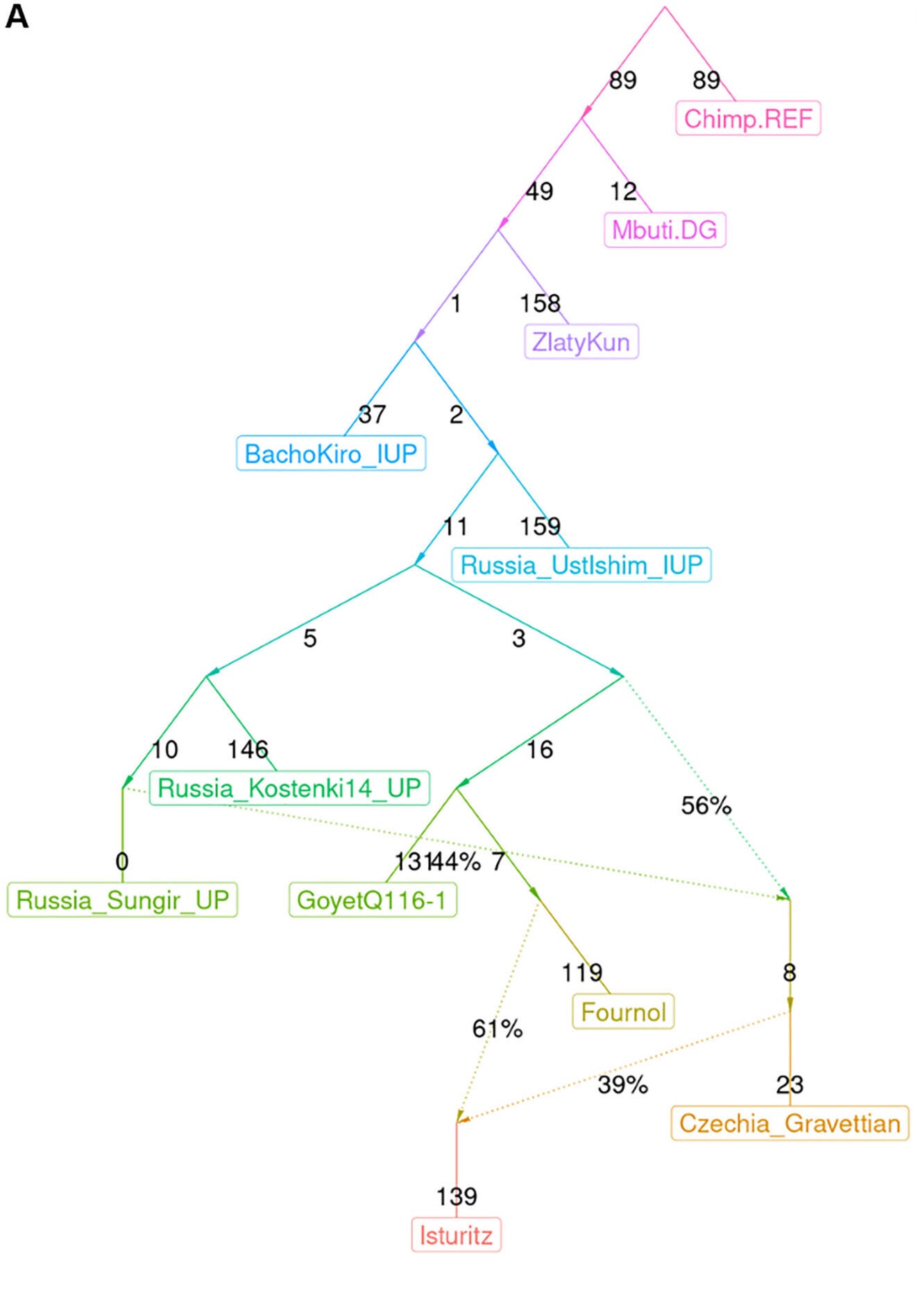
Genetic models placed her mainly within the western ancestry group, with an additional contribution related to ancestors of the Věstonice group. Reanalysis of a previously studied individual from Ormesson, France, revealed another mixed-ancestry signal. These results extend evidence of east-west connections beyond the pattern previously documented in Belgium.
“Our results show that eastern and western European populations were not as genetically isolated as previously assumed,” said first author Pere Gelabert, of Vienna’s Department of Evolutionary Anthropology. “Gene flow across such large distances adds a new dimension to our understanding of how Gravettian populations were connected.” The finding concerns inherited ancestry, rather than proof that the Isturitz woman herself traveled across Europe.
The team estimated that the mixing represented in her genome occurred around 32,500 to 31,500 years ago. That calculation assumes a single pulse of gene flow. The comparable estimate for Ormesson did not reach statistical significance, so it provides less secure evidence for the timing.
Researchers also considered an alternative explanation for the eastern-related ancestry. It might reflect a deeper ancestral component already present in some western populations before the Gravettian. Missing genomic data from earlier southwestern Europeans prevent the team from fully resolving that possibility.
Isturitz nevertheless offers an intriguing archaeological setting for encounters. Its rich portable artworks and position near the western end of the Pyrenees support longstanding interpretations of the cave as a gathering place. Different groups may have exchanged goods, information and partners there, although the genome cannot reconstruct particular meetings or migration routes.
The researchers also examined an adult woman’s tooth from Chufín Cave in northern Spain. Its degraded DNA yielded far fewer usable markers than the Isturitz remains. Even so, the results supported the presence of western-related ancestry in the region around 26,000 years ago.
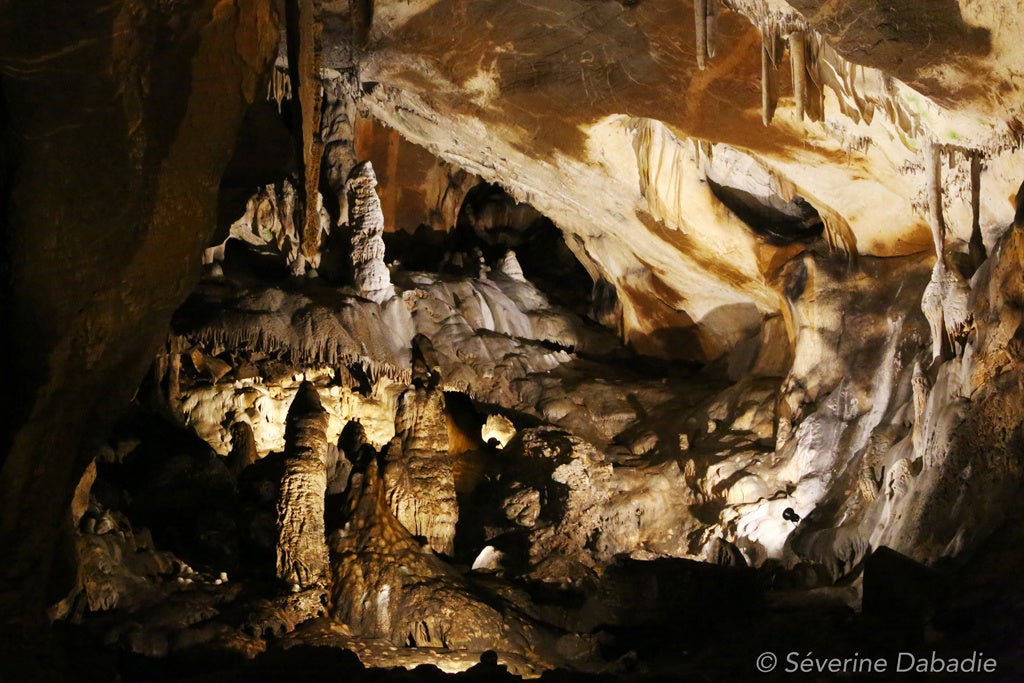
At El Mirón Cave in Cantabria, the team turned to sediment from a layer dated to roughly 22,000 years ago. No human bones or teeth were needed from that layer. Instead, researchers recovered traces of human nuclear DNA, which contains ancestry information inherited from both parents.
Earlier sediment work at the cave had recovered mitochondrial DNA, which traces maternal inheritance. Nuclear DNA supplies many more positions across the genome for comparing populations and detecting ancestry relationships. For both the sediment and the degraded Chufín sample, the researchers restricted analysis to molecules showing characteristic ancient DNA damage to reduce interference from modern contamination. These precautions cannot make a low-coverage environmental sample equivalent to a well-preserved skeleton, but they help separate an authentic ancient signal from DNA introduced much later.
Obtaining usable information required extensive sequencing and strict filtering. More than a billion sequencing reads ultimately yielded 14,737 selected genetic markers for the ancestry analysis. The sediment contained DNA from multiple people, so the result represents a mixed environmental sample rather than one person’s reconstructed genome.
“Sedimentary DNA allows us to recover genetic information from periods where human remains are missing,” said senior author Ron Pinhasi, also of Vienna’s Department of Evolutionary Anthropology. “This gives us a way to connect archaeological layers with the genetic ancestry of the people who occupied a site.” The method expands the record while introducing challenges involving contamination and mixtures of DNA.
The El Mirón sample resembled other western European ancestry profiles. Combined with skeletal genomes and earlier research, it supports regional ancestry continuity from before 30,000 years ago into the Last Glacial Maximum. That severely cold interval made southern refuges particularly important for understanding European population history.
The findings reinforce the view that Iberia sheltered descendants of earlier western European populations. They do not require every local community to have remained unchanged or continuously occupied the same cave. Regional continuity can persist through movement, encounters and shifts in the relative contributions of different groups over many generations.
That distinction is central to the study’s broader significance. Genetic exchange does not automatically imply a mass migration that replaces everyone already living in a region. The southwestern evidence instead supports a history containing both enduring ancestry and connections beyond regional boundaries.
In southern Italy, researchers sequenced Ostuni1b, a male fetus genetically identified as a first-degree relative of the previously studied woman Ostuni1. Their relationship and archaeological context indicate that he was most likely her son. Comparisons suggested his father belonged to the same broad genetic population as his mother.
Yet the fetus’s genome showed no evidence that his parents were closely related. The researchers assessed stretches of matching DNA that can reveal shared ancestry between parents. This result suggests that finding partners within a population did not necessarily mean reproducing with close relatives, without establishing formal mating rules for Gravettian society.
The overall picture still rests on a sparse record: only around 25 Gravettian-associated individuals had informed the earlier genetic framework. Sediment samples could help test whether additional episodes of mixing occurred and identify ancestry present before the Isturitz woman lived. Earlier deposits at Isturitz are particularly promising targets for distinguishing a Gravettian connection from a deeper inherited signal.
These studies explore ancient European ancestry, Gravettian cultural diversity and the recovery of DNA from cave sediments.
A sedimentary ancient DNA perspective on human and carnivore persistence through the Late Pleistocene in El Mirón Cave, Spain
Earlier work at El Mirón recovered human and animal DNA from sediment, establishing the foundation for the new nuclear ancestry analysis. (Nature Communications, January 2025)
Evidence from personal ornaments suggest nine distinct cultural groups between 34,000 and 24,000 years ago in Europe
An analysis of Gravettian ornaments explores how cultural variation relates to geography and genetic ancestry. (Nature Human Behaviour, January 2024)
A 23,000-year-old southern Iberian individual links human groups that lived in Western Europe before and after the Last Glacial Maximum
DNA from southern Spain provides earlier evidence that Iberia preserved western European ancestry through the coldest part of the last Ice Age. (Nature Ecology & Evolution, March 2023)
Palaeogenomics of Upper Palaeolithic to Neolithic European hunter-gatherers
This broad genomic study established a framework for tracing distinct hunter-gatherer ancestries and population changes across Europe. (Nature, March 2023)
Unearthing Neanderthal population history using nuclear and mitochondrial DNA from cave sediments
This methodological study demonstrates how nuclear DNA in cave sediment can reveal population relationships without skeletal remains. (Science, April 2021)
Research findings are available online in the journal Science Advances.
The original story “30,000-year-old woman’s DNA links ancestry between eastern and western Europe” is published in The Brighter Side of News.
Like these kind of feel good stories? Get The Brighter Side of News’ newsletter.
The post 30,000-year-old woman’s DNA links ancestry between eastern and western Europe appeared first on The Brighter Side of News.


Leave a comment
You must be logged in to post a comment.