A 13-kilometer-thick strip of crust beneath northern Kenya may mark one of the clearest places on Earth where a continent is progressing toward breakup.
The crust beneath the Turkana Rift is thinner than scientists had recognized, according to research published in Nature Communications. The work identifies Turkana as the first active continental rift known to be undergoing necking, when stretching becomes concentrated before separation.
The finding also offers a new way to view Turkana’s record of human evolution. The same tectonic process that weakened the continent appears to have created sediment-filled basins capable of preserving fossils over millions of years.
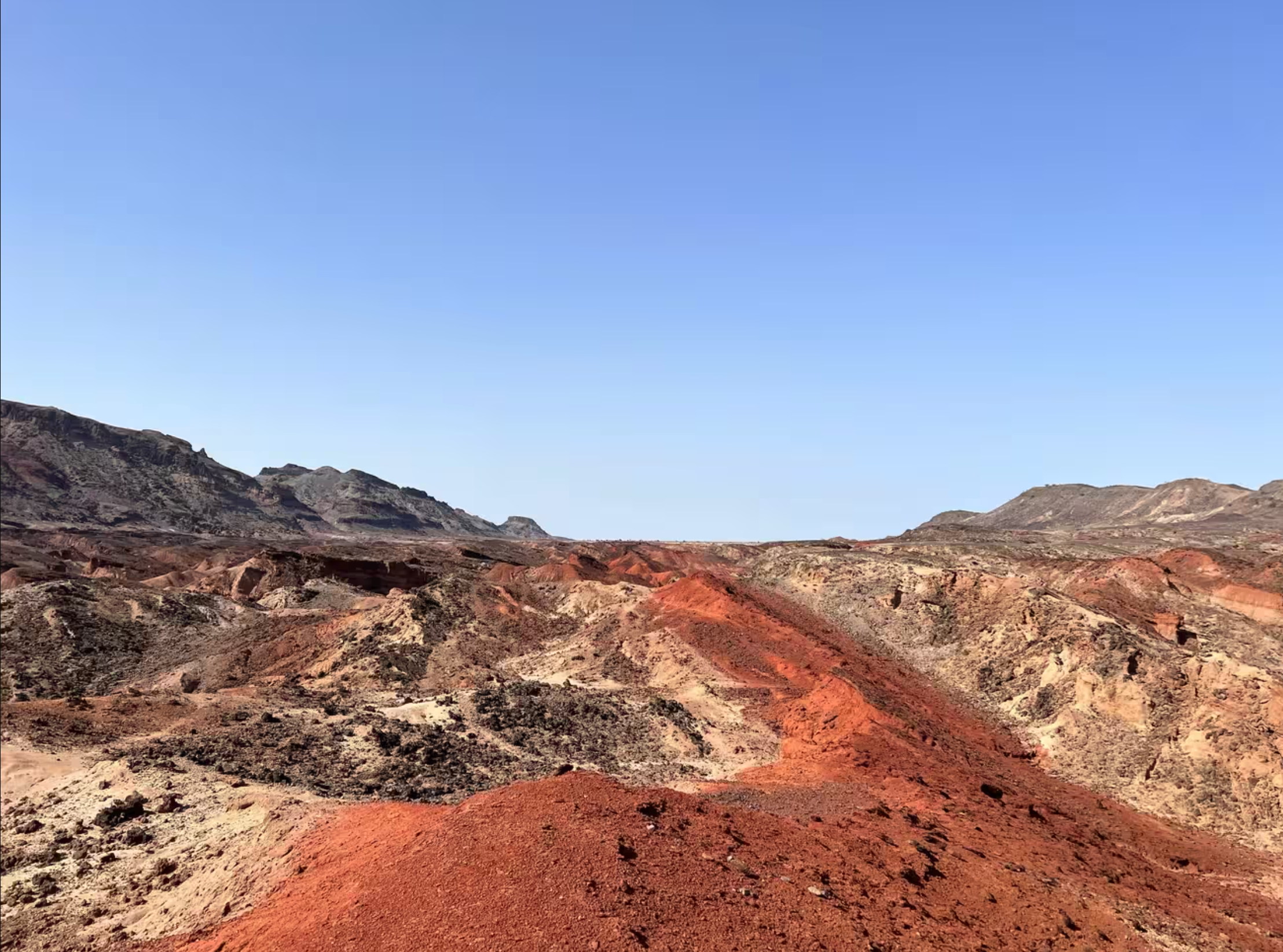
The Turkana Rift spans northern Kenya and southern Ethiopia within the larger East African Rift System. In this region, the Nubian part of the African plate and the Somali plate are slowly moving apart.
Continental rifting does not always end with a new ocean. Some rifts stop developing, while successful rifts pass through several stages as deformation becomes increasingly concentrated.
Necking is a critical stage in that progression. Much like pulling taffy from both ends, stretching causes the middle to become longer and thinner while material farther away remains relatively unchanged.
“We found that rifting in this zone is more advanced, and the crust is thinner, than anyone had recognized,” said lead author Christian Rowan, a doctoral researcher at Columbia University’s Lamont-Doherty Earth Observatory. “Eastern Africa has progressed further in the rifting process than previously thought.”
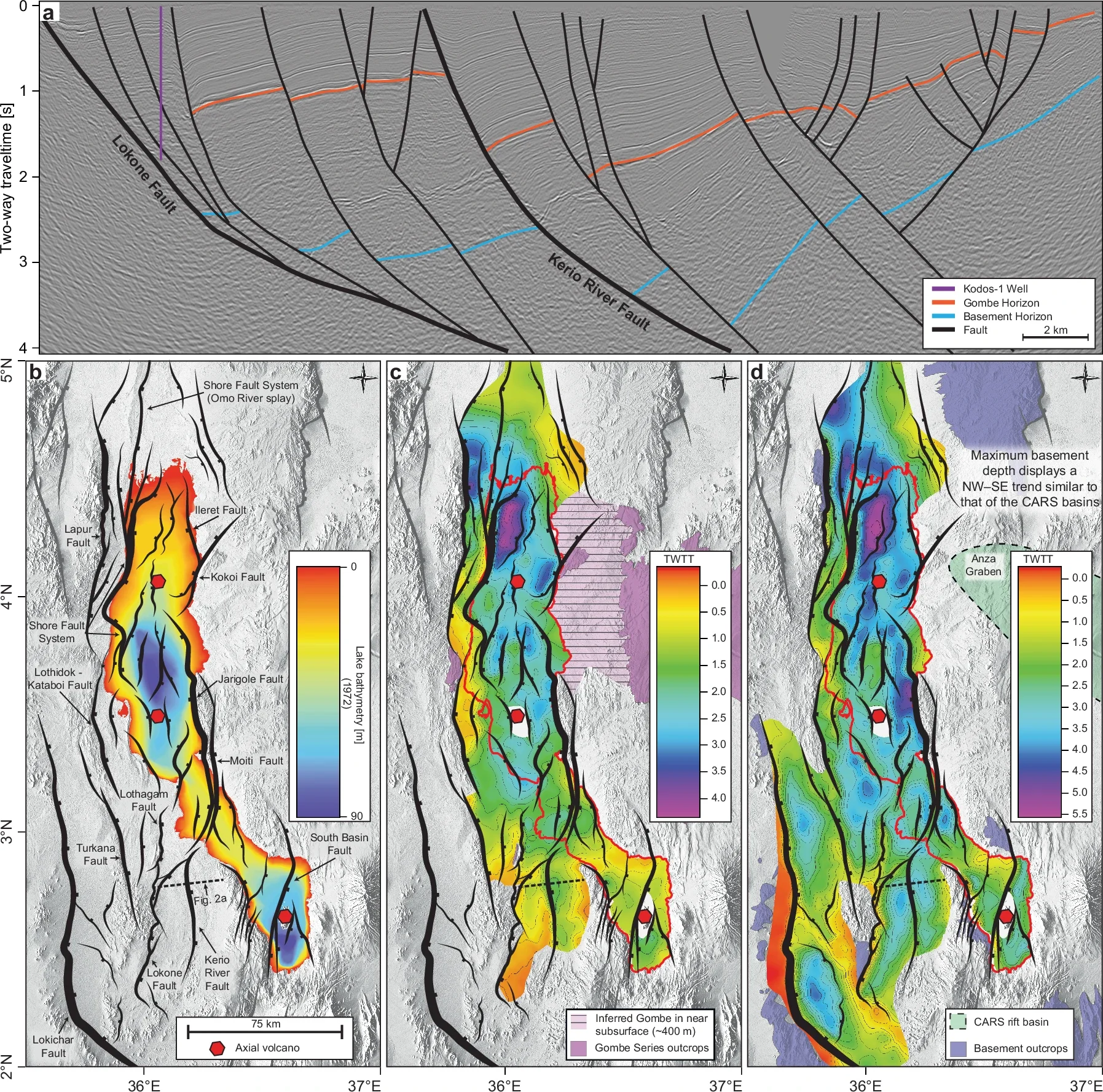
Using seismic reflection data and borehole information, Rowan and colleagues mapped buried rock layers. They combined those measurements with estimates of the Moho, the boundary between Earth’s crust and mantle.
The resulting cross section revealed a wedge-shaped structure. Crystalline crust thicker than 35 kilometers near the rift flanks narrows to about 12.7 kilometers, with an uncertainty of 2.8 kilometers, near the rift axis.
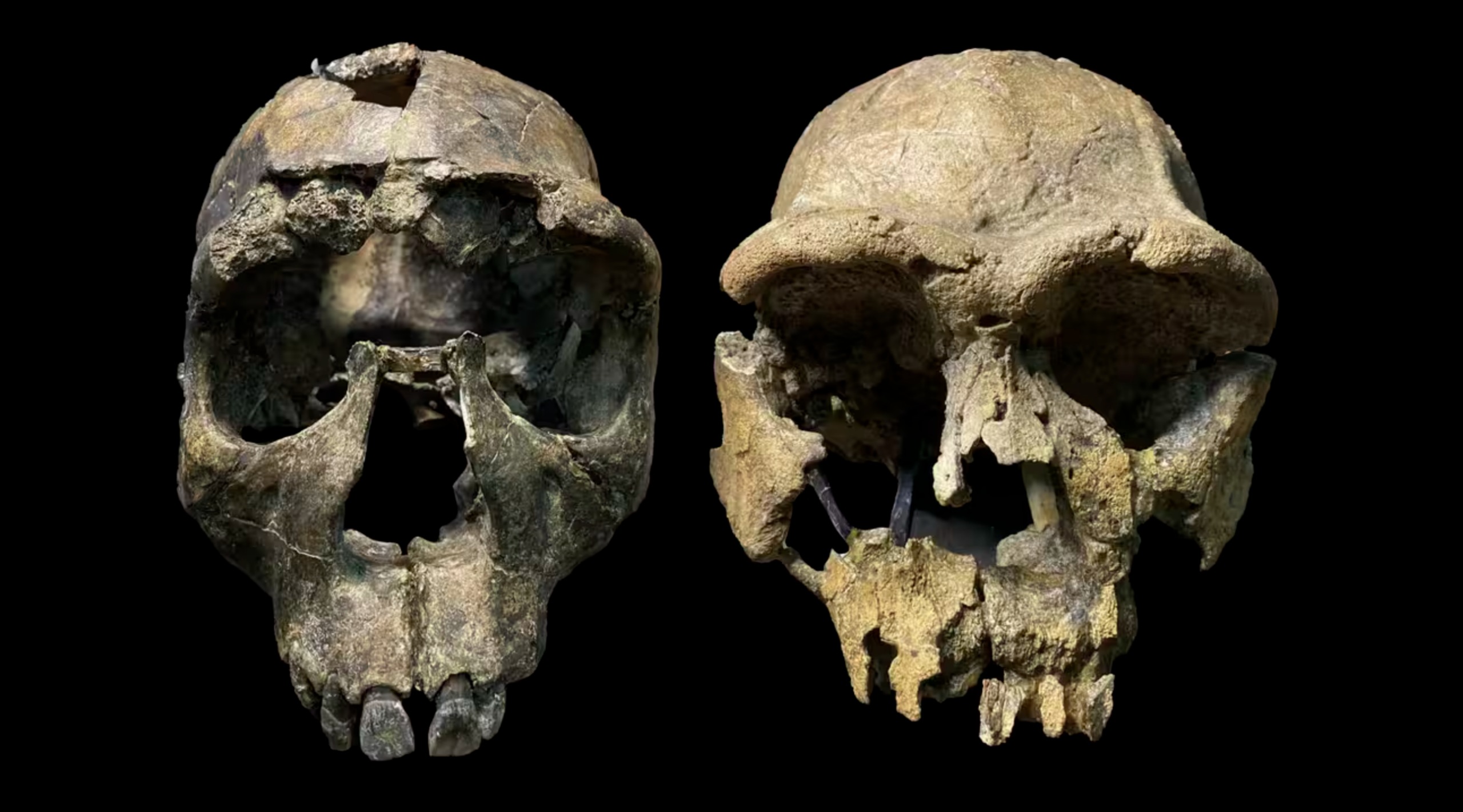
That geometry resembles necked crust at ancient continental margins where breakup already occurred. Modern earthquake activity is also concentrated in the thinned zone, indicating that deformation continues there.
“We’ve reached that critical threshold” of crustal breakdown, co-author Anne Bécel, a Lamont geophysicist, said. “We think this is why it is more prone to separate.”
The result does not mean eastern Africa is about to split apart on a human timescale. Continental breakup unfolds across millions of years. Necking instead indicates that Turkana has entered a more advanced stage than most active continental rifts.
Earlier tectonic history may have helped bring Turkana to this point. The region experienced an older episode of rifting that left weakened and thinned crust for later deformation to exploit.
This inheritance may explain why Turkana matured faster than expected despite relatively slow present-day plate motion. Magmatism also weakened the lithosphere, further concentrating deformation.
East African Rift-related faulting began in the Turkana region roughly 45 to 40 million years ago, followed by volcanism around 37 million years ago. For much of that history, deformation was spread across a broad region.
The pattern changed around 4 million years ago. A major phase of basaltic volcanism was followed by stronger localization of tectonic strain and faster sediment accumulation.
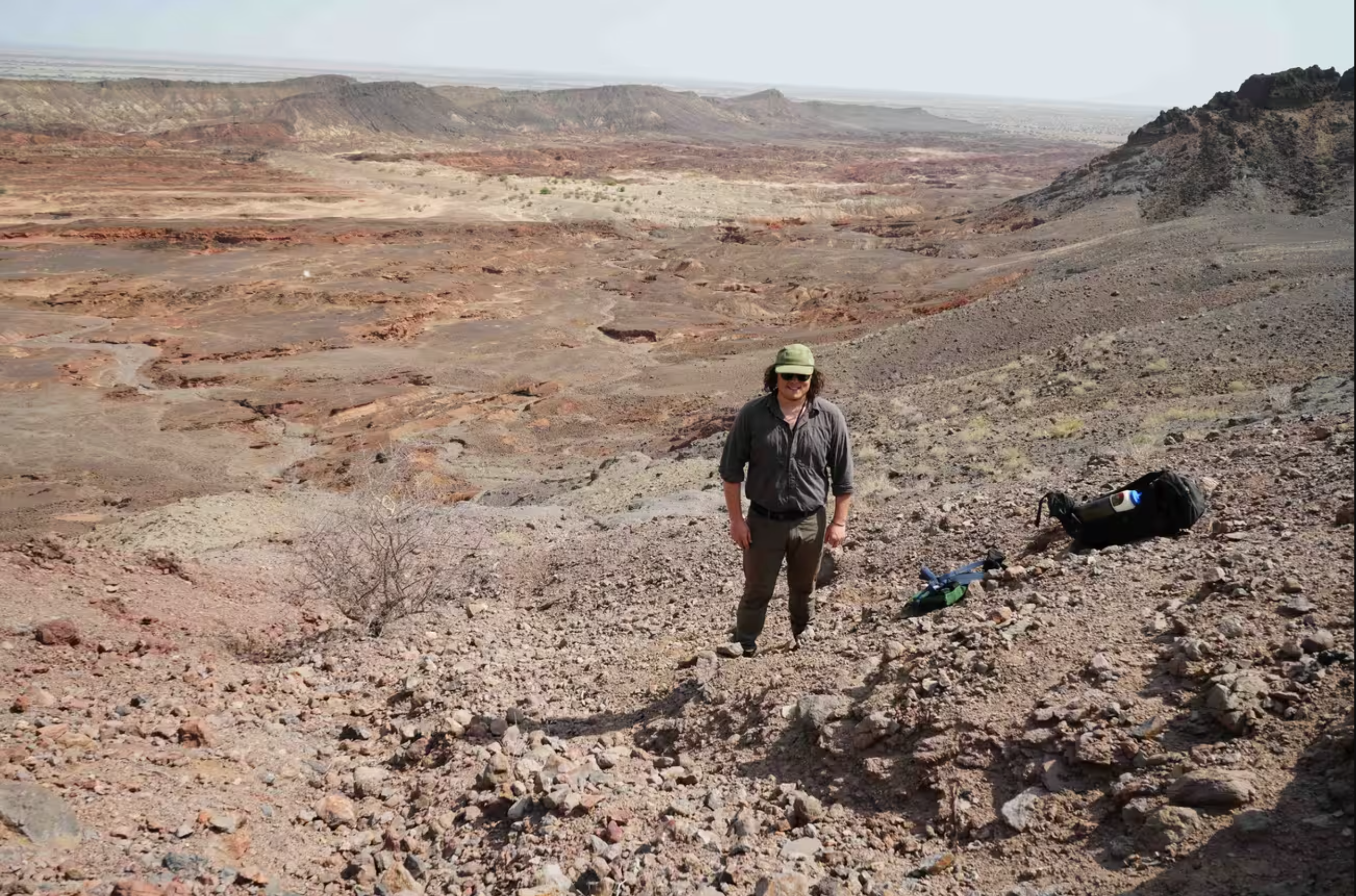
The researchers interpret that transition as the beginning of crustal necking. Extension along major faults created more space for sediment to accumulate as parts of the basin subsided.
That timing overlaps with a major change in Turkana’s fossil record. Before about 4 million years ago, fossil-bearing deposits were more isolated and discontinuous. Afterward, thick sediments accumulated across a connected basin system.
“In essence, we now have a front row seat to observe a critical rifting phase that had fundamentally shaped all rifted margins across the world,” said co-author Folarin Kolawole of Lamont.
The Turkana region is one of the most important places for studying human origins. Its Plio-Pleistocene sediments preserve thousands of hominin fossils, archaeological remains and other fossils.
Much of that continuous record lies within the Omo Group, including the Shungura, Nachukui and Koobi Fora formations. Together, these deposits preserve a rich record spanning roughly 4 million to 1 million years ago.
Scientists have long considered why Turkana contains such an extraordinary concentration of evidence about early humans. One possibility is that the region itself played an unusually important biological role in hominin evolution.
The new work adds another possibility. Turkana may be unusually important partly because its geology made preservation more likely.
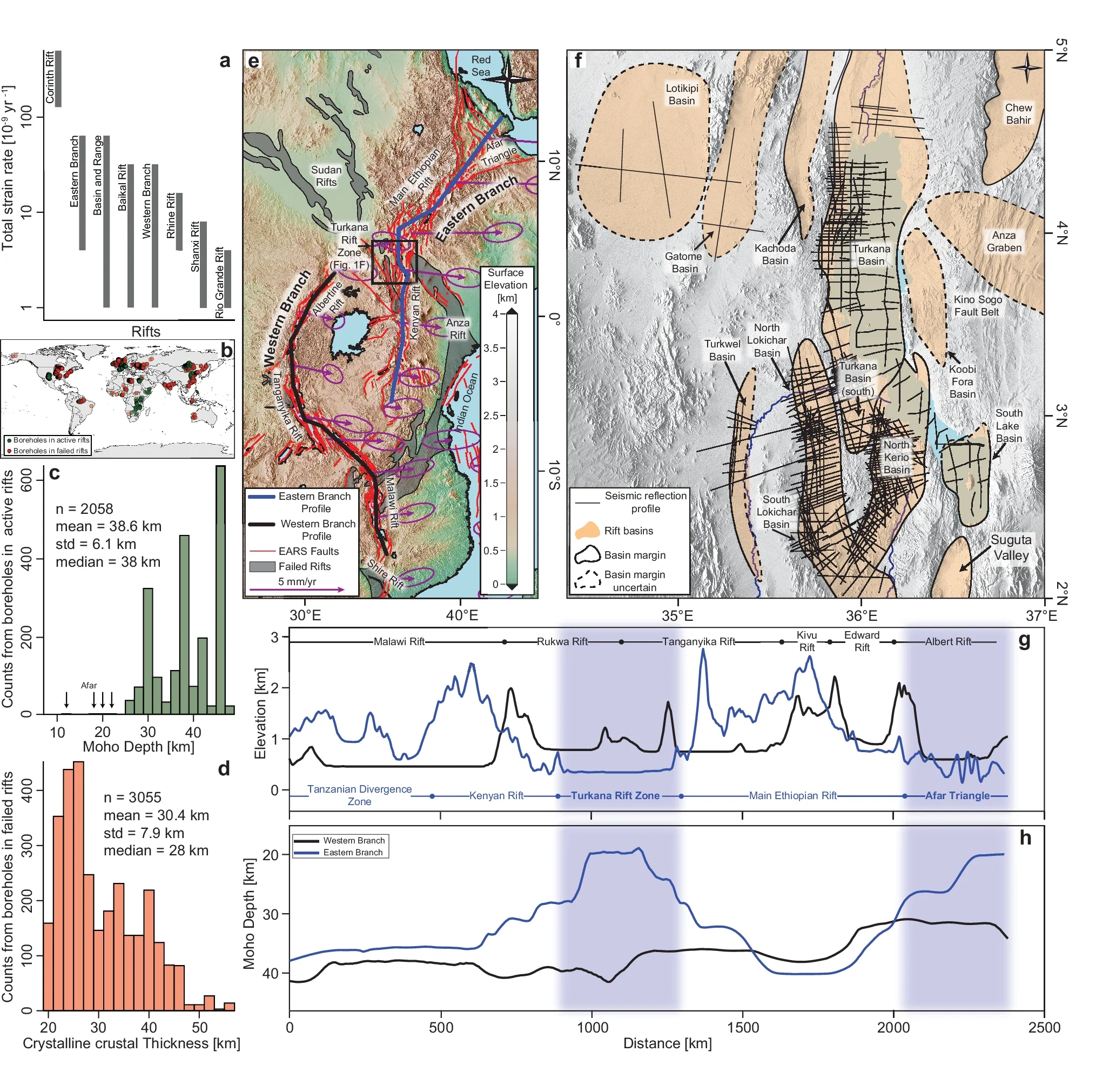
As necking intensified, subsidence produced additional accommodation space, the geological term for room in which sediments can accumulate. Faster sediment buildup could bury bones, artifacts and environmental evidence, helping preserve them.
“The conditions were right to preserve a continuous fossil record,” Rowan said.
That distinction matters. A rich fossil record can reflect biological diversity, favorable preservation, intensive scientific sampling, or some combination of those factors. The study does not establish that tectonics alone created Turkana’s fossil abundance, and the authors present the preservation connection as a hypothesis for further testing.
Identifying active necking in Turkana gives geologists a rare opportunity to examine a stage of continental breakup usually reconstructed from ancient margins after the process is complete.
It may also change how scientists connect geology with the history of life. Tectonic movement can reshape elevation, drainage, lakes and local climate while determining where sediments accumulate and fossils survive.
The study suggests Turkana’s geological transformation may have affected both the landscapes inhabited by early hominins and the record scientists use to reconstruct their lives.
Other researchers can now test whether changes in fossil abundance around 4 million years ago reflect ecological change, preservation conditions or both. Tectonic models can also be combined with climate reconstructions to examine how evolving landscapes influenced habitats across eastern Africa.
Turkana therefore preserves two overlapping records. Deep below ground, its thinning crust captures a continent moving toward eventual separation. In the sediments above, the same tectonic history may help explain why so much of humanity’s early story survived.
These studies provide additional context on continental rifting, volcanism and Turkana’s exceptional fossil record.
Geodynamics of continental rift initiation and evolution: Reviews the processes that determine whether continental rifts fail or progress toward breakup and new ocean formation. (Nature Reviews Earth & Environment, 2023)
The development of multiple phases of superposed rifting in the Turkana Depression, East Africa: Evidence from receiver functions: Uses seismic observations to investigate crustal thinning and earlier rifting episodes beneath the Turkana Depression. (Earth and Planetary Science Letters, 2023)
Basaltic Pulses and Lithospheric Thinning—Plio-Pleistocene Magmatism and Rifting in the Turkana Depression (East African Rift System): Examines how pulses of lithospheric thinning may have driven Pliocene volcanism and strain localization in Turkana. (Journal of Geophysical Research: Solid Earth, 2024)
The Omo-Turkana Basin Fossil Hominins and Their Contribution to Our Understanding of Human Evolution in Africa: Reviews the hominin fossil record that makes the Omo-Turkana Basin central to research on early human evolution. (Evolutionary Anthropology, 2011)
Birth of the East African Rift System: Nucleation of magmatism and strain in the Turkana Depression: Investigates evidence that East African Rift-related magmatism and deformation began particularly early in the Turkana Depression. (Geology, 2019)
Research findings are available online in the journal Nature Communications.
The original story “Africa’s Turkana Rift has entered a critical stage of continental breakup” is published in The Brighter Side of News.
Like these kind of feel good stories? Get The Brighter Side of News’ newsletter.
The post Africa’s Turkana Rift has entered a critical stage of continental breakup appeared first on The Brighter Side of News.


Leave a comment
You must be logged in to post a comment.