Higher levels of a wakefulness-related brain chemical were tied to worse Alzheimer’s outcomes, but certain sleep brain waves appeared to soften that relationship. The pattern points to a more detailed role for sleep than simply counting hours.
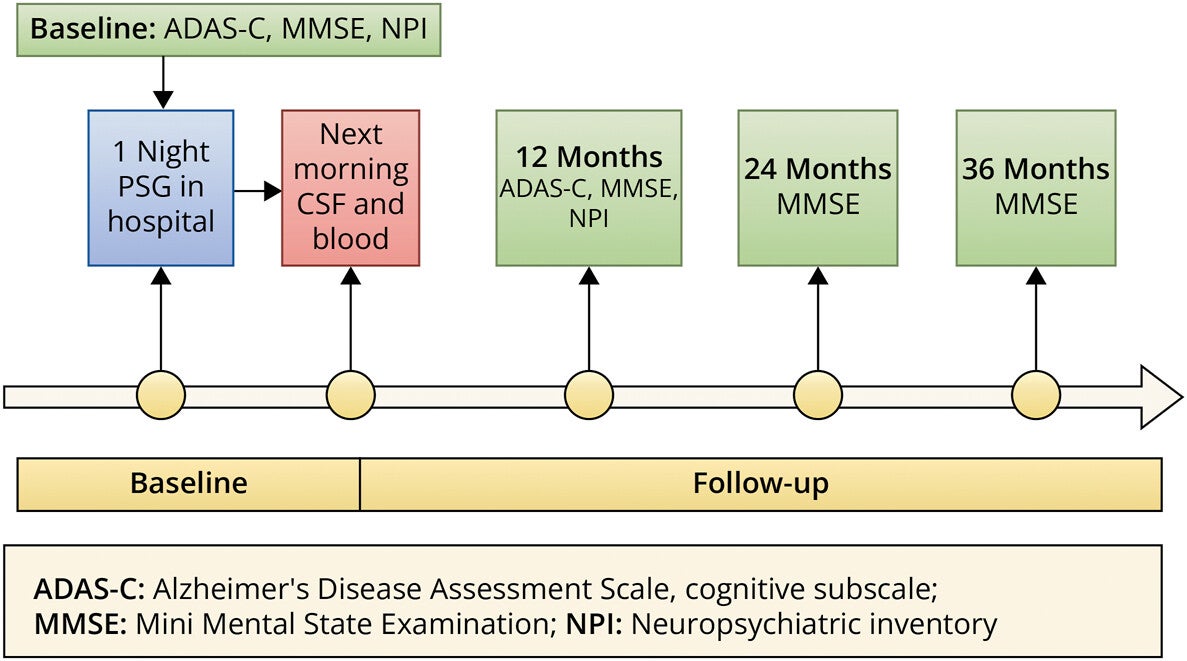
An international team led by Concordia researchers followed 60 adults with mild-to-moderate Alzheimer’s disease for up to three years.
The study focused on orexin, a neurotransmitter involved in wakefulness, sleep transitions and appetite. Higher orexin levels in cerebrospinal fluid were associated with poorer cognition, more severe behavioral symptoms and higher levels of several biomarkers linked to neurodegeneration and inflammation.
But the picture changed when researchers looked at specific patterns of brain activity during nonrapid eye movement, or NREM, sleep.

Each participant spent a night in a sleep laboratory in Lleida, Spain. Researchers recorded brain activity with overnight polysomnography using 34 EEG channels sampled at 512 Hz.
The next morning, they collected cerebrospinal fluid and measured orexin-A along with amyloid-beta 42, phosphorylated tau181, total tau and YKL-40, a marker of neuroinflammation.
Participants also completed repeated tests of global cognition, verbal learning, visual memory and neuropsychiatric symptoms over as long as 36 months.
Broad measures such as total sleep time, sleep efficiency, time awake after falling asleep and time needed to fall asleep were not significantly associated with orexin.
Instead, the strongest relationships appeared in the electrical features of NREM sleep.
Researchers concentrated on sleep spindles and slow oscillations, two forms of NREM brain activity associated with memory and cognitive function.
Sleep spindles were measured between 9 and 16 hertz and lasted from 0.5 to 3 seconds. Slow oscillations ranged from 0.16 to 1.25 hertz and lasted between 0.8 and 2 seconds.
Automated systems detected the events, and trained investigators reviewed the recordings to remove false detections and artifacts.
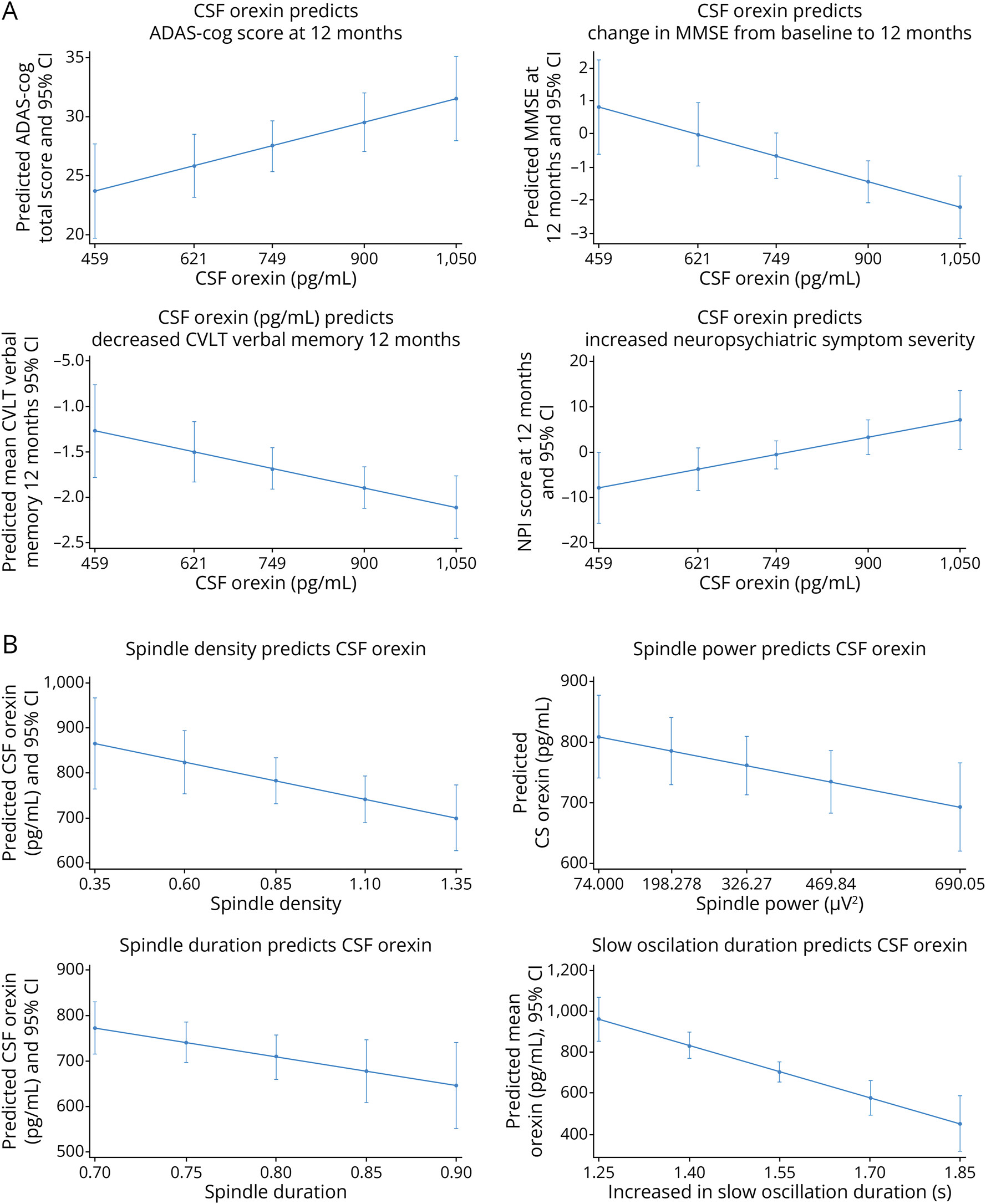
Higher spindle density, duration and power, along with longer slow oscillations, generally tracked with lower orexin levels.
Higher spindle density was associated with lower orexin concentration.
Some individual associations weakened after corrections for multiple comparisons, but the broader interaction between orexin and sleep oscillations remained important.
The average cerebrospinal fluid orexin concentration was 757.3 picograms per milliliter.
Women had higher average orexin than men, about 837 compared with 673 picograms per milliliter. Women also had higher spindle density and spindle power.
Across the full group, higher orexin was associated with worse performance on several cognitive measures.
On the Alzheimer’s Disease Assessment Scale-Cognitive Subscale, where higher scores indicate worse impairment, orexin showed a positive association with poorer scores.
On the Mini-Mental State Examination, where lower scores are worse, higher orexin was associated with lower performance.
Higher orexin was also associated with higher phosphorylated tau181, total tau and YKL-40, along with several ratios involving tau and amyloid-beta 42.
“This study shows that there is a direct association between orexin levels in the brain and biomarkers of Alzheimer’s disease,” said Thanh Dang-vu of Concordia University.
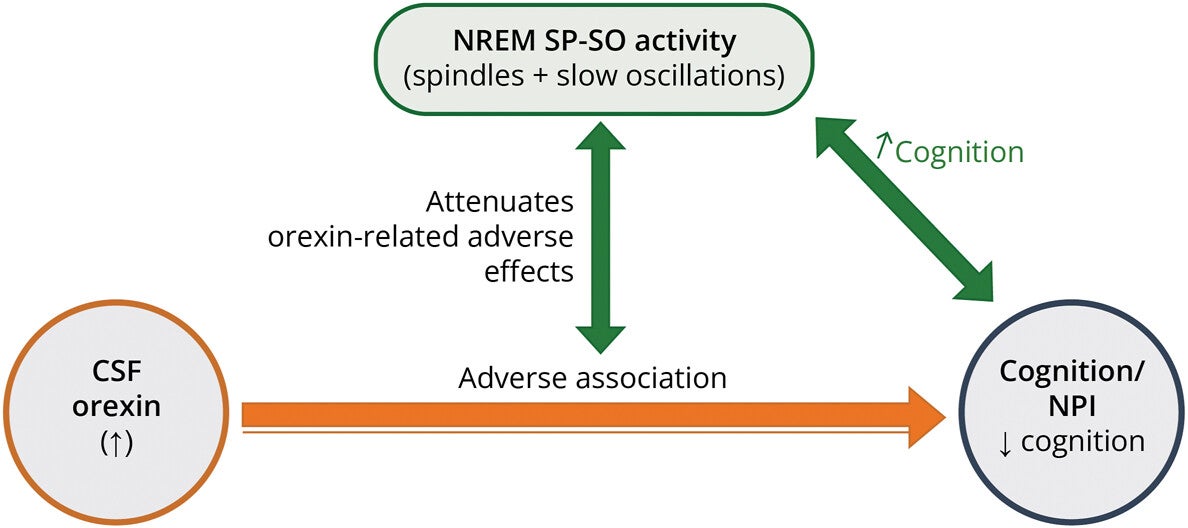
The most striking finding emerged when orexin and NREM brain waves were examined together.
Stronger sleep spindles and slow oscillations weakened the negative relationship between elevated orexin and several cognitive and behavioral outcomes.
Greater spindle activity reduced the orexin-related decline seen in global cognition, verbal memory, visual memory and neuropsychiatric symptoms.
Longer and stronger slow oscillations showed similar protective associations.
These interactions remained after researchers accounted for major Alzheimer’s biomarkers, including amyloid-beta 42 and phosphorylated tau181.
For neuropsychiatric symptoms, higher orexin was associated with worsening scores, while greater spindle density offset part of that relationship through a significant statistical interaction.
The pattern also worked in reverse. Higher orexin weakened some of the positive relationships between preserved sleep oscillations and cognition.
Researchers described this as a form of reciprocal buffering.
Sleep apnea was common in the group.
About 70% of participants had moderate-to-severe obstructive sleep apnea, while 45% met the threshold for severe disease.
Adjusting for apnea severity and YKL-40 did not substantially change the main findings.
Still, the study cannot establish that orexin causes cognitive decline or that stronger sleep oscillations directly protect the brain.
The design was observational, and the sample included only 60 people.
There was also no cognitively healthy control group, so the researchers could not determine whether these relationships are unique to Alzheimer’s disease.
Sleep was recorded only once, at baseline. Participants did not undergo an adaptation night, and repeated sleep studies were not available to show how NREM brain activity changed as disease progressed.
The findings suggest that future Alzheimer’s research may benefit from looking beyond simple measures of sleep duration.
Orexin levels, spindle activity and slow oscillations could provide complementary information about how sleep and wakefulness systems interact during disease progression.
Orexin-blocking medications are already used to treat insomnia and are being explored as possible Alzheimer’s therapies.
The study does not establish that these drugs would slow disease progression, but it identifies a biological relationship that can be tested more directly in future trials.
“With this data, we can see how the course of people’s Alzheimer’s disease changes over time,” said co-first author Arsenio Paez. “Alzheimer’s is a very long process, so this gives us a better picture of how conditions can change over time and we might intervene at different stages of the disorder.”
Future studies with larger groups, healthy comparison participants and repeated sleep recordings could clarify whether NREM sleep-wave measures help identify patients most likely to benefit from sleep-focused treatment.
These studies explore how NREM sleep rhythms, orexin signaling and disrupted sleep physiology relate to memory, biomarkers and cognitive decline in Alzheimer’s disease.
Sleep spindles and slow oscillations predict cognition and biomarkers of neurodegeneration in mild to moderate Alzheimer’s disease: Examines the same broader Alzheimer’s cohort and finds that preserved spindle and slow-oscillation activity predicted cognitive performance and relationships with amyloid and tau over three years. (Alzheimer’s & Dementia, 2025)
Coupled sleep rhythm disruption predicts cognitive decline in Alzheimer’s disease: Finds that disrupted coordination among slow oscillations, theta bursts and sleep spindles worsens across the Alzheimer’s spectrum and predicts faster cognitive decline. (Science Bulletin, 2025)
Slow wave synchrony during NREM sleep tracks cognitive impairment in prodromal Alzheimer’s disease: Links declining slow-wave synchronization with worsening cognition in people ranging from healthy aging through mild cognitive impairment and Alzheimer’s disease. (Alzheimer’s & Dementia, 2025)
Research findings are available online in the journal Neurology.
The original story “Alzheimer’s study finds sleep quality may matter more than hours slept” is published in The Brighter Side of News.
Like these kind of feel good stories? Get The Brighter Side of News’ newsletter.
The post Alzheimer’s study finds sleep quality may matter more than hours slept appeared first on The Brighter Side of News.


Leave a comment
You must be logged in to post a comment.