Ancient animal waste may have helped transform Earth’s oceans more than 500 million years ago. A new international study led by Flinders University argues that fossilized feces played a key role in one of evolution’s greatest turning points.
The review describes what researchers call the “faecal revolution.” It links the rise of animal digestion, fecal pellets and nutrient recycling to the Cambrian Explosion about 540 million years ago.
During that short and dramatic period, many major animal groups began to appear. Marine ecosystems became richer, more layered and more like the oceans you would recognize today.
Scientists have long studied the Cambrian Explosion through oxygen, predation and new body plans. The new study does not dismiss those forces. Instead, it adds a less glamorous but powerful factor: poop.
“Next to rising oxygen levels and other contributing factors, the importance of faeces in ancient ecosystems is often overlooked,” said Dr. Russell Bicknell, an Australian Research Council Early Career Researcher Award fellow at Flinders University’s College of Science and Engineering.
Bicknell and lead author Dr. Julien Kimmig of Germany’s Karlsruhe Institute of Technology argue that fecal matter helped move nutrients through ancient seas. That could have supported more animals, more feeding styles and more complex food webs.
In simple terms, waste became fuel. What one creature expelled could feed microbes, seafloor animals and broader marine ecosystems.
The earliest animals appeared around 600 million years ago during the Ediacaran Period. But clear fossilized feces, known as coprolites, become much more visible near the start of the Cambrian.
That timing matters. It suggests that animals were developing more advanced digestive systems as ecosystems became more complex.
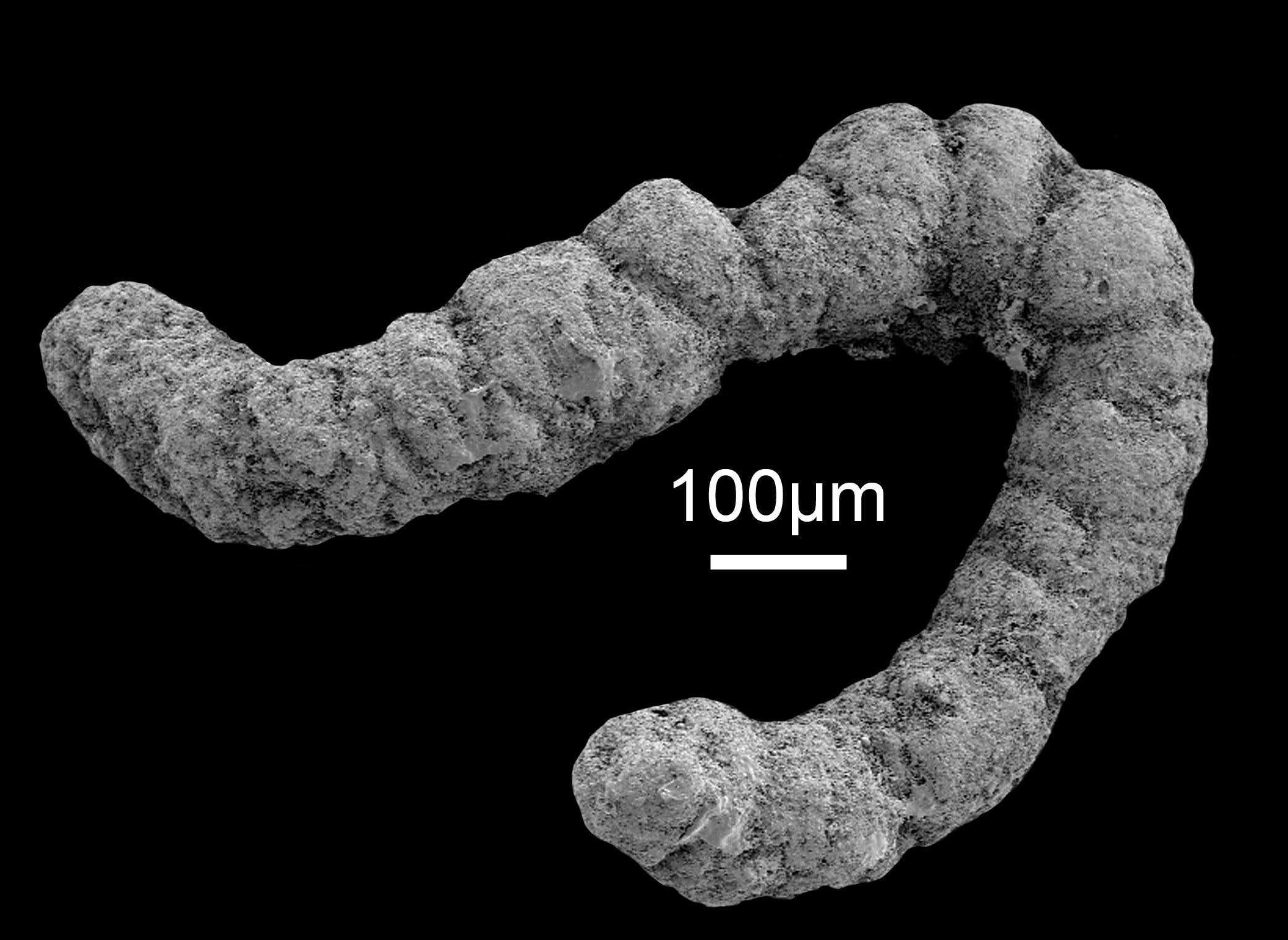
Coprolites are fossil remains of material expelled from an animal’s gut. They can appear as tiny pellets, strings, flattened films or larger masses containing shells and animal fragments.
To the untrained eye, they may not look important. To paleontologists, they can reveal what ancient animals ate, how they digested food and how nutrients moved.
Early animals likely fed in many ways. Some absorbed nutrients, grazed microbial mats, filtered particles from water or scavenged soft material.
As through-guts became more common, animals could eat, process and expel material more efficiently. That changed both bodies and environments.
“We have considered these ancient diets, increasingly sophisticated digestive systems and trophic interactions as part of a much bigger picture to help explain how more organic matter and nutrients poured into the ancient oceans to accelerate ecosystem development at the end of the Ediacaran and early Cambrian periods,” Bicknell said.
The review notes that Cambrian fossils show growing gut complexity. Some early worms had simple tube-like digestive systems. Early arthropods began developing more specialized foreguts and digestive glands.
Those organs helped animals handle a wider range of food, including harder prey and sediment-rich meals.
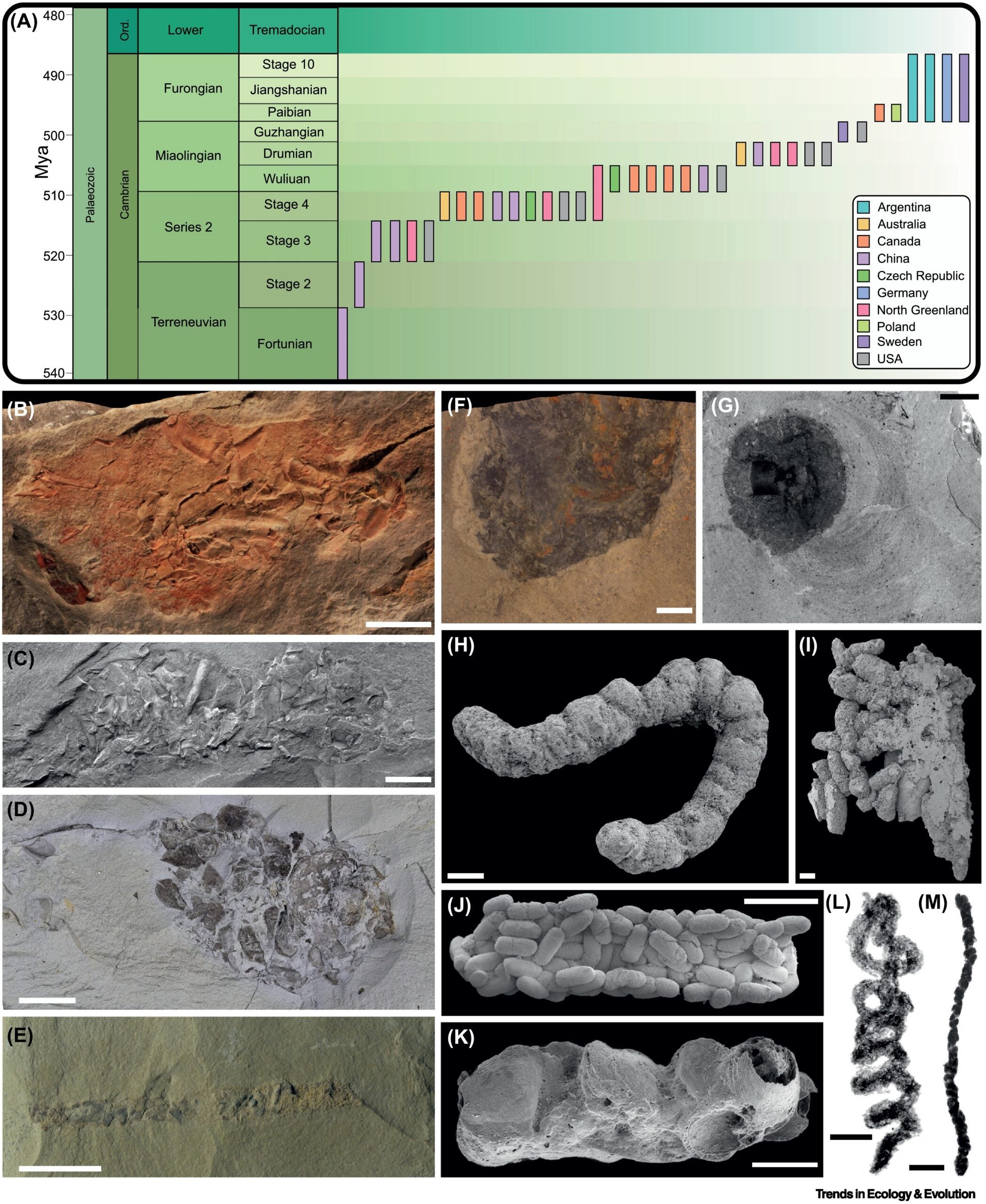
The researchers found evidence of Cambrian coprolites in more than 35 deposits around the world. Their sizes and shapes changed as the Cambrian progressed.
“The faecal matter includes microscopic pellets through to centimetre-scale coprolites containing shells and other animal fragments,” Bicknell said.
This variety points to many different producers. Some coprolites likely came from seafloor grazers or deposit feeders. Others may have come from predators or scavengers that crushed shelly prey.
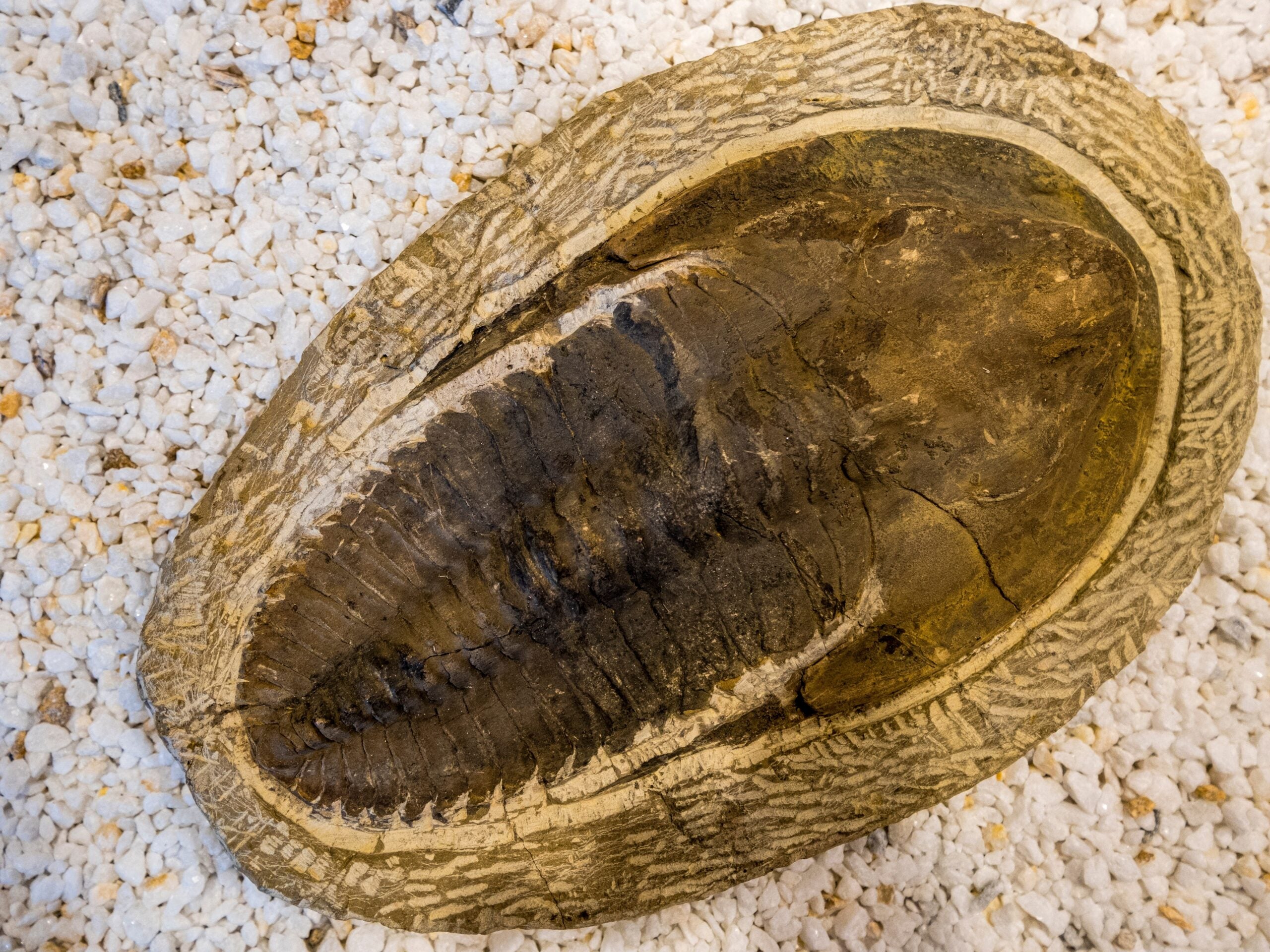
The fossil record includes pellets, fecal strings, organic films and shell-filled waste. Some specimens preserve fragments of trilobites, hyoliths, worms, sponges and other early animals.
Each preserved piece gives a glimpse into an ancient meal. Together, they show ecosystems becoming more active, connected and hungry.
“With this shift, we see increasingly complex digestive systems, particularly in early anthropods which evolve specialised foreguts and digestive glands capable of processing a wider variety of food,” Bicknell said.
Those changes mattered because feeding drives evolution. If animals can eat new foods, they can enter new niches. If prey develop defenses, predators may evolve better tools.
The Cambrian seas saw this kind of escalation. Animals grew larger, moved more, dug into sediment and interacted in more complex ways.
Coprolites capture part of that story. A shell-filled fossil dropping can show that an animal ate hard prey. Sediment-rich waste can suggest deposit feeding.
In this way, fossil feces help reconstruct ancient food webs. They show not only who lived, but how life interacted.
Modern oceans rely on fecal pellets too. Tiny animals release waste that carries carbon, nitrogen, phosphorus and other nutrients through the water.
Some of that material sinks into deeper water. There, it feeds microbes and animals far from sunlight.
The review suggests a similar process gained importance during the Cambrian. As more animals produced fecal pellets, more organic matter moved through marine systems.
“It becomes clear in the fossil record that the evolution of feeding strategies aligns with the production and distribution of organic carbon and nutrients to start creating conditions we see in modern oceans and later on land where fertiliser today is used to produce our food,” adds Bicknell.
That comparison makes the idea easier to grasp. Ancient waste may have acted like natural fertilizer in early seas.
The researchers describe a possible feedback loop. More animals meant more feeding. More feeding produced more fecal matter.
That waste helped move nutrients and carbon through the ocean. Better nutrient flow could then support more life, more biomass and more complex communities.
This does not mean feces alone caused the Cambrian Explosion. Evolution rarely turns on one factor.
Oxygen levels, ecological pressure, body plans and environmental change all mattered. But the new review argues that fecal matter deserves a place among those drivers.
It was not just a byproduct of evolution. It may have helped create the conditions for further evolution.
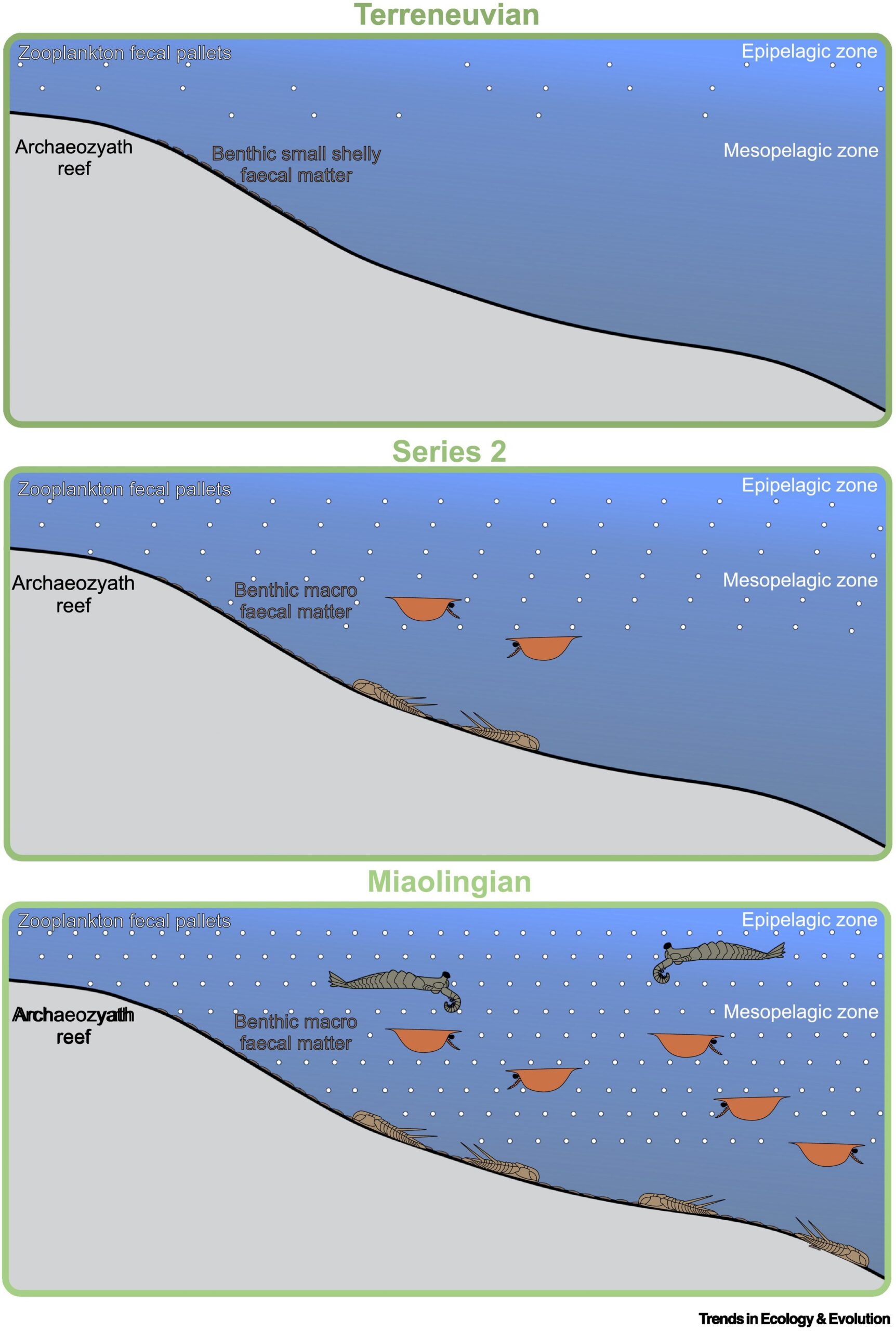
Fecal matter may also have helped life spread into deeper marine habitats. As pellets sank, they carried food to animals living farther from surface production.
This could have supported detritivores, animals that feed on decaying organic material. It may also have helped animals that consumed feces or feces-associated microbes.
As more creatures disturbed and mixed the seafloor, marine habitats changed. Burrowing and sediment mixing created new niches.
By the middle Cambrian, marine shelf communities had become more established. Fecal matter likely formed part of that expanding ecological engine.
The ocean was becoming a more dynamic place, shaped by eating, digestion and waste.
This research helps scientists better understand how complex ecosystems form. It shows that evolution depends not only on bodies and genes, but also on nutrient cycles and waste movement.
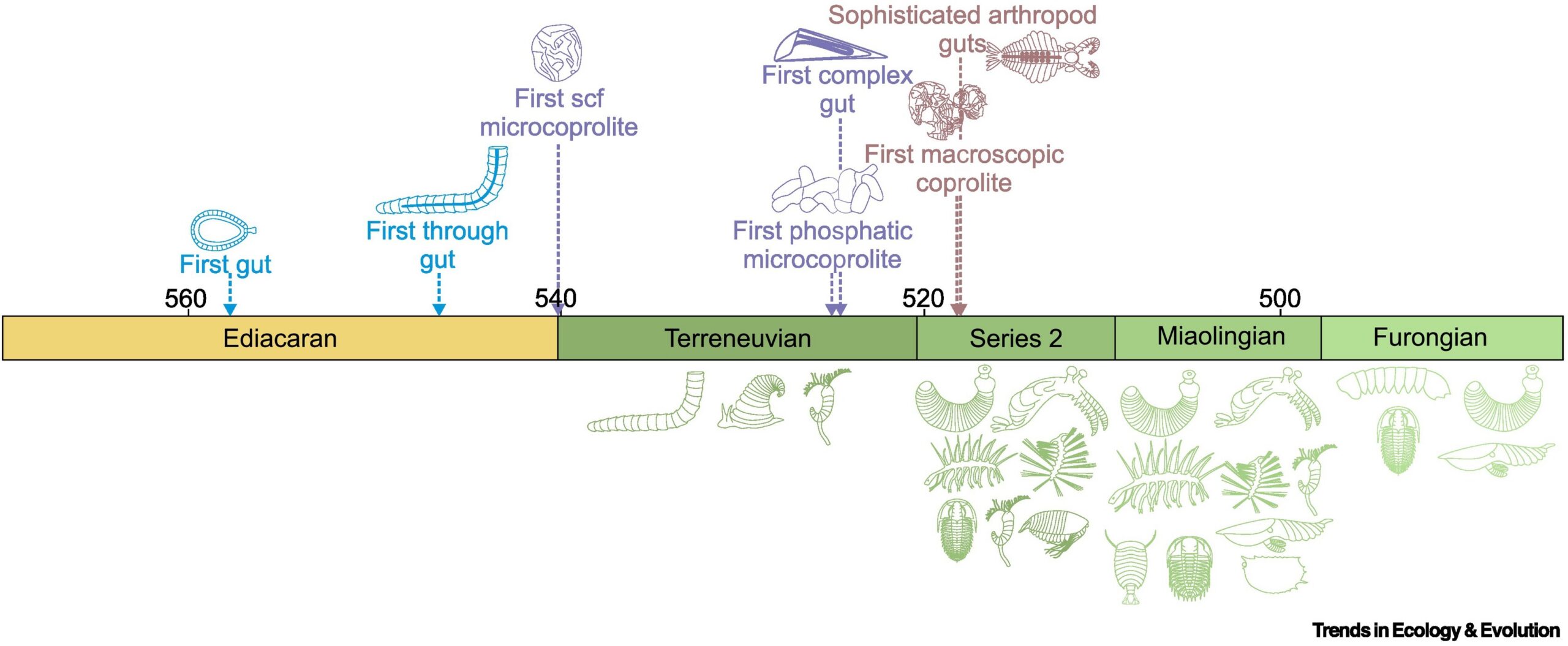
The findings may improve how researchers interpret ancient ecosystems. Coprolites can reveal feeding behavior, predator-prey links and the movement of carbon through early oceans. That makes them valuable records of both biology and environment.
The work also reminds humanity that waste can shape life in powerful ways. In modern ecosystems, nutrient recycling remains essential for soil, oceans and food production. Studying ancient feces can deepen our understanding of those cycles today.
More broadly, the study gives scientists a fuller picture of the Cambrian Explosion. By adding fecal matter to the story, researchers can better explain how early animal life transformed Earth’s seas.
These resources explore how ecology, oxygen, digestive systems and seafloor engineering helped transform animal communities across the Ediacaran-Cambrian transition.
From organisms to biodiversity: the ecology of the Ediacaran/Cambrian transition: This review traces the shift from relatively simple Ediacaran communities to increasingly specialized Cambrian ecosystems, examining changes in feeding, movement, predation, burrowing and interactions among animals. (Paleobiology, 2025)
Bioturbators as ecosystem engineers in space and time: This review examines how animals that disturb sediment alter food resources, habitats and biogeochemical processes. It highlights the Cambrian Explosion as a critical stage in the development of modern-style shallow marine ecosystems. (Palaeontology, 2024)
Life on the Edge: The Cambrian Marine Realm and Oxygenation: This synthesis examines oxygen levels and marine environments from the late Ediacaran through the Early Ordovician, showing how variable oxygen conditions interacted with extinction and diversification during the Cambrian. (Annual Review of Earth and Planetary Sciences, 2024)
Organ systems of a Cambrian euarthropod larva: An exceptionally preserved Cambrian arthropod larva reveals detailed internal anatomy, including digestive glands, helping researchers reconstruct how sophisticated organ systems had already become early in arthropod evolution. (Nature, 2024)
Guts, gut contents, and feeding strategies of Ediacaran animals: Molecular evidence from 558-million-year-old fossils showed that Kimberella and Calyptrina possessed guts and consumed algae and bacteria, while Dickinsonia appears to have used a different feeding strategy. The findings illuminate digestive biology just before the Cambrian Radiation. (Current Biology, 2022)
Research findings are available online in the journal Trends in Ecology & Evolution.
The original story “Ancient animal feces may have helped transform Earth’s oceans 540 million years ago” is published in The Brighter Side of News.
Like these kind of feel good stories? Get The Brighter Side of News’ newsletter.
The post Ancient animal feces may have helped transform Earth’s oceans 540 million years ago appeared first on The Brighter Side of News.


Leave a comment
You must be logged in to post a comment.