One of northern Europe’s largest ancient volcanic ash deposits has puzzled geologists for decades. The Kinnekulle tephra stretches across Scandinavia and the Baltic region, yet the volcano powerful enough to produce it seemed to have vanished.
Evidence now points toward an unexpected location: beneath the flat landscapes and shallow waters surrounding The Wash on England’s east coast.
Scientists from the British Geological Survey and University of Oslo have linked rocks buried beneath Norfolk and Lincolnshire with the enormous ash deposit. Their research, published in the Geological Society of America Bulletin, identifies the concealed Wash Igneous Complex as a leading candidate for the source of much of the Kinnekulle tephra.
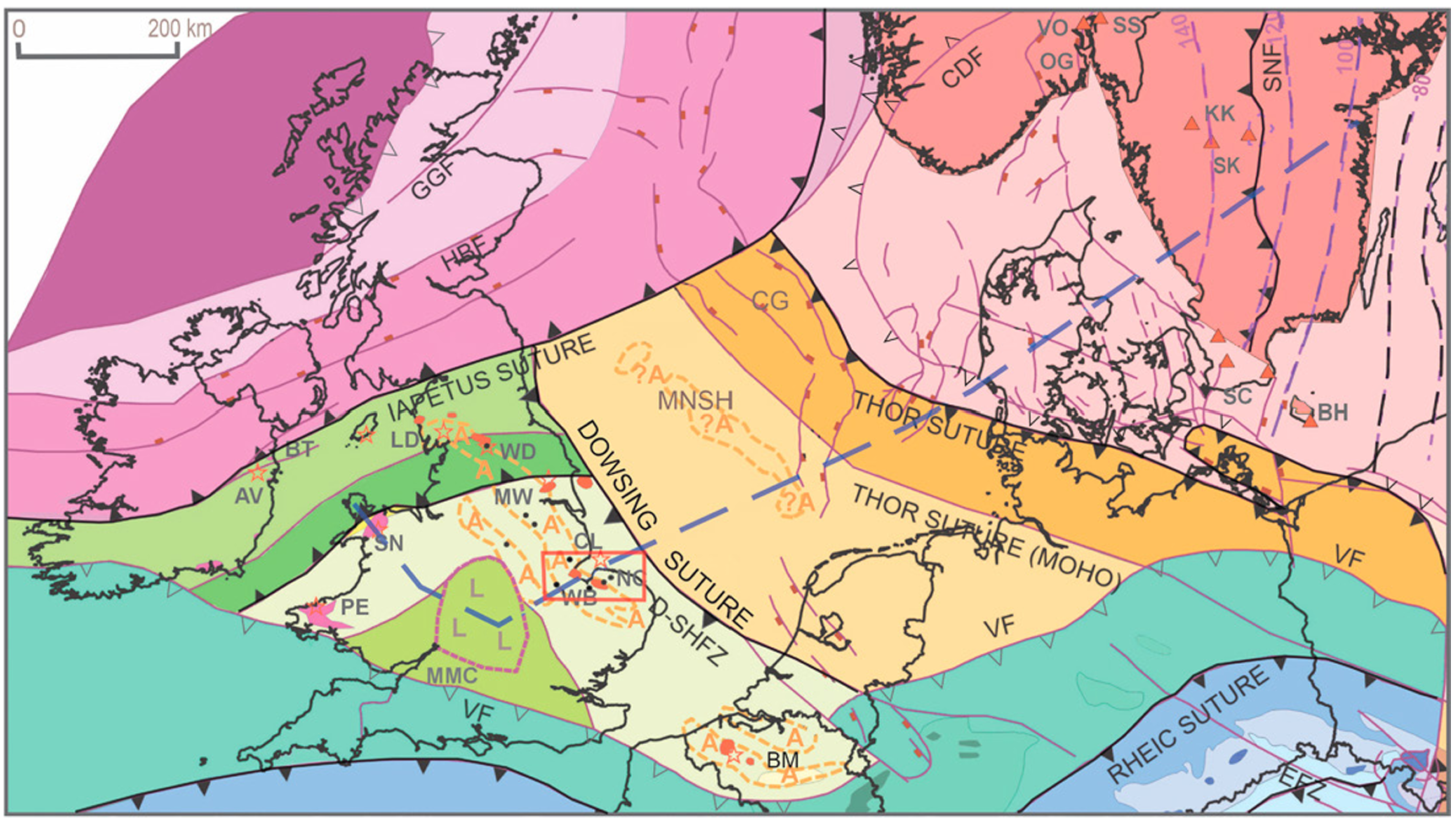
The volcanic system existed during the Late Ordovician, about 454 million years ago. At that time, England and Scandinavia were separated by the Tornquist Sea, and a belt of active volcanoes extended from what is now northern England toward continental Europe.
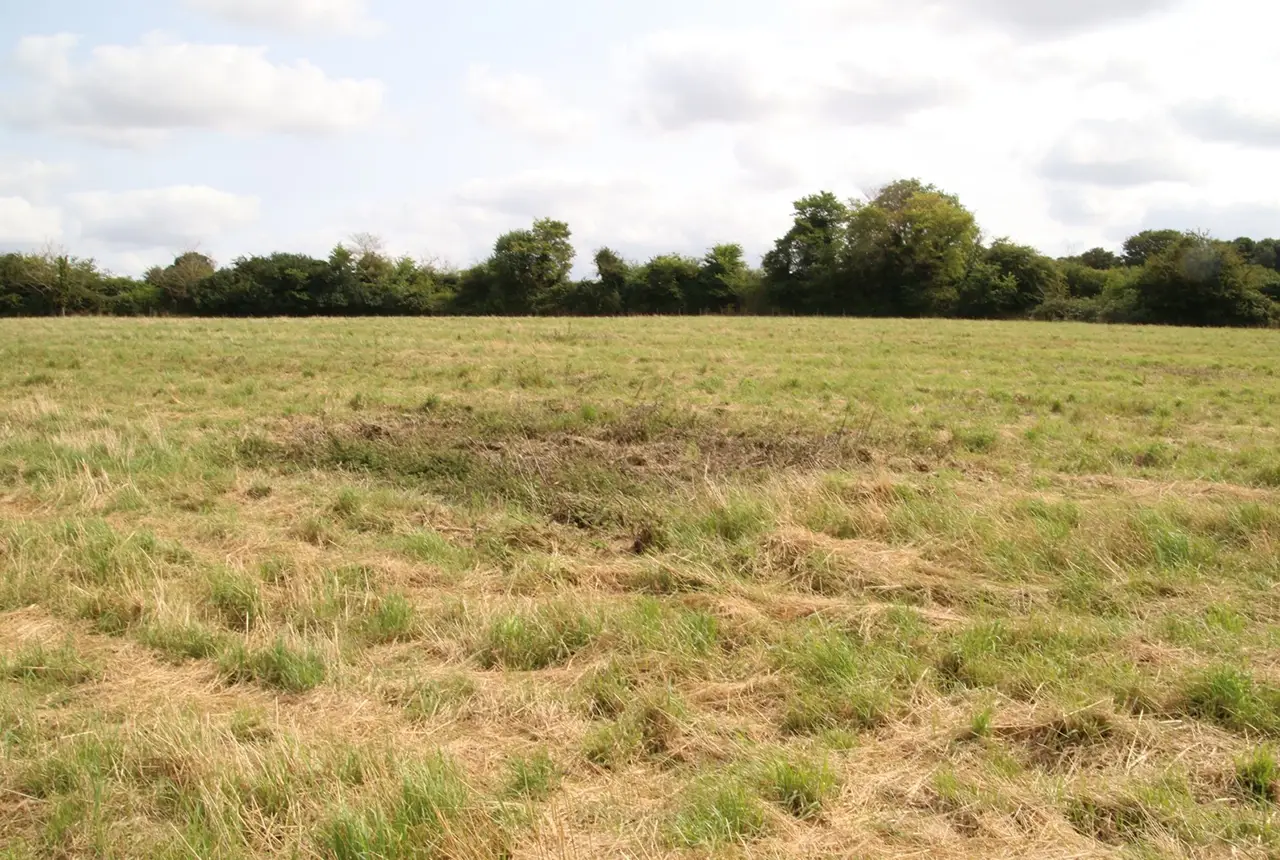
The landscape above the suspected source gives almost nothing away today. The complex lies beneath The Wash and surrounding parts of eastern England, concealed by hundreds of millions of years of geological change.
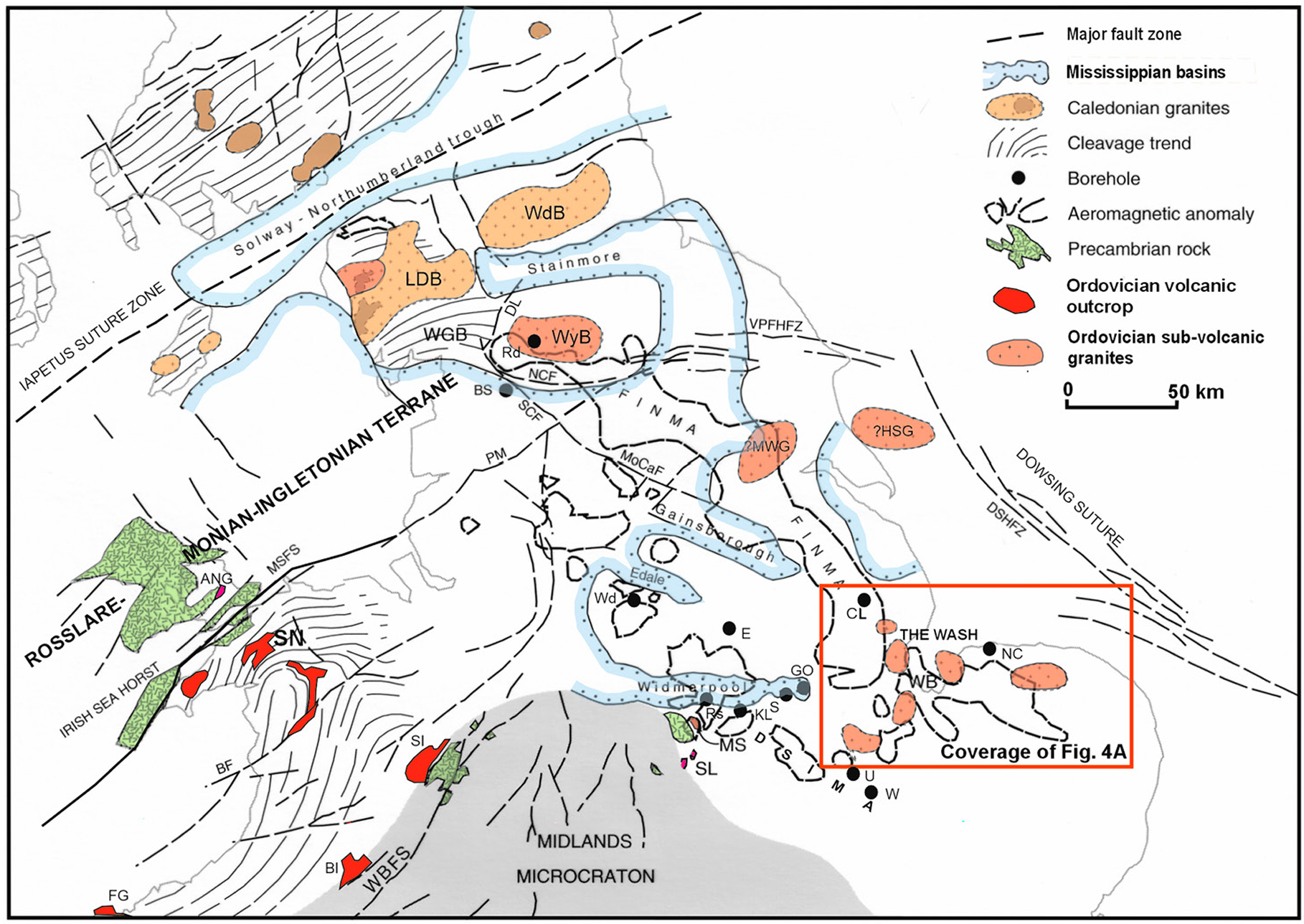
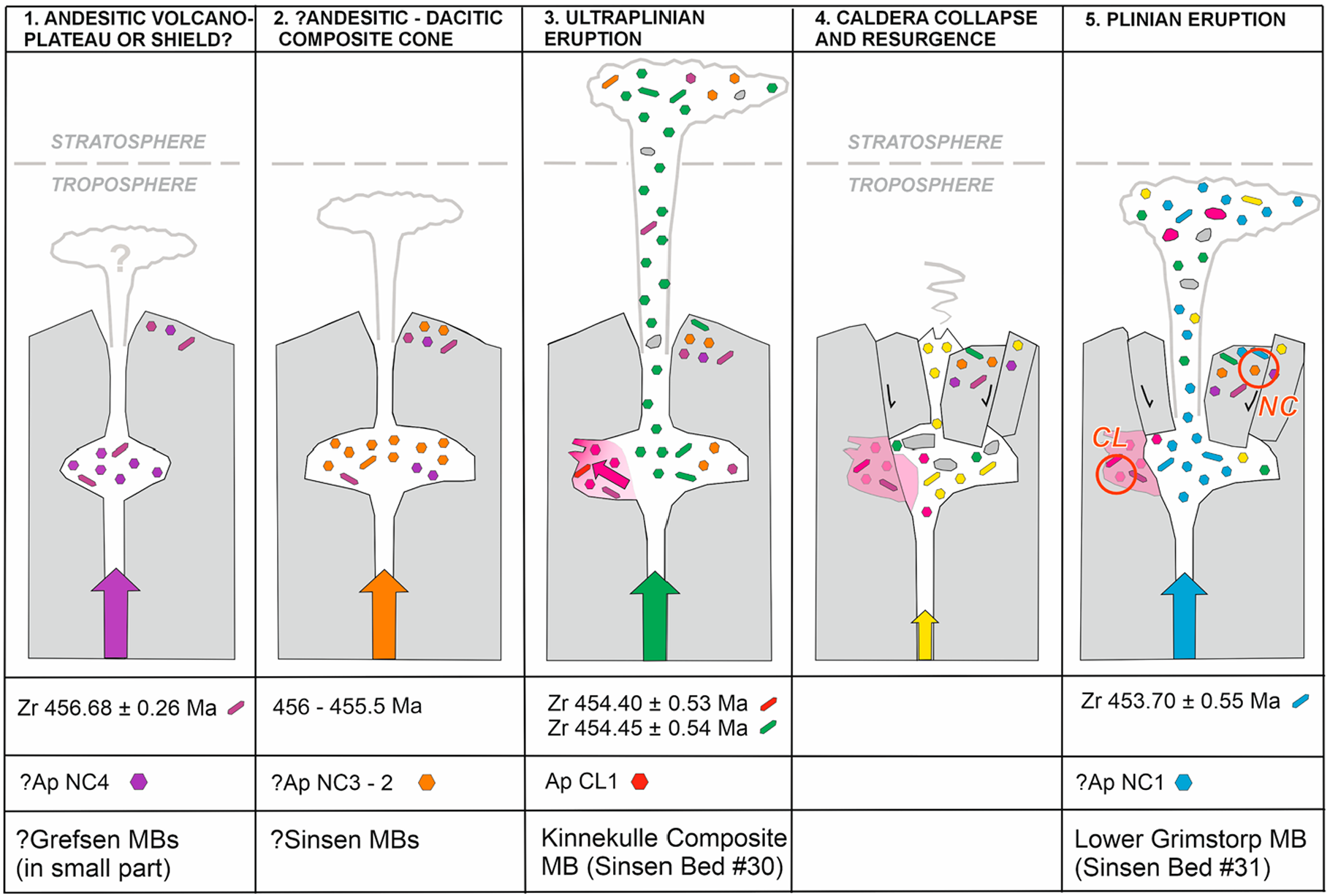
The breakthrough came from rocks recovered by deep boreholes at Claxby in Lincolnshire and North Creake in Norfolk. The sites lie about 65 kilometers apart, yet tiny zircon crystals inside the rocks recorded almost identical ages.
Zircon is especially valuable for dating ancient volcanic events. Uranium enters the crystal as it forms from magma and gradually decays into lead. Measuring those isotopes allows geologists to calculate when the zircon crystallized.
The Claxby microgranite produced an age of about 454.40 million years. An older population of zircon from the North Creake volcanic breccia dated to about 454.45 million years. The researchers concluded that the matching ages represented the same major period of magmatic activity across a volcanic system extending at least 65 kilometers.
Those numbers closely match previous high-precision dates for the Kinnekulle Metabentonite in Scandinavia. Measurements from Bornholm, Denmark, and sites in Norway place the deposit at roughly 454.4 million years old.
That agreement provides the chronological foundation for the proposed link.
Age alone is not enough to identify the volcano that produced an ash layer. Several volcanic centers were active around the region, including systems associated with what are now Snowdonia and the Lake District.
The researchers therefore examined apatite, another mineral preserved within volcanic rocks and ash. Its chemical composition can retain a distinctive signature of the magma from which it crystallized.
Apatite crystals from the Wash Igneous Complex show similarities to crystals preserved in the Kinnekulle deposit. Some chemical patterns are close enough to support the age-based correlation, strengthening the argument that eruptions beneath eastern England supplied at least part of the Scandinavian ash.
The proposed geography explains how the connection could have worked. England then formed part of Avalonia, while Scandinavia belonged to Baltica. The Tornquist Sea separated them.
A sufficiently powerful eruption could have driven ash high into the atmosphere, where prevailing winds carried it across the sea. The particles eventually settled onto the seafloor around ancient Scandinavia and were buried within marine sediments.
Today, the altered volcanic material survives as metabentonite.
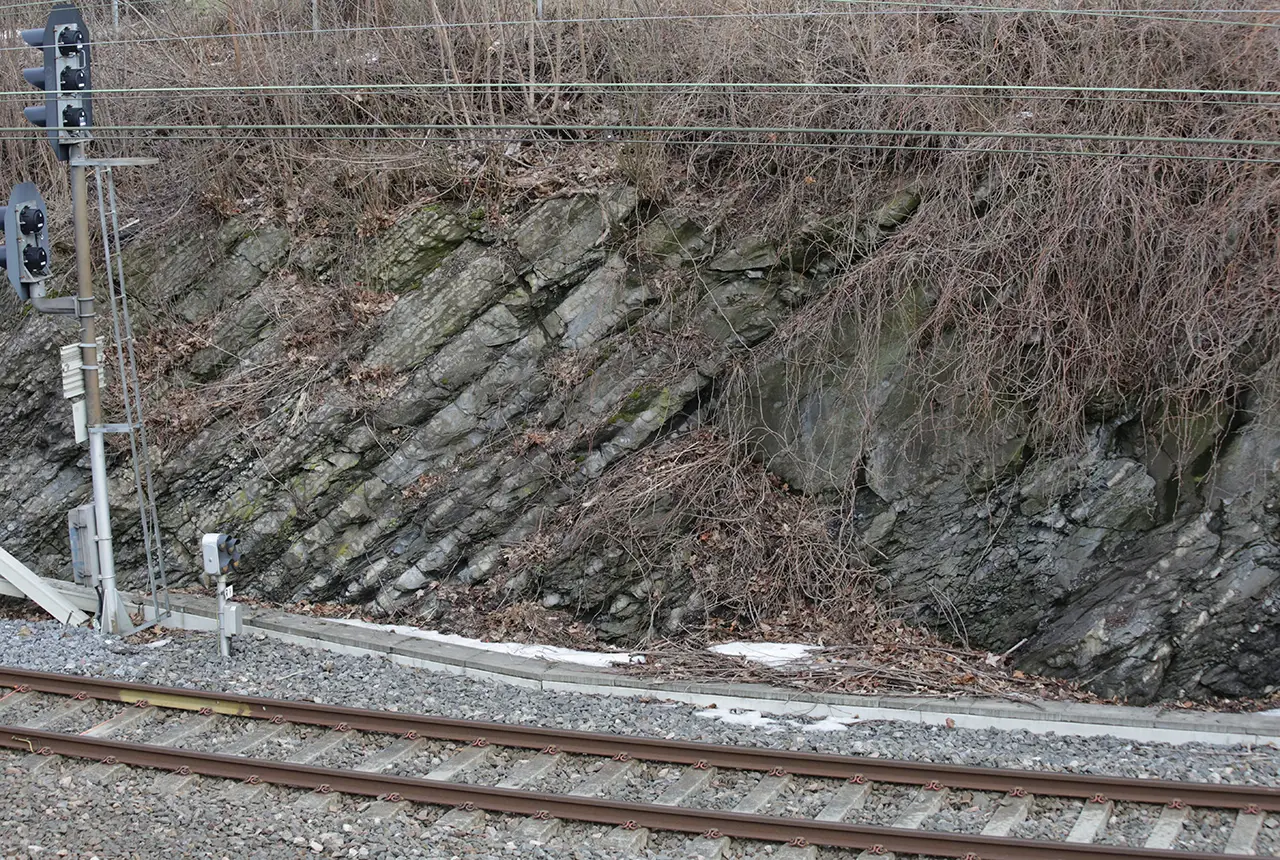
The Kinnekulle layer is not a minor trace of volcanic activity. It can reach about two meters thick near its type locality in Sweden and has been recognized across at least 690,000 square kilometers of Baltoscandia.
Earlier estimates place its dense-rock-equivalent volume at at least 972 cubic kilometers, making the eruptions responsible for it among the largest explosive volcanic events preserved from the Paleozoic. The deposit also appears to be composite, meaning more than one eruption contributed material.
Geophysical measurements around The Wash reveal large negative gravity anomalies consistent with an extensive buried granite body. Researchers interpret the volcanic rocks encountered by the boreholes and this deeper inferred batholith as parts of the Wash Igneous Complex.
A younger group of zircon crystals from North Creake adds another chapter. Those grains date to about 453.70 million years ago, roughly 700,000 years after the main event. Their age matches younger Grimstorp ash beds in Scandinavia within analytical uncertainty.
The researchers suggest this later activity may record renewed volcanism and collapse of the caldera. The North Creake borehole contains a chaotic volcanic breccia with material from different magma sources, consistent with rocks becoming mixed during caldera collapse.
The evidence places a major Ordovician volcanic system beneath eastern England at precisely the right time to have produced the Kinnekulle ash. The match combines high-precision zircon ages with similarities in apatite chemistry and evidence for a volcanic complex large enough to generate enormous eruptions.
“More than 454 million years ago, a supervolcano now hidden beneath some of England’s flattest landscapes, produced some of the biggest eruptions in recorded Earth’s history,” BGS researcher Tim Pharaoh, the paper’s principal author, said. “We believe that, thanks to cutting edge-analysis, we have been able to provide evidence that the source of the ash layer in Scandinavia originated from this supervolcano, reshaping our understanding of England’s deep geological past.”
The scientific paper remains more cautious about declaring the mystery closed. Apatite data are still lacking from some competing volcanic sources in the wider ancient arc, including areas that could also have contributed ash.
Until those sources receive comparable isotopic and chemical testing, the authors describe the Wash Igneous Complex as a candidate source for components of the Kinnekulle deposit rather than a definitive match.
Still, the discovery changes the geological picture beneath eastern England. A landscape now known for low-lying farmland, tidal flats and shallow coastal waters may conceal the remnants of a volcanic system whose eruptions once scattered ash across a large part of northern Europe.
These studies trace the age, chemistry and enormous geographic reach of the volcanic events preserved in the Kinnekulle and related Ordovician ash beds.
A new age model for the Ordovician (Sandbian) K-bentonites in Oslo, Norway: High-precision zircon dating of the Oslo succession identified 33 K-bentonite beds and dated the Kinnekulle layer to 454.06 ± 0.43 million years, providing a detailed chronology for the volcanic interval. (Palaeogeography, Palaeoclimatology, Palaeoecology, 2019)
Tectono-magmatic division of the Late Ordovician (Sandbian) volcanism at the south-western margin of Baltica using immobile trace elements: Relations to the plate movements in the Iapetus Palaeo-Ocean: Trace-element chemistry distinguishes several phases of Sandbian volcanism and examines how changing magma sources related to tectonic activity along the margin of Baltica. (Geological Journal, 2020)
Geochemistry of Upper Ordovician metabentonites and their cognate apatite microphenocrysts from Norway and Sweden: Apatite and whole-rock chemistry reveal relationships among Scandinavian ash beds and demonstrate why mineral fingerprints are useful for identifying and correlating ancient eruptions. (GFF, 2014)
Apatite phenocryst compositions demonstrate a miscorrelation between the Millbrig and Kinnekulle K-bentonites of North America and Scandinavia: Chemical differences between apatite crystals showed that the Kinnekulle and North American Millbrig deposits could not have come entirely from a single eruption, while also indicating that both deposits contain multiple eruptive components. (Geology, 2011)
Astronomically forced cyclicity in the Upper Ordovician and U–Pb ages of interlayered tephra, Oslo Region, Norway: Zircon dating placed the Kinnekulle ash at 454.52 ± 0.50 million years and the younger Grimstorp tephra at 453.91 ± 0.37 million years, dates central to reconstructing the sequence of massive eruptions. (Palaeogeography, Palaeoclimatology, Palaeoecology, 2015)
Research findings are available online in the journal GSA Bulletin.
The original story “Ancient English supervolcano blasted ash across northern Europe 454 million years ago” is published in The Brighter Side of News.
Like these kind of feel good stories? Get The Brighter Side of News’ newsletter.
The post Ancient English supervolcano blasted ash across northern Europe 454 million years ago appeared first on The Brighter Side of News.



Leave a comment
You must be logged in to post a comment.