A faint point of light sits beside Betelgeuse in a newly processed image. It may resolve a century-old question about the famous red supergiant, while opening another about how its unseen partner could shape the star’s final years.
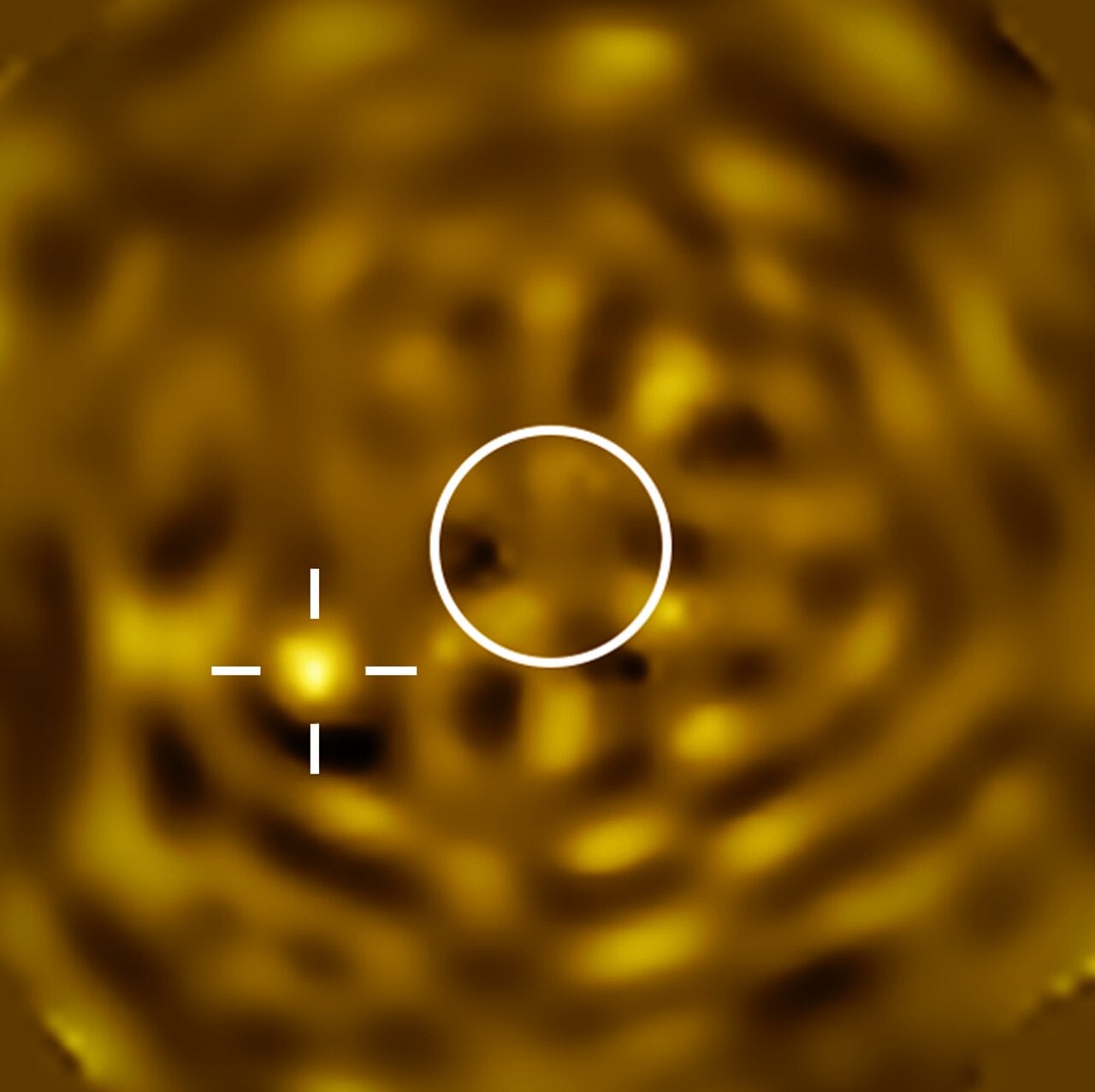
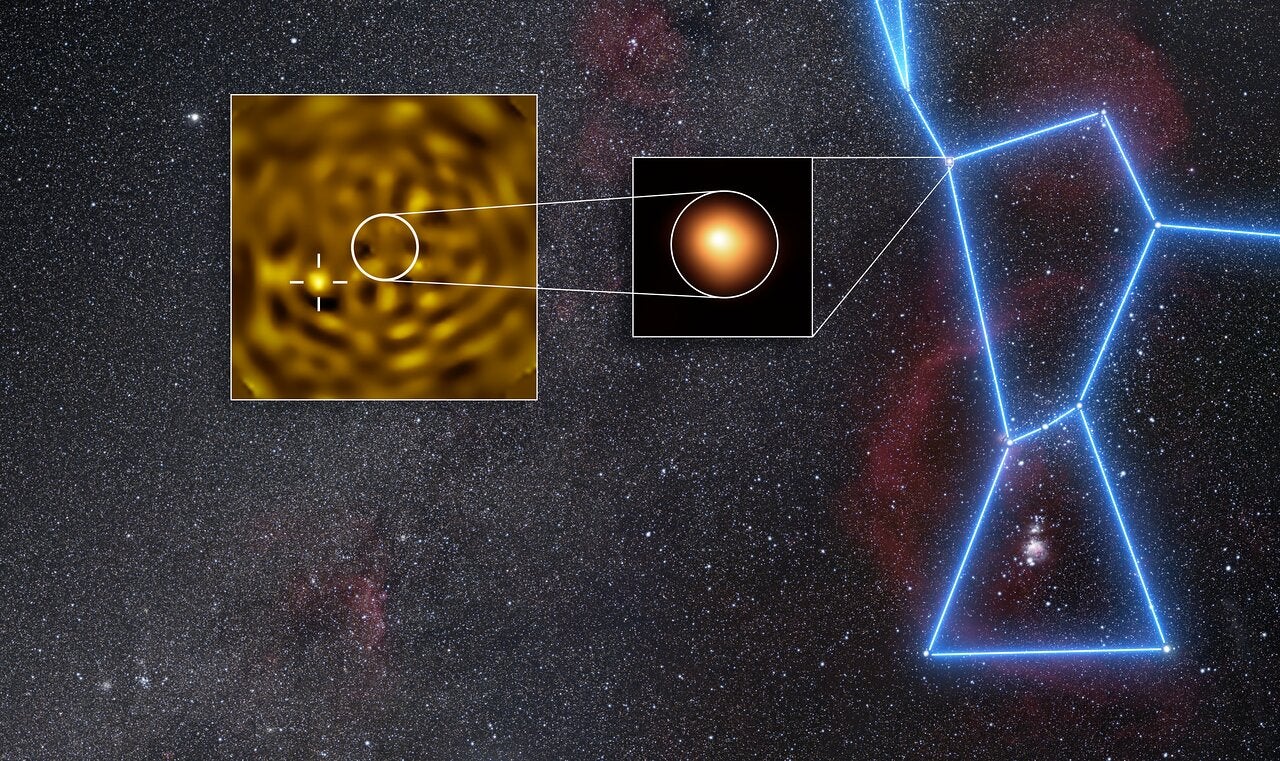
Miguel Montargès and his colleagues directly detected the likely companion using the European Southern Observatory’s Very Large Telescope in Chile. The object, known as candidate Betelgeuse B, appeared at a statistical significance of 6.1 sigma.
“This is the conclusion of a century-long quest,” said Montargès, an astronomer at the Observatoire de Paris-PSL in France.
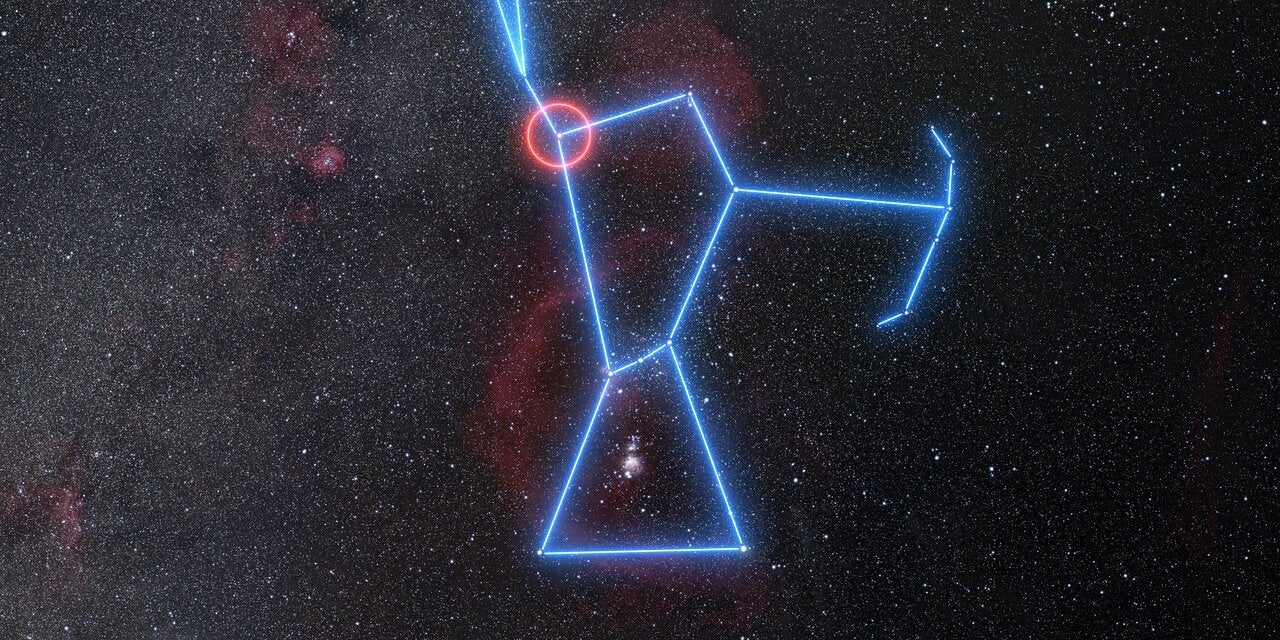
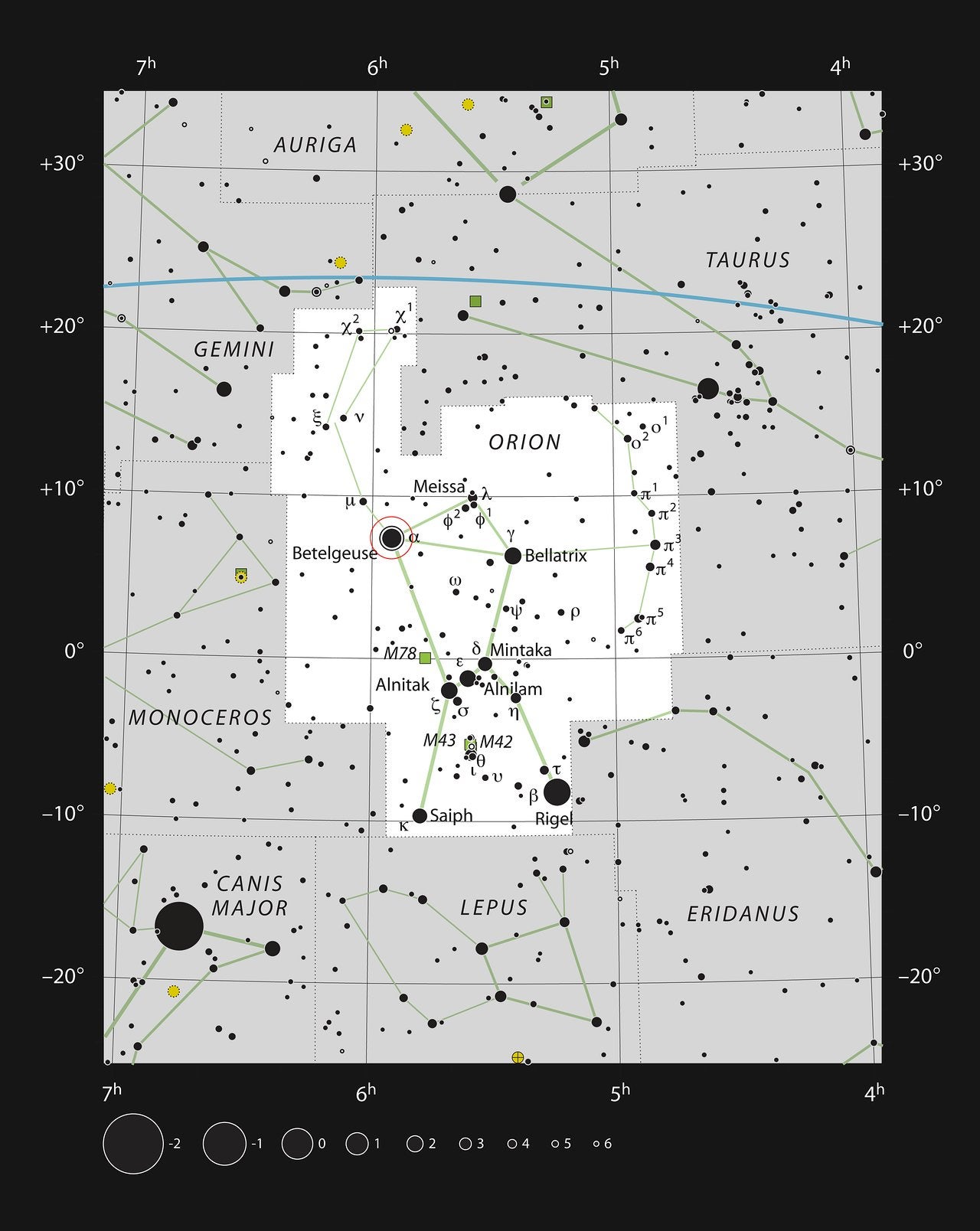
Betelgeuse lies in the constellation Orion and is easily visible without a telescope. Its reddish color, changing brightness, and eventual fate as a supernova have made it one of the most closely watched stars in the sky.
Astronomers have repeatedly proposed that Betelgeuse has a companion, but earlier claims lacked independent confirmation. Interest intensified after researchers connected the star’s longest brightness cycle to a possible orbiting object.
Betelgeuse has several semi-regular variations. Three shorter periods, lasting about 420, 230, and 180 days, are commonly linked to pulsations within the star.
A longer cycle lasts about 2,200 days, or roughly six years. Two studies published in 2024 (The Astrophysical Journal and arXiv respectively) and proposed that an unseen companion could help produce that long secondary period.
Those calculations predicted that the object would reach its greatest apparent separation from Betelgeuse in December 2024. That would give astronomers their best chance to distinguish its light from the brilliant supergiant.
Montargès’ team observed Betelgeuse on December 3 and December 6 using the SPHERE instrument on the Very Large Telescope. The researchers then spent months separating a possible companion from instrumental effects and the overwhelming light of Betelgeuse.
“I jumped from my chair when I saw the processed images,” Montargès said.
The source appeared in a filter measuring visible light near the hydrogen-alpha wavelength. It did not appear in the narrower hydrogen-alpha filter itself.
The team measured a projected separation of 52.32 milliarcseconds from Betelgeuse. Using an estimated distance of 168 parsecs to the system, that corresponds to at least 8.8 astronomical units. One astronomical unit is the average distance between Earth and the Sun.
The new position closely matches a tentative detection made with the Gemini North Telescope in Hawaii during December 2024. That earlier signal reached only 1.5 sigma, making it too weak to provide firm evidence by itself.
The Very Large Telescope result offers the strongest detection and clearest image so far.
“We have shown that Betelgeuse is not single, it is accompanied by a faint stellar companion,” Montargès said.
The researchers remain formally cautious. A single observing period cannot prove that the object follows the predicted orbit.
“To be certain that the companion is really there, we still need to observe it in one year on the other side of the star, but there is very little space left for doubt,” Montargès said.
The brightness of Betelgeuse B also challenged earlier expectations. Astronomers had predicted a companion with a mass comparable to the Sun.
Instead, the observations indicate a star with roughly 2.6 to 3.1 times the Sun’s mass. It may be a young main-sequence star of spectral type B8.5V to B9.5V.
“Honestly, I thought we did not have the sensitivity to detect Betelgeuse B as it was predicted,” Montargès said. “Because it is more massive than predicted, we see it!”
The estimated age of the system places the companion near the beginning of its main-sequence life. Betelgeuse, by contrast, has already expanded into a red supergiant after beginning life with an estimated 18 to 21 solar masses.
The lack of hydrogen-alpha emission, far-ultraviolet light, and X-rays is consistent with the companion being a young main-sequence star rather than a younger object still forming.
“The fact that we can still discover a nearby companion, more massive and brighter than the Sun, around such a well-studied star is remarkable,” Montargès said. “These are among the best moments in science: seeing something new, unexpected.”
The candidate’s minimum orbital period depends strongly on Betelgeuse’s uncertain distance. At 168 parsecs, calculations produce a minimum period between roughly 5.5 and 5.9 years, with sizable uncertainty.
That agrees with the approximately six-year brightness cycle and earlier predicted orbital periods of 5.78 and 5.94 years.
A larger distance estimate of 222 parsecs would place the companion farther away. The minimum orbital period would then exceed eight years, weakening the match with the brightness cycle.
Betelgeuse’s distance has remained difficult to determine because its apparent surface is enormous and active. Large convection cells can shift the apparent center of its light, complicating standard measurements.
The companion may influence surrounding dust, which could contribute to Betelgeuse’s changing brightness. Images show clumpy dust around the supergiant, including material near the candidate’s position.
However, the new analysis suggests that radiation from Betelgeuse B could clear only a small region of dust. That effect might change the star’s brightness by about 0.1 magnitude, less than the roughly 0.5-magnitude variation associated with the long cycle.
The researchers therefore favor a larger role for dynamical effects linked to the companion’s motion.
The detection follows the intense attention surrounding Betelgeuse’s dramatic dimming several years ago. Some observers wondered whether the fading signaled an approaching supernova.
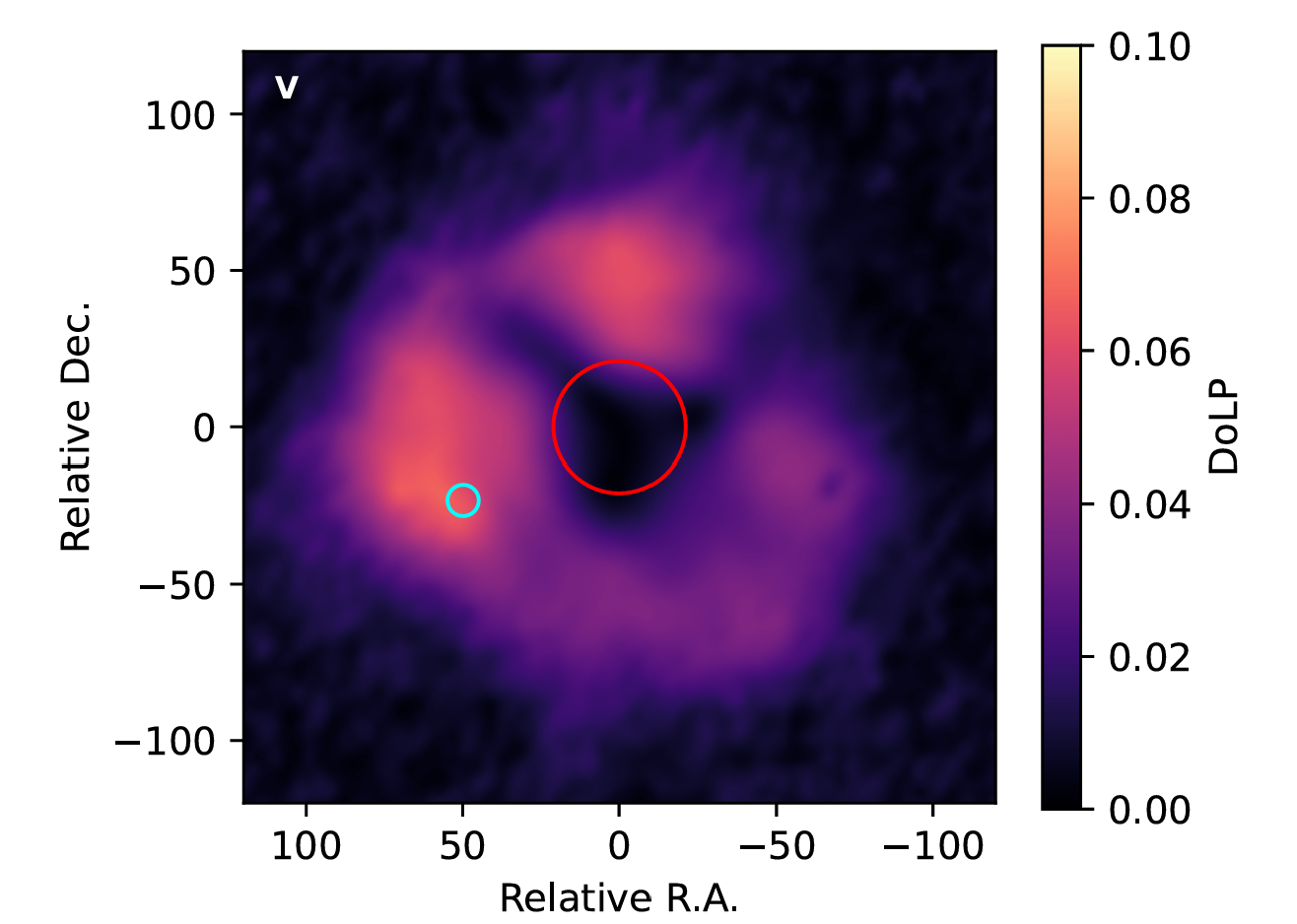
Montargès and other astronomers later found that dust obscuring the star caused much of that event.
Betelgeuse will eventually explode as a supernova, but the presence of a companion raises new questions about its path toward that explosion. Close binary systems can exchange matter, alter stellar rotation, or merge before one star reaches the red-supergiant stage.
The candidate sits far enough away that its precise influence remains uncertain. Astronomers still need additional observations to establish its orbit, confirm its physical properties, and determine whether it has interacted with Betelgeuse.
Confirming Betelgeuse B would give astronomers a rare nearby laboratory for studying how companions affect aging massive stars. Such systems can help explain why fewer red supergiants appear in binaries than expected from their younger ancestors.
Future images should reveal whether the candidate moves to the opposite side of Betelgeuse as predicted. A longer series of observations could then define the orbit and improve estimates of both stars’ masses.
That information may clarify whether the companion drives Betelgeuse’s six-year brightness cycle, alters nearby dust, or influences the supergiant’s evolution.
“The question is truly opened whether this companion is going to have an impact on the evolution of the red supergiant,” Montargès said.
Research findings are available online in the journal Astronomy and Astrophysics.
The original story “Astronomers capture the strongest evidence yet of Betelgeuse B” is published in The Brighter Side of News.
Like these kind of feel good stories? Get The Brighter Side of News’ newsletter.
The post Astronomers capture the strongest evidence yet of Betelgeuse B appeared first on The Brighter Side of News.

