Barnard’s Star sits less than six light-years away, yet its four known planets look nothing like familiar neighbors. Each is smaller than Earth, larger than Mars, and packed so tightly around the star that a year lasts only days.
The planets circle the nearest single star to the Sun. Their masses and orbits were confirmed through radial velocity measurements, which track the slight motion a planet causes in its host star.
A detailed analysis led by Xander Byrne at the University of Cambridge now offers the clearest picture yet of what those worlds may be like. The findings appear in the Monthly Notices of the Royal Astronomical Society.
All four planets are probably rocky. None appears likely to support life as we know it.
“They were always going to be hostile, because they’re really close to their star,” Byrne said. “Even the outermost planet orbits ten times closer than Mercury orbits the Sun.”
The planets complete their orbits in about 2.34, 3.15, 4.12, and 6.74 days. Even the outermost lies only 0.0382 astronomical units from Barnard’s Star.
Such a compact arrangement can become unstable. Planets may tug on one another until they collide, fall into the star, or escape the system.
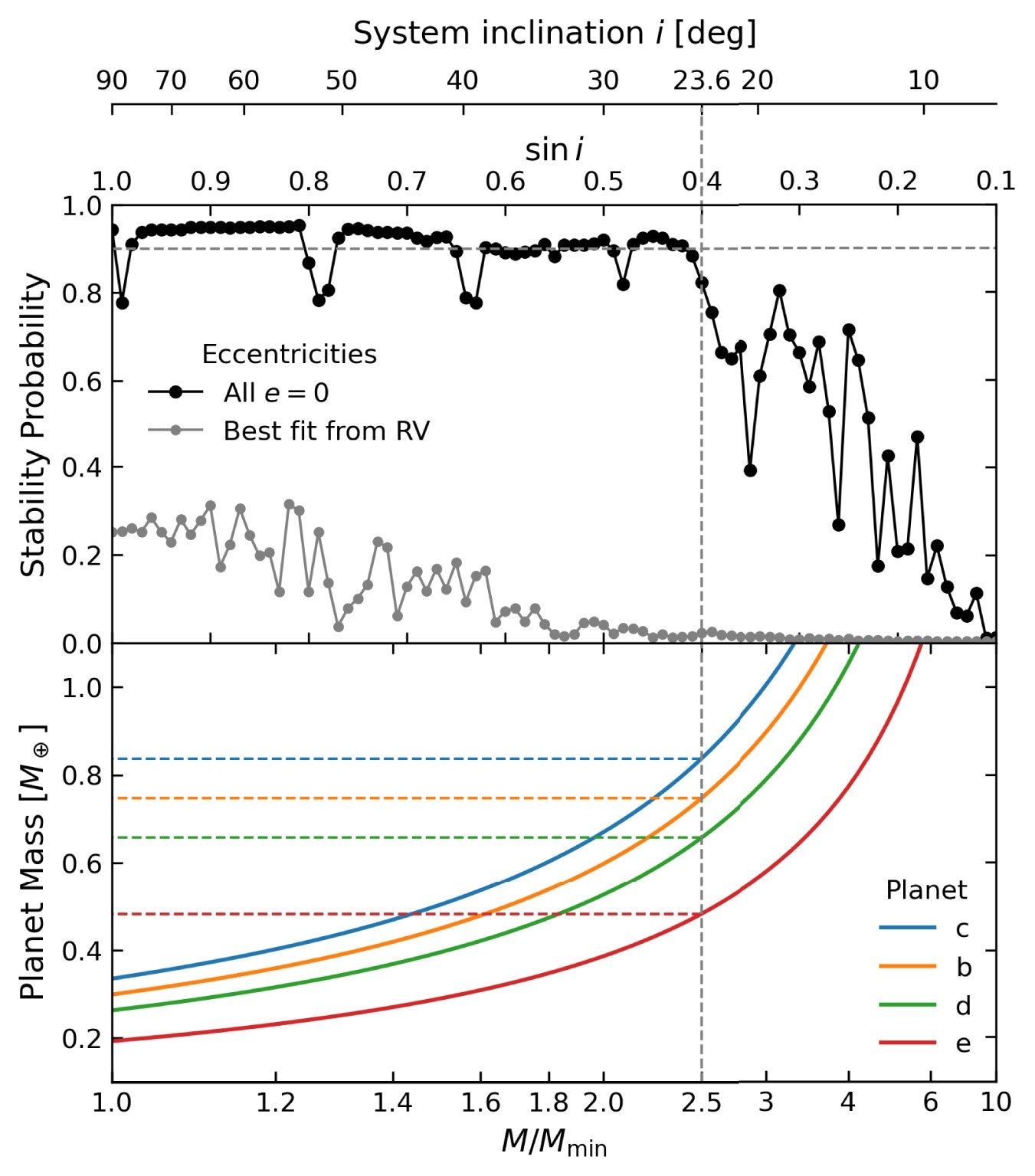
The team tested how large the planets could be before those interactions became too disruptive. Because radial velocity observations provide only minimum masses, the planets might be heavier if their orbital plane has a low inclination.
The stability analysis suggests their true masses are unlikely to exceed about 2.5 times the measured minimum values. That places all four between Mars and Earth in mass.
The most massive, Barnard’s Star c, probably weighs less than Earth. The researchers call this a “Lilliputian” system, meaning it contains several unusually small planets.
Circular or nearly circular orbits appear necessary for long-term stability. The best-fitting eccentric orbits from earlier observations produced unstable configurations in the models.
The inner three planets may receive help from an orbital resonance.
Their orbital periods sit close to a 9:12:16 ratio. Musically, that resembles two consecutive perfect fourths. Gravitational systems can also fall into repeating rhythms that prevent destructive encounters.
Similar orbital harmonies help organize Jupiter’s moons. A resonance chain could stabilize Barnard’s Star’s planets and maintain small orbital eccentricities.
Those eccentricities matter because they can generate tidal heating. As a planet’s shape flexes under changing gravitational forces, friction may warm its interior.
The available data do not yet establish whether such heating occurs. More radial velocity observations would be needed to constrain the planets’ orbital shapes and positions more precisely.
The planets are almost certainly tidally locked. Each likely keeps one side permanently facing the star, much as the Moon keeps one face toward Earth.
One hemisphere would experience constant daylight. The other would remain in permanent darkness.
Low gravity and intense radiation create severe problems for planetary atmospheres.
“When you’re that close to your star, and have such little gravity, your atmosphere just gets blown off,” Byrne said.
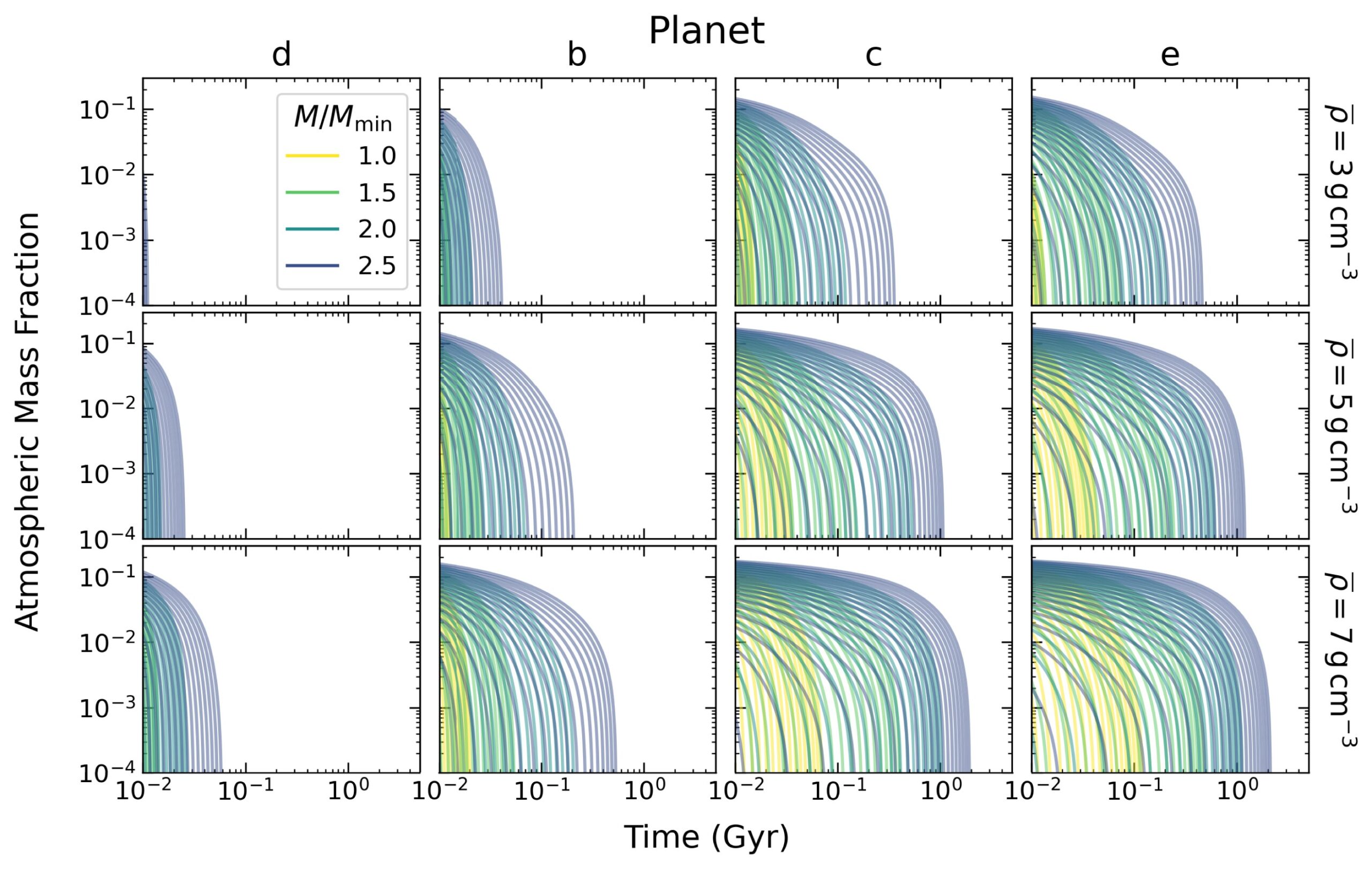
The team modeled the loss of hydrogen and helium atmospheres across a wide range of planet masses, densities, and starting conditions. In every case, the original atmosphere disappeared within two billion years.
Barnard’s Star is about 10 billion years old. Any primordial atmosphere would therefore have vanished early in the system’s history.
Secondary atmospheres, produced later by volcanic outgassing, also appear unlikely. The planets probably have cool interiors, limited water storage, and weak volcanic activity.
Barnard’s Star still produces occasional flares, adding another threat to any gas surrounding the planets.
Future observations may test that prediction. The ANDES instrument planned for the European Extremely Large Telescope could potentially examine reflected light from the planets and determine whether atmospheres remain.
The most unusual result comes from Barnard’s Star’s chemistry.
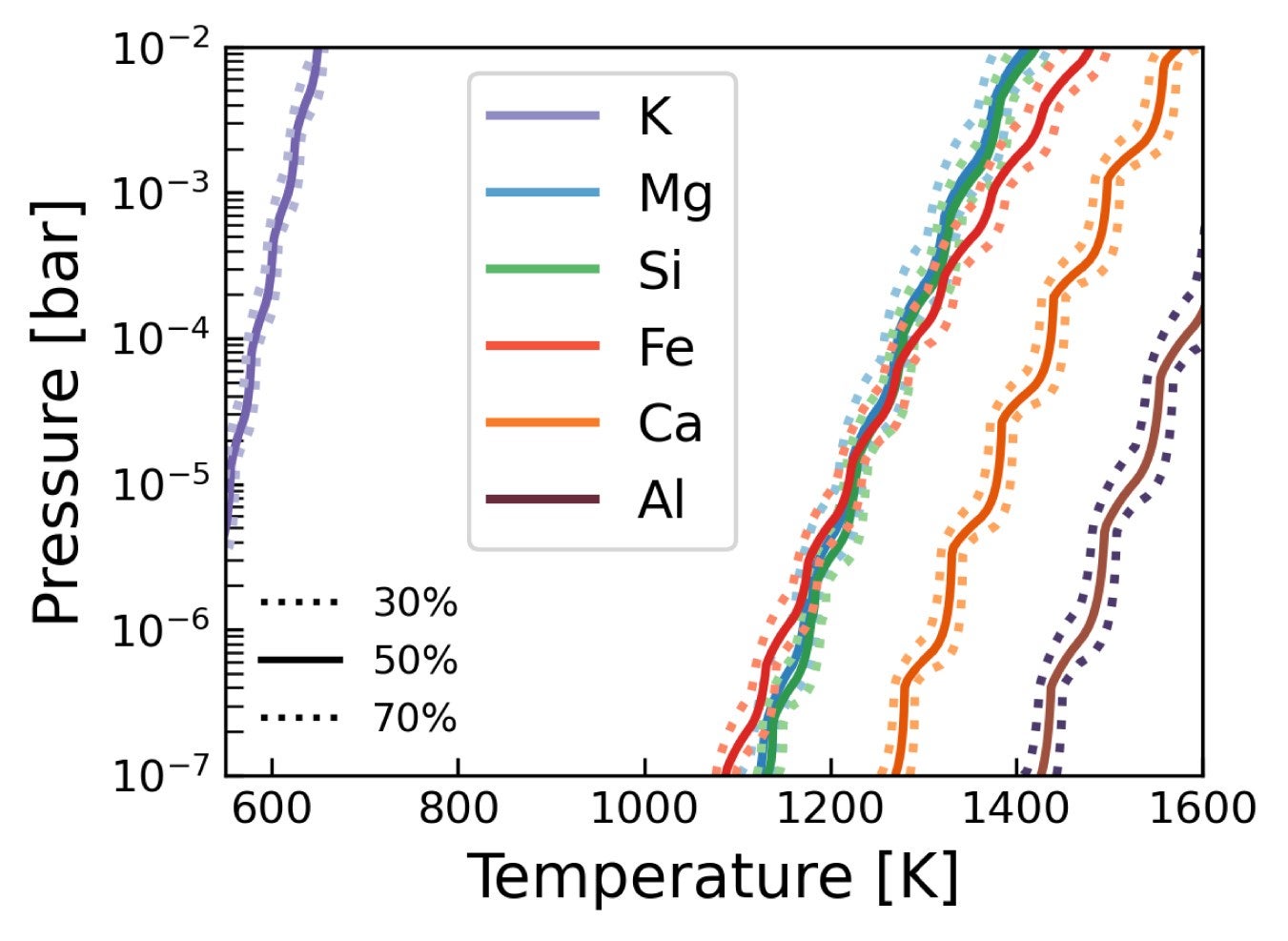
Planets and stars form from the same original cloud, so rocky planets often inherit ratios of elements such as magnesium, silicon, and iron from their host star.
“Barnard’s Star has an enormous amount of the element magnesium compared to other stars, so its planets are likely to be rich in magnesium too,” Byrne said.
Barnard’s Star has a magnesium-to-silicon ratio of about 2.63, far higher than the Sun’s. The team modeled how that composition would shape the planets’ mantles.
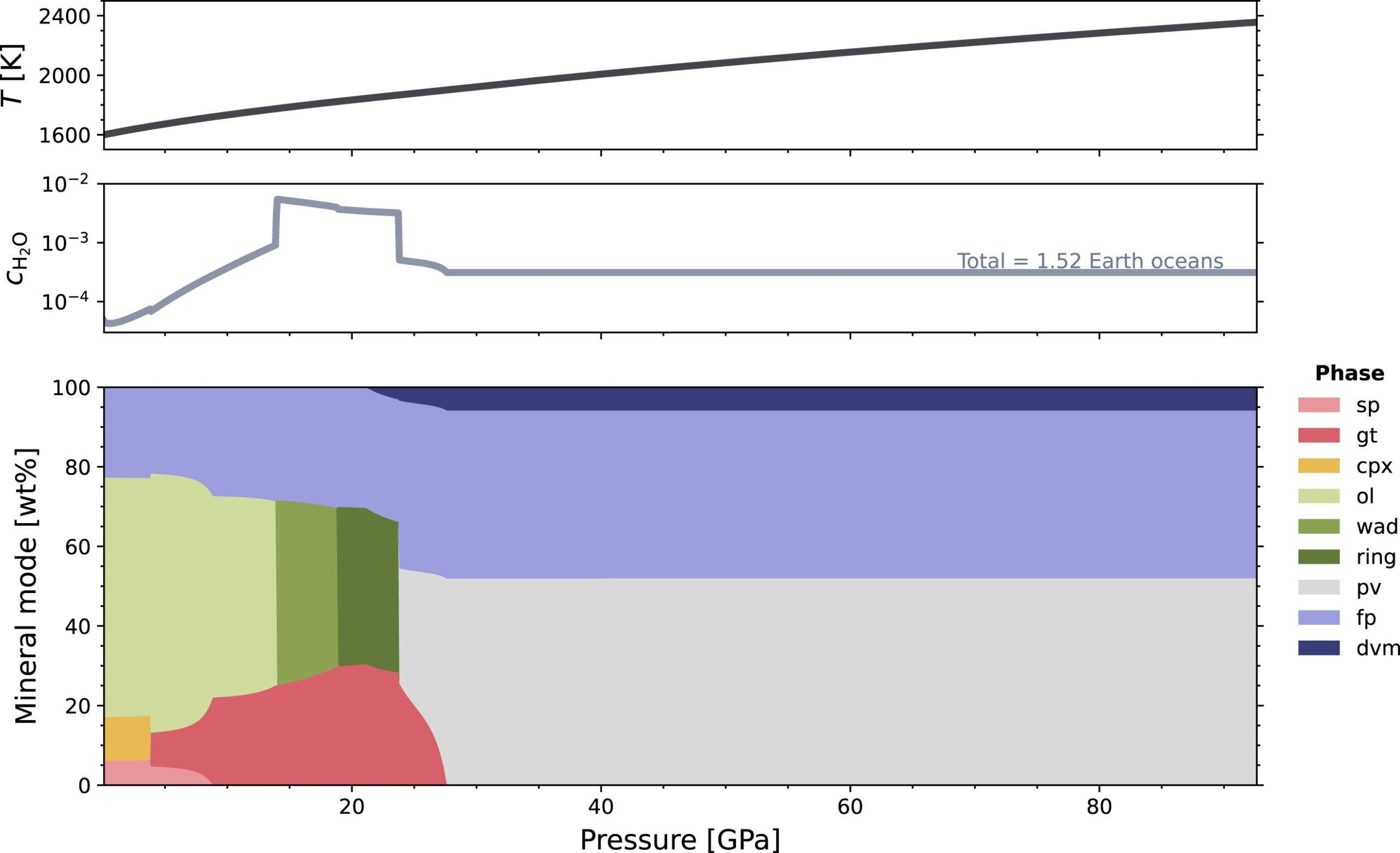
Earth stores much of its magnesium in minerals such as olivine, wadsleyite, and ringwoodite. Some of these minerals can hold substantial amounts of water.
The Barnard’s Star planets may instead contain large quantities of ferropericlase, a magnesium- and iron-rich mineral related to periclase. On Earth, ferropericlase mainly occurs deep in the lower mantle.
At the highest modeled magnesium levels, the mineral could make up roughly 60 percent of a planet’s mantle.
That difference matters because ferropericlase stores very little water. Wadsleyite and ringwoodite can contain up to about 1 percent water by weight. Ferropericlase may hold only about 10 parts per million.
For Barnard’s Star c, one representative model produced a mantle water capacity equal to about 1.52 Earth oceans. A comparable Earth model held just under three.
The planets may also generate less internal heat than Earth.
Thorium, uranium, and potassium release heat through radioactive decay. That heat helps drive mantle motion, volcanism, and magnetic activity.
Barnard’s Star formed billions of years before the Sun. Its planets began with radioactive elements, but much of that material has had more time to decay.
The analysis suggests their mantles now produce less than half as much radiogenic heat per unit of magnesium as Earth’s mantle.
Smaller planets also lose heat faster because they have more surface area relative to their volume. Cooler mantles would further limit melting, volcanic activity, and atmospheric outgassing.
Important uncertainties remain. The planets do not cross in front of their star, so their sizes are unknown. Their interior models also depend on the assumption that planetary element ratios reflect the star’s chemistry.
The planets may have formed farther out and migrated inward. Collisions could also have altered their compositions, as may have happened to Mercury.
Barnard’s Star shows how stellar chemistry can reveal the likely interiors of planets that cannot be directly examined.
Spectra of a host star may help researchers estimate a planet’s minerals, water storage, internal heat, and ability to retain an atmosphere. Those factors are central to judging whether a rocky world could remain geologically active or habitable.
The approach could become increasingly valuable as missions such as Plato, Gaia, Earth 2.0, and the Nancy Grace Roman Space Telescope identify more small planets.
“Larger planets are much easier to detect than small ones, so we know about very few sub-Earth planets like the ones in this system,” Byrne said. “But the sensitivity of these new missions will help to reduce this bias.”
Barnard’s Star’s planets may be lifeless, dry, and airless. Their importance lies elsewhere. They offer a nearby test of how stars, minerals, heat, and gravity shape small rocky worlds.
Research findings are available online in the journal Monthly Notices of the Royal Astronomical Society.
The original story “Astronomers find four Barnard’s Star planets to be small, uninhabitable, with years lasting only days” is published in The Brighter Side of News.
Like these kind of feel good stories? Get The Brighter Side of News’ newsletter.
The post Astronomers find four Barnard’s Star planets to be small, uninhabitable, with years lasting only days appeared first on The Brighter Side of News.

