Uranium pollution has lingered in soil and water for decades, often long after mining operations have ended. In many places, the metal remains dissolved in groundwater, posing risks to ecosystems and human health. A new study suggests that microscopic life may hold a surprising solution, turning a dangerous contaminant into a stable compound that could remain locked away for years.
Researchers from Helmholtz-Zentrum Dresden-Rossendorf, working with Wismut GmbH and scientists at the University of Granada, have shown that naturally occurring bacteria can transform dissolved uranium into a stable chemical form. Their findings reveal a previously unknown pathway that could reshape how contaminated environments are cleaned.
Uranium is usually trapped in minerals deep in the ground. Under certain conditions, it can dissolve into water and spread through the environment. Mining, groundwater movement, and chemical changes can all trigger this shift.
Once dissolved, uranium becomes far more mobile and toxic. It can contaminate drinking water and accumulate in ecosystems. Cleaning it up has proven difficult and expensive.
Scientists have long searched for ways to immobilize uranium. The goal is to convert it into a form that cannot easily move or dissolve again. Traditional approaches often rely on chemical treatments, which can be costly and produce waste.
The new study focused on the role of bacteria that already exist in contaminated environments. These microbes can use certain substances as food and energy sources. In doing so, they can also change the chemical state of metals around them.
“There are bacteria that can metabolically utilize the heavy metal, uranium, which is toxic for humans,” said Evelyn Krawczyk-Bärsch.
To explore this process, the team collected water from a flooded uranium mine in the Ore Mountains. The environment was deep underground, with little oxygen, which closely matches natural conditions in many contaminated sites.
In laboratory experiments, the researchers added glycerol, a simple compound found in fats, to the water. This provided a food source for the bacteria already present.
Under these conditions, microbial activity increased. Over time, the amount of dissolved uranium dropped sharply.
The results were striking. After about 130 days, only around five percent of the original dissolved uranium remained in the samples.
“After 130 days, only around five percent of the uranium dissolved in the water remained in the samples,” said Antonio M. Newman-Portela.
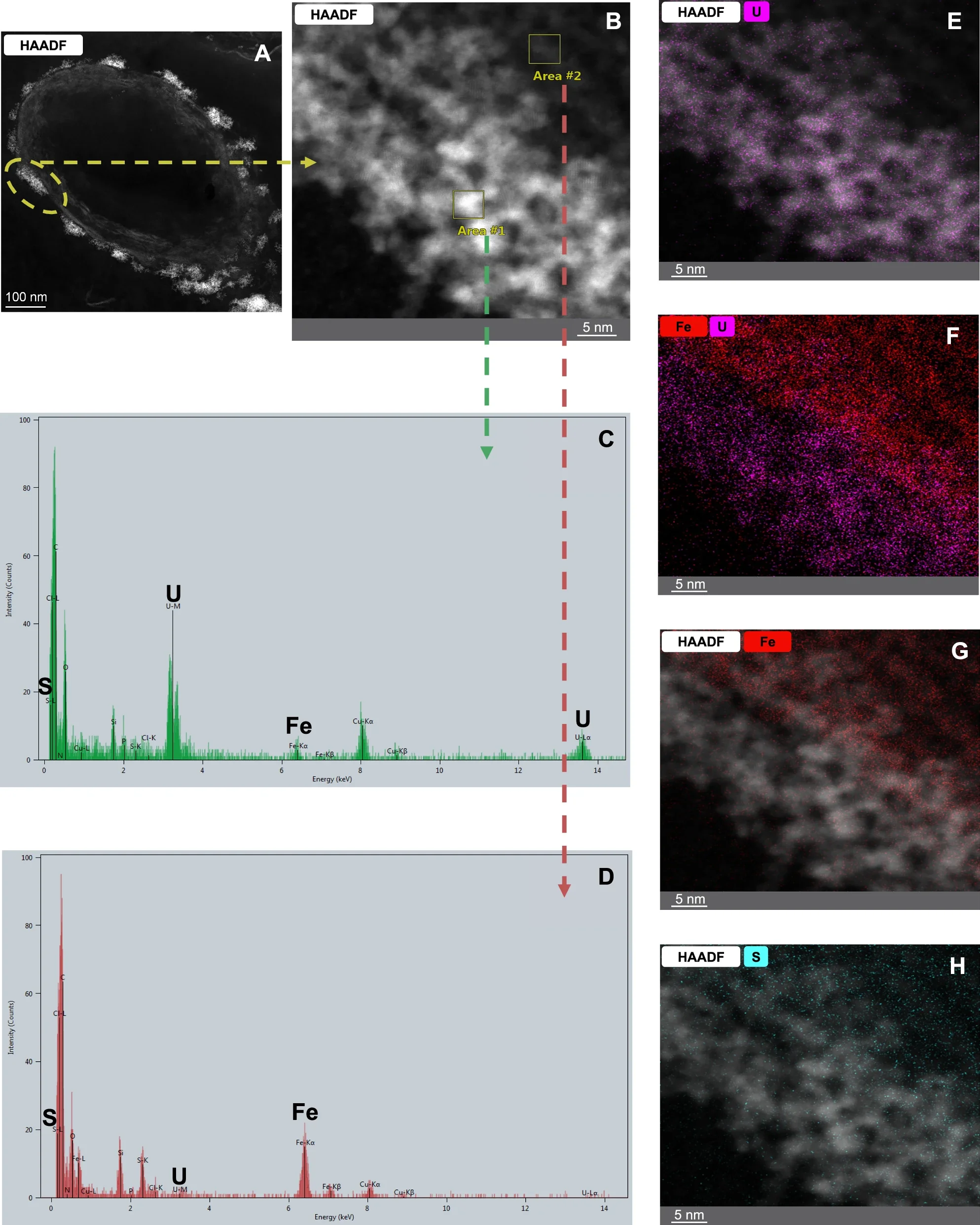
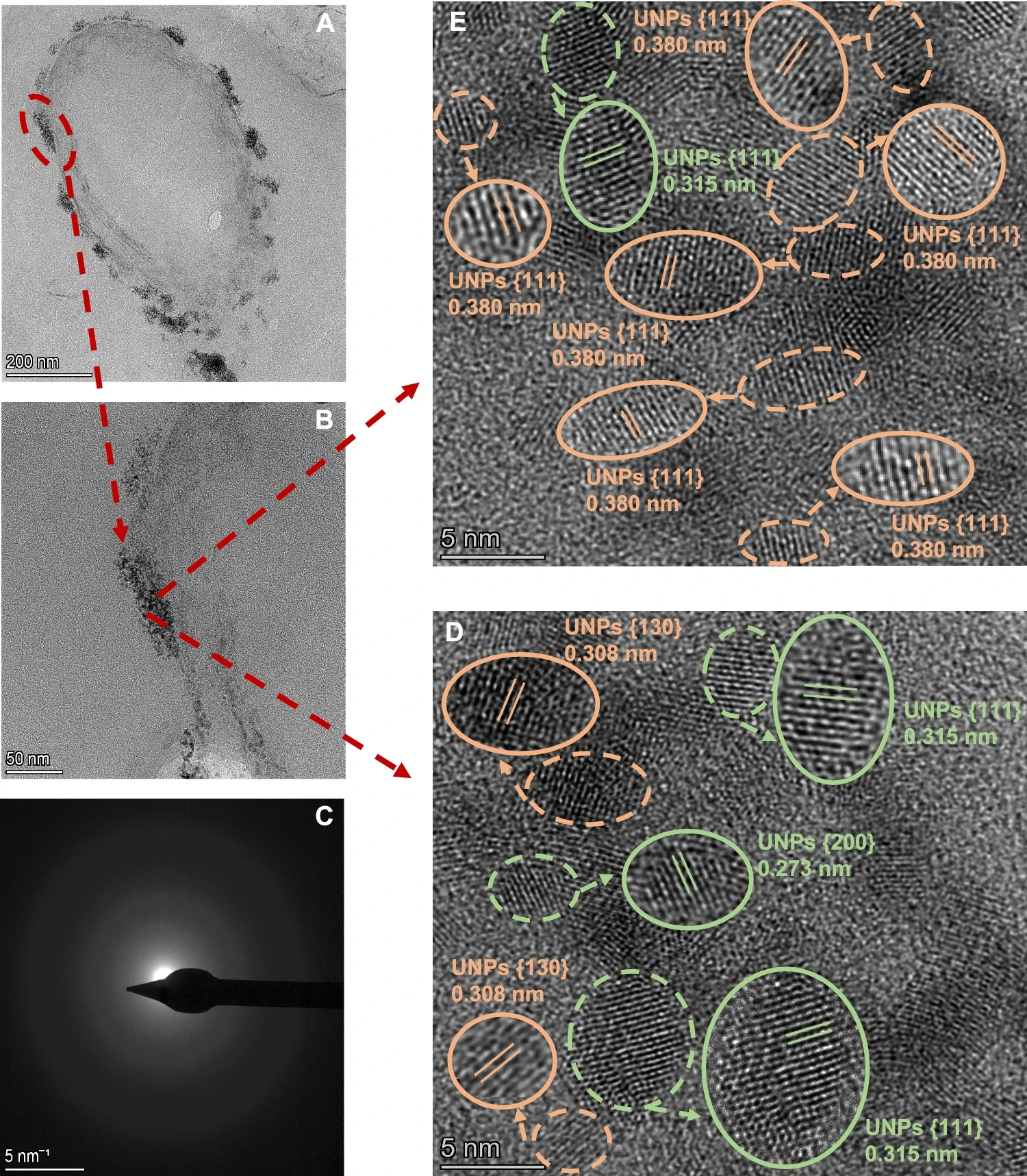
The researchers suspected that the bacteria were not simply removing uranium, but storing it. Further analysis confirmed that uranium had accumulated within the cell walls of the microbes.
This finding points to a natural process where bacteria capture and hold uranium, preventing it from spreading through water systems.
Understanding where the uranium went required a closer look at its chemistry. Scientists used advanced imaging and spectroscopy to study the samples at the microscopic level.
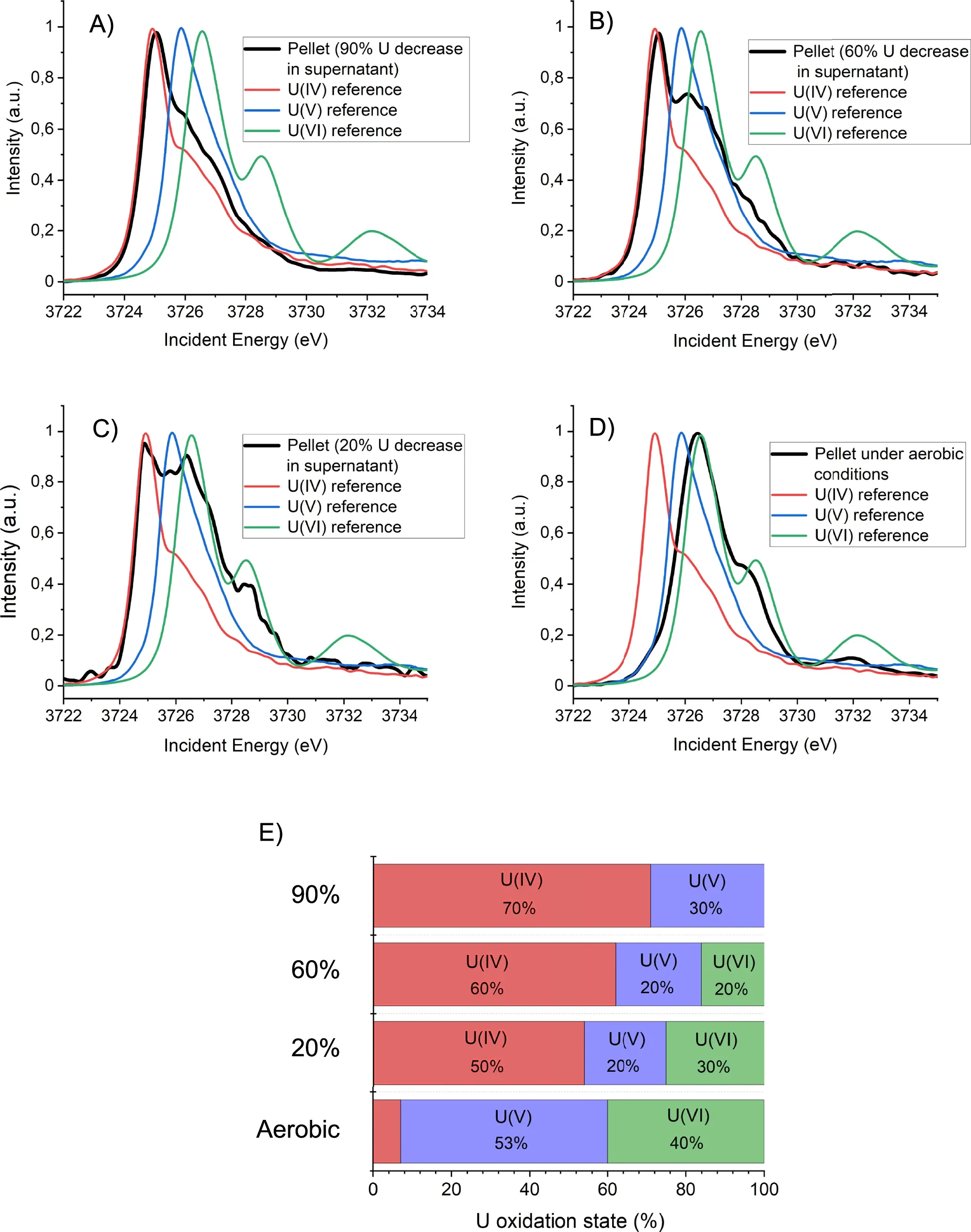
Uranium can exist in several chemical forms, known as oxidation states. The most common are tetravalent, U(IV), and hexavalent, U(VI). A third form, pentavalent uranium, U(V), has been considered rare and unstable.
“Pentavalent uranium does exist, but it is rare or only transient,” Newman-Portela explained.
The team expected to find mainly U(IV) or U(VI). Instead, they discovered a large amount of U(V) within the bacterial material.
This was surprising. The presence of stable pentavalent uranium had not been observed before in this context. It suggested that bacteria were creating conditions that allowed this rare form to persist.
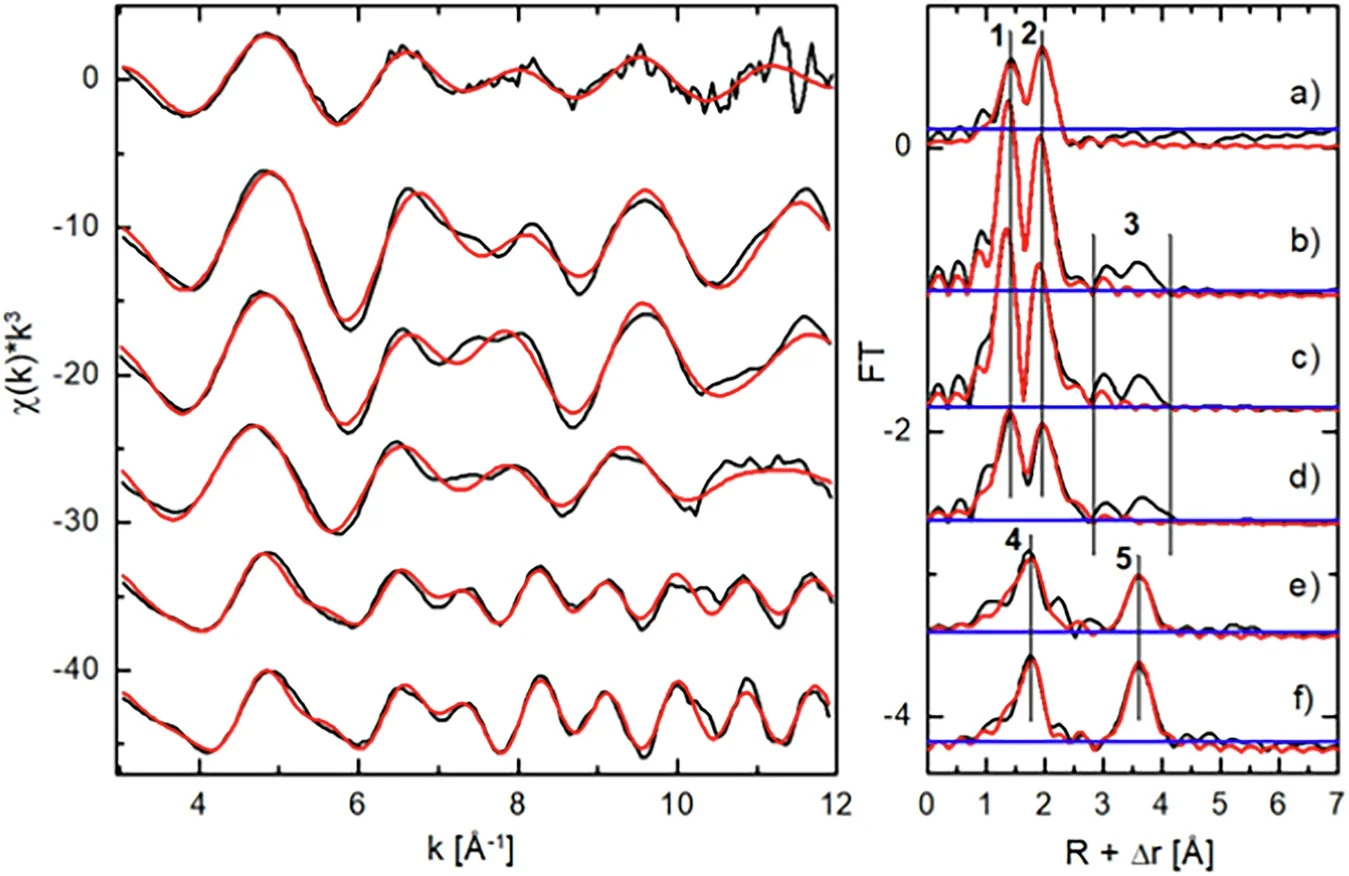
Further analysis revealed that the uranium had formed a compound with iron and oxygen, known as FeU(V)O₄. This compound is relatively new to science and had previously been observed only in contaminated soils.
“This uranium compound doesn’t have a name yet as it is comparatively new,” Krawczyk-Bärsch said.
What makes this compound important is its stability. Earlier studies showed that it can remain unchanged for decades, even when exposed to oxygen.
In this study, the researchers found that the compound remained stable and even increased when exposed to air after drying. This suggests that once formed, it may resist breaking down under changing environmental conditions.
The process depends on the interaction between bacteria, their food source, and the surrounding environment. When bacteria consume glycerol, they generate chemical reactions that alter the conditions in the water.
These reactions create a reducing environment, which favors the transformation of uranium into less mobile forms. At the same time, iron and other elements present in the water help form stable compounds.
The bacteria then incorporate uranium into their cell walls. This traps the metal at a microscopic level, preventing it from returning to the water.
The result is a combination of biological and chemical processes working together to immobilize uranium.
The discovery challenges long-held assumptions about uranium chemistry. For years, scientists believed that uranium moved directly between its most common states during environmental processes.
The presence of stable U(V) suggests a more complex pathway. It may act as an intermediate that can persist under certain conditions.
This insight opens new questions about how uranium behaves in natural systems. It also highlights the role of microbes in shaping the chemistry of contaminated environments.
The findings point to a potential new approach for environmental remediation. Instead of relying solely on chemical treatments, scientists could use bacteria to transform uranium in place.
This method could reduce costs and limit waste. It may also provide a more sustainable solution, as it uses naturally occurring organisms and simple nutrients.
“Our study has revealed for the first time that bacteria supplied with glycerol as a carbon source can convert toxic uranium dissolved in water into a stable chemical compound,” Krawczyk-Bärsch said.
However, the researchers caution that more work is needed. They must determine how widely this process can be applied and how it behaves under different conditions.
This research could change how scientists approach uranium contamination in the future. By using bacteria to convert uranium into stable compounds, it may be possible to clean polluted water more effectively.
The method could reduce the need for expensive chemical treatments and lower the environmental impact of cleanup efforts. It also offers a way to address contamination in remote or hard-to-reach areas.
In addition, the discovery of stable pentavalent uranium expands scientific understanding of how heavy metals behave in natural systems. This knowledge could influence research in geology, chemistry, and environmental science.
For communities affected by uranium pollution, these advances may lead to safer water and healthier ecosystems. While the technology is still developing, it represents a promising step toward long-term solutions.
Research findings are available online in the journal Nature Communications.
The original story “Bacteria can turn toxic uranium into stable, environmentally safe form” is published in The Brighter Side of News.
Like these kind of feel good stories? Get The Brighter Side of News’ newsletter.
The post Bacteria can turn toxic uranium into stable, environmentally safe form appeared first on The Brighter Side of News.

