A microscopic object can appear to vibrate less and less until it finally becomes still. At the quantum level, however, the final step does not happen gradually. It jumps from one allowed energy state to another.
Stanford University physicists have now directly watched that transition occur in a mechanical resonator, observing an individual quantum of vibration disappear in real time. The experiment provides the first direct observation of quantum jumps of sound and extends a phenomenon previously seen with atoms and photons into mechanical motion.
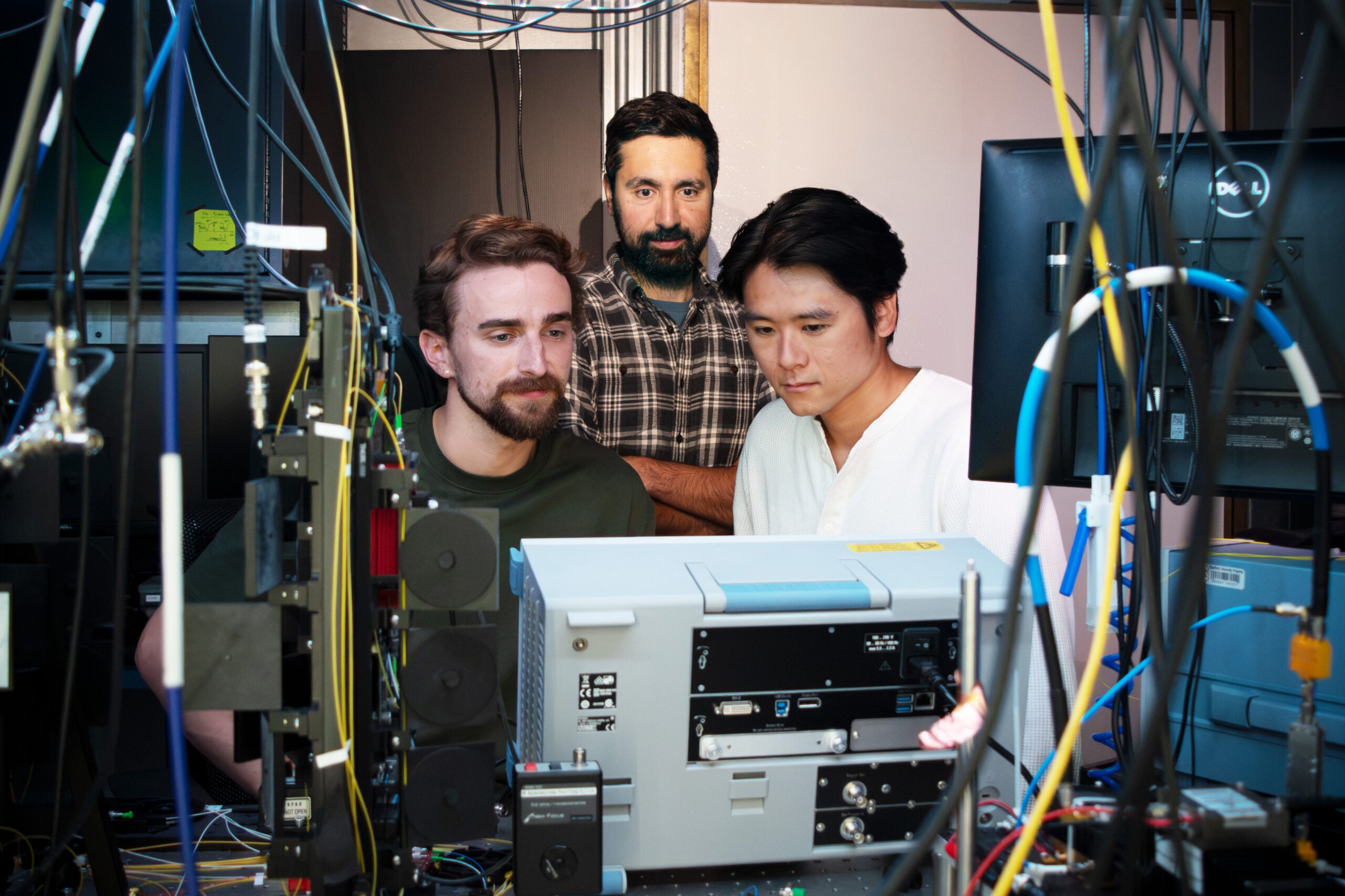
The work, published in Science, was led by Stanford physicist Amir Safavi-Naeini, with Takuma Makihara and Erik Szakiel as co-first authors. The achievement gives researchers a new way to watch quantum behavior unfold inside a solid mechanical device.
“What this study shows will allow us to move forward with developing new quantum technologies with sound,” Safavi-Naeini said. “We have seen that vibrating objects can exhibit quantum behavior, which is the prerequisite for many of the operations needed by quantum computing and sensing.”
Everyday vibrations appear continuous. Strike a tuning fork and its motion slowly fades as energy escapes into the surroundings, producing what looks like a smooth decline toward silence.
Quantum mechanics predicts something more unusual underneath that behavior. The energy of a vibrating system can exist only in discrete amounts called phonons, which represent coordinated motion involving many atoms rather than tiny material particles traveling through the device.
A resonator containing one phonon cannot continuously slide toward three-quarters of a phonon and then half a phonon as it loses energy. Instead, it remains in an allowed quantum state until it suddenly changes to another, eventually jumping from one phonon to zero.
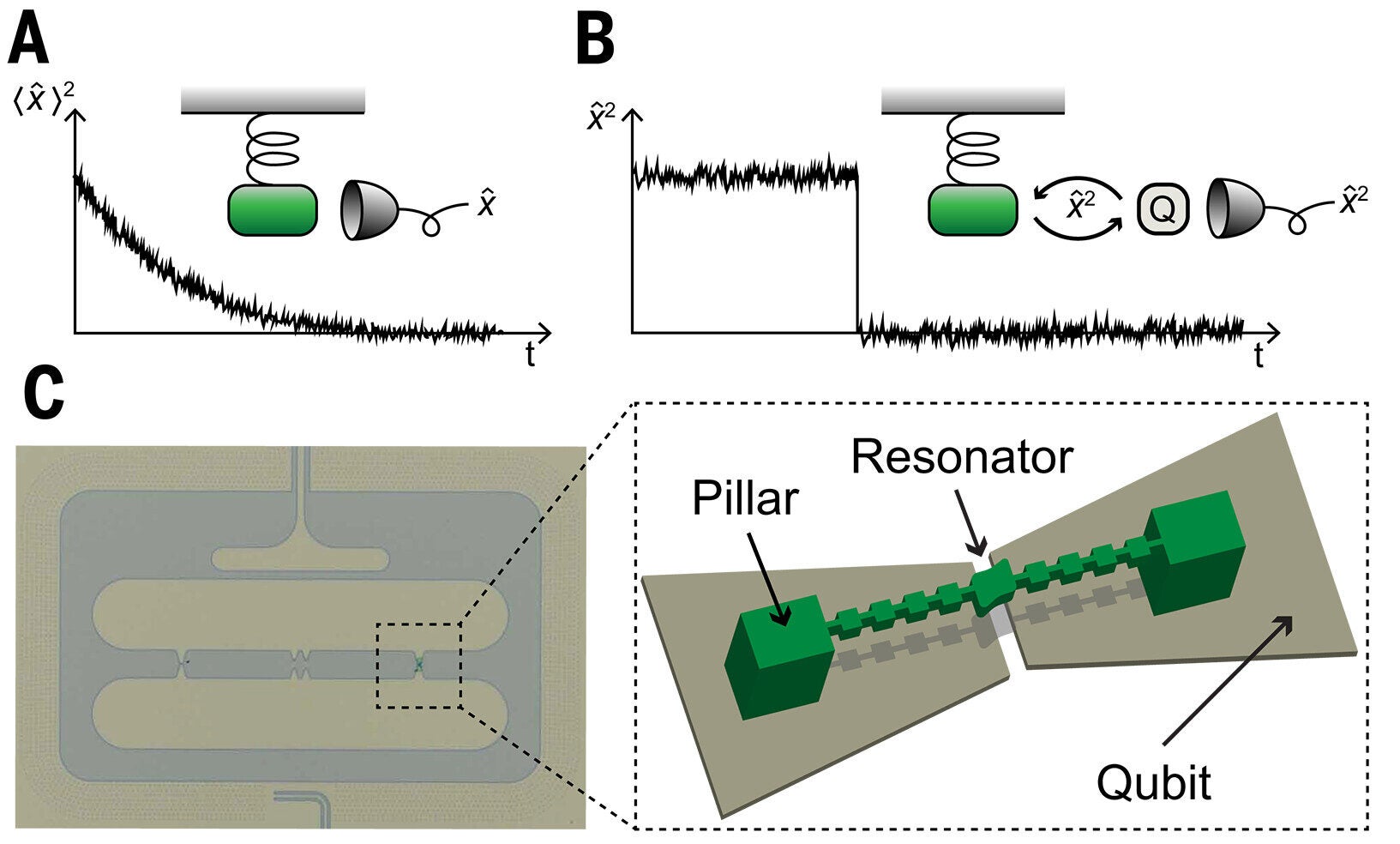
Detecting that transition has been difficult because conventional measurements of a resonator’s displacement produce an average that looks like ordinary exponential decay. The smooth signal can hide the discrete changes occurring in the mechanical energy underneath.
Quantum jumps were directly observed in individual trapped ions in 1986. Researchers later watched individual photons appear and disappear inside electromagnetic cavities, but extending that capability to mechanical vibration required a combination of properties that had not previously been achieved in one device.
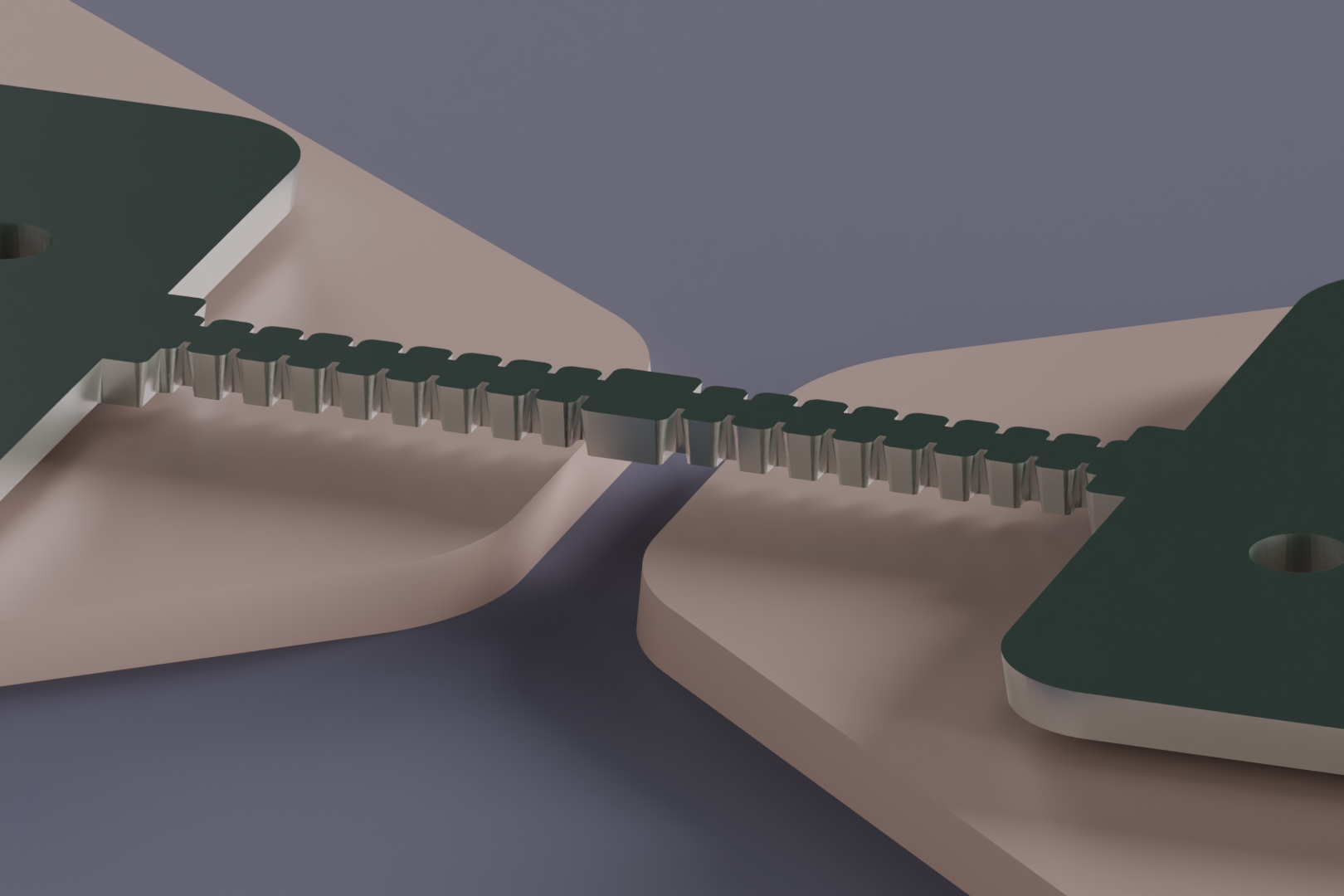
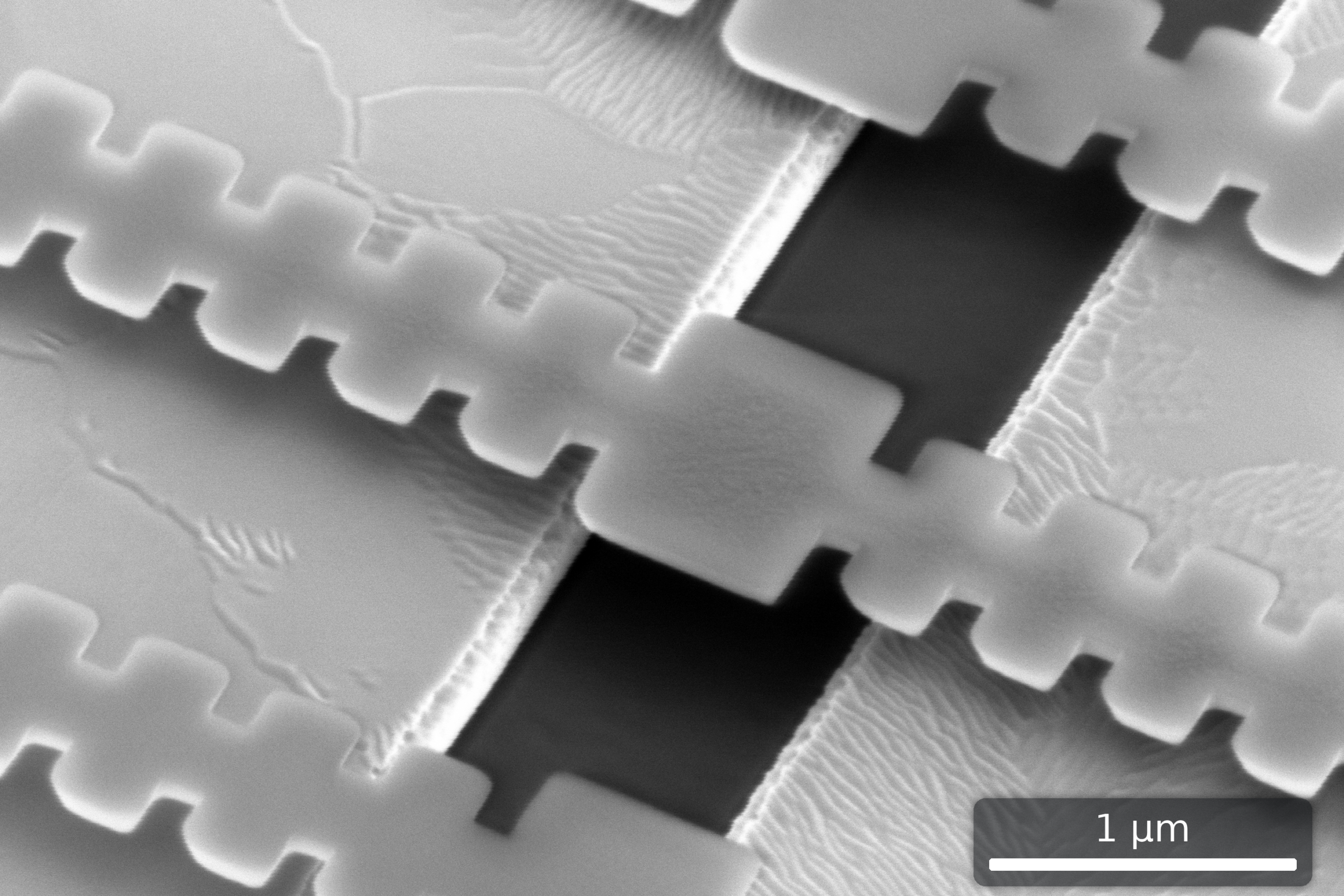
The Stanford team built its mechanical resonator from thin-film lithium niobate using fabrication methods compatible with modern chipmaking. A small central section vibrates while patterned structures on either side act as acoustic mirrors, trapping sound energy inside the device.
Those structures form a phononic crystal that prevents vibrations in a selected frequency range from easily escaping into the surrounding material. The design allows the resonator to hold mechanical energy for roughly two milliseconds, an exceptionally long lifetime at gigahertz frequencies.
Two milliseconds may sound insignificant, but it is enormous on the timescale of the microscopic vibrations being measured. Stanford compared the performance to an ordinary tuning fork that, if it retained its vibration equally well, would continue ringing for several hours.
That unusually long ringdown time gave researchers enough opportunity to interrogate the resonator repeatedly before its final phonon disappeared. The integrated device allowed roughly 170 useful parity checks during a single intrinsic phonon lifetime.
The resonator is also extremely small. That compact size raises the possibility that many similar mechanical systems could eventually be integrated onto a single chip for more complicated quantum operations.
The experiment required overcoming one of quantum measurement’s central problems. Measuring a delicate quantum system usually disturbs it, meaning that a detector searching for a phonon can easily become the reason the phonon disappears.
The researchers coupled the mechanical resonator to a superconducting qubit, an artificial quantum system built from an electrical circuit. The qubit acted as a nonlinear detector capable of revealing the resonator’s energy while minimizing disturbance to the phonon state.
The two systems operated in what physicists call the strong dispersive regime. Instead of directly absorbing the phonon, the qubit’s transition frequency changed depending on how many phonons were present in the resonator.
Researchers used repeated quantum nondemolition, or QND, measurements to read that information. In an ideal QND measurement, a property can be measured without forcing that same property to change, allowing scientists to check the system again and again.
The team used a Ramsey pulse sequence to determine the parity of the mechanical state, effectively distinguishing whether the resonator contained zero or one phonon under the experimental conditions. Each measurement provided partial information, so repeated readings steadily increased confidence about the resonator’s true state.
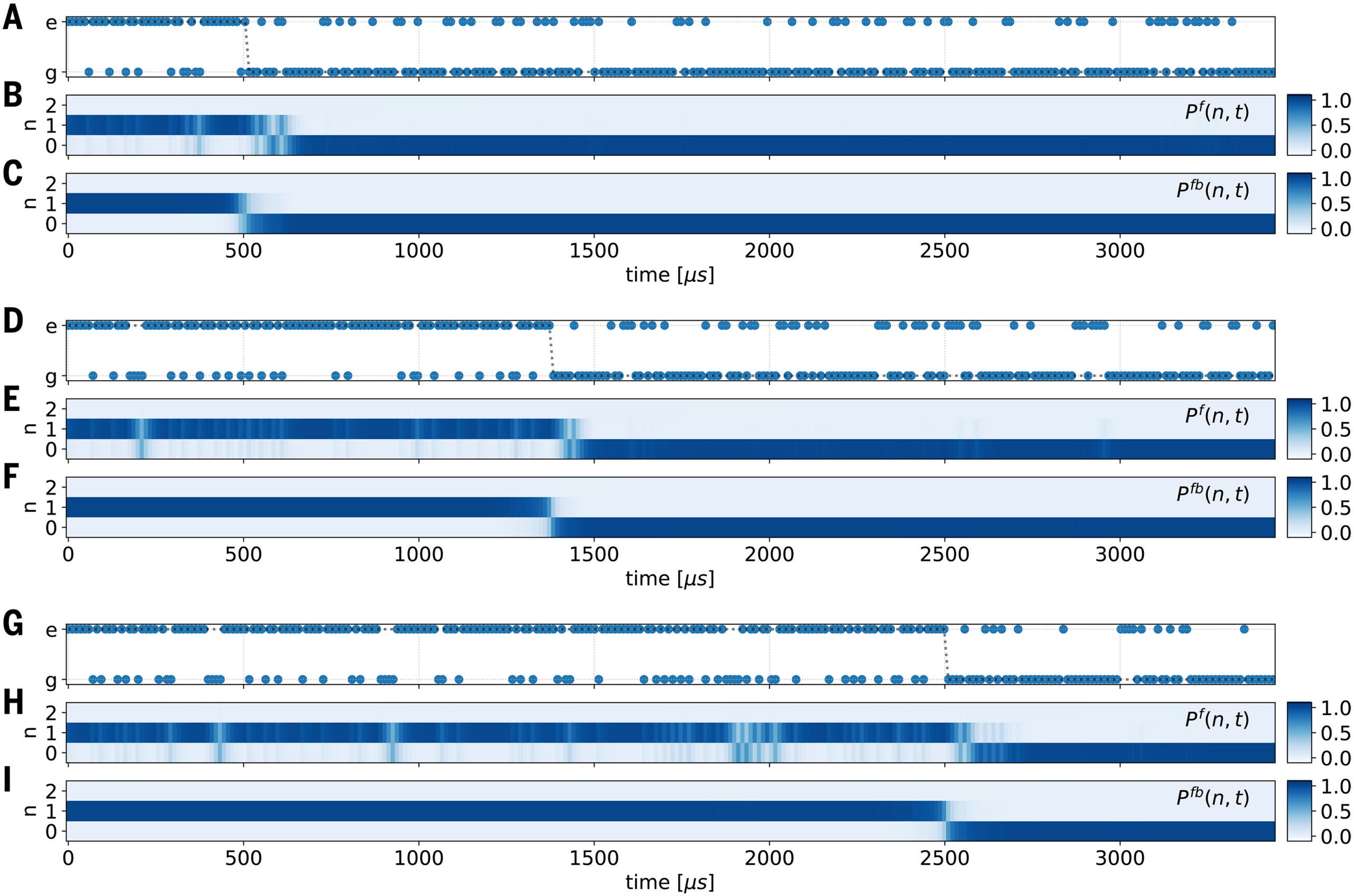
After preparing the resonator so it was likely to contain a single phonon, the researchers repeatedly monitored what happened next. Individual experimental trajectories included 294 consecutive parity measurements.
For many readings, the data indicated that the one-phonon state remained present. Then the pattern abruptly shifted, showing that the resonator had moved into its zero-phonon state rather than slowly passing through intermediate energies.
The raw measurement records were noisy because individual qubit readings were not perfect. Bayesian state-estimation methods allowed the researchers to combine the measurements and determine the most probable phonon number at each moment.
The resulting trajectories showed clear jumps from one phonon to zero. The transition occurred at different times in different runs, matching the random timing expected for spontaneous quantum decay.
A classical oscillator would instead show its measured energy gradually declining. The Stanford device remained in a discrete energy state until the mechanical quantum suddenly disappeared.
The repeated measurements were not completely free of back action. Continuous monitoring reduced the effective phonon lifetime because each interaction with the qubit carried a small chance of disturbing the mechanical state.
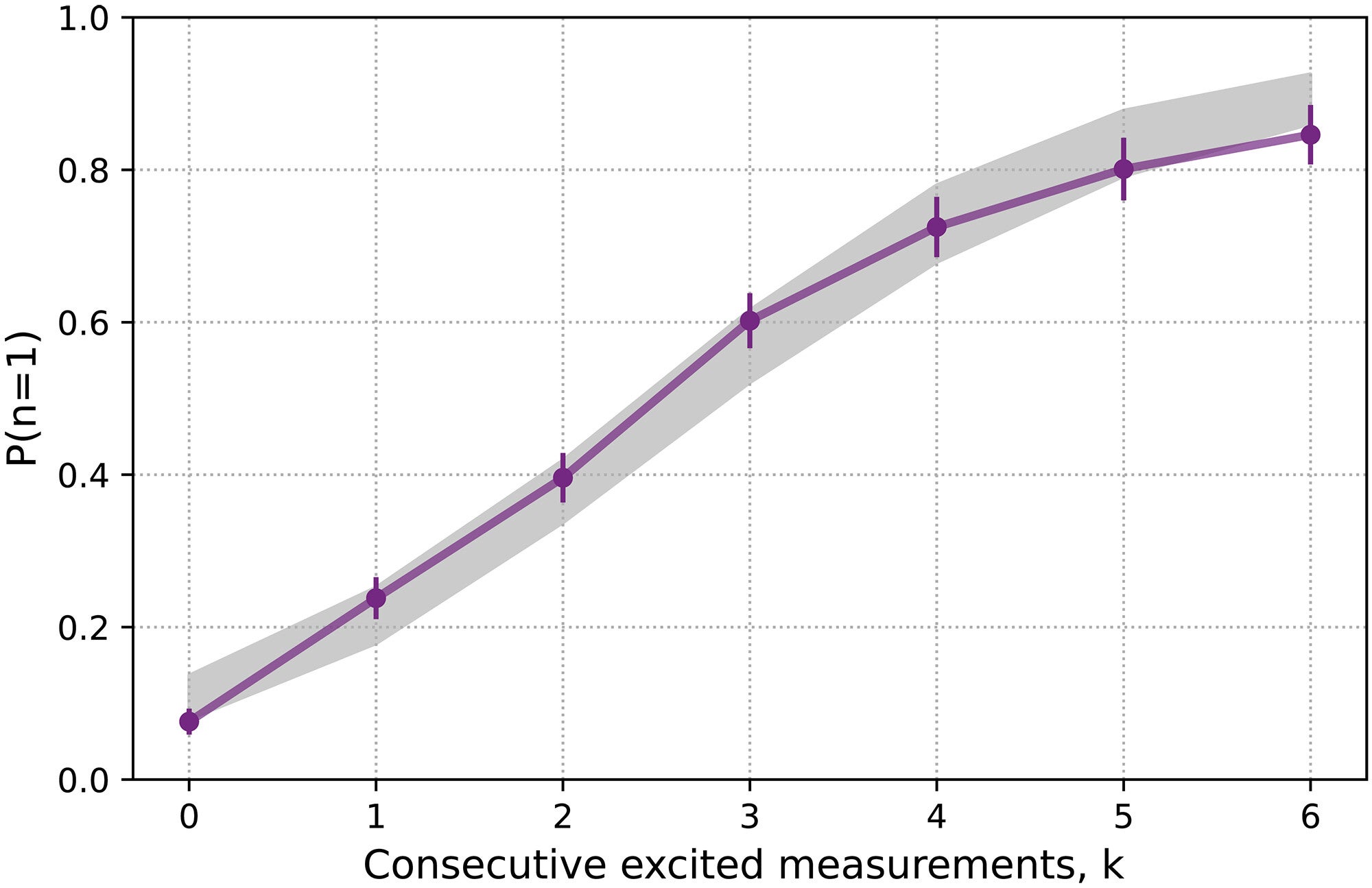
Even so, the researchers estimated that the measurements were about 99% quantum nondemolition. That level of performance was sufficient to track individual quantum jumps while preserving the state long enough to build a detailed measurement record.
Achieving that combination required keeping both parts of the system exceptionally coherent. Piezoelectric mechanical materials can introduce losses into superconducting circuits, so the researchers fabricated the mechanical resonator and qubit separately before integrating them with a transfer-printing process.
The lithium niobate resonator was suspended only about 75 nanometers above a narrow gap in the superconducting qubit. That configuration produced strong coupling while limiting the additional material that could degrade the qubit’s performance.
The result was a mechanical system with both a long lifetime and sufficiently strong interaction with its detector to make real-time phonon tracking possible.
Watching quantum jumps is more than a demonstration of unusual physics. The same measurement capability could eventually help detect errors in quantum computers.
Quantum information is fragile because energy can escape or environmental interactions can corrupt a stored state. In some architectures, the loss of a single quantum excitation represents a specific error that must be detected before the calculation can be protected.
Mechanical resonators offer several advantages for this task. They can be compact, retain vibrational energy for relatively long periods and remain naturally isolated from distant mechanical systems because phonons cannot propagate through a vacuum.
The researchers envision a future mechanical dual-rail qubit involving two resonators coupled to a shared superconducting qubit. A lost phonon could then appear as a detectable erasure error, allowing a quantum system to recognize that something had gone wrong.
Their transfer-printing method could support such architectures because additional mechanical resonators can be integrated with the same superconducting circuit.
Mechanical systems interact naturally with quantities such as mass, force, acceleration and strain. That makes them attractive for precision sensing in ways that electromagnetic quantum systems cannot always match.
Tiny mechanical resonators have already been investigated for measuring extremely small masses and detecting microscopic physical changes. Quantum control adds another layer by allowing researchers to prepare and read unusual mechanical states at very low energy.
Safavi-Naeini’s group is collaborating with Michael Roukes’ team at Caltech on approaches that could eventually use related devices to detect and distinguish proteins inside cells. The combination of small effective mass and exceptionally high sensitivity could make mechanical quantum devices useful for new forms of molecular measurement.
The breakthrough does not mean sound-based quantum computers or single-protein quantum sensors are ready for practical use. Significant improvements in coherence, readout fidelity and device integration would still be required.
But physicists can now do something they could not do before: repeatedly watch a mechanical quantum state and identify the moment a single phonon disappears. A vibration that looks smooth in the everyday world has finally revealed the sudden jumps hidden underneath.
These studies trace major steps toward observing and controlling discrete quantum states in atoms, light and mechanical motion.
Observation of Quantum Jumps in a Single Atom: Researchers directly observed abrupt transitions in a single trapped mercury ion, establishing one of the landmark experimental demonstrations of quantum jumps. (Physical Review Letters, 1986)
Quantum jumps of light recording the birth and death of a photon in a cavity: Repeated nondestructive measurements allowed researchers to watch individual microwave photons appear and disappear inside a superconducting cavity. (Nature, 2007)
Laser cooling of a nanomechanical oscillator into its quantum ground state: Researchers cooled a mechanical resonator close to its lowest quantum energy state, helping establish mechanical motion as a controllable quantum system. (Nature, 2011)
Resolving the energy levels of a nanomechanical oscillator: A superconducting qubit resolved individual phonon-dependent energy shifts in a nanomechanical oscillator, laying key groundwork for nondestructive phonon measurements. (Nature, 2019)
Quantum state preparation, tomography, and entanglement of mechanical oscillators: This work demonstrated control, measurement and entanglement of multiple nanomechanical resonators using a superconducting qubit. (Nature, 2022)
Research findings are available online in the journal Science.
The original story “Stanford physicists observe a quantum jump of sound for the first time” is published in The Brighter Side of News.
Like these kind of feel good stories? Get The Brighter Side of News’ newsletter.
The post Stanford physicists observe a quantum jump of sound for the first time appeared first on The Brighter Side of News.


Leave a comment
You must be logged in to post a comment.