Food often tells its story through smell, but the human nose does not always catch the warning signs. Each year, millions of people in the United States fall ill from foodborne bacteria that grow in spoiled or undercooked meals. A new device developed at the University of California, Berkeley, aims to change that by detecting scents with far greater accuracy and consistency.
Researchers have created an “electronic nose,” a small sensor system that can identify food freshness and even detect allergens. The technology combines a network of gas sensors with machine learning to recognize the chemical signals released by different foods.
The result is a system that can detect spoilage earlier than a person might notice and identify substances that could trigger dangerous allergic reactions.
Many people rely on sight and smell to judge whether food is safe. These methods can work, but they are not always reliable. Some harmful bacteria do not produce strong odors, and subtle changes can go unnoticed.
Carla Bassil, a doctoral student in electrical engineering and computer sciences, led the work. She sees the device as part of a future where food safety becomes more proactive.
“I think ‘smart’ fridges, which come with sensors that you can control on your phone, would be a great application for this kind of technology,” Bassil said. “How great would it be if your fridge could tell you, ‘Hey, your broccoli’s going to go bad soon, so you should probably eat that’? Or, ‘Your chicken is on its last day’?”
The system could help reduce waste and prevent illness by offering clear, objective information about food quality.
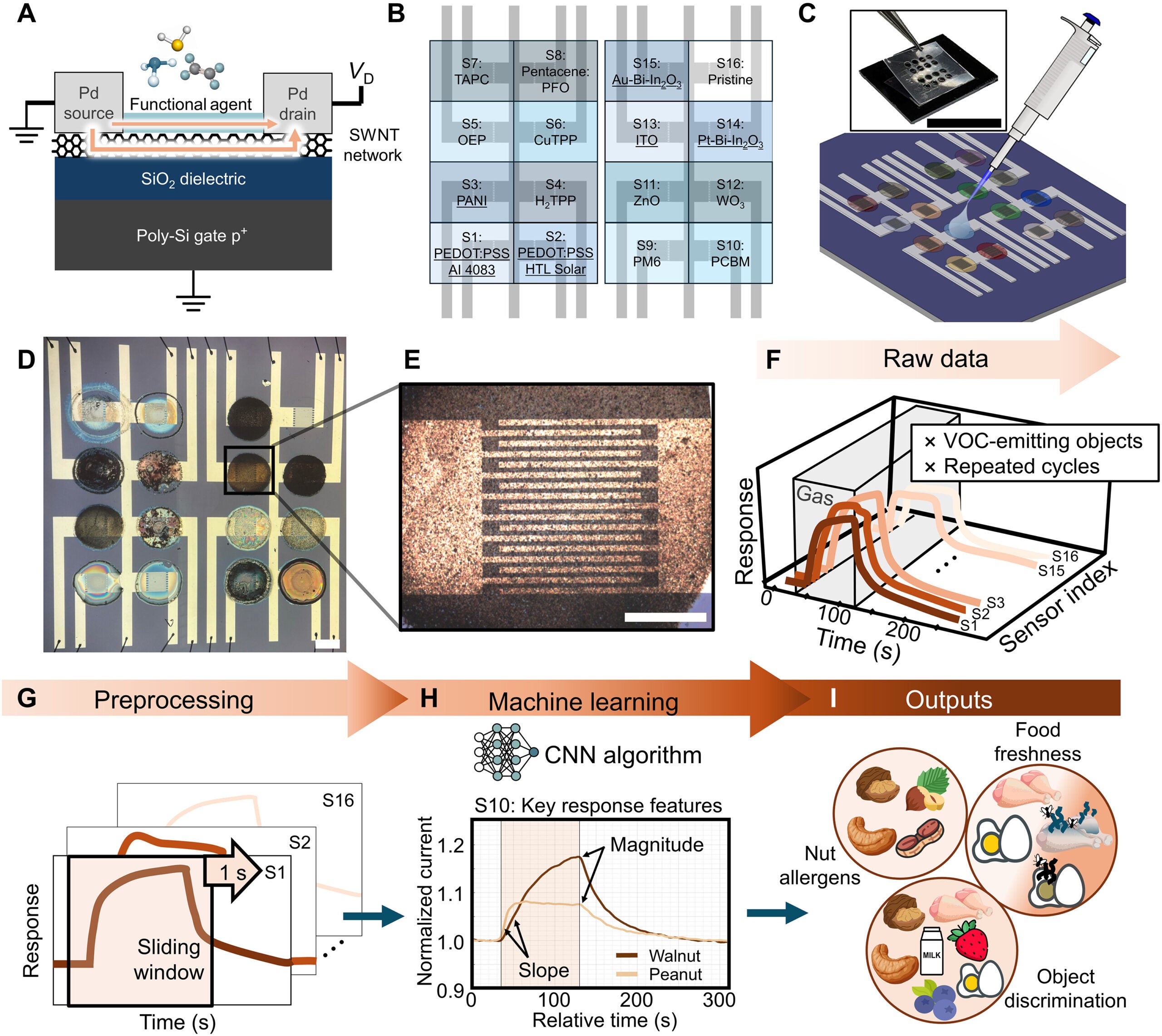
The device is built around an array of 16 tiny gas sensors. Each sensor responds to a slightly different mix of gases released into the air. Together, they form a pattern that reflects the scent of a particular food.
“You can think of it like a set of digital taste buds,” Bassil explained. “Each of these 16 sensors has a different sensing film on it, and it works by converting chemical reactions between the sensor surface and the gas molecule into electrical signals.”
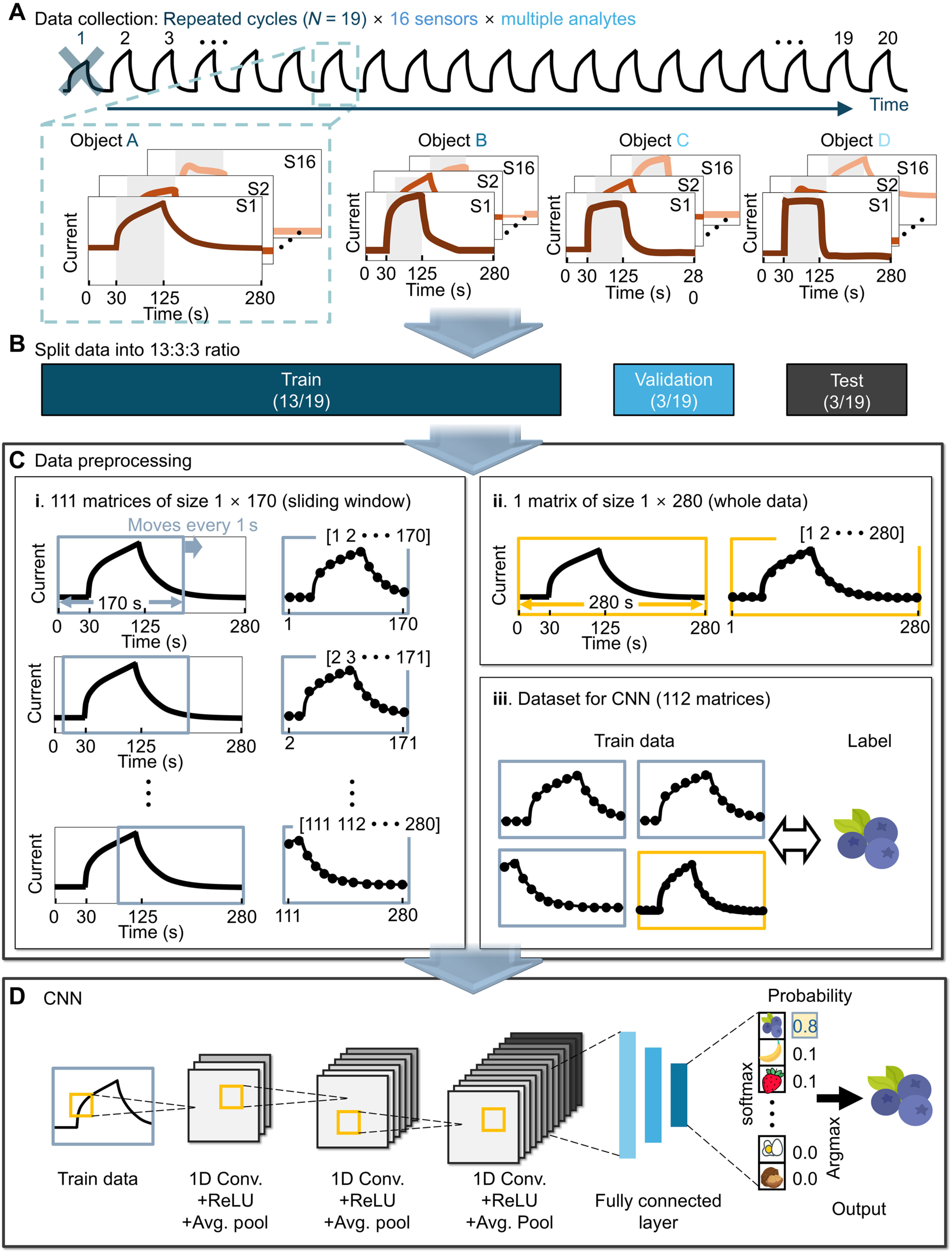
When food releases gases, these sensors react in unique ways. The system records these reactions as electrical signals. Machine learning software then analyzes the pattern and identifies what produced it.
Instead of relying on a single reading, the device looks at the full combination of signals. This allows it to distinguish between complex scents that might seem similar to the human nose.
To teach the device how to identify different foods, the research team trained it on a set of known examples. These included fruits such as strawberries, blueberries, and bananas, as well as nuts like walnuts, hazelnuts, cashews, and peanuts.
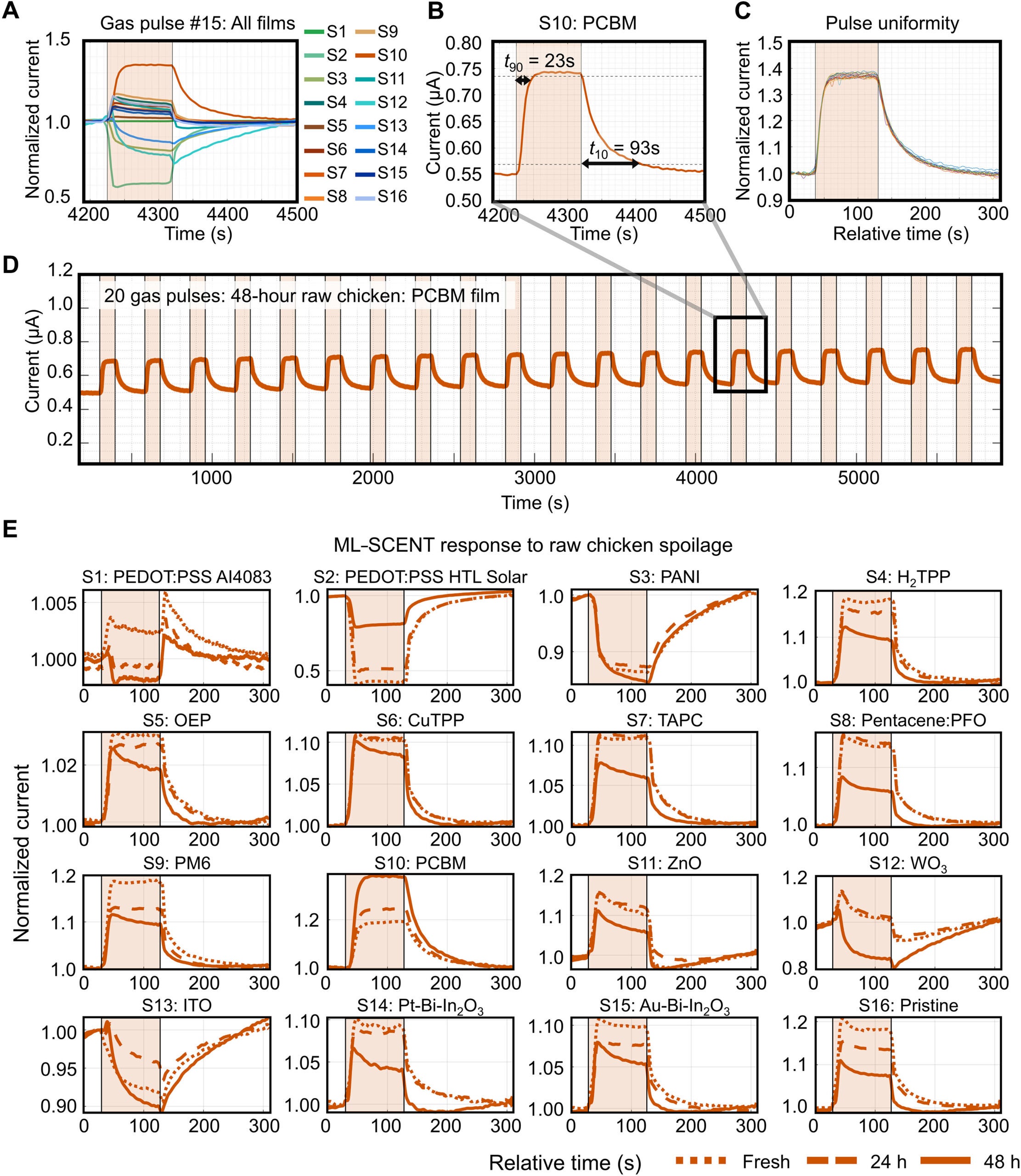
The system also learned to recognize raw chicken, milk, and eggs at different stages of freshness. Each food was tested when fresh and again after being left out for 24 and 48 hours.
By comparing these samples, the model learned how scent patterns change as food spoils. This allows it to detect not only what a food is, but also whether it is still safe to eat.
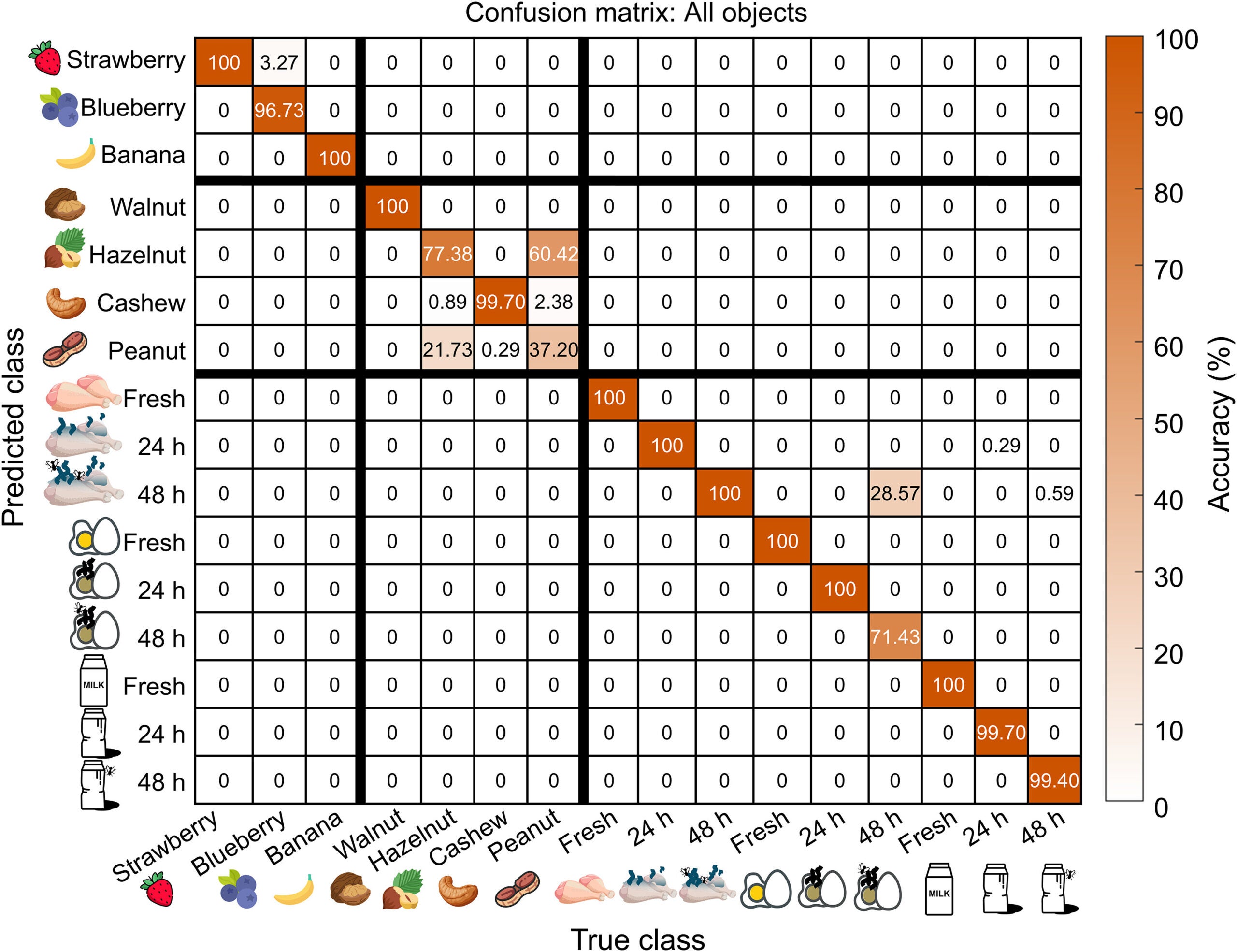
The results show that the device can identify these foods with high accuracy. It can also detect extremely small amounts of allergens. In one test, it identified just 0.05 grams of walnut, about one hundredth of a typical serving.
Food allergies can pose serious health risks, especially when exposure is unexpected. Even trace amounts of certain foods can trigger severe reactions.
The electronic nose offers a new way to detect these hidden threats. By recognizing the scent patterns of allergens, it can identify their presence even when they are not visible.
This could be especially useful in kitchens, restaurants, and food processing facilities. It may also help individuals check whether a meal contains ingredients they need to avoid.
While further testing is needed in more complex environments, the early results suggest strong potential for improving safety.
One reason the device performs so well is its use of carbon nanotubes. These materials are extremely thin, measuring only a few nanometers. They provide a large surface area for chemical reactions, which makes them highly sensitive.
Unlike many traditional sensors, this system operates at room temperature. This allows it to use a wider range of sensing materials, including delicate polymers that would break down at higher heat.
Bassil also developed a simpler way to build the device. Instead of using complex manufacturing methods, the team applied the sensor materials through a process known as drop casting. This approach places all the sensing films onto the chip in a single step.
“The truly scalable aspect of my electronic nose is that we can use all these different types of sensing materials while depositing them all in a single step,” Bassil said.
This design could make the technology easier to produce and more accessible for everyday use.
The research team has already begun developing a portable version of the device. This model can connect to a smartphone, allowing users to monitor food through an app.
Although the current study focused on controlled settings, future tests will examine how the device performs in real-world environments. These include kitchens, grocery stores, and refrigerators filled with mixed foods.
Understanding how different scents interact will be an important next step. For example, detecting walnuts in a salad or spoiled food among fresh items presents additional challenges.
Even so, the researchers are optimistic. The combination of sensor diversity and machine learning provides a strong foundation for improvement.
The concept of an electronic nose has existed for decades, but building a reliable version has proven difficult. Many earlier systems relied on single sensors or required high temperatures to function.
This new approach overcomes those limitations by combining multiple sensors with advanced data analysis. It does not try to replicate human smell directly. Instead, it creates a more consistent and measurable system.
The device does not tire, lose sensitivity, or rely on subjective judgment. It offers a stable way to detect changes that might otherwise go unnoticed.
This technology could transform how people manage food safety and reduce waste. By detecting spoilage early, it can help households avoid consuming unsafe food and prevent unnecessary disposal.
In commercial settings, the system could improve quality control. Food producers and retailers may use it to monitor freshness during storage and transport. This could lead to safer products and fewer losses.
The ability to detect allergens adds another layer of protection. Restaurants and manufacturers could use the device to verify that foods are free from harmful ingredients. This may reduce the risk of accidental exposure for people with allergies.
The research also opens new possibilities in other fields. Similar sensors could be used in healthcare to detect disease markers or in environmental monitoring to track air quality.
As the technology develops, it may become part of everyday life. Smart appliances could use it to guide food choices, while portable devices could provide instant safety checks.
In the long term, the work shows how machines can interpret complex chemical signals in ways that support human health and well-being.
These resources explain the sensor technology, food chemistry and limits of odor-based monitoring.
The nose knows: Electric schnoz can smell when your food’s gone bad
Berkeley’s account describes the research and distinguishes the separately developed portable prototype from the published experiments. (University of California, Berkeley, June 2026)
Sensors for Volatile Organic Compounds
This review explains approaches to sensing airborne chemicals, including materials, applications and technical limitations. (ACS Nano, May 2022)
Volatile Profile of Nuts, Key Odorants and Analytical Methods for Quantification
This review examines nut aromas and explains how processing and other conditions influence their volatile chemical profiles. (Foods, July 2021)
Analysis of volatile organic compounds released during food decaying processes
This earlier study provides context on measuring chemical emissions as food deteriorates. (Environmental Monitoring and Assessment, March 2012)
Food Allergies
The FDA explains the protein-based nature of food allergies and the role of labeling and allergen controls. (U.S. Food and Drug Administration)
Research findings are available online in the journal Science Advances.
The original story “Berkeley’s new electronic nose recognizes food odors and signs of spoilage” is published in The Brighter Side of News.
Like these kind of feel good stories? Get The Brighter Side of News’ newsletter.
The post Berkeley’s new electronic nose recognizes food odors and signs of spoilage appeared first on The Brighter Side of News.


Leave a comment
You must be logged in to post a comment.