Warming near Earth’s surface and cooling high in the atmosphere form a distinctive pattern. Scientists predicted that combination decades ago, and increasingly detailed observations now help distinguish human influence from natural climate fluctuations.
A review published in Earth’s Future concludes that such climate “fingerprints” provide stronger evidence than they did in 2009. Benjamin Santer of the University of East Anglia led the work with Susan Solomon, David Thompson, Qiang Fu and Gabriele Hegerl.
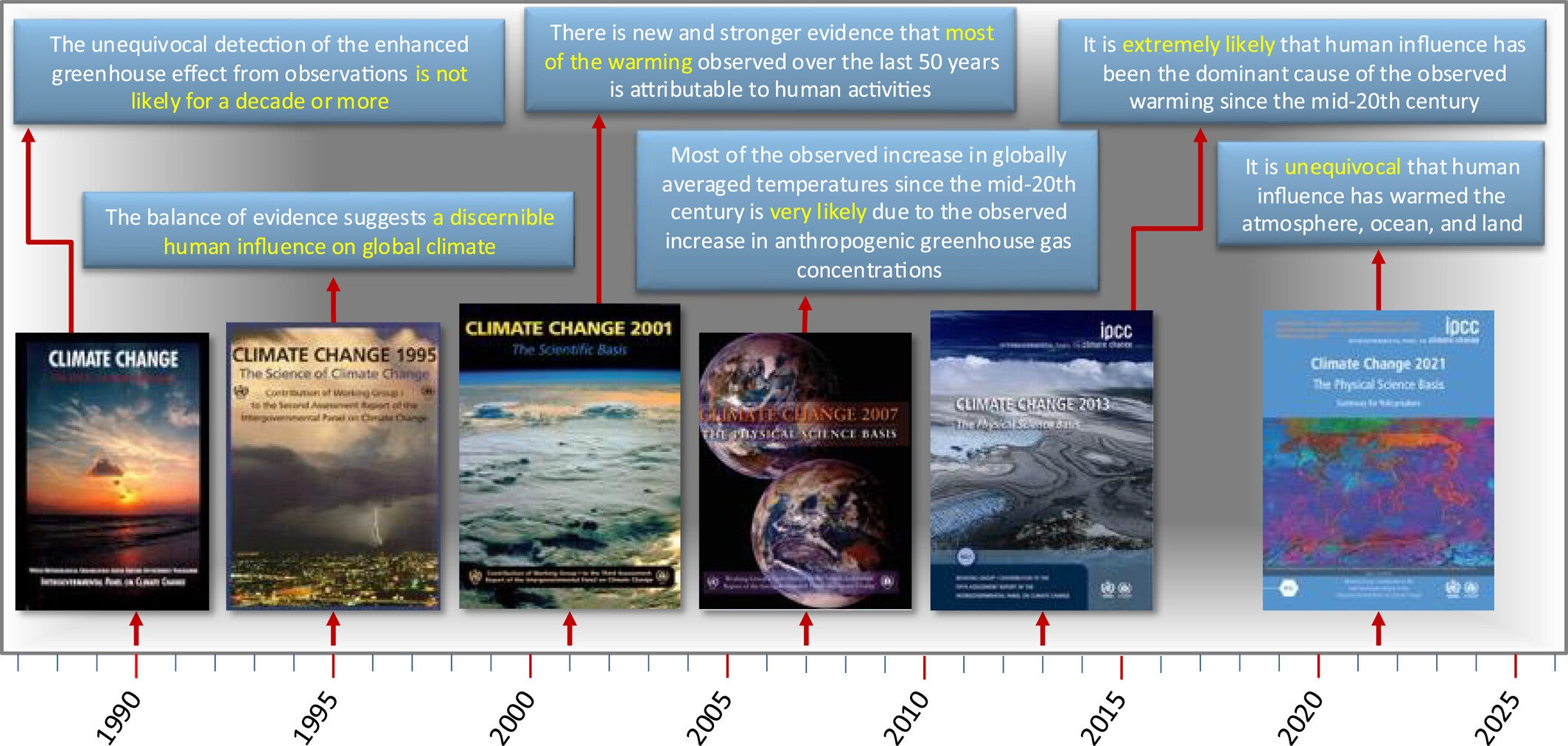
Their institutions include MIT, Colorado State University, the University of Washington and the University of Edinburgh. The review brings together more than three decades of attribution research. It examines the scientific basis underlying the EPA’s 2009 determination that greenhouse gases endanger public health and welfare.

Fingerprinting asks whether observed patterns match the expected effects of particular influences. Researchers compare measurements with simulations that include greenhouse gas increases, other human influences and natural factors. They also estimate the background variability generated within the climate system itself.
The aim is not merely to show that the planet has warmed. Different influences produce different geographical, vertical and seasonal patterns. Those differences help researchers test whether natural processes alone could plausibly explain the observations.
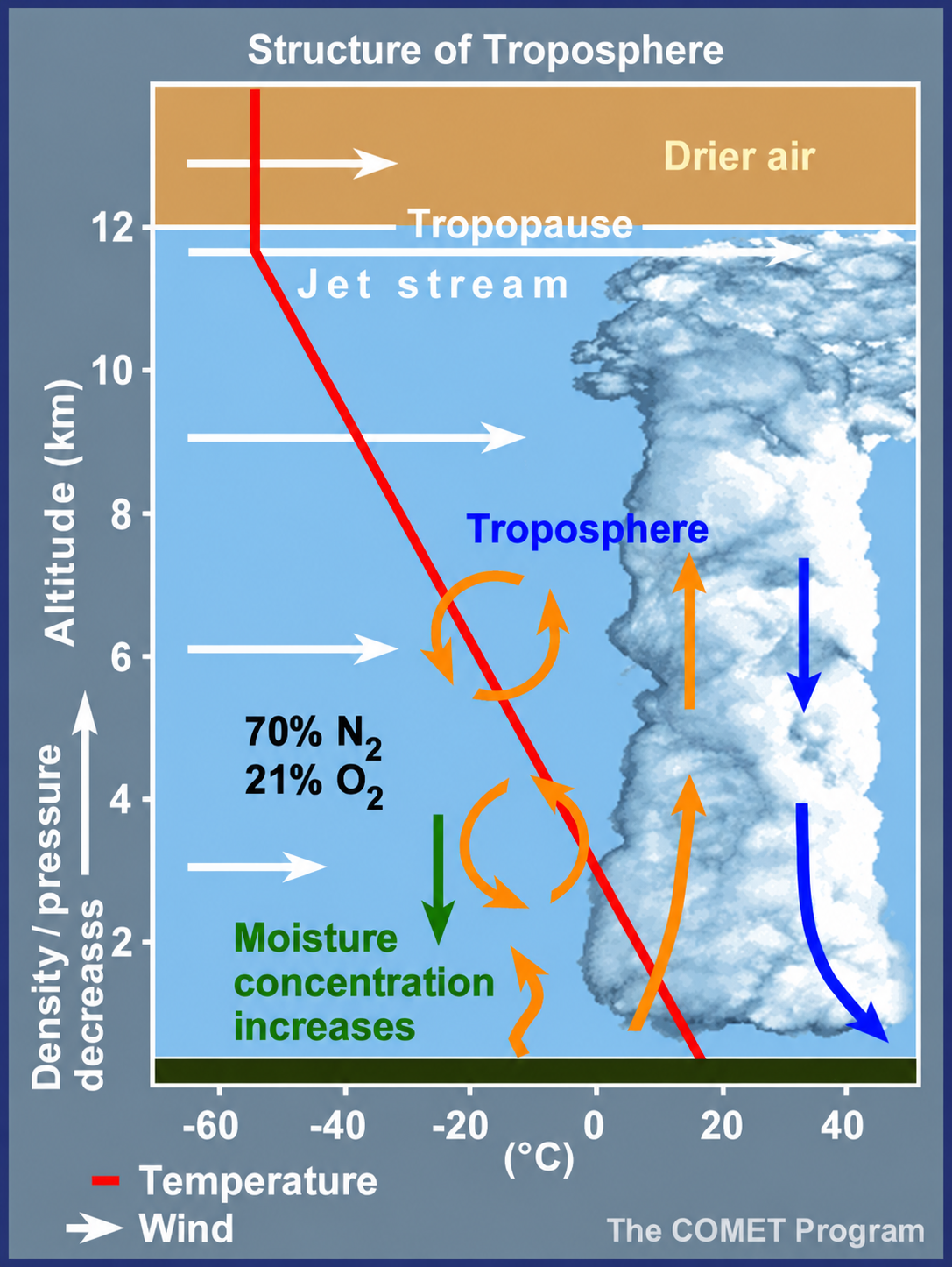
A foundational example comes from a 1967 model by Syukuro Manabe and Richard Wetherald. Increasing carbon dioxide warmed the troposphere, the lowest atmospheric layer, while cooling the stratosphere above it. Later weather-balloon and satellite measurements identified that pattern.
Additional carbon dioxide helps the lower atmosphere retain heat while increasing infrared emission from the stratosphere to space. Human-caused ozone depletion also contributes to stratospheric cooling. The fingerprint therefore requires attention to multiple physical influences, rather than treating every observed change as the effect of carbon dioxide alone.
Early attribution studies concentrated on surface and atmospheric temperatures. Researchers subsequently identified human influences in ocean temperatures, rainfall, atmospheric water vapor and Arctic sea ice. Since 2009, the evidence has expanded into salinity, snow cover, drought and other indicators.
The strength of the case comes partly from agreement among independently monitored systems. Satellites, weather balloons, ocean instruments and surface observations track different aspects of climate. Their changes nevertheless fit a physically consistent response to warming.
The review highlights simultaneous warming of the upper ocean across major ocean basins. Internal variability can warm or cool individual basins for prolonged periods. It cannot explain the same sustained warming pattern throughout the global ocean without an external influence.
Researchers have also moved beyond annual averages. Studies now identify human fingerprints in changes to the seasonal temperature cycle in the troposphere, at the ocean surface and below it. These patterns offer another test of attribution using different timescales and measurements.
Improved satellite records extend atmospheric fingerprinting into the middle and upper stratosphere, approximately 25 to 50 kilometers above the surface. That region carries a strong predicted cooling response to rising carbon dioxide. Including it makes the human signal easier to separate from natural variability.
More observations have strengthened attribution in two ways. They reveal a growing human-caused signal and improve estimates of natural variability. The review notes that the ten warmest years in multiple instrumental surface-temperature records all occurred after 2009.
The apparent early-century slowdown in surface warming illustrates why timescale matters. Natural variability can temporarily suppress warming over years or longer while greenhouse gases continue adding heat. Longer records showed that the slower interval did not overturn the continuing planetary warming trend.
Scientists also use ensembles, collections of simulations that explore different possible climate histories. Repeated runs help separate the response to external influences from internally generated fluctuations. Comparing different models tests whether attribution depends too heavily on one representation of the climate system.
Observational ensembles address uncertainties in the measurements themselves. Satellite orbit drift, instrument calibration and the merging of records from different instruments can affect estimated trends. Researchers test how those uncertainties change their ability to identify fingerprints.
Statistical advances, including Bayesian approaches and machine learning, supply additional checks. They complement established methods rather than replacing the physical evidence. The authors argue that agreement across methods strengthens confidence without eliminating every uncertainty about climate responses.
The review focuses primarily on annual, decadal and seasonal changes. It also discusses research examining how warming changes the probability or intensity of particular extreme events. That question differs from asking whether climate change was the sole cause of a storm or heat wave.
Evidence has strengthened for human influence on extreme heat, heavy rainfall, hot-humid conditions and marine heat waves. Attribution studies compare the likelihood or severity of an event under current conditions with a climate without the same human influence. Results depend on the event definition, observations and modeling approach.
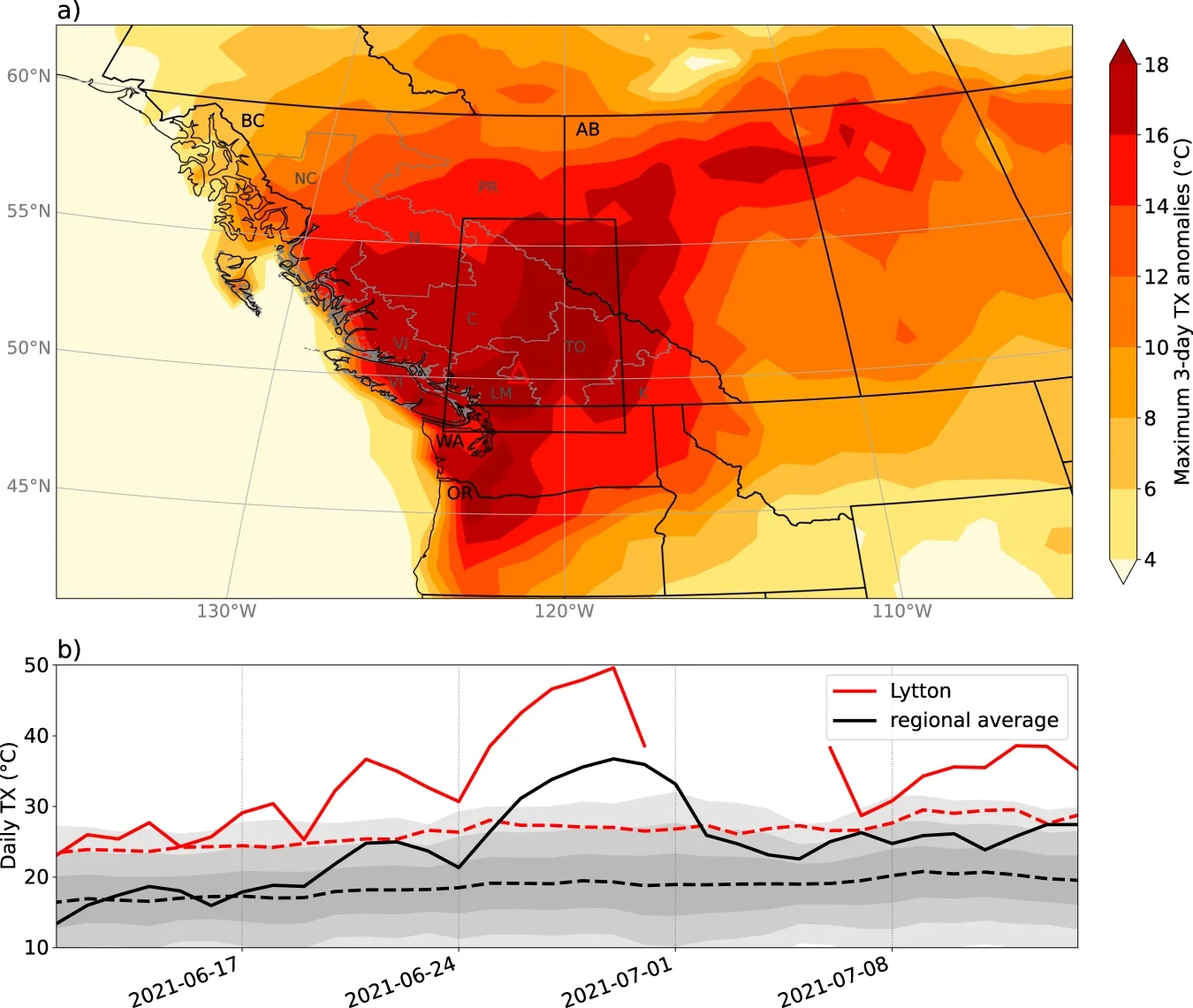
The authors cite the 2021 Pacific Northwest heat event as an example. Research found that its extraordinary amplitude would have been nearly impossible without global warming. That conclusion concerns a particular extreme, rather than making every unusual weather event equally attributable.
Important challenges remain, especially where connections between an event and broader climate changes are poorly understood. A 2026 National Academies report also examines the emerging attribution of health and economic impacts. Establishing those consequences adds another layer beyond attributing the weather itself.
The review began as input to a 2025 National Academies assessment of greenhouse gas effects on U.S. climate, health and welfare. Its authors also respond to a July 2025 Department of Energy report that questioned fingerprinting. They describe that assessment as deeply flawed and inconsistent with the accumulated evidence.
The regulatory context has already changed. The EPA finalized its rescission of the 2009 Endangerment Finding on February 12, 2026. The agency also repealed subsequent greenhouse gas standards for highway vehicles and engines; the action did not repeal regulations covering traditional air pollutants.
Santer said, “The climate science that’s been published since the 2009 Endangerment Finding is now stronger than in 2009, the evidence is incontrovertible.” The review argues that this expanding evidence should inform policy and legal proceedings.
Its conclusion rests on the convergence of many observations, not one temperature record or model. Natural influences remain essential to attribution analysis, but they cannot explain the full pattern of observed changes. The authors find that continued research has strengthened, rather than weakened, the evidence for human-caused climate change.
These resources examine human influence on climate, atmospheric and seasonal fingerprints, and attribution of extreme events.
Effects of Human-Caused Greenhouse Gas Emissions on U.S. Climate, Health, and Welfare: Reviews evidence accumulated since 2009 on climate changes and their consequences for U.S. health and welfare. (National Academies of Sciences, Engineering, and Medicine, 2025)
Exceptional stratospheric contribution to human fingerprints on atmospheric temperature: Examines how upper-stratospheric observations improve the detection of human influence on atmospheric temperature patterns. (Proceedings of the National Academy of Sciences, 2023)
Human influence on the seasonal cycle of tropospheric temperature: Identifies a human fingerprint in changes to the atmosphere’s seasonal temperature cycle. (Science, 2018)
Modeled and Observed Stratospheric Temperature Changes: Implications for Fingerprint Studies: Investigates agreement between observed and modeled stratospheric changes and their relevance to attribution. (AGU Advances, 2026)
Attribution of Extreme Weather and Climate Events and Their Impacts: Assesses advances and remaining challenges in linking individual extremes and their impacts to human-caused climate change. (National Academies of Sciences, Engineering, and Medicine, 2026)
Research findings are available online in the journal Earth’s Future.
The original story “Climate change models and measurements provide clear evidence of human influence” is published in The Brighter Side of News.
Like these kind of feel good stories? Get The Brighter Side of News’ newsletter.
The post Climate change models and measurements provide clear evidence of human influence appeared first on The Brighter Side of News.


Leave a comment
You must be logged in to post a comment.