Storms sweeping across Cretaceous coastlines may have delivered an unexpected food source to dinosaurs living beside ancient seas.
A new study finds that fossils from several North American coastal ecosystems contain chemical evidence that marine organic matter entered terrestrial food webs. Large herbivorous dinosaurs may have eaten seaweed or other marine plants directly, while predators could have acquired the same chemical signature by consuming animals already influenced by ocean-derived food.
Researchers led by Clayton Forster at the University of Arkansas compared carbon isotopes preserved in fossil teeth and other skeletal material from coastal and inland ecosystems. Their results, published in Frontiers in Ecology and Evolution, provide what the authors describe as the first evidence for marine subsidization in prehistoric terrestrial ecosystems.
Marine subsidization is common today. Seaweed, dead marine animals and other material regularly wash ashore, supplying nutrients and calories to organisms that otherwise depend on land-based food. The new research suggests this ecological connection was already operating more than 100 million years ago.
The study grew from a longstanding puzzle involving carbon isotopes in dinosaur enamel.
Plants contain different proportions of the isotopes carbon-12 and carbon-13. That balance, expressed as δ13C, is transferred into the tissues of animals that eat them. Because predictable changes occur between food and tooth enamel, paleontologists can use those chemical signatures to reconstruct ancient diets.
Yet dinosaur teeth from many Cretaceous environments have produced unusually high δ13C values. Earlier explanations included unusual dinosaur physiology, differences in ancient atmospheric carbon, specialized diets and local environmental effects.
Forster and his colleagues tested another possibility. Marine algae and other aquatic plants can have substantially higher δ13C values than the terrestrial C3 plants that dominated Cretaceous landscapes. If dinosaurs ate marine vegetation, or consumed animals connected to marine food webs, that carbon could appear in their teeth.
“By determining the carbon isotope composition of dinosaur, fish, and crocodile tooth enamel, we can determine what their primary dietary source was and if they were different between regions,” Forster said.
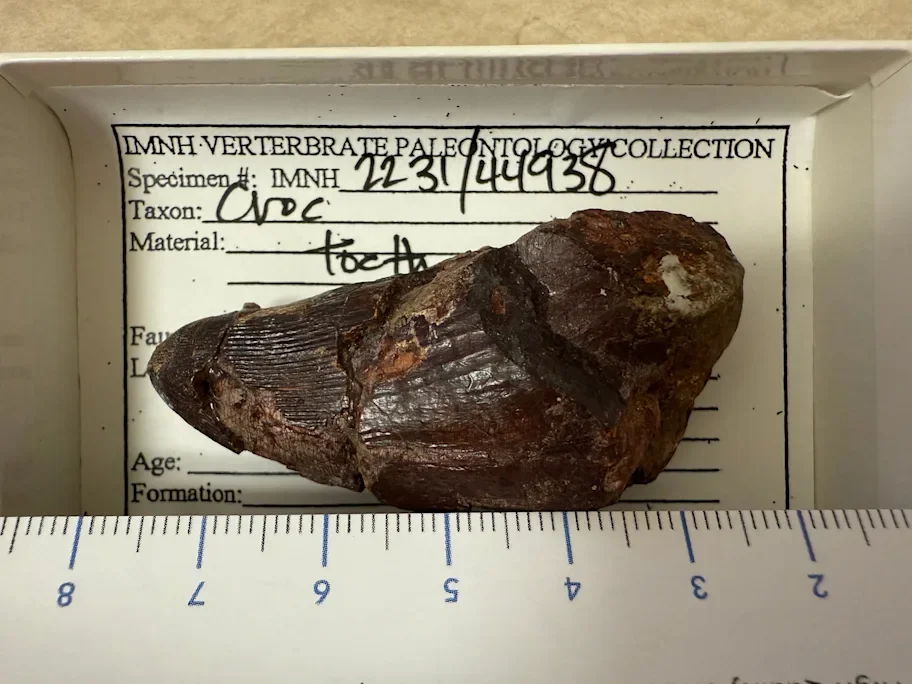
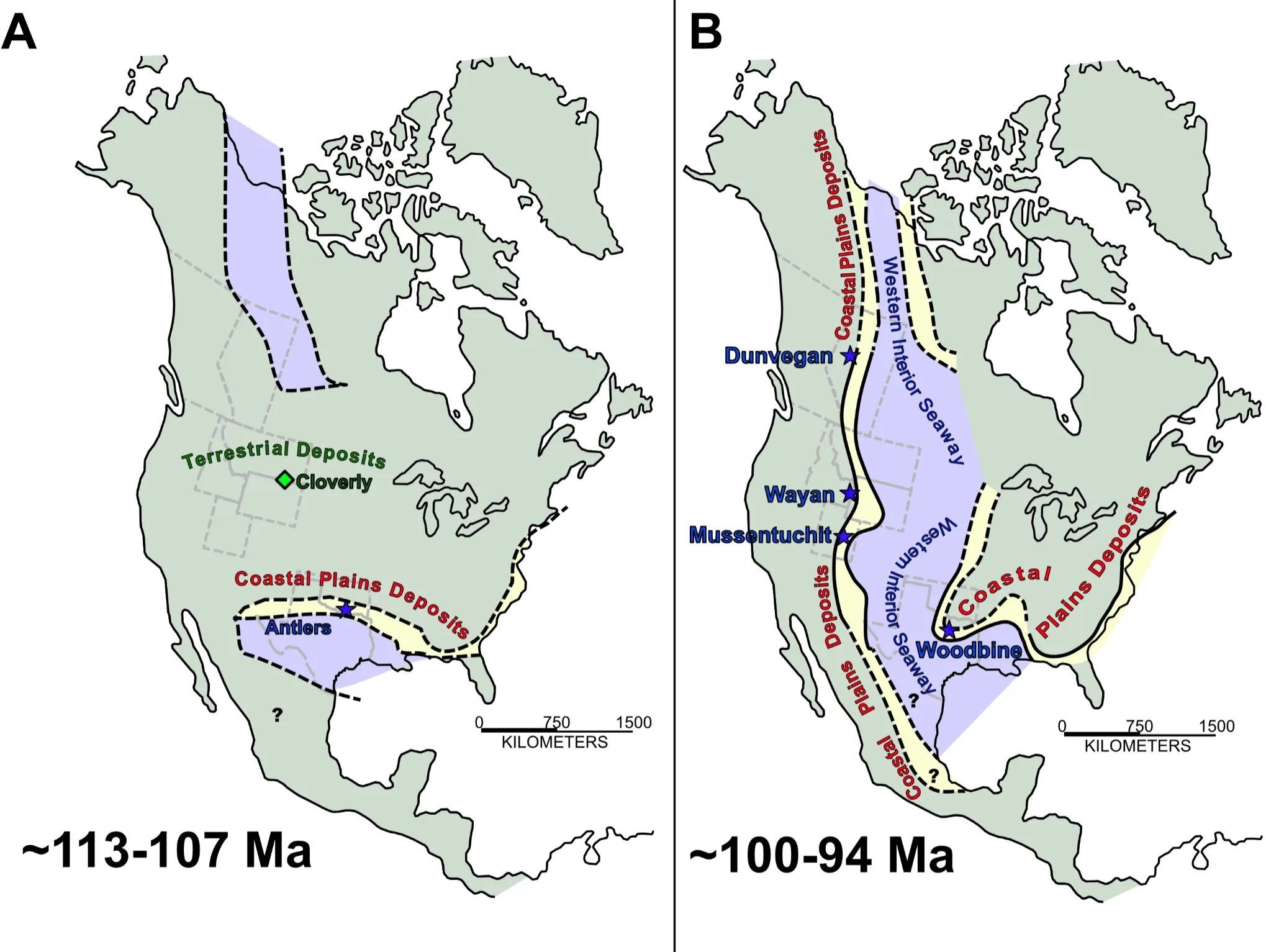
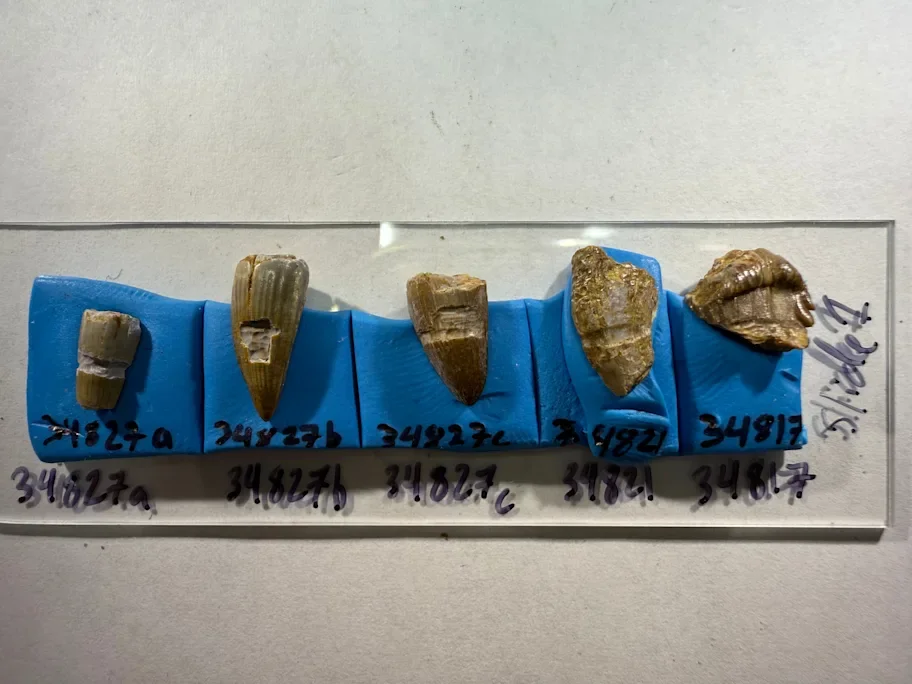
The researchers examined fossils from six North American formations dating to the Albian and early Cenomanian stages of the Cretaceous, roughly 113 million to 96 million years ago.
Five represented coastal environments influenced by the Western Interior Seaway or ancient Gulf of Mexico. They included the Antlers Formation of Oklahoma and Texas, Woodbine Formation of Texas, Wayan Formation of Idaho, Dunvegan Formation of western Canada and the Mussentuchit Member of Utah’s Cedar Mountain Formation.
The Cloverly Formation of Wyoming and Montana provided an inland comparison.
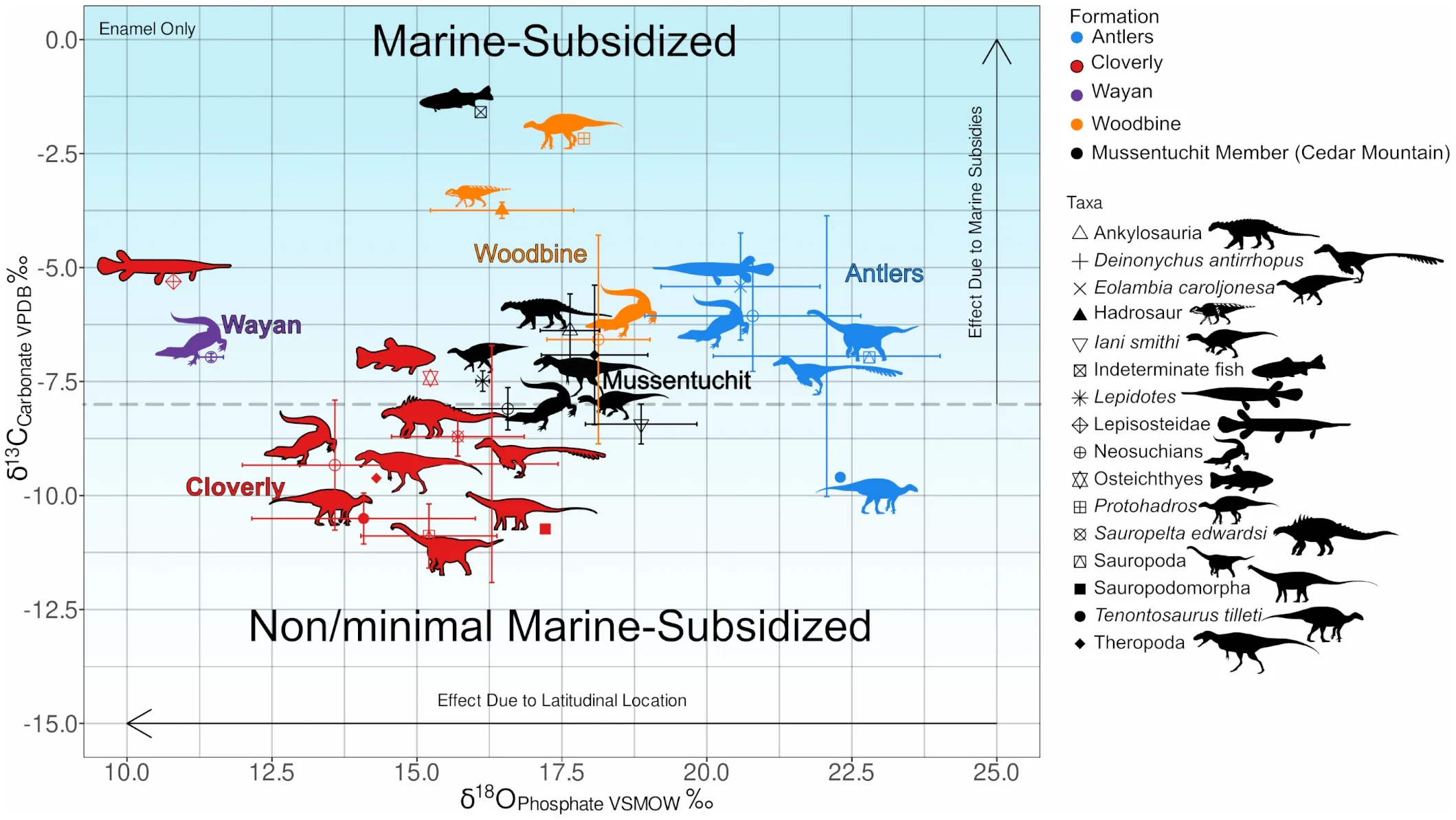
Across the coastal sites, average carbon isotope values were consistently higher than those from the inland Cloverly ecosystem. The difference appeared across several groups of vertebrates rather than only dinosaurs, including crocodilian relatives, turtles and fish.
In some coastal vertebrate enamel, δ13C values reached more than 5.5 parts per thousand above the levels expected from a diet based strictly on terrestrial C3 vegetation.
That widespread pattern weakens the idea that dinosaurs possessed an unusual physiological mechanism that altered carbon isotopes. A physiological explanation specific to dinosaurs would not readily explain similar enrichment in unrelated animals living beside them.
The researchers argue that the most plausible additional food source was marine macroalgae or other marine plants.
Such material would have been plentiful along Cretaceous shorelines. Sea levels were high, coastal environments covered enormous areas and storms could move large quantities of organic material from sea to land.
“Coastal-dwelling organisms must have eaten some kind of organic matter from the ocean, or prey that had done so,” Forster said. “This pattern is shared from fish to megaherbivores and indicates that the extra carbon source must have been low in the food-chain to affect both aquatic and terrestrial animals.”
Marine plants fit those requirements. They could have been deposited repeatedly along shorelines while carrying a carbon isotope signature capable of shifting values throughout an entire food web.
“Few organisms meet these criteria besides marine macroalgae or macrophytes, seaweeds,” Forster said.
Direct evidence already shows that supposedly herbivorous dinosaurs were not always strict plant specialists. Fossilized droppings from Late Cretaceous Utah contain crustacean remains alongside decaying wood, indicating that some large plant-eating dinosaurs occasionally consumed animal material.
The new isotope evidence suggests coastal diets could have been flexible in another direction, with marine vegetation becoming an additional source of food.
Not every animal living near the coast appears to have used marine resources.
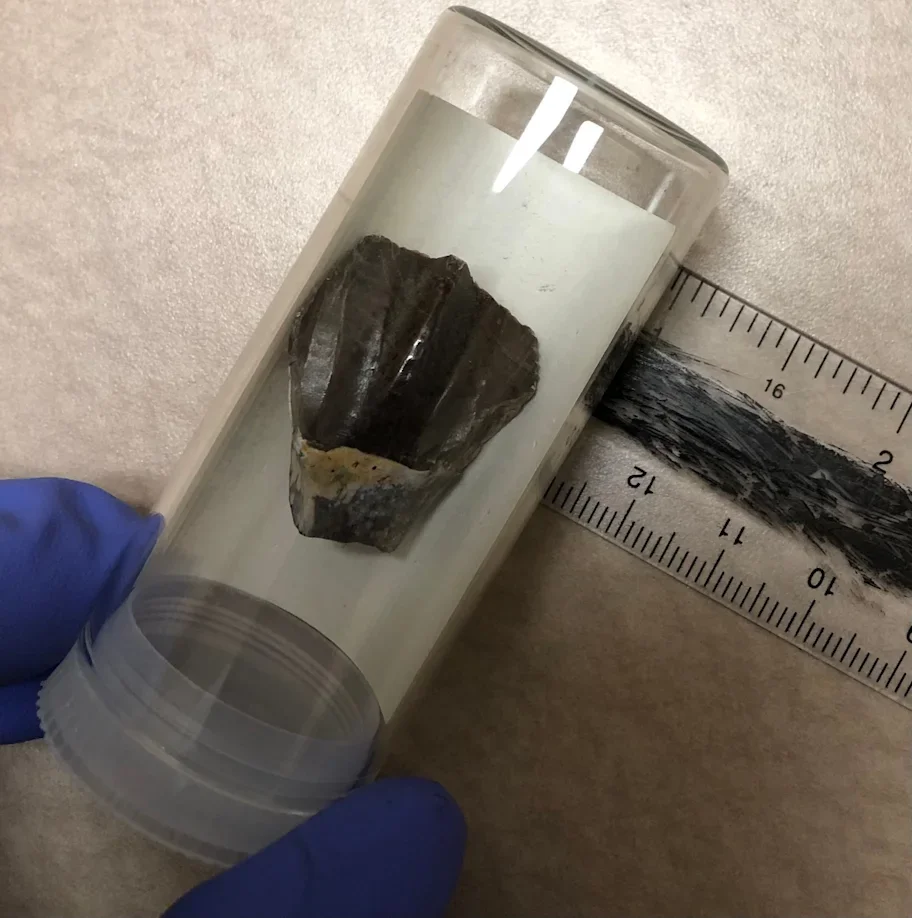
The herbivore Tenontosaurus tilletti provided an especially useful comparison. A tooth from the coastal Antlers Formation had a carbon isotope value similar to specimens from the inland Cloverly Formation.
That result suggests Tenontosaurus may have preferred terrestrial C3 plants even when marine-derived food was locally available. The sample size for the animal remains small, so the researchers say additional fossils are needed before drawing a firm conclusion about its feeding behavior.
Still, the exception strengthens an important part of the interpretation. If geology or ancient atmospheric carbon alone created the elevated values, all animals from the same coastal environment should show a similar shift. Instead, dietary differences appear to matter.
The researchers also examined oxygen isotopes and rare earth elements to test whether chemical alteration after burial could have produced the pattern. Tooth enamel generally retained the strongest evidence of original composition, while some bone and dentin showed greater signs of alteration.
The findings could change how scientists interpret unusual isotope values in dinosaur fossils. Previous estimates of the difference between dinosaur diets and their tooth chemistry may have been inflated because researchers assumed those animals consumed only terrestrial plants.
Marine carbon mixed into coastal diets could account for part of that discrepancy. It also means paleontologists may need detailed information about geography, sediments and other isotope systems before converting a tooth’s carbon signature directly into a plant diet.
The broader implication is ecological. Coastal dinosaurs apparently belonged to food webs that extended beyond the shoreline, much as bears, foxes, lizards and other animals exploit marine resources today.
“Our study emphasizes the connections between terrestrial and marine ecosystems,” Forster said. “They are deeply intertwined and have been for hundreds of millions of years.”
Future work will test whether the same pattern appears at polar and equatorial latitudes and during other periods, including the Jurassic and early Cenozoic. If it does, marine subsidies may have been a recurring influence on terrestrial ecosystems throughout much of Earth’s history.
These studies provide additional evidence for flexible dinosaur diets, unusual Cretaceous carbon isotope signatures and the influence of coastal environments on ancient vertebrates.
A Campanian ecosystem reconstruction through the geochemistry of enamel and amber: Isotope measurements from Saskatchewan’s Dinosaur Park Formation show that proximity to the Western Interior Seaway strongly influenced the chemistry preserved in vertebrate enamel and amber. (Cretaceous Research, 2026)
13C enrichment within Cretaceous amber as an alternate C3 plant proxy to investigate anomalous carbon isotope values observed within Cretaceous food webs: Carbon measurements from amber provide an independent plant-based comparison for investigating why Cretaceous vertebrates often show unexpectedly enriched carbon isotope signatures. (Cretaceous Research, 2026)
New biogeochemical insights into Mesozoic terrestrial paleoecology and evidence for omnivory in troodontid dinosaurs: Multiple chemical tracers reveal dietary and habitat differences among dinosaurs and provide evidence that some troodontids occupied omnivorous niches. (Geological Society of America Bulletin, 2024)
Anomalous 13C enrichment in Mesozoic vertebrate enamel reflects environmental conditions in a “vanished world” and not a unique dietary physiology: This multi-species analysis showed that unusually high carbon isotope values were not unique to dinosaurs, pointing toward environmental or dietary explanations. (Paleobiology, 2023)
Consumption of crustaceans by megaherbivorous dinosaurs: dietary flexibility and dinosaur life history strategies: Fossilized droppings containing crustacean remains demonstrated that some large herbivorous dinosaurs periodically consumed animal material. (Scientific Reports, 2017)
Research findings are available online in the journal Frontiers in Ecology and Evolution.
The original story “Coastal dinosaurs may have been beachcombers, eating seafood that washed up on ancient beaches” is published in The Brighter Side of News.
Like these kind of feel good stories? Get The Brighter Side of News’ newsletter.
The post Coastal dinosaurs may have been beachcombers, eating seafood that washed up on ancient beaches appeared first on The Brighter Side of News.


Leave a comment
You must be logged in to post a comment.