Coffee has long carried an unusual reputation in nutrition research. It is a daily habit, not a medicine, yet study after study has tied it to longer life and lower risk of diseases that often come with aging.
Now a team at Texas A&M University says it may have found part of the biological machinery behind that pattern.
In research published in Nutrients, scientists at the Texas A&M College of Veterinary Medicine and Biomedical Sciences traced several coffee compounds to a receptor called NR4A1, a protein involved in how the body responds to stress, inflammation and tissue damage. Their work offers one of the clearest explanations yet for how coffee might help protect the body, at least in part.
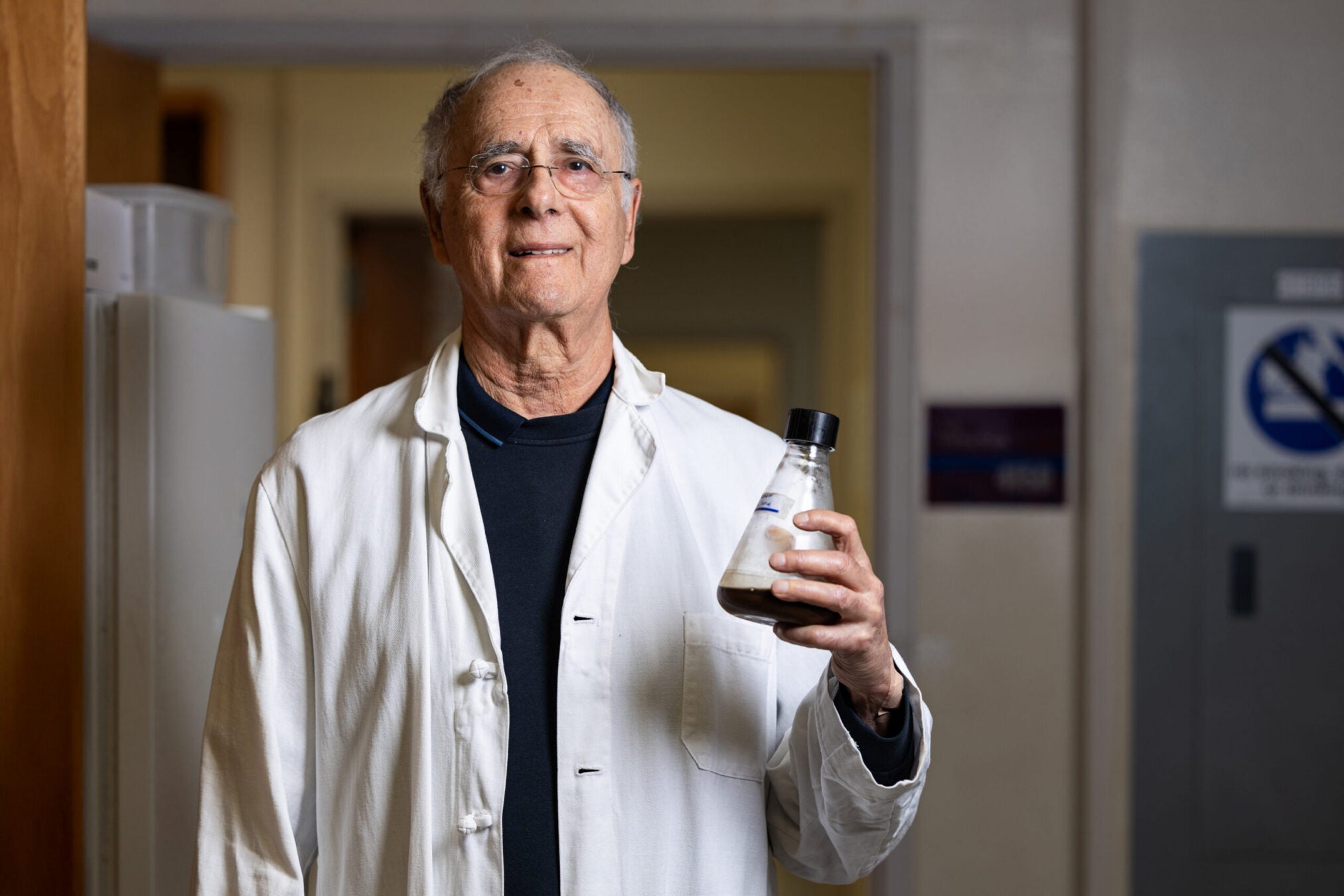
“Coffee has well-known health-promoting properties,” said Dr. Stephen Safe, distinguished professor and Sid Kyle Endowed Chair in Veterinary Toxicology in the university’s Department of Veterinary Physiology and Pharmacology. “What we’ve shown is that some of those effects may be linked to how coffee compounds interact with this receptor, which is involved in protecting the body from stress-induced damage.”
The finding does not prove that coffee directly prevents disease in people. But it begins to answer a question that has lingered for years: what, exactly, is coffee doing inside the body?
NR4A1 belongs to a family of nuclear receptors, proteins that help control gene activity when cells face stress or injury.
Safe and his collaborators have previously described NR4A1 as a kind of nutrient sensor, meaning it responds to compounds in food and may help maintain health as the body ages. In earlier work, they also found that when this receptor is missing, tissue damage tends to get worse.
“If you damage almost any tissue, NR4A1 responds to bring that damage down,” Safe said. “If you take that receptor away, the damage is worse.”
That matters because NR4A1 is tied to several processes that sit near the center of age-related disease, including inflammation, metabolism and tissue repair. The receptor has also drawn attention for its role in cancer, neurodegeneration and metabolic disorders.
Coffee, meanwhile, has been linked in population studies to lower mortality and lower risk of conditions such as Parkinson’s disease, dementia, cardiovascular disease, metabolic disease and some cancers. Those patterns have shown up often enough to be hard to ignore. What has been harder is showing a direct mechanism.
That gap shaped the Texas A&M project.
Coffee is chemically crowded. The researchers note that brewed coffee contains more than 1,000 compounds. Caffeine is the best known, but it is only one part of a much larger mix that includes polyphenols and other hydroxylated compounds.
Several of those compounds already had a reputation of their own.
Earlier research had linked coffee polyphenols such as caffeic acid, ferulic acid and chlorogenic acid to antioxidant and anti-inflammatory effects. Other plant-derived compounds, including resveratrol and the flavonoids quercetin and kaempferol, had also been shown to bind NR4A1 in previous studies.
That overlap led the Texas A&M group to ask a direct question: could some of coffee’s widely reported health effects be explained by the same receptor?
The team, which included Dr. Robert Chapkin, Dr. Roger Norton, Dr. James Cai and Dr. Shoshana Eitan, tested brewed coffee extracts and individual coffee compounds in lab models. They used Rh30 rhabdomyosarcoma cells, a cancer cell line that responds to NR4A1, along with macrophage cells to examine inflammatory signaling.
The choice of cell type is important here. The authors say Rh30 cells were selected because prior work had already shown them to be responsive to NR4A1-targeting compounds. They also make clear that the results still need confirmation in non-transformed tissues and organs.
What stood out was not caffeine.
The researchers found that brewed coffee extracts, along with several individual compounds found in coffee, bound to the NR4A1 receptor. Among the key compounds were caffeic acid, ferulic acid, chlorogenic acid, p-coumaric acid, kahweol and cafestrol. They also tested related cinnamic acids.
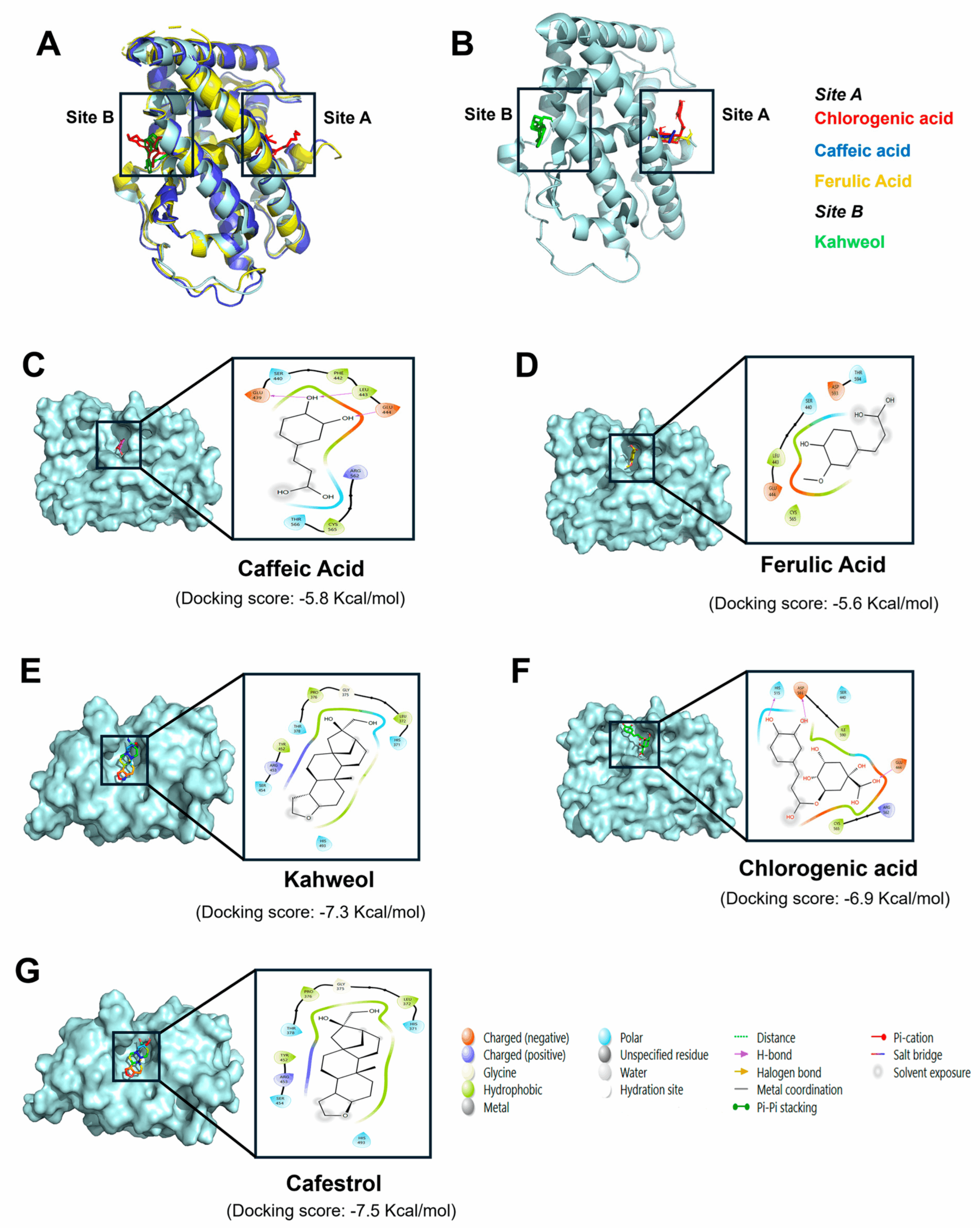
Using fluorescence quenching and surface plasmon resonance, the group showed that these molecules could physically interact with the receptor’s ligand-binding domain. The reported binding strengths varied by compound. For example, caffeic acid had a dissociation constant of 1.23 micromoles per liter in the fluorescence assay, while chlorogenic acid came in at 2.13 micromoles per liter and ferulic acid at 7.89 micromoles per liter. Kahweol and cafestrol showed even stronger binding in the surface plasmon resonance experiments, with dissociation constants of 0.75 and 0.37 micromoles per liter.
The researchers also used molecular docking to model where these compounds may fit on the receptor. The major polyphenols appeared to interact with one region, called site A, while kahweol and cafestrol appeared to bind mainly at site B.
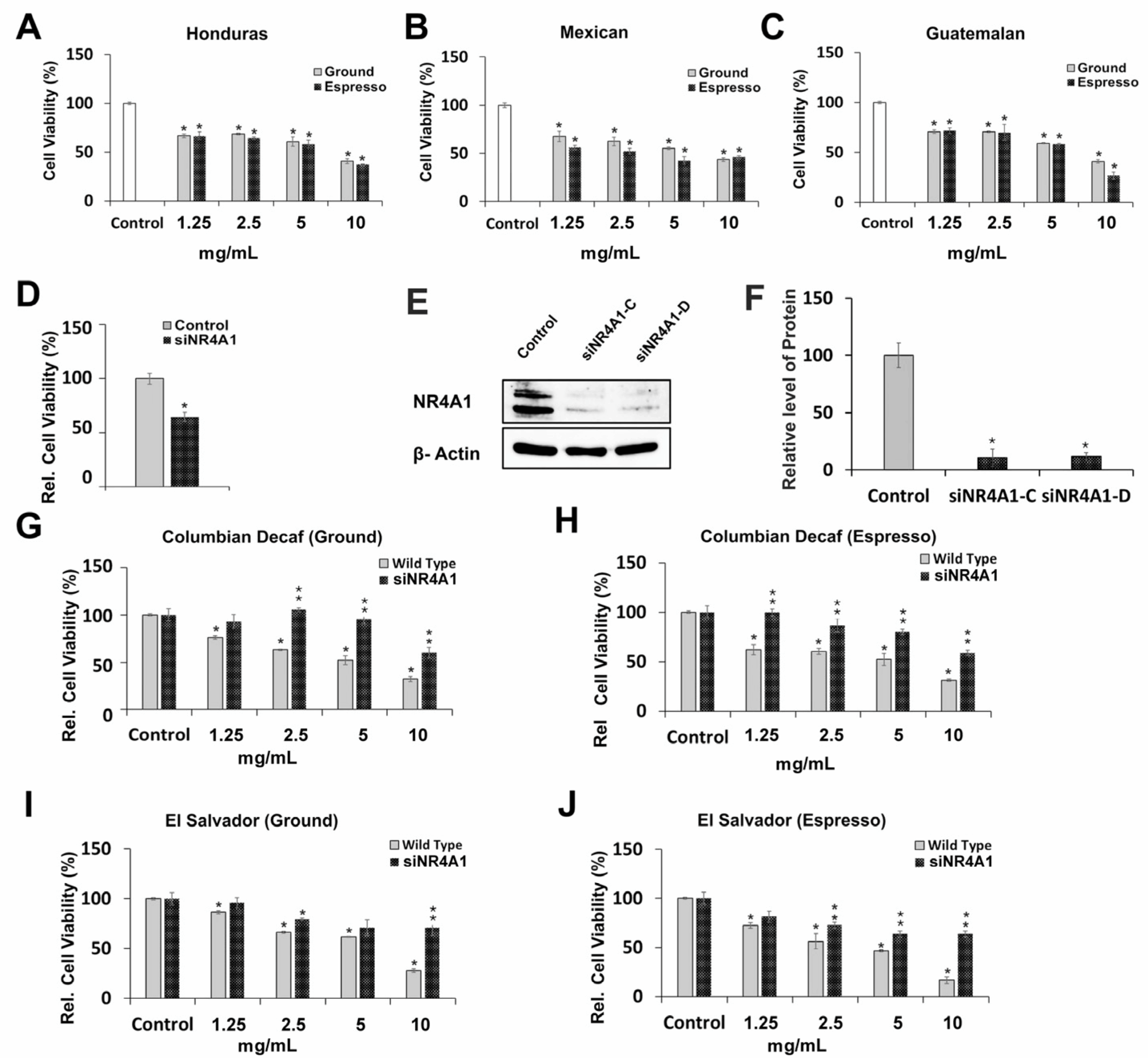
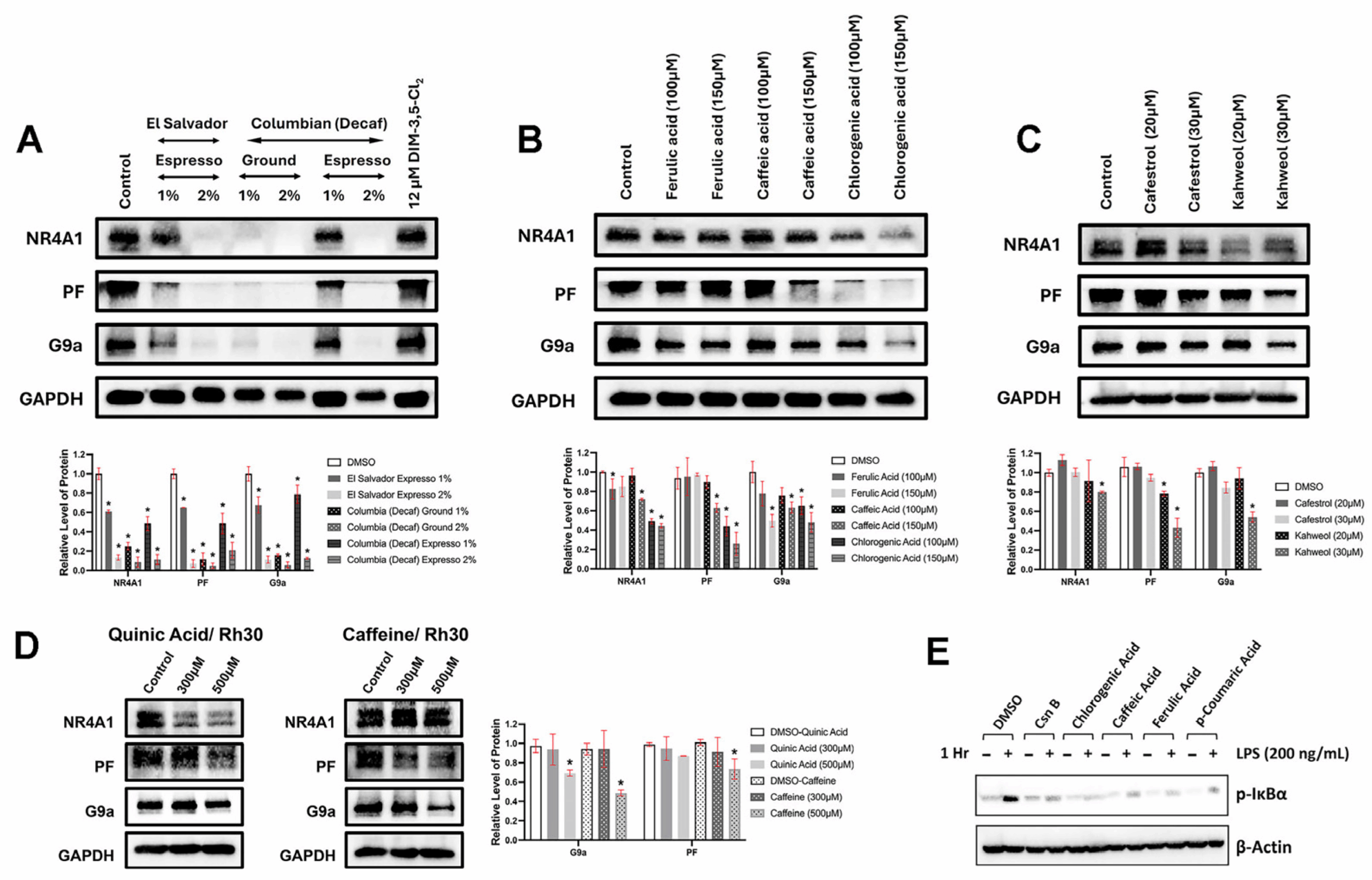
That binding was not just a biochemical curiosity. In the cancer cells, coffee extracts and several of these compounds reduced cell growth. When NR4A1 was knocked down, that growth-inhibiting effect was weakened or disappeared for many of the strongest compounds. That pattern suggested the receptor was playing a meaningful role in the response.
“What we’re saying is that at least part of coffee’s health benefits may come through binding and activating this receptor,” Safe said.
Caffeine did bind NR4A1 in the lab.
But its behavior was mixed.
In the binding assays, caffeine and quinic acid showed measurable interaction with the receptor. Yet in the functional tests, both looked weak and inconsistent compared with the coffee polyphenols and diterpenoids. Caffeine did little in the transactivation assays, and the researchers describe its NR4A1-dependent activity in Rh30 cells as low and variable.
“Caffeine binds the receptor, but it doesn’t do much in our models,” Safe said. “The polyhydroxy and polyphenolic compounds are much more active.”
That point helps explain an older puzzle in coffee research. Large population studies have often found that regular and decaffeinated coffee are linked to similar health benefits. If caffeine is not the main actor, that similarity starts to make more sense.
The work also fits with the broader idea that plant-based compounds, not just major nutrients, may shape how the body responds to stress and aging.
Still, the team stops short of overselling the connection. The authors write that coffee compounds act through many pathways, not one, and that NR4A1 likely accounts for only part of the beverage’s overall activity.
That caution runs throughout the research.
The study is mechanistic, meaning it focuses on how a process may work at the cellular and molecular level. It is not a clinical trial, and it does not show cause and effect in people. The authors also note that the coffee extracts used in the experiments were brewed in a specific way, with boiling water and an 8 to 10 minute extraction, and that other preparation methods could produce different activity.
There are other limits as well. The strongest effects in Rh30 cells appeared at concentrations above 100 micromoles for caffeine and polyphenols, while the paper notes that caffeine serum levels in humans are generally in the low micromolar range and that polyphenol concentrations are likely much lower and not well defined. That means the cell results cannot be mapped neatly onto a morning cup of coffee.
The findings also shifted depending on the source and concentration of the coffee extracts. Espresso and ground coffee from Honduras, Mexico, Guatemala, Colombia and El Salvador all inhibited Rh30 cell growth, but the magnitude varied.
And the receptor itself plays different roles depending on the setting. In most tissues, NR4A1 appears protective during stress and inflammation. In solid tumors, by contrast, it can act in a pro-oncogenic way, helping support cancer cell growth. That is why the same receptor can be linked both to tissue protection and, in cancer cells, to growth inhibition when certain ligands act as inverse agonists.
“There are many receptors and many mechanisms involved,” Safe said. “What we’re showing is that this could be one of the important pathways.”
For coffee drinkers, the immediate takeaway is not that more coffee is automatically better. The work does not change current recommendations, and it does not show that coffee alone can ward off aging-related disease.
What it does offer is a sharper explanation for why coffee has repeatedly looked beneficial in large observational studies. According to the Texas A&M analysis, some of coffee’s polyphenols and diterpenoids may help engage a receptor that responds to stress and damage, which could contribute to the drink’s association with lower mortality and lower risk of several chronic conditions.
The findings may also matter beyond coffee itself. If NR4A1 truly acts as a sensor for protective dietary compounds, it could become a target for new therapies. Safe’s group is already exploring synthetic compounds designed to act on the receptor more effectively than naturally occurring dietary chemicals, with the aim of developing treatments for cancer and other diseases.
For now, the work reinforces a broader theme in aging research: small compounds in everyday foods may influence major biological systems in ways scientists are only beginning to map.
Research findings are available online in the journal Nutrients.
The original story “Drinking coffee linked to slower aging and better health” is published in The Brighter Side of News.
Like these kind of feel good stories? Get The Brighter Side of News’ newsletter.
The post Drinking coffee linked to slower aging and better health appeared first on The Brighter Side of News.

