Water beside a dinner plate is often treated as a simple defense against overeating. The logic seems straightforward: fill the stomach with liquid, feel full sooner and stop eating. A new analysis challenges that familiar advice.
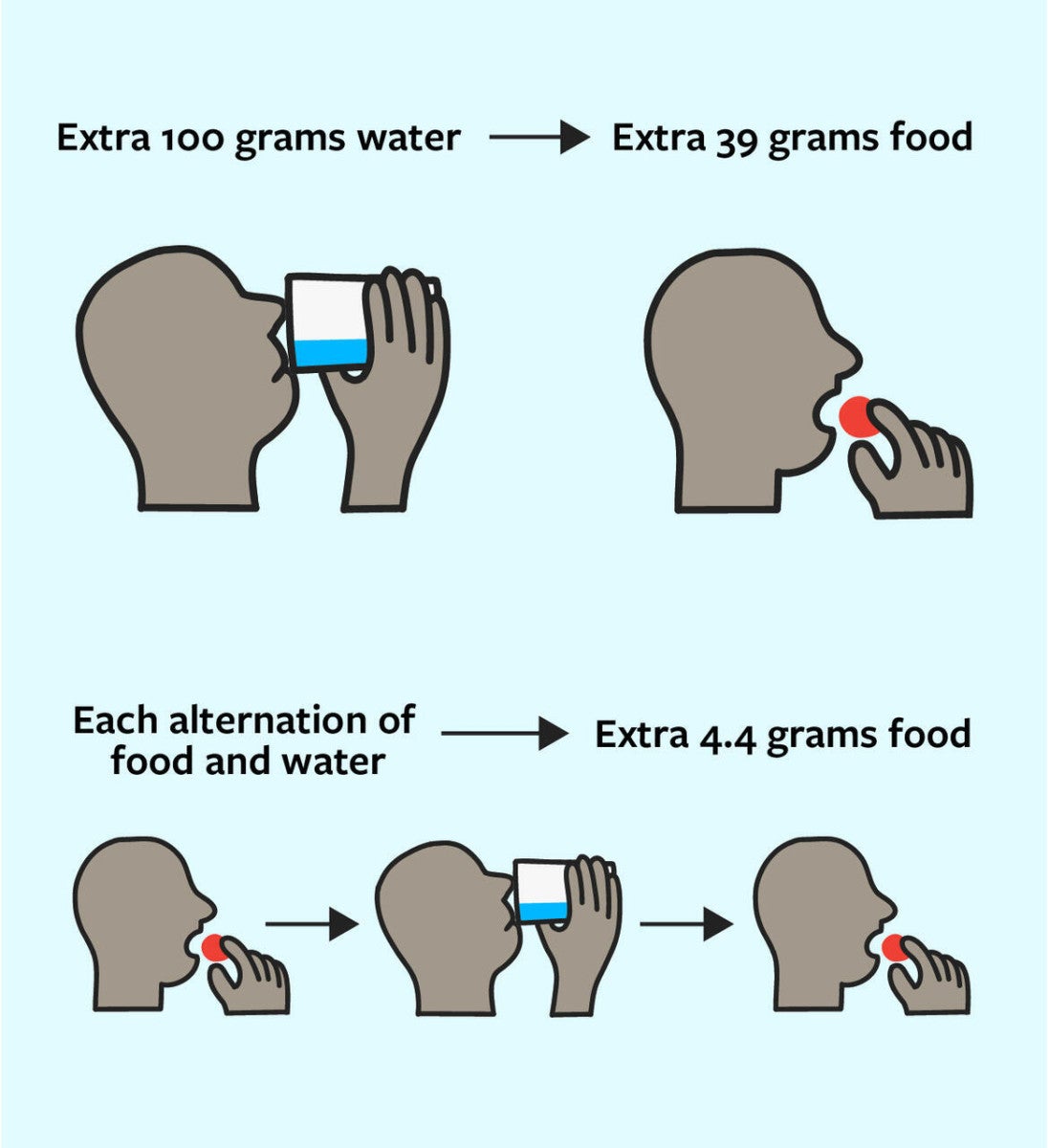
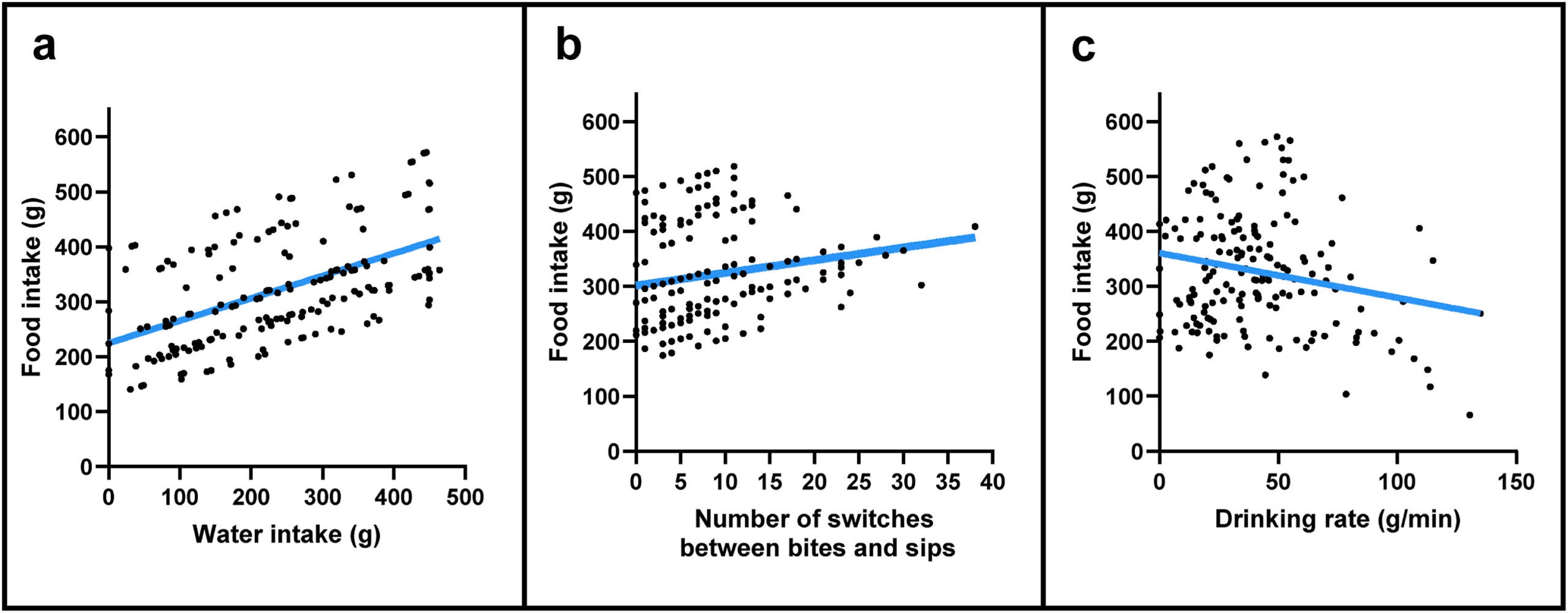
Researchers at Cornell University and Penn State found that people who drank more water during meals also tended to eat more food. Every additional 100 grams of water corresponded to about 39 more grams of food, or roughly 49 extra calories.
The association does not prove that water caused the increase. The analysis drew on earlier laboratory experiments that were not designed to establish cause and effect.
Still, the results complicate widespread advice that treats water as an automatic tool for reducing food intake.
“There’s been this widespread advice that if we drink water, it fills us up,” said Paige Cunningham, assistant professor in the Division of Nutritional Sciences in Cornell’s College of Human Ecology. “But water is emptied quickly from the stomach so it likely doesn’t fill us up for long. Instead, water may increase how much we eat, providing lubrication which can speed up eating, and preventing a dry mouth which can prolong enjoyment of the food.”
Cunningham and Penn State food scientist John Hayes pooled data from two randomized crossover experiments involving 86 adults and 172 lunches. The analysis was published in July in the journal Appetite.
Participants ate either beef chili or chicken tikka masala in a sensory laboratory. Each received an oversized 650-gram portion and 450 grams of water. They could eat and drink as much as they wanted.
Cameras recorded every bite and sip. Researchers also weighed the food and water before and after each meal.
Participants drank an average of 236 grams of water and switched between bites and sips about 8.5 times. They took nearly 10 sips per meal.
A 129-gram increase in water intake, equal to one standard deviation in the study, was associated with about 50 additional grams of food and 63 more calories.
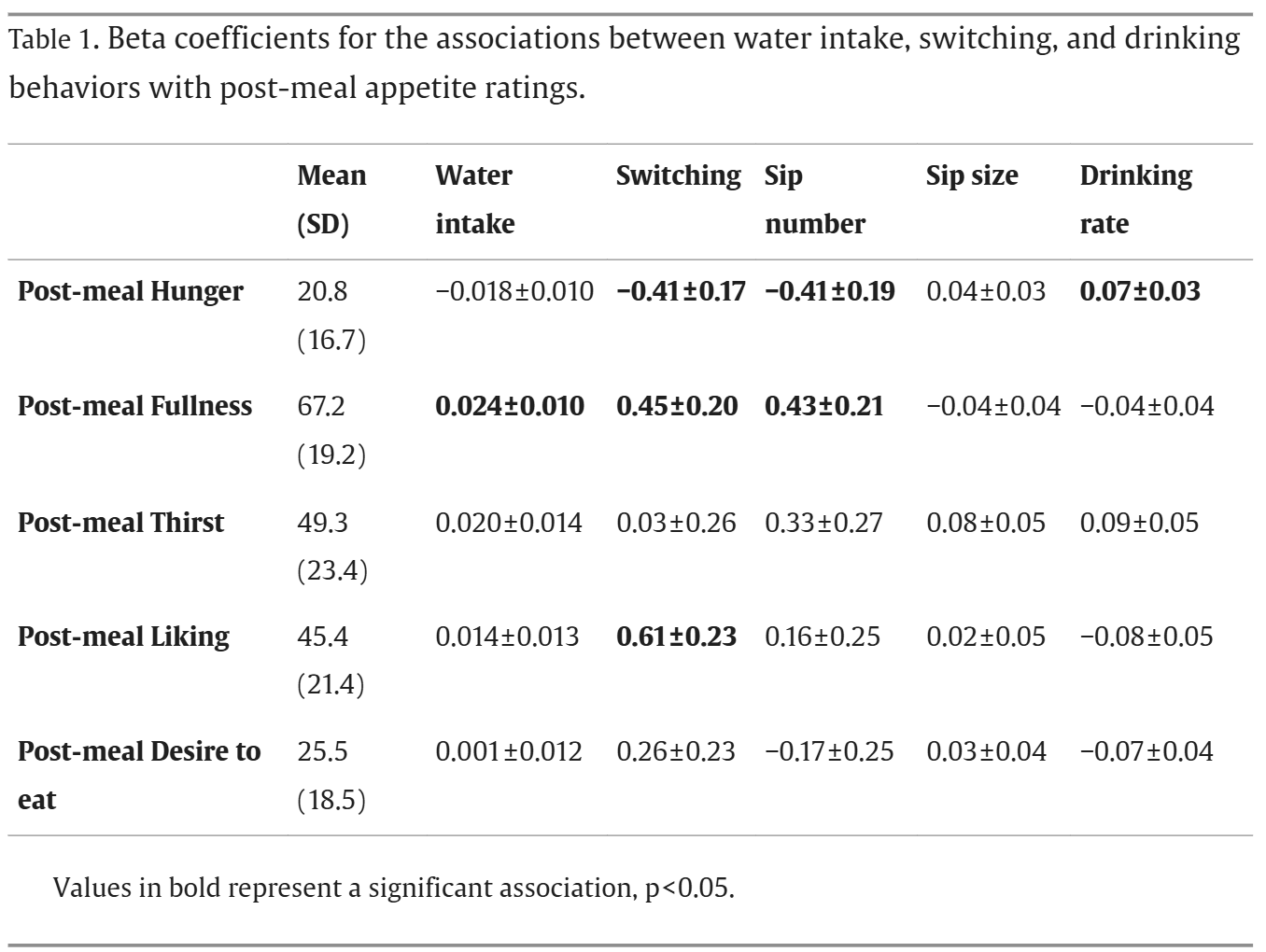
Greater water intake was also connected to higher fullness after the meal, even after accounting for food intake. It was not linked to lower thirst, increased liking or a greater desire to continue eating.
The researchers offered several possible explanations. Water may lubricate food, ease swallowing and prevent dry mouth. It could also reduce unpleasant sensations from thirst that might otherwise discourage continued eating.
Those mechanisms remain speculative. The experiments did not directly test why drinking and eating rose together.
How participants alternated between food and water also appeared to matter.
Every additional switch between a bite and a sip was associated with 4.4 more grams of food and 5.8 extra calories. Seven additional switches corresponded to about 31 more grams of food and 41 calories.
The researchers suspect switching may delay sensory-specific satiety, the gradual decline in a food’s appeal as it is eaten.
Repeatedly moving from food to water may create sensory contrast. That contrast could refresh the experience of the meal, slow the decline in enjoyment and delay the point when someone decides to stop.
The researchers did not directly measure sensory-specific satiety. However, participants who switched more frequently also reported greater liking after the meal, which supports the possibility.
Similar associations have appeared in earlier work involving adults and children. Frequent switching has also been connected with greater weight gain over one year among children with a high family risk of obesity.
The current findings cannot establish whether switching encourages people to eat more or simply occurs during longer meals.
One result ran against the researchers’ expectations. Participants who drank water faster ate less food, not more.
Every 10-gram-per-minute increase in drinking speed was associated with 16.2 fewer grams of food and about 20 fewer calories. A one-standard-deviation increase corresponded to 56 fewer grams of food and 70 fewer calories.
Slower drinking may leave water in the mouth longer, increasing sensory contrast between food and water. It may also simply indicate a longer meal, giving someone more time to eat while spreading water consumption across that period.
“This was a secondary analysis looking at associations,” Cunningham said. “We are following up on this right now so we can make those causal inferences.”
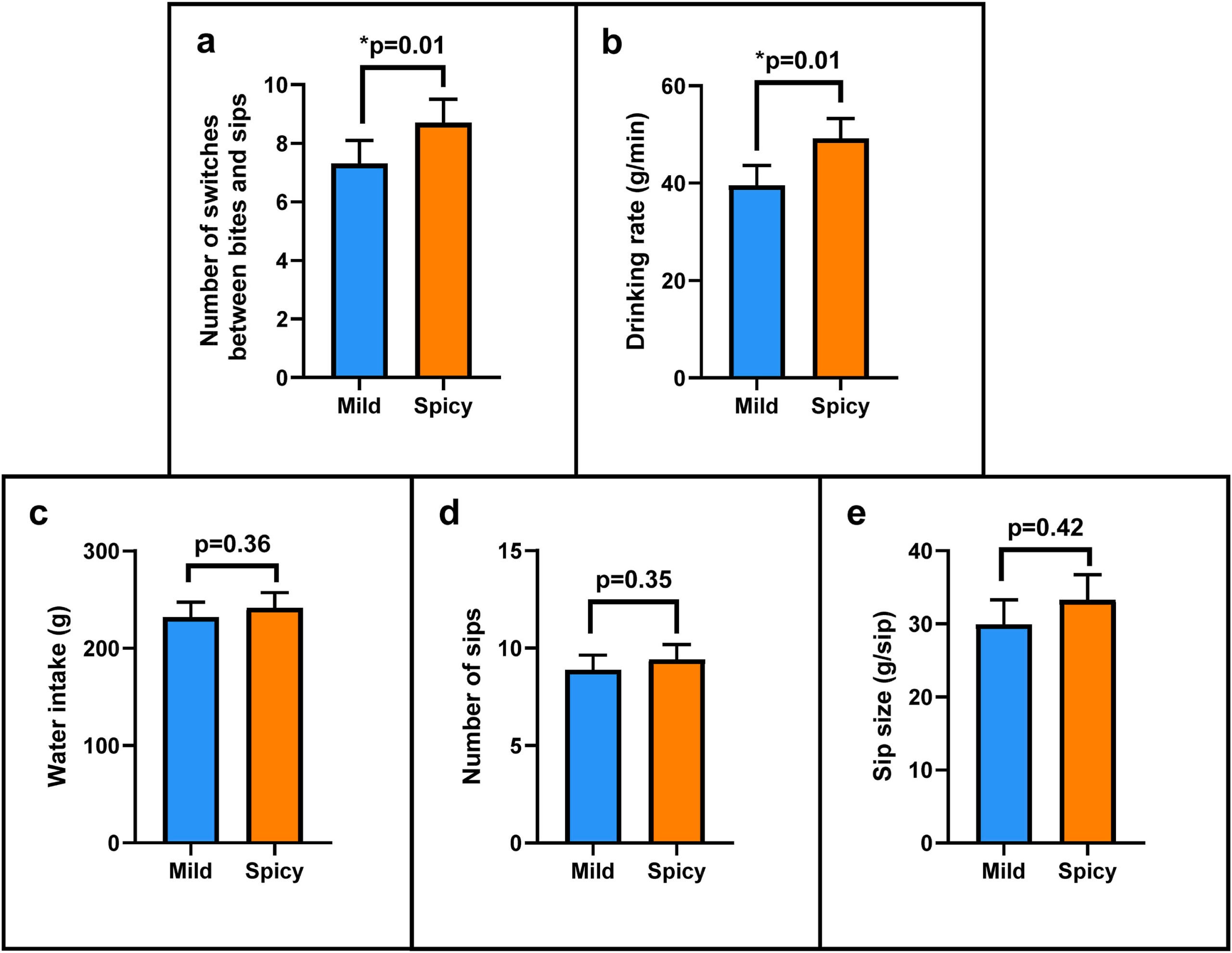
Neither sip size nor the total number of sips showed a significant relationship with food or calorie intake.
A related experiment examined whether spicy salsa could alter snack consumption. The results appeared in April in Food Quality and Preference.
Forty-nine adults received tortilla chips with either mild or spicy salsa once a week for two weeks. Only the cayenne content changed between conditions.
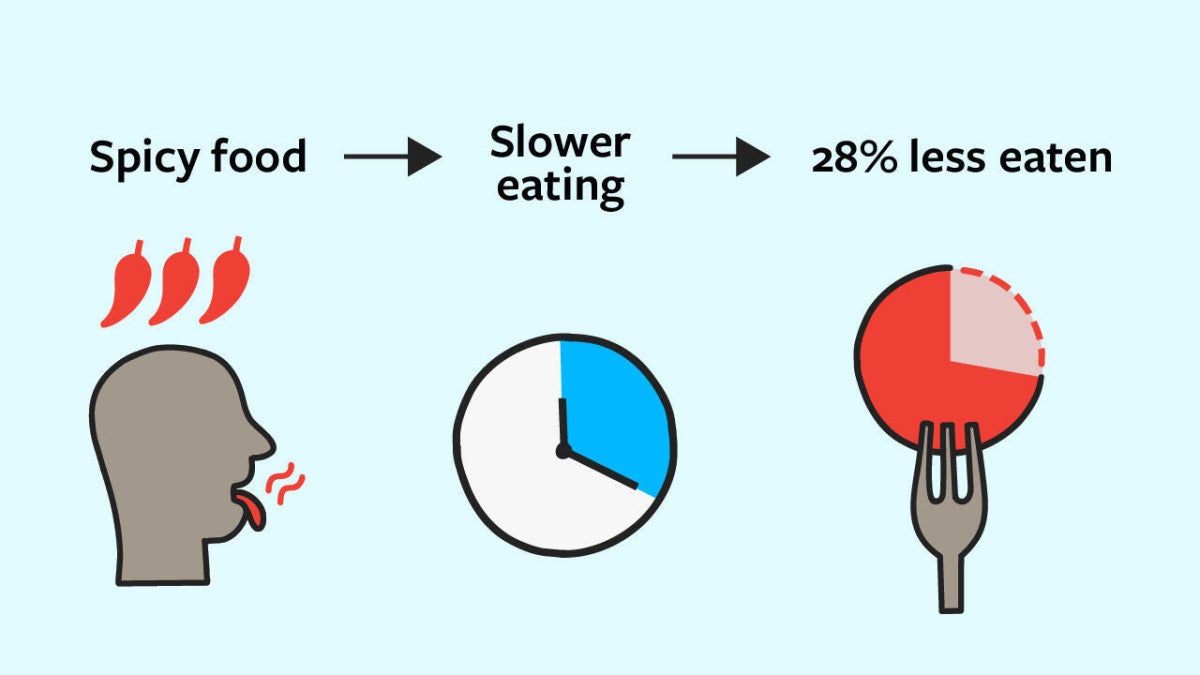
Participants ate 28% less of the spicy snack. The reduction included both salsa and chips, even though the chips remained identical.
They also ate the hotter snack about 30% more slowly. The researchers suspect the slower pace led to lower intake.
Water consumption did not change with the salsa’s spice level, ruling it out as an explanation.
“We were interested in whether making the salsa spicy would result in people eating the same amount of chips,” Cunningham said. “And they didn’t. The takeaway is that adding spice to one part of the snack can significantly influence how much people eat overall.”
The lunch experiments produced a similar pattern. Across the 172 meals, increasing spiciness reduced food intake by about 53 grams, or 67 calories.
Water consumption and drinking behavior did not weaken the effect.
“Both studies show how mealtime behaviors and food properties can significantly influence how much we eat, without us even realizing,” Cunningham said. “We found that just drinking more water was associated with greater consumption, while adding a bit more spice to a snack slowed eating and decreased how much participants ate.”
The findings suggest that advice about water and appetite needs greater precision. Drinking before a meal may not have the same effect as repeatedly drinking throughout one.
The results do not support telling people to avoid water while eating. They do show that drinking more is not guaranteed to reduce food intake and may sometimes accompany greater consumption.
Spice may offer a way to slow eating, but the evidence remains limited to specific foods and controlled settings.
The experiments tested chili, tikka masala and tortilla chips with salsa. The samples lacked broad geographic and demographic diversity, and the patterns may differ with dry foods, sweet dishes or everyday meals.
Future experiments will need to manipulate drinking and switching directly. That work could determine whether these behaviors change consumption or merely reflect how people naturally eat.
Research findings are available online in the journal Appetite.
The original story “Drinking water during meals may not help people eat less” is published in The Brighter Side of News.
Like these kind of feel good stories? Get The Brighter Side of News’ newsletter.
The post Drinking water during meals may not help people eat less appeared first on The Brighter Side of News.

