Proteins power nearly every process inside the body, from healing wounds to fighting infection. For decades, scientists have tried to redesign them, often by making small, careful changes. A new study suggests that approach may be too limited. Researchers at Duke University School of Medicine have created an artificial intelligence system that can reshape proteins on a much larger scale, while keeping them functional.
The tool, called Raygun, can shorten, expand, or heavily rewrite proteins in ways that resemble natural evolution. The findings point to a future where scientists can tailor proteins for medicine, research, and biotechnology with far greater flexibility.
Proteins are built from chains of amino acids. Their shape determines what they do, whether they bind to other molecules or carry out chemical reactions. Changing even a few amino acids can disrupt that shape, making design difficult.

Traditional methods focus on small edits. Scientists often swap one amino acid at a time and test the result. But as changes increase, the number of possible combinations grows beyond reach.
Raygun takes a different path. It does not treat proteins as simple chains. Instead, it converts them into a shared mathematical format that captures patterns learned from vast biological data.
Rohit Singh, a co-corresponding author of the study, described the idea behind this approach.
“There is a language that governs how a protein’s amino acid sequence gives rise to its shape and function, but scientists don’t fully understand that language,” Singh said. “Protein language models act as a kind of translator, learning patterns from millions of protein sequences and linking those patterns to biological structure and function.”
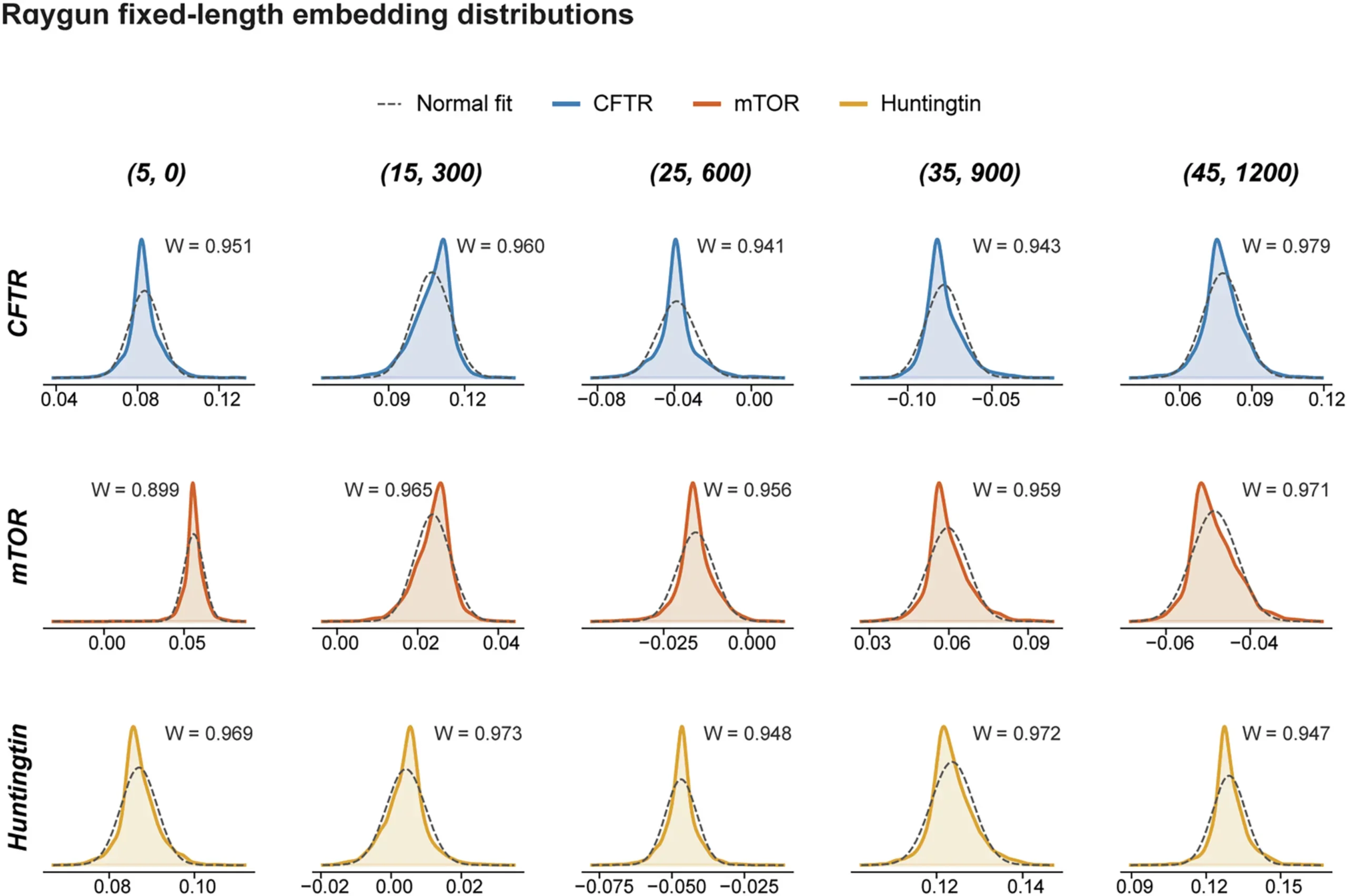
This translation allows the system to compare proteins of different sizes and redesign them in coordinated ways.
The system builds on protein language models, a type of artificial intelligence trained on millions of known protein sequences. These models learn how sequence relates to structure and function, much like how language models learn grammar and meaning.
Raygun adds a new layer. It represents proteins in a standardized form, allowing direct comparison across different lengths. Once in this format, proteins can be expanded, compressed, or altered while preserving key features.
Researchers control the process using two simple settings. One determines how much the sequence changes. The other decides whether the protein becomes shorter or longer.
This approach allows large-scale redesign. Instead of small tweaks, the system can introduce many changes at once, similar to how evolution reshapes proteins over time.
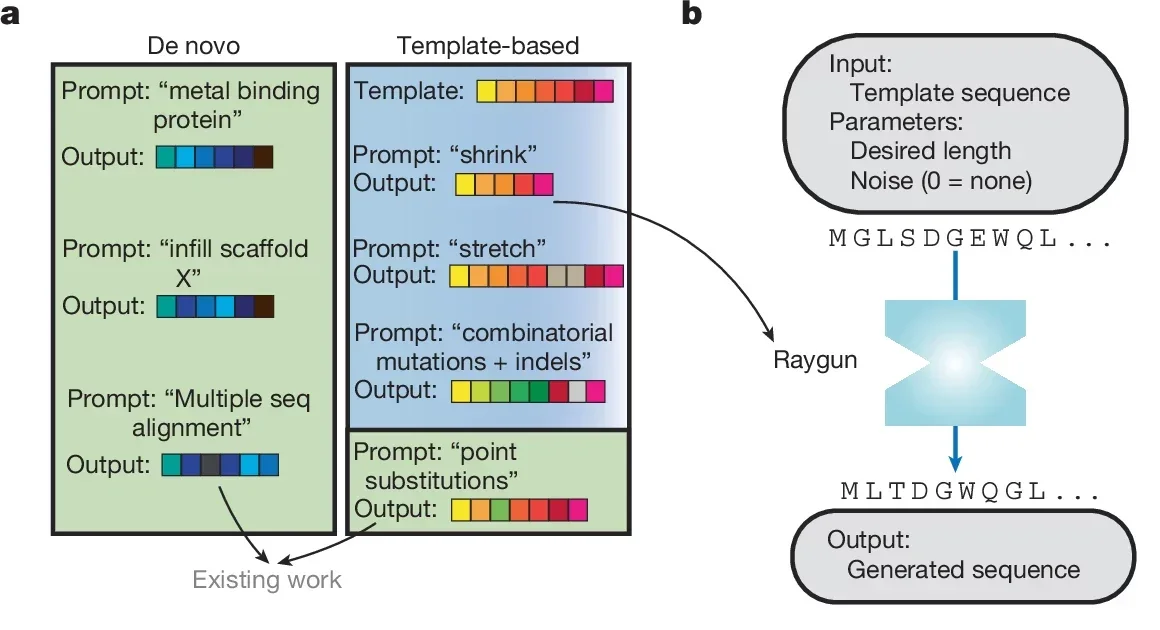
To evaluate the system, the team ran a series of tests on different proteins. They generated new versions with varied lengths and sequences, then analyzed whether those versions still held their structure.
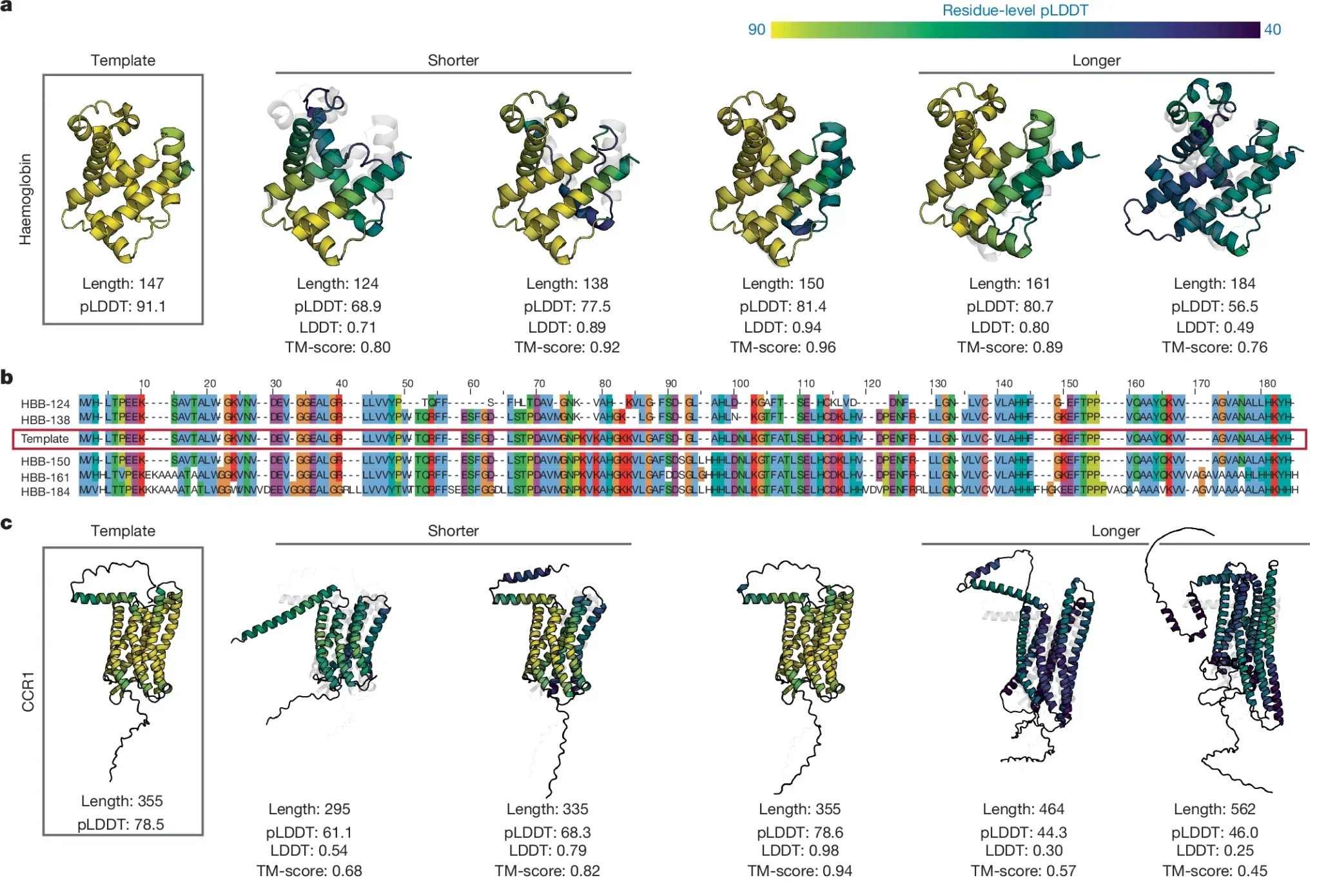
The results were encouraging. Many redesigned proteins maintained their predicted shapes, even after significant changes. Key functional regions were often preserved, suggesting the system understands which parts matter most.
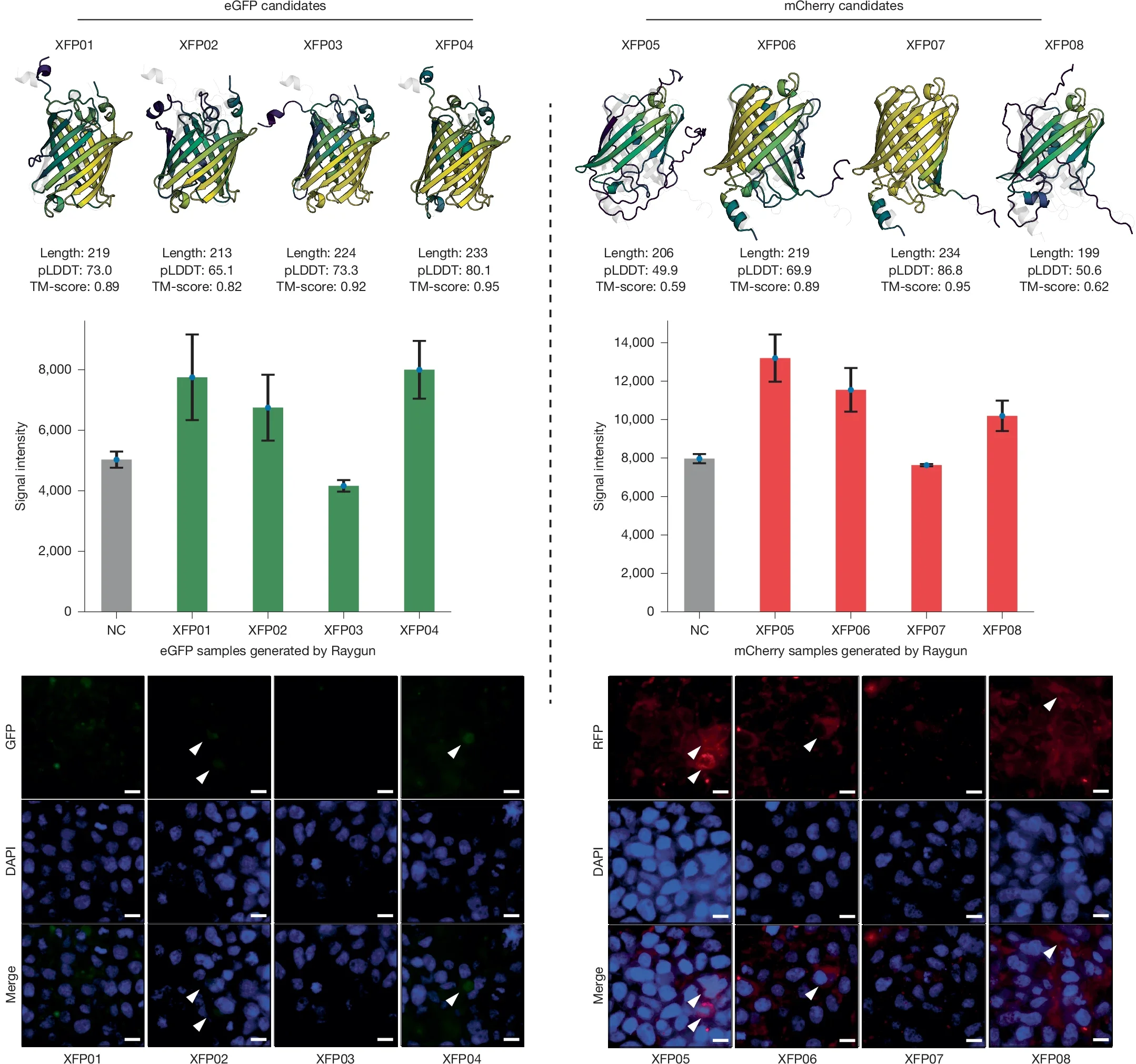
The researchers also tested the proteins in living cells. They focused on fluorescent proteins, which glow under certain conditions and help scientists track activity inside cells.
Several redesigned versions still produced visible signals. Some were much smaller than typical fluorescent proteins, yet retained their ability to function.
The team also examined enzymes, which carry out essential chemical tasks in cells. Some shortened versions remained active, even after large reductions in size.
These findings show that function can survive major changes, as long as the overall structure stays intact.
Raygun does not only shrink proteins. It can also make them larger or more complex.
The researchers applied the system to epidermal growth factor, a protein involved in wound healing and cell growth. This protein also plays a role in cancer-related pathways.
By generating new variants, the team tested whether the redesigned proteins could still bind to their targets. Experiments confirmed that several versions retained this ability.
In some cases, binding improved, even when changes occurred far from the binding site. This suggests that overall structure influences function more than individual sequence details.
The results highlight the system’s ability to explore new designs that go beyond simple edits.
One of the most striking features of Raygun is its speed. The system can generate new protein designs in fractions of a second. This allows researchers to explore thousands of possibilities quickly.
After generating candidates, the system ranks them based on predicted quality. This step helps identify the most promising designs for further testing.
The approach mirrors natural evolution in a compressed form. Instead of taking millions of years, the system explores large changes in a matter of minutes.
The study also offers insight into how proteins evolve. In nature, proteins change through a mix of small adjustments and larger shifts, such as insertions or deletions.
Raygun captures this full range of changes. It shows that proteins can tolerate significant variation while maintaining function, as long as their structure remains stable.
This finding challenges the idea that precise sequences are always required. Instead, it suggests that structure and relationships within the molecule play a larger role.
By studying these patterns, researchers may gain a deeper understanding of how evolution shapes biological systems.
Despite its promise, the system has limits. Extreme changes can weaken function, even if structure remains intact. Some redesigned proteins showed reduced activity, especially after major size reductions.
The model also depends on existing data. Rare or unusual proteins may be harder to design accurately.
Researchers plan to improve the system by using larger datasets and combining it with experimental feedback. This could help refine designs and restore lost activity.
Future work may also explore more complex proteins, including those with multiple functional parts.
Raygun represents a shift in how scientists approach protein design. Instead of building from scratch, it reshapes what already exists, exploring a broader range of possibilities.
The ability to adjust size and function at the same time opens new opportunities. Smaller proteins may be easier to deliver in medical treatments. Larger or modified ones could perform new tasks.
The system also allows researchers to test ideas quickly, speeding up discovery.
The development of Raygun could have far-reaching effects in science and medicine. In gene therapy, smaller proteins are easier to deliver into cells, making treatments more efficient. In biological research, compact fluorescent proteins could improve imaging and reduce interference with other molecules.
In drug development, the ability to redesign proteins may lead to more precise therapies. Scientists could create molecules that bind more strongly to disease targets or avoid unwanted interactions. This could improve treatments for conditions such as cancer, where signaling pathways often rely on specific protein interactions.
The research also deepens understanding of evolution. By showing how structure can remain stable through large changes, it provides a new way to study how proteins adapt over time. This knowledge may guide future efforts to engineer proteins with new functions.
More broadly, the technology could reduce the time and cost required to design biological tools. Faster design cycles mean quicker testing and development, which could accelerate progress across many fields.
Research findings are available online in the journal Nature.
The original story “Duke scientists create an AI Raygun that shrinks, expands, and rewrites proteins” is published in The Brighter Side of News.
Like these kind of feel good stories? Get The Brighter Side of News’ newsletter.
The post Duke scientists create an AI Raygun that shrinks, expands, and rewrites proteins appeared first on The Brighter Side of News.

