Scientists exploring the deep Pacific off Costa Rica have found a coral so unusual that it needed its own new family. Bright yellow, tree-like and rooted among fields of brittle stars, the coral rose from rocky seamounts like a golden forest in the dark.
The discovery introduces a new species, a new genus and a new family of gorgonian octocorals. The species is named Laurinque elenya. The genus is Laurinque, and the new family is Laurinqueidae.
Researchers collected the coral at depths of 360 to 529 meters. The work took place during expeditions in 2019 and 2023 aboard the research vessels Falkor and Falkor (too), operated by Schmidt Ocean Institute.
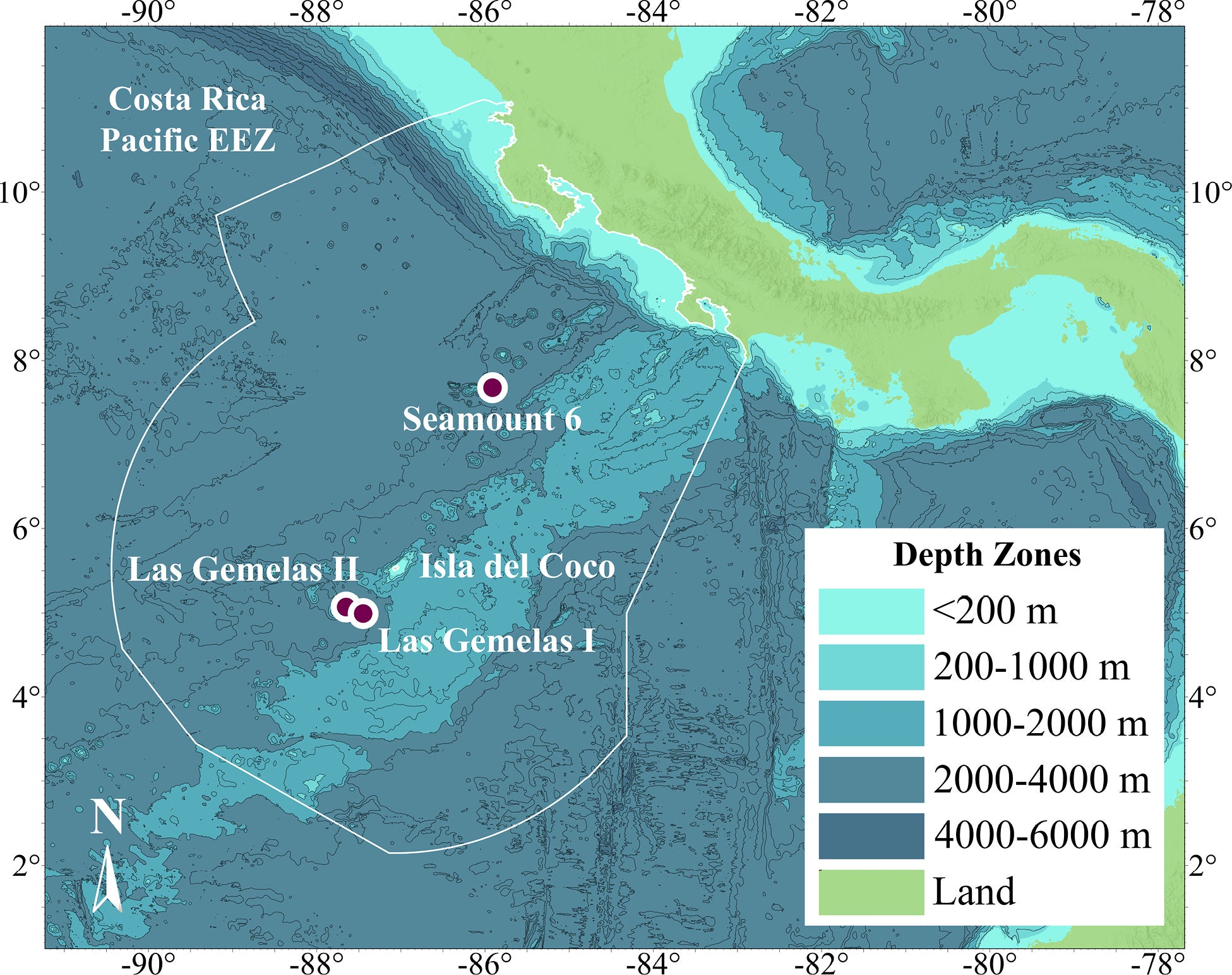
The colonies were found on seamounts off Isla del Coco and along the Costa Rican Pacific margin. Scientists used the remotely operated vehicle SuBastian to photograph and collect them.
The deep-sea scene stunned the researchers. Rocky outcrops were almost entirely covered by brittle stars, creating a shimmering, star-like seafloor. From that living carpet, golden coral branches rose like trees.
“I saw the octocoral garden for the first time in 2019 and I was impressed by the beauty of the landscape, which inspired, later the elvish name of the taxa,” said Dr. Odalisca Breedy of the Universidad de Costa Rica, lead researcher on the study.
The genus name Laurinque comes from “Laurinquë,” meaning “golden tree” in Quenya, the Elvish language created by J.R.R. Tolkien. The species name elenya means “stellar” or “of the stars.”
At first, the coral seemed like it might belong to a known group. Its bright color and delicate branching form resembled some other deep-sea octocorals.
But closer study showed otherwise. The animal’s body shape, tiny skeletal structures and genetic data did not match any known family.
“I thought the species could belong to a known family and genera, but after the preliminar morphological analysis I realised that it was something very different that I could not match with the known taxa,” Breedy said.
That difference mattered. Scientists do not create new biological families lightly. A family marks a deep branch on the tree of life.
In this case, the coral’s features were distinct enough to justify Laurinqueidae, a new family built to house it.
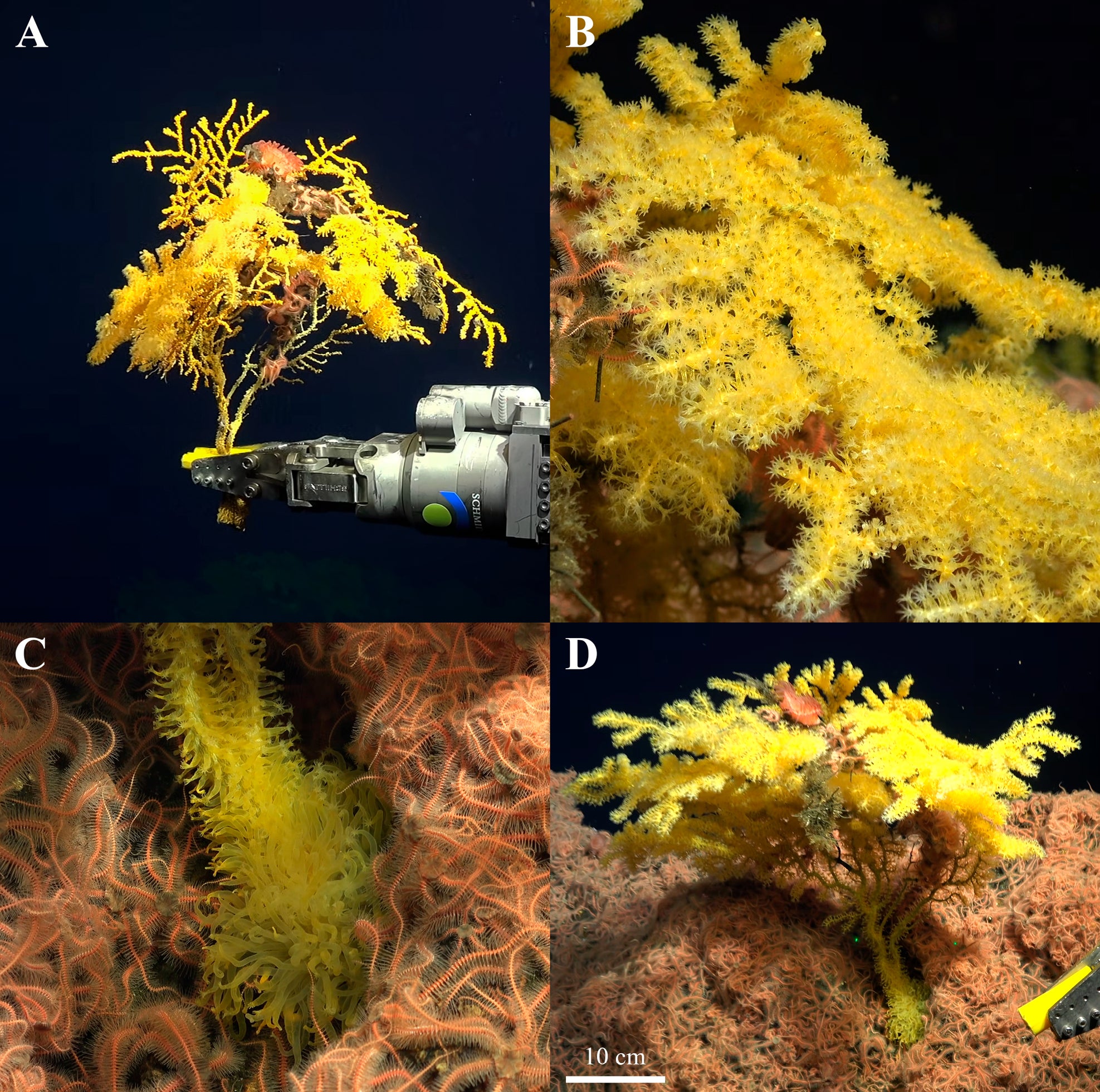
Living Laurinque elenya colonies are bright yellow. Some can grow more than a meter tall and 1.2 meters wide.
Their branches form dense, irregular fans. Some branches grow sideways and split many times. Others occasionally join together, creating a tangled, tree-like shape.
The coral has a dark brown internal axis made of protein-rich material. A thin outer tissue layer covers that support structure. When alive, the colony looks soft and fuzzy because its many polyps extend outward.
The habitat is far from gentle. The coral lives in cold, deep water with very low oxygen. Temperatures ranged from about 8.12 to 10.8 degrees Celsius.
Still, the species formed large gardens at some sites. That shows how life can thrive in places that seem extreme from a surface-world view.
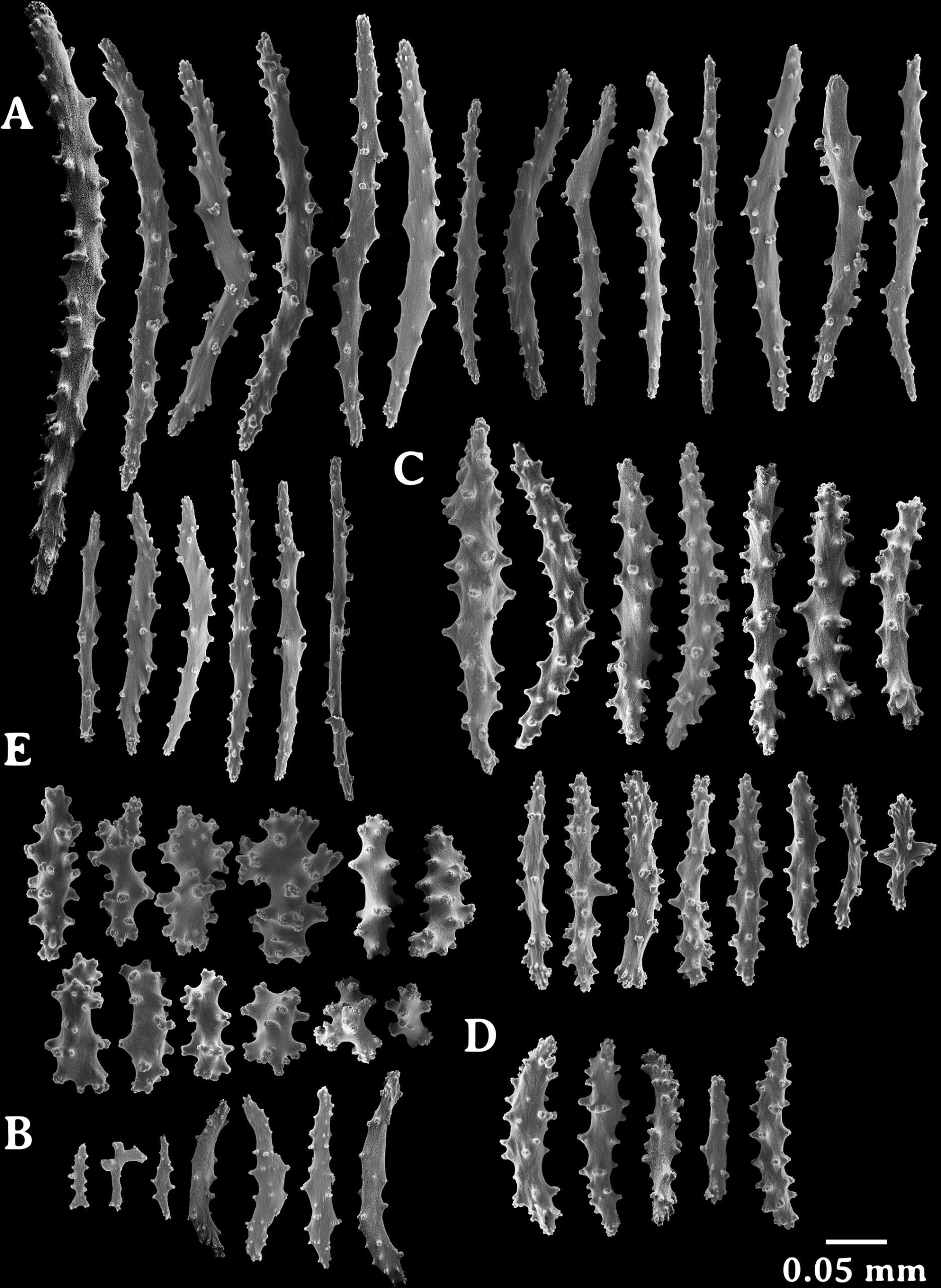
To understand the coral, researchers studied its polyps and microscopic skeletal parts. These tiny structures, called sclerites, help scientists classify octocorals.
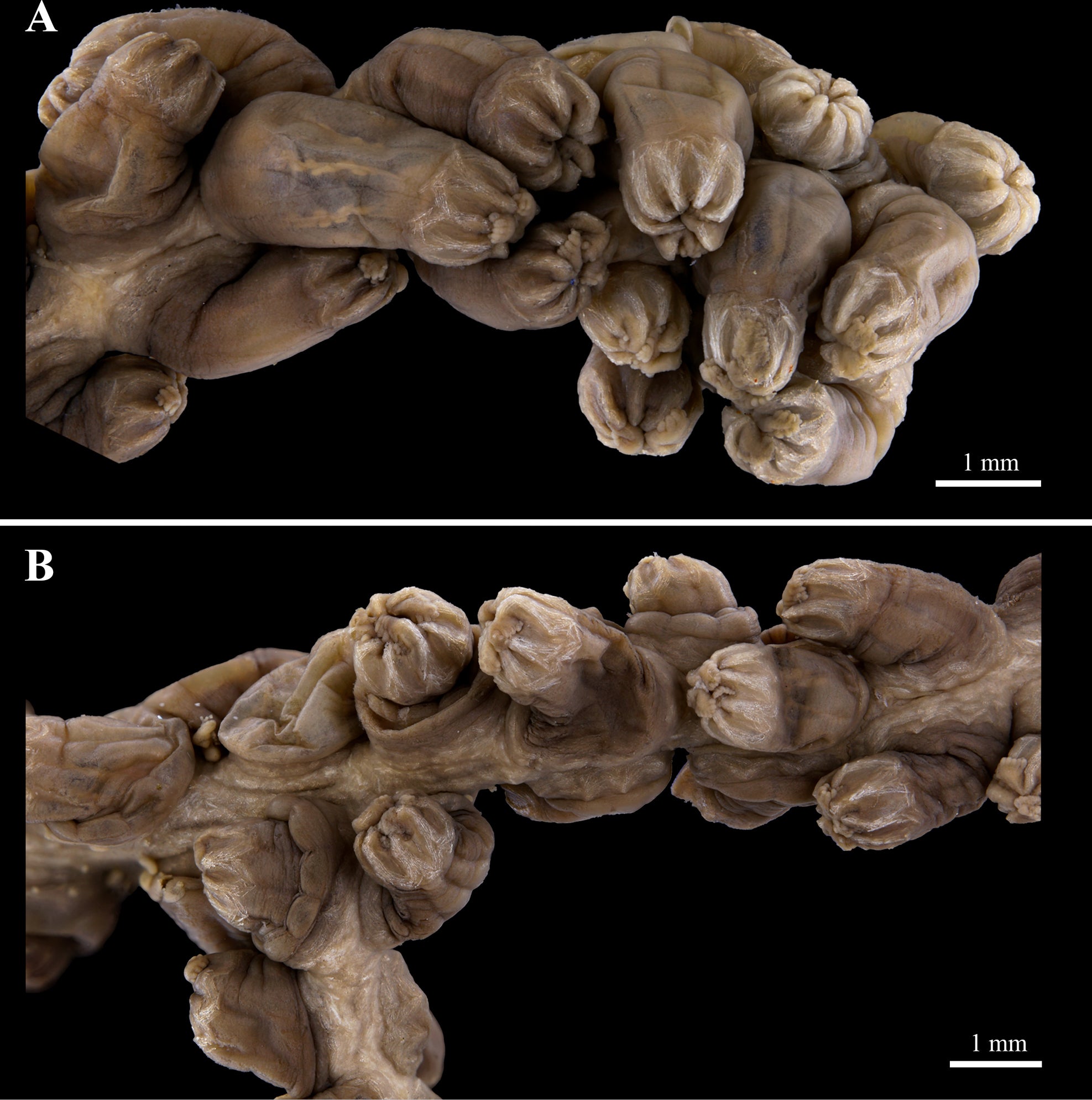
The polyps are long, tubular and tightly packed. They appear in rows on thicker branches and cover thinner branchlets more fully.
Some polyps reach up to 5 millimeters long. Near branch tips, they often cluster in groups of four or five.
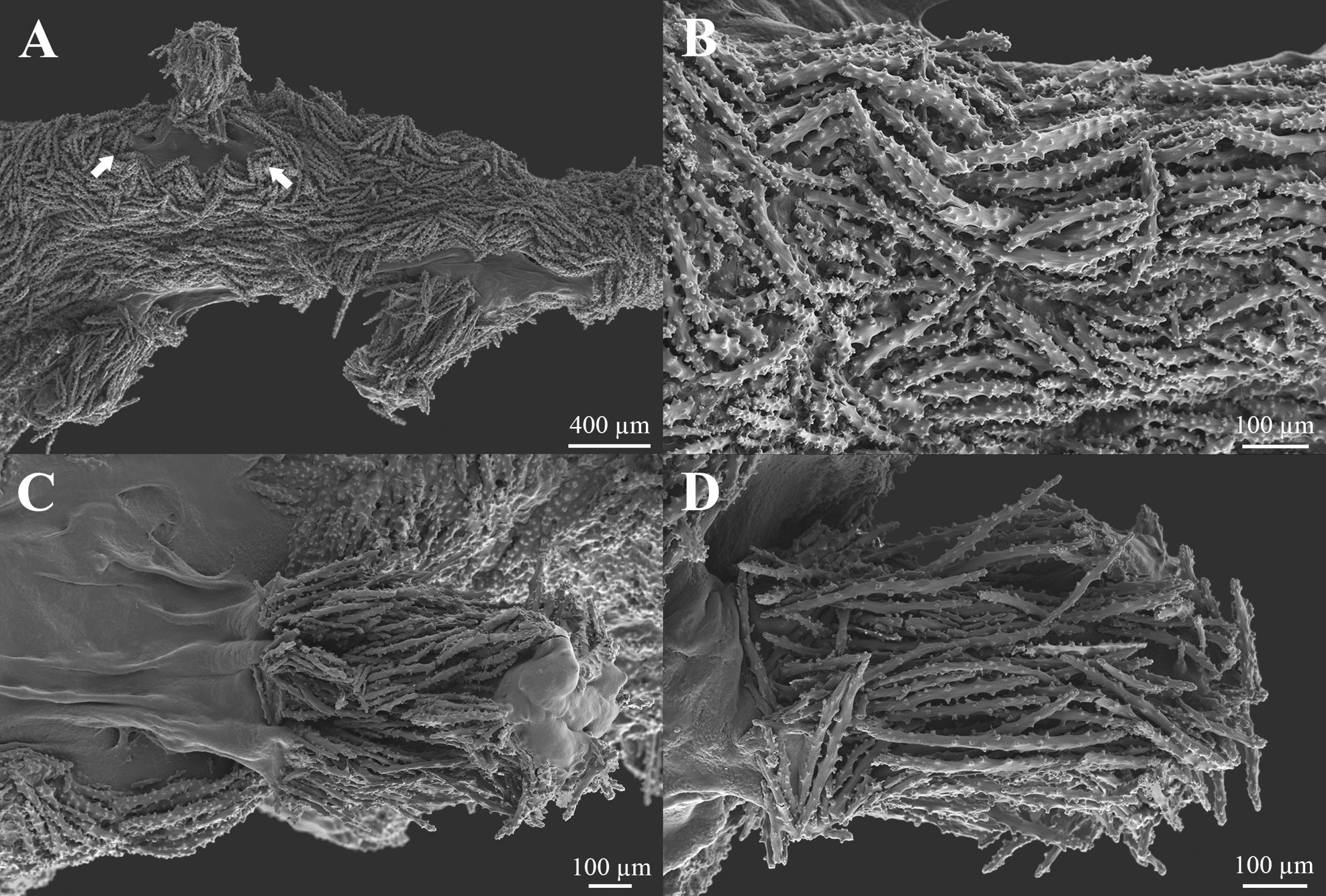
The coral’s sclerites also stood out. The researchers found rods, spindles and radiating forms with different bumps and spines. Their arrangement did not match similar-looking coral families.
These small details helped confirm what the colony’s larger form already suggested. The golden coral belonged to a lineage scientists had not recognized before.
The team first sequenced three genes often used to classify corals. Instead of giving one clear answer, each gene pointed in a different direction.
One gene suggested the coral belonged with Incrustatidae. Another pointed toward Eunicellidae. A third gave a weaker and less certain placement near other gorgonian groups.
That level of disagreement was unusual. It also showed why relying on one genetic marker can mislead scientists.
To solve the puzzle, the researchers turned to phylogenomics. This method analyzes hundreds of genes at once, giving a broader view of evolutionary history.
That larger analysis showed that the coral is closest to Eunicellidae. Yet it remains genetically and anatomically distinct enough to stand as its own family.
The discovery required years of fieldwork, lab study and collaboration. Samples from 2019 gave researchers their first look at the coral garden. Additional specimens collected in 2023 helped complete the picture.
“In 2023 we collected more samples and thanks to the exhaustive molecular analyses made by my colleagues, Cathy McFadden, Catalina Murillo and Andrea Quattrini, we were able to determine the taxonomic placement of the stunning species, in one of the most enigmatic sites,” Breedy said.
The researchers preserved samples in ethanol and at very low temperatures for molecular work. Larger pieces were dried or fixed for detailed study.
They also deposited reference specimens at the Museo de Zoología at the Universidad de Costa Rica. These specimens will help future scientists compare new findings with the original description.
Deep-sea coral gardens create structure in places with little shelter. Their branches can provide habitat for many animals, including brittle stars and other seafloor life.
These communities may qualify as vulnerable marine ecosystems. That matters because deep-sea habitats can recover slowly after disturbance.
The deep ocean begins below 200 meters and covers much of Earth’s surface. Yet scientists still know relatively little about many deep regions.
Every expedition can uncover animals that reshape the map of life. In this case, one coral garden revealed an entire new family.
The finding reminds you that biodiversity does not only live in rainforests or reefs near the shore. It also grows quietly in darkness, under pressure, far beyond human sight.
This research can help scientists better understand deep-sea biodiversity and evolution. By identifying Laurinque elenya as a new family, the study adds an important branch to the octocoral family tree. That clearer classification can guide future research on related corals and deep-sea ecosystems.
The discovery also supports conservation planning. Coral gardens create habitat for many species, and some may represent vulnerable marine ecosystems. Knowing what lives on Costa Rican seamounts can help decision-makers protect areas before damage occurs.
The study also shows why advanced tools matter. Morphology, DNA barcoding and phylogenomics each contributed different clues. Together, they helped researchers avoid a mistaken classification and reveal a hidden lineage.
For humanity, the deeper value is perspective. The ocean still holds forms of life that scientists have never named. Protecting these places means protecting evolutionary history, ecological complexity and beauty that most people will never see in person.
These resources explore how scientists classify octocorals, document deep-sea biodiversity, study coral anatomy and genetics, and identify vulnerable habitats that may require protection.
A global database of trait information for octocoral species
This global resource compiles ecological, biological and morphological traits across octocoral species, giving researchers a broader framework for comparing newly discovered corals and understanding their diversity from shallow waters to the deep sea. (Scientific Data, 2025)
The molecular basis of octocoral calcification revealed by comparative genomics and transcriptomics
Researchers used genomic approaches, including data from deep-sea octocorals, to investigate the molecular processes involved in producing octocoral skeletal structures. The work illustrates how genome-scale tools are expanding scientists’ understanding of octocoral biology beyond traditional morphology. (Communications Biology, 2025)
The deepest record of the octocoral Acanthogorgia from the Red Sea
Morphological and genetic analyses identified an Acanthogorgia colony collected at 1,453 meters, providing new information about how octocorals are identified and distributed in poorly explored deep-water habitats. (Frontiers in Marine Science, 2024)
Diversity of Deep-Sea Echinoderms From Costa Rica
This assessment documents Costa Rica’s rich deep-sea echinoderm fauna, including especially diverse brittle stars, providing important regional context for the animal communities associated with deep Pacific habitats where coral gardens occur. (Frontiers in Marine Science, 2022)
Implementing area-based management of vulnerable marine ecosystems
This research examines how vulnerable marine ecosystems can be identified and managed spatially, addressing habitats containing fragile, easily disturbed and slow-recovering organisms such as deep-sea corals. (Ocean & Coastal Management, 2026)
Research findings are available online in the journal ZooKeys.
The original story “Golden deep-sea coral off Costa Rica adds a new branch to the tree of life” is published in The Brighter Side of News.
Like these kind of feel good stories? Get The Brighter Side of News’ newsletter.
The post Golden deep-sea coral off Costa Rica adds a new branch to the tree of life appeared first on The Brighter Side of News.


Leave a comment
You must be logged in to post a comment.