The 14% figure refers to median lifespan in a small study of aged female mice. This version also distinguishes younger molecular profiles from proven rejuvenation and includes the unresolved safety questions. Nature Aging
Old skin cells can acquire more youthful molecular features without surrendering their specialized identity. A study of human cells and aged mice has identified an RNA-processing factor that may help separate those two processes, offering a possible alternative to more sweeping cellular reprogramming.
The research, published in Nature Aging, centers on SRSF1, a protein involved in processing genetic messages. Regulated expression improved several aging-related measurements in cultured fibroblasts and increased median lifespan in a small mouse experiment. The work does not establish an anti-aging treatment for people.
George Church’s group at Harvard’s Wyss Institute and Harvard Medical School collaborated with Antonio del Sol’s computational biology group at CIC bioGUNE-BRTA in Spain. Alexandru Plesa and Sascha Jung shared first authorship.

The challenge builds on a discovery dating to 2006. Shinya Yamanaka and colleagues showed that four factors could reprogram mature mouse cells into pluripotent stem cells. Later experiments found that shorter exposure could improve some aging-related features without completing that transformation.
However, reprogramming can disrupt the identity that allows a cell to perform its normal job. Certain approaches also risk abnormal growth or tumors. A useful rejuvenation strategy must therefore do more than make an aging clock report a younger number.
“In reprogramming, there is a fundamental tradeoff between rejuvenation and cell identity; achieving one without losing the other requires walking a fine line,” Plesa said. The team sought regulators outside the conventional pluripotency program that could improve aging-related states while retaining specialized functions.
The researchers first needed a way to compare candidate interventions. They developed a machine-learning predictor using gene-expression profiles from human skin fibroblasts spanning ages one to 96. Unlike DNA-methylation clocks, which examine chemical marks on DNA, this model reads patterns in RNA production.
The final predictor used 292 genes across seven biological processes, including protein production, cellular quality control and cell organization. Training involved 306 samples, followed by evaluation on 105 held-out samples. Its mean absolute error was approximately 9.6 years, illustrating both its predictive value and its limitations.
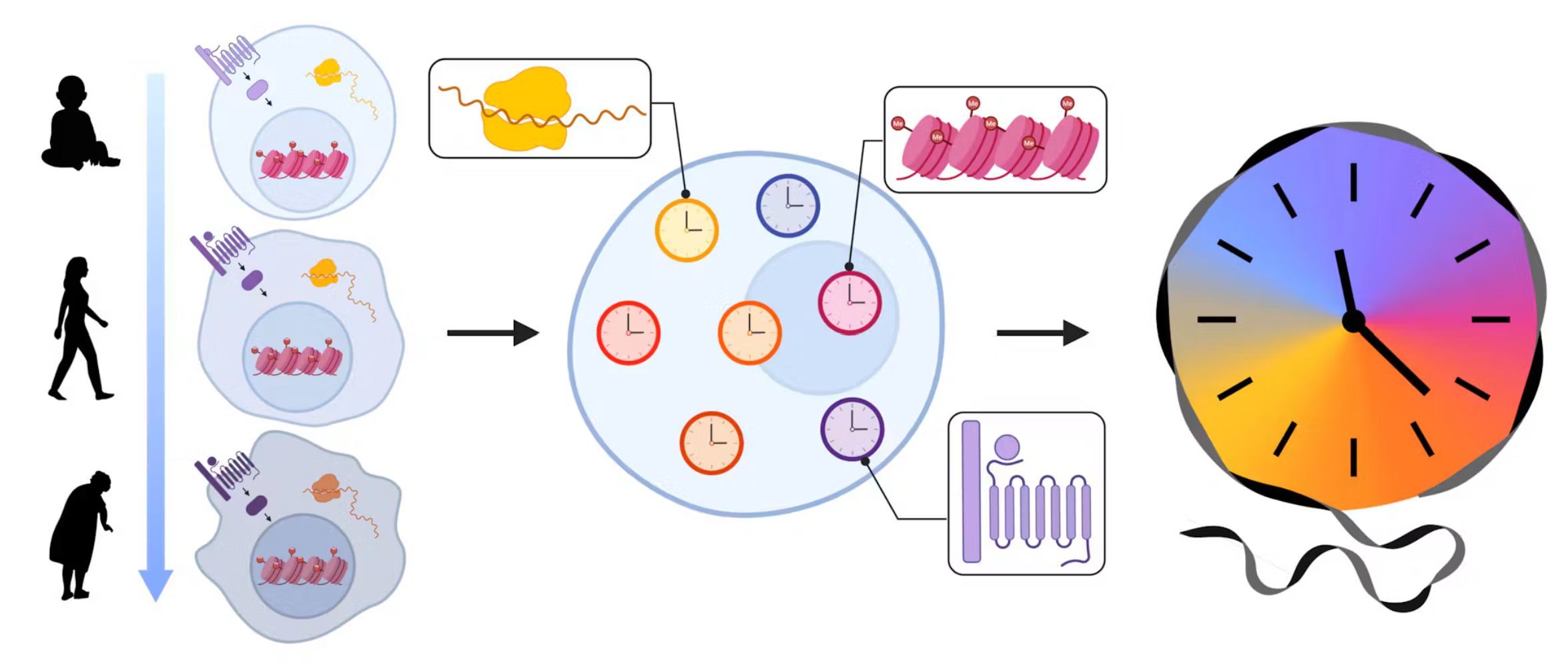
The team then checked whether the predictor responded to interventions already associated with aging-related changes. It detected younger expression profiles during reprogramming and after rapamycin exposure, while identifying older-looking profiles under certain stresses. These tests supported its use as a screening tool, rather than a definitive measurement of biological age.
The initial screen tested 89 prioritized genes alongside controls in fibroblasts from donors aged 55, 65 and 79. Researchers increased each gene’s expression and examined the resulting molecular and functional changes. SRSF1 emerged as the most consistent candidate across those measurements.
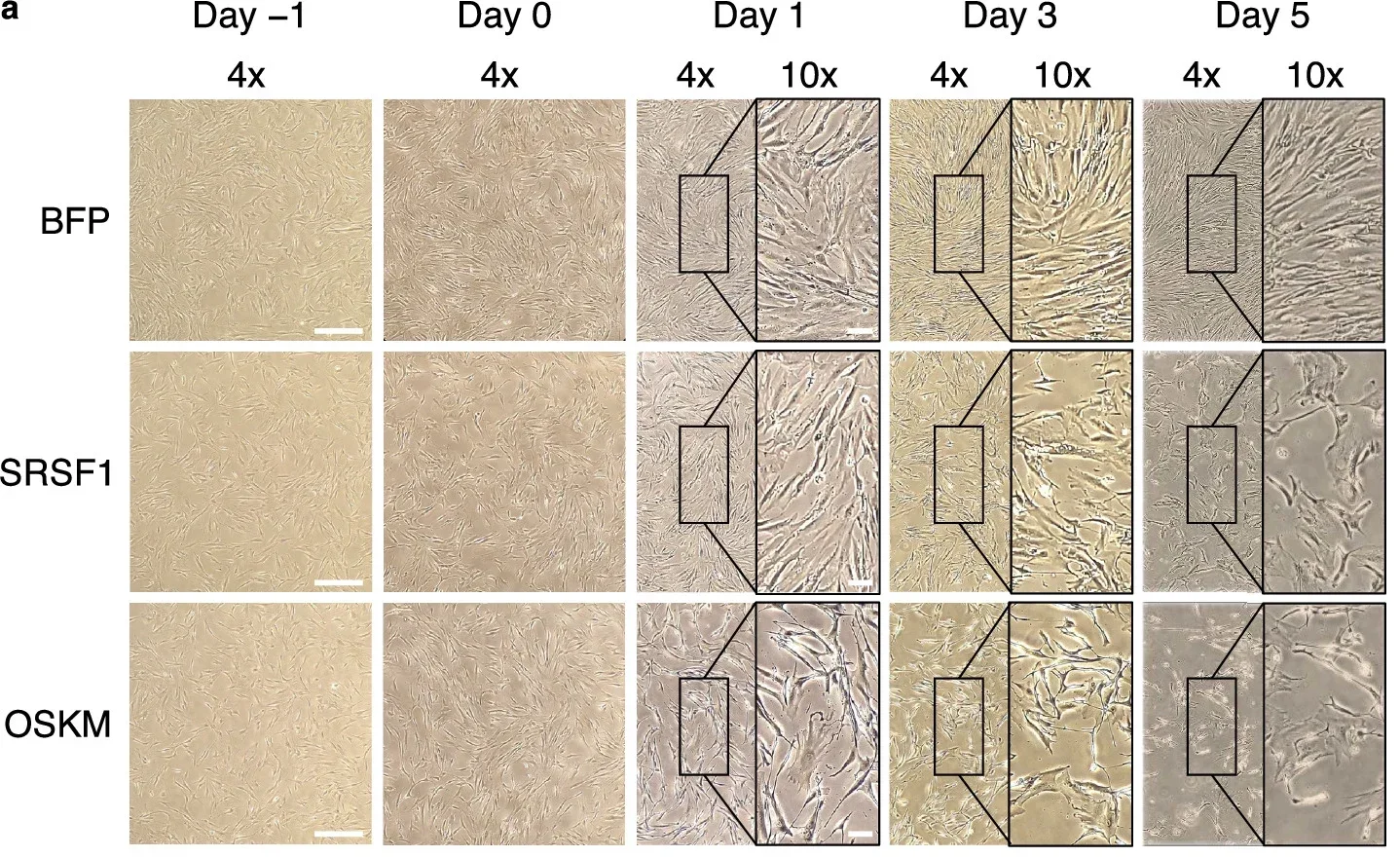
Further testing across six aged donor lines supported SRSF1’s ability to shift gene-expression patterns toward younger states. The treated cells largely retained fibroblast markers and their characteristic spindle-shaped appearance. They also avoided the coordinated activation of pluripotency genes seen with the Yamanaka factors under the tested conditions.
Functional assays added evidence beyond the predictor. Senescence-associated enzyme activity fell by approximately 70% across five donor lines, and inflammatory signaling decreased in another assay. These measurements indicate changes in aging-associated features; they do not mean that 70% of aging cells disappeared.
SRSF1 also increased expression of DNA-repair pathways, although the measured reduction in a DNA-damage marker did not reach statistical significance. Treated fibroblasts closed gaps faster in a laboratory scratch assay. That test measures cell behavior in culture, rather than healing of a human wound.
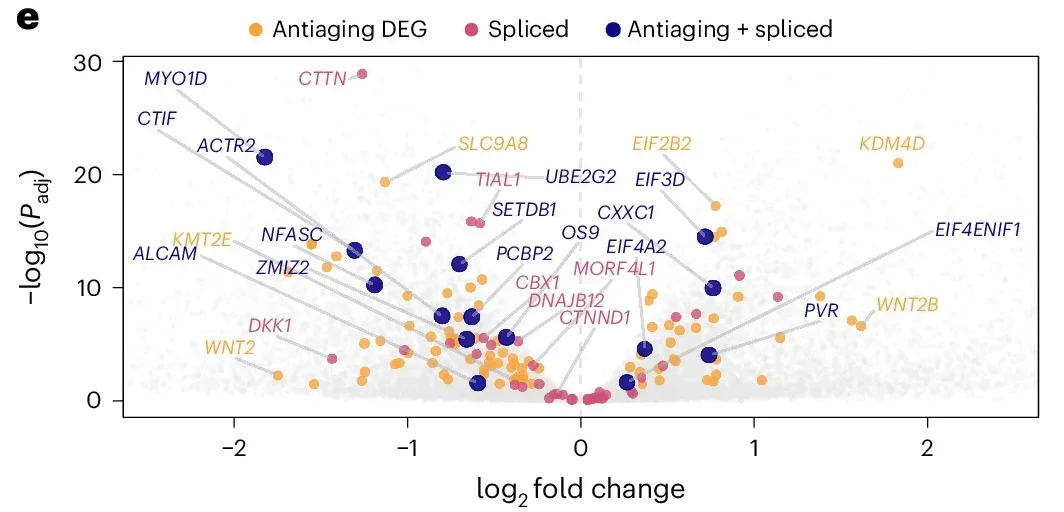
The molecular effects also depended on timing. Brief exposure did not produce sustained younger scores six or 12 days after withdrawal. A longer five-day induction preserved a measurable effect two days after withdrawal, leaving the longer-term durability unresolved.
The researchers next delivered the mouse Srsf1 gene using an adeno-associated viral vector that primarily targeted the liver. The lifespan experiment included 10 treated female mice and nine viral-control animals. Gene delivery occurred at 561 days of age, with regulated induction beginning later, at 606 days.
Median lifespan reached 886 days in the SRSF1 group, compared with 778 days in controls. That difference of 108 days represents approximately 14% of the control group’s total median lifespan. It does not predict how many years a comparable intervention might add in humans.
A model combining repeated frailty measurements with survival estimated approximately 44% slower accumulation of frailty. That figure describes the measured frailty trajectory, rather than a universal reduction in every aging process. Individual frailty components did not remain statistically significant after correction for multiple comparisons.
One intervention-focused DNA-methylation clock also showed reduced liver age acceleration. Other clocks did not provide equally strong confirmation, and molecular responses varied across organs. The findings therefore support physiological benefits in this experiment without demonstrating uniform rejuvenation throughout the body.
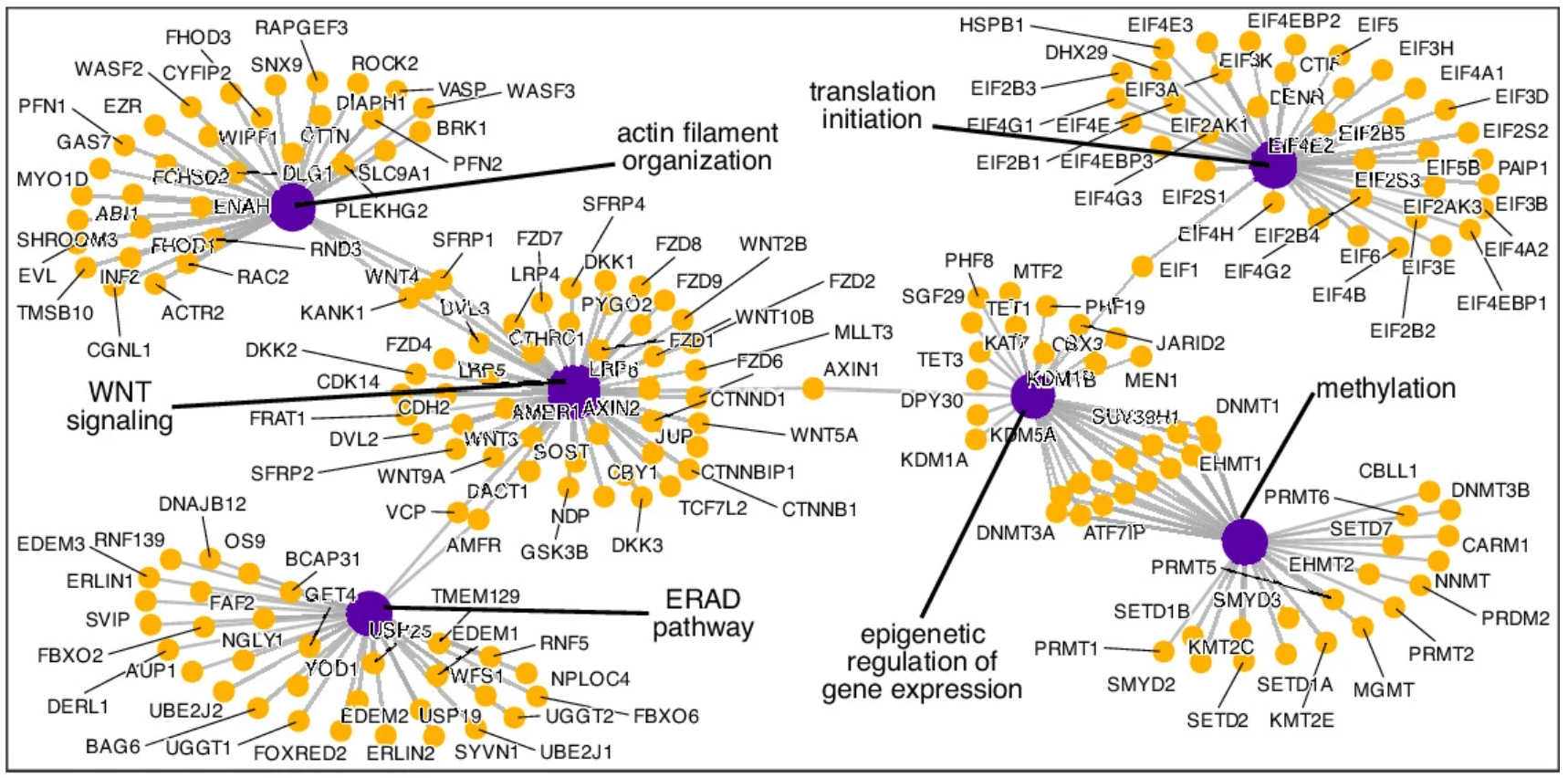
SRSF1 helps determine how RNA segments are assembled into mature messages, potentially changing which protein versions cells produce. The team observed widespread changes in RNA splicing, but the precise chain connecting those changes to longer survival remains unclear. Liver-to-organ communication is a hypothesis requiring further investigation.
More expression did not automatically produce better outcomes. A separate system producing much higher, continuous SRSF1 levels failed to improve wound repair or muscle regeneration. This result suggests that the timing and amount of expression matter, rather than SRSF1 acting as a simple regeneration switch.
Safety also needs direct testing. Earlier research links SRSF1 overexpression to tumor-promoting effects in particular experimental settings. Preserving fibroblast identity does not eliminate that concern, and the absence of overt toxicity during a short observation period cannot establish long-term safety.
The lifespan result needs replication in larger groups, including males, alongside better tracking of expression over time. Researchers must also establish delivery, dosing and long-term effects before considering human treatment. Several authors hold related patent interests; Plesa and Church also disclosed equity in RegulaBio, a company developing age-related therapeutics.
The authors noted that control survival fell within some published ranges for the strain, but below reports under optimal husbandry. That makes the result informative within this experiment while leaving its reproducibility across colonies and conditions uncertain. Independent replication would help establish how broadly the benefit applies.
Beyond SRSF1, the screening platform offers a way to prioritize other candidate regulators. Pairing molecular age predictions with functional tests could help researchers distinguish useful changes from shifts that merely improve an aging score. Larger screens could then investigate additional targets.
These resources explain aging predictors, partial reprogramming and important considerations for interpreting the new findings.
Predicting age from the transcriptome of human dermal fibroblasts: Describes earlier work using gene-expression patterns to estimate age in human skin cells. (Genome Biology, 2018)
In Vivo Amelioration of Age-Associated Hallmarks by Partial Reprogramming: Demonstrates partial reprogramming effects, including lifespan extension in a mouse model of premature aging. (Cell, 2016)
Multi-omic rejuvenation of human cells by maturation phase transient reprogramming: Examines molecular and functional changes after temporary reprogramming of cultured human fibroblasts. (eLife, 2022)
Splicing Factor SRSF1 Promotes Pancreatitis and KRASG12D-Mediated Pancreatic Cancer: Shows why SRSF1’s effects depend on biological context and why cancer safety requires specific investigation. (Cancer Discovery, 2023)
The impact of short-lived controls on the interpretation of lifespan experiments and progress in geroscience – Through the lens of the “900-day rule”: Discusses how control survival, experimental conditions and replication influence confidence in mouse longevity findings. (Ageing Research Reviews, 2024)
Research findings are available online in the journal Nature Aging.
The original story “Harvard study finds a single gene extended median lifespan by 14%” is published in The Brighter Side of News.
Like these kind of feel good stories? Get The Brighter Side of News’ newsletter.
The post Harvard study finds a single gene extended median lifespan by 14% appeared first on The Brighter Side of News.





Leave a comment
You must be logged in to post a comment.