For years, one of the simplest explanations for human intelligence was also one of the biggest: the human brain has an enormous number of neurons. It also has an even more enormous web of connections linking them together. But a new study argues that part of the story may sit inside the cells themselves.
The work points to individual human cortical neurons as far more sophisticated computing units than those in rats. This finding could help explain why the human brain can support language, mathematics, imagination, and invention while still being built from the same basic kind of nervous tissue found across mammals.
“People often think of a neuron as a simple switch that either turns on or off,” said Prof. Idan Segev of the Hebrew University of Jerusalem. “What we show is that a single human neuron is itself an extraordinarily sophisticated computing device.”
The study was led by Segev and Prof. Mickey London at the Edmond and Lily Safra Center for Brain Sciences at Hebrew University, along with PhD students Ido Aizenbud and Daniela Yoeli. They worked in collaboration with Prof. Chris de Kock of Vrije Universiteit Amsterdam.
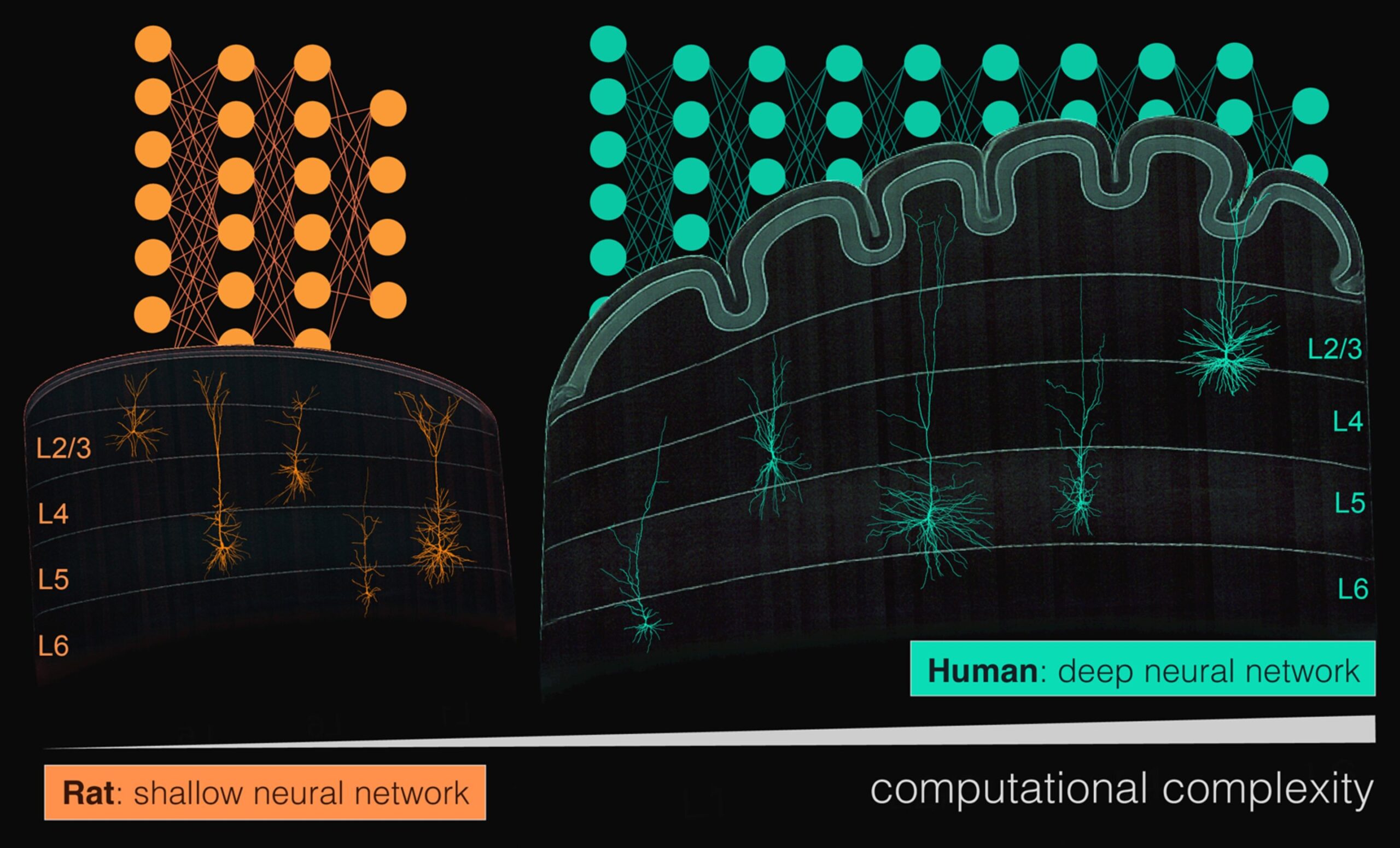
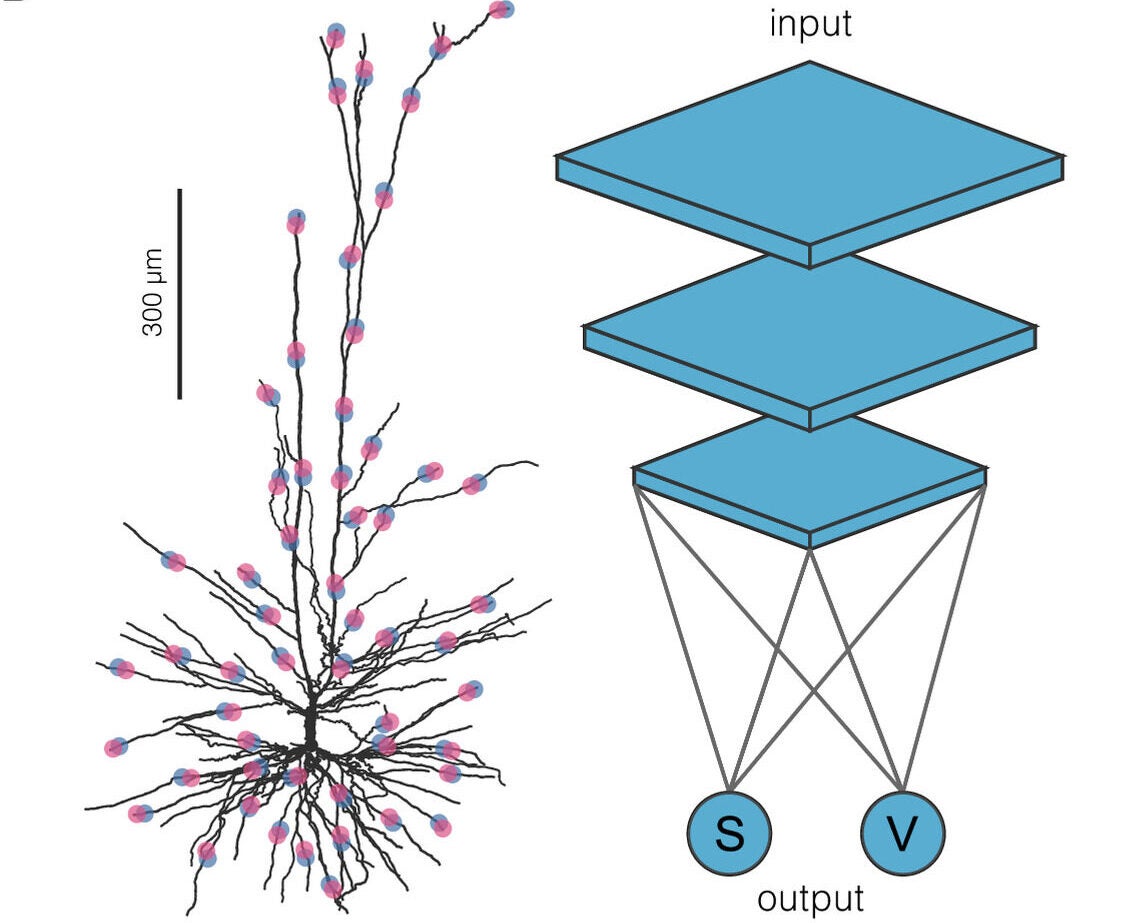
To test how much a single neuron can do, the team used a modern machine-learning idea. As part of the process, they built detailed biophysical models of cortical pyramidal neurons from humans and rats. Then they asked a fixed artificial neural network to learn each cell’s input-output behavior.
The logic was simple. If an artificial network could easily mimic a neuron, that neuron would count as less computationally complex. On the other hand, if the artificial network struggled, missing spikes or predicting them at the wrong times, the biological cell would count as more complex.
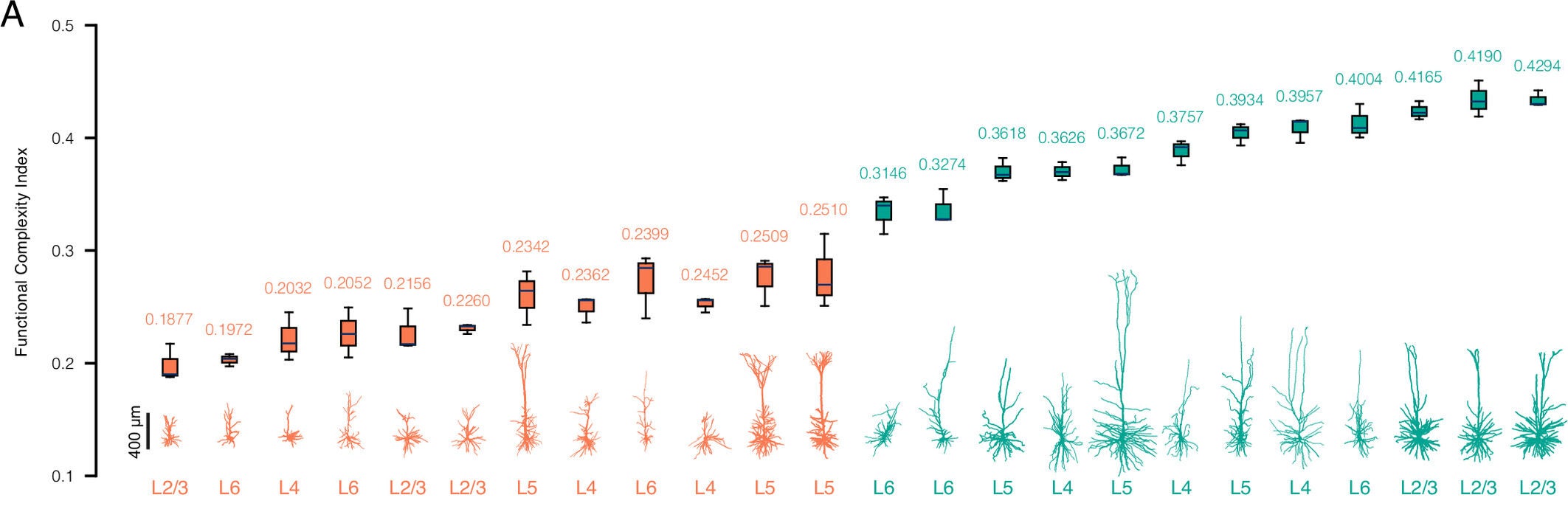
From that, the researchers created what they call a Functional Complexity Index, or FCI. The measure rises as a neuron becomes harder for the artificial system to copy.
Across 24 modeled pyramidal neurons, 12 from humans and 12 from rats, the pattern was clear. Human cortical neurons scored much higher on average than rat neurons. The mean FCI was 0.3803 in human cells and 0.2244 in rat cells. The analysis found this difference to be highly significant.
The result does not mean one human neuron “thinks” on its own, or replaces a network. What it does suggest is that the building blocks of the human cortex are doing more processing before signals ever spread across larger circuits.
A big reason appears to be shape.
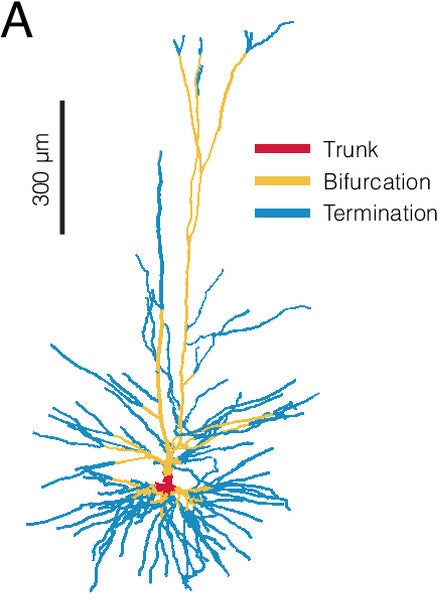
Human cortical pyramidal neurons are known to have larger dendritic trees, with longer branches and more elaborate arborization than those in rodents. Dendrites are the branching structures that receive incoming signals. In the new analysis, those sprawling trees were strongly linked to greater functional complexity.
Among 58 measured morphological features, the strongest single predictor of complexity was total dendritic area. The strongest two-feature combination paired total dendritic area with the longest bifurcation branch. In plain terms, the more extensive and strategically branched the dendritic tree, the more capable the neuron appeared to be.
That matters because dendrites are not just passive wires. Their geometry can help split the tree into semi-independent regions, letting different parts of the same neuron process inputs somewhat separately. As a result, the authors argue that this kind of compartmentalized handling of information helps raise the cell’s computational capacity.
The number of branches alone did not explain much. What mattered more was how size and branching worked together.
Morphology was not the whole story. The study also points to differences in synaptic behavior, especially involving NMDA receptors, which are known to shape how neurons combine incoming excitatory signals.
The models assumed that human synapses have stronger NMDA-mediated conductance and steeper voltage dependence than rat synapses. This is in line with earlier evidence cited by the authors, including larger excitatory postsynaptic densities in the human cortex. In those simulations, human-type synapses pushed neurons toward more nonlinear behavior and higher functional complexity.
When the researchers activated increasing numbers of synapses on one branch of a modeled human layer 2/3 neuron, the human synapse type showed a sharp nonlinear jump in response at around 35 simultaneously activated synapses. Meanwhile, rat and hybrid synapse types were much less dramatic under the same conditions.
That kind of nonlinear response matters because it lets a neuron do more than simply add up inputs. It can behave more like a layered processor, combining signals in richer ways depending on where and when they arrive.
In fact, the paper argues that a single human cortical neuron can have computational capabilities equivalent to those of a deep neural network.
The study challenges the long-standing idea that intelligence arises mainly from scale. This idea says intelligence comes from packing more neurons into a larger cortex and wiring them together in more elaborate ways.
Those factors still matter, and the paper does not claim otherwise. But the findings suggest that the internal sophistication of each neuron may also have helped shape human cognition.
The layer-by-layer pattern was also striking. In rats, layer 5 pyramidal neurons were more complex than layer 2/3 neurons. In humans, the reverse was true: layer 2/3 neurons were significantly more complex than neurons in layers 4 and 5. The authors note that layer 2/3 is expanded in the human cortex and contains several distinct cell types.
That raises an evolutionary possibility. If human cortical circuits gained not just more cells, but more powerful cells, especially in layers involved in cortical communication, then some of the brain’s distinctive capacities may rest on a deeper kind of redesign. This would go beyond what raw size alone would suggest.
The framework is not without limits. The models left out active dendritic conductances in human neurons because the authors say the experimental constraints are still too limited. The Functional Complexity Index also depends on the architecture of the artificial network used to test the neuron, so the measure is not a timeless constant but a structured comparison. Even so, the authors report that the ranking of neuron complexity stayed robust across different network depths and input protocols.
The study offers a new way to think about what gives the human brain its edge. Instead of treating neurons mainly as simple switches in a giant circuit, it suggests that at least some human cortical cells are already deep processors on their own.
That could matter in two fields at once. In neuroscience, the work offers a framework for linking the physical structure of neurons to their information-processing ability. In artificial intelligence, it hints that future systems might gain power not just by adding more artificial units, but by making each unit less simplistic and more biologically realistic.
The findings also sharpen a broader question that remains unanswered. The question is whether still-uncertain features of human neurons, including active dendritic conductances and other cell-specific properties, make the gap even larger than this study could measure.
Research findings are available online in the journal PNAS.
The original story “Human brain cells may be far more powerful computers than scientists thought” is published in The Brighter Side of News.
Like these kind of feel good stories? Get The Brighter Side of News’ newsletter.
The post Human brain cells may be far more powerful computers than scientists thought appeared first on The Brighter Side of News.

