Building material samples from the University of Delaware spent six months bolted to the outside of the International Space Station, exposed to vacuum, radiation and constant temperature swings. When they came back, some were stronger than matching samples kept on Earth.
That result does not mean moon bases are around the corner. But it does offer an encouraging sign for one of the hardest practical problems in space exploration: how to build roads, landing pads, shelters and shields without hauling huge amounts of construction material from Earth.
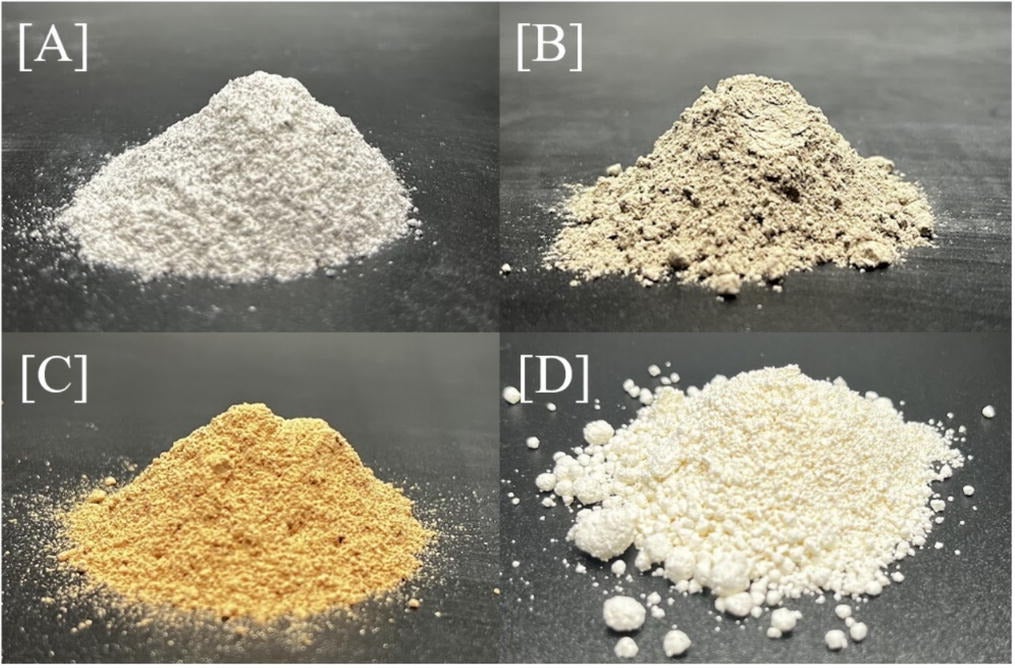
The team is working with geopolymers, a cement-like material that can be made by chemically binding clay-rich powders into a solid. In this case, the powders were simulated lunar and Martian regolith, stand-ins for the dusty surface material found on those worlds. The results appear in Advances in Space Research, with related processing work reported in Acta Astronautica and a special issue of the Journal of Rheology.
“Regolith is essentially a clay-like silicate material,” said Norman Wagner, the Unidel Robert L. Pigford Chair in Chemical Engineering at the University of Delaware. “It is one of the most abundant materials on both Earth and the moon, which makes it interesting for construction.”
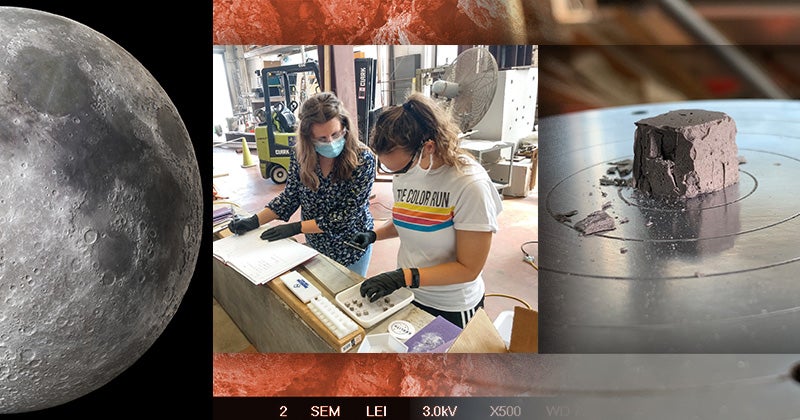
For future lunar missions, that abundance matters. There are no supply depots on the moon, and launching construction material from Earth would be extremely expensive. The appeal of geopolymers is that they could be made largely from local material, with relatively little energy input, because the process does not require melting ingredients at high temperature.
To test whether those materials can withstand space exposure, Wagner’s group sent thin geopolymer plates on NASA’s MISSE-20 mission. The samples were mounted outside the space station for 201 days, during which they traveled more than 82 million miles and completed 3,216 orbits of Earth.
The experiment included four formulations: two made from lunar simulants called LHS-1 and BP-1, one made from a Martian simulant called MGS-1C, and one made from metakaolin, a high-purity aluminosilicate used as a comparison material. During flight, the samples saw temperatures from minus 11.75 to 35 degrees Celsius, with swings of about 15 degrees during each orbit. They also absorbed a cumulative ultraviolet dose of 15.0 kilojoules per square centimeter.
Back on Earth, the researchers compared the flown samples with control samples stored in blackout bags for the same period, as well as samples tested shortly after they were made.
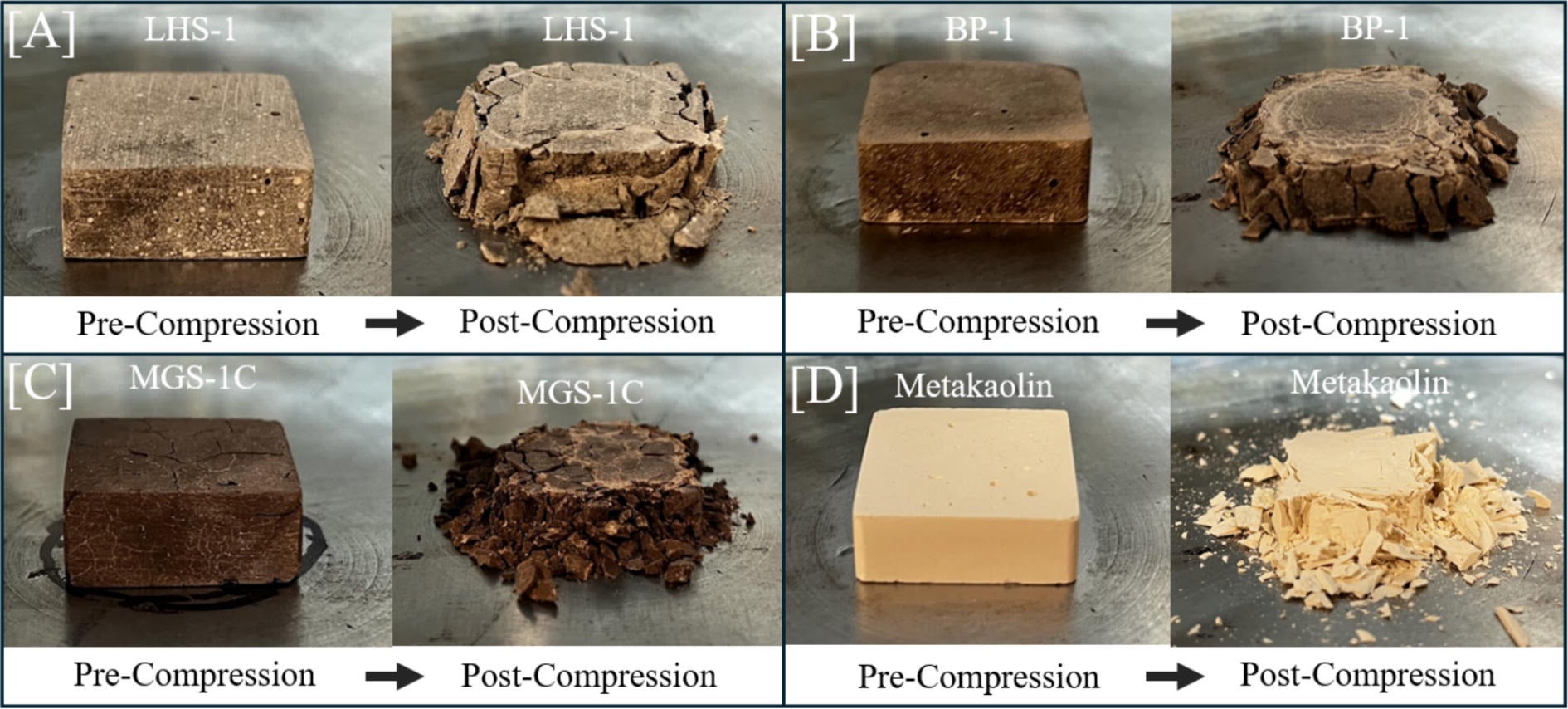
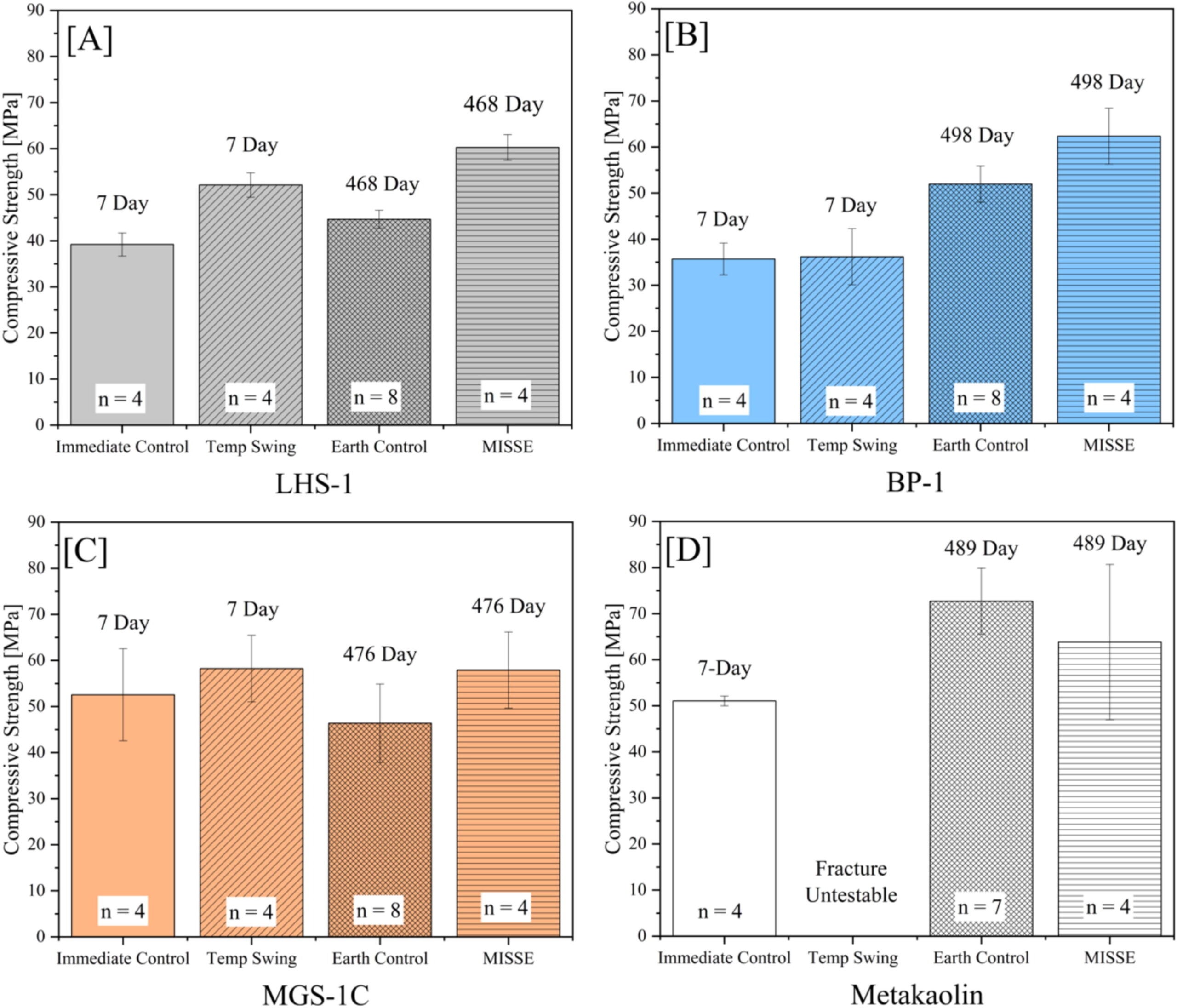
The main finding was straightforward. The lunar and Martian regolith geopolymers held up. LHS-1, BP-1 and MGS-1C samples resisted obvious degradation and maintained high compressive strength after their months in low Earth orbit.
In two cases, the flown samples performed better than their Earth-bound twins. LHS-1 samples exposed through MISSE reached an average compressive strength of 60.3 megapascals, compared with 44.7 megapascals for the Earth controls, a difference the team reported as statistically significant. BP-1 samples also showed a significant increase compared with controls. MGS-1C samples trended higher as well, though that difference was not statistically significant.
The researchers concluded that the biggest boost in strength was not caused by space itself, but by pre-flight bakeout testing, which exposed samples to elevated temperature and low pressure before launch. For LHS-1, strength also rose in laboratory samples that went through a similar temperature-swing treatment, pointing to extra curing as the likely reason. The material appears to keep reacting and strengthening over time.
That distinction matters. It suggests the geopolymers did not simply survive orbit, they also tolerated the preparation steps needed to get them there.
Not every formula passed so cleanly.
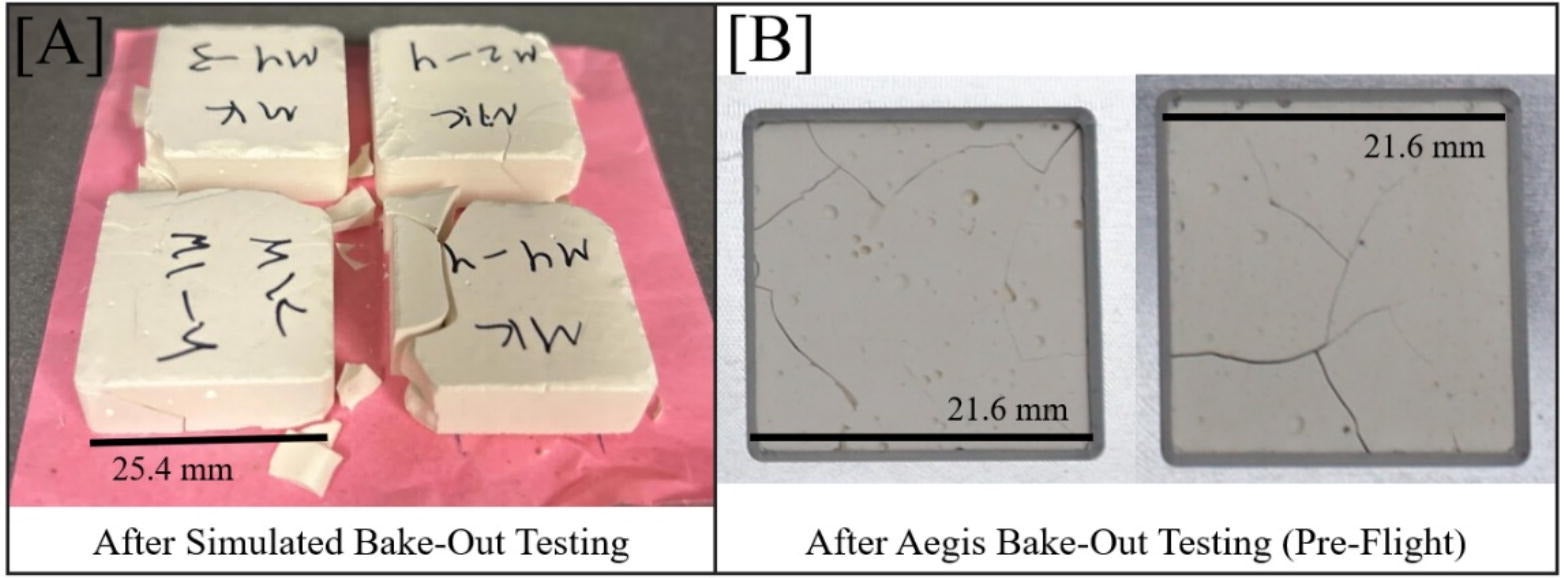
The metakaolin geopolymer cracked during bakeout testing before flight. Some samples developed large, sample-spanning fractures, and those cracks were already visible in the earliest station images. During the mission, the exposed surfaces also darkened noticeably.
The study found that this cracking was linked to the combined pressure and temperature change during bakeout, not to the low Earth orbit exposure itself. X-ray diffraction patterns for the flown and Earth-control metakaolin samples looked nearly identical, which suggests no major chemical change in the binder during flight. Their densities were also essentially unchanged. The authors said possible explanations include the expansion of water trapped in micropores or thermal mismatch between different parts of the material.
By contrast, the LHS-1, BP-1 and MGS-1C regolith-based samples showed no comparable cracking after space exposure. X-ray tomography also found no clear internal differences between the flown and Earth-control versions of those three materials.
That is the more important result for lunar construction, because those are the compositions meant to mimic off-Earth soils.
The work does more than show that a space-tested material can survive. It also points to a way of making construction on the moon more practical.
The researchers note that water used in geopolymer synthesis is not chemically locked into the final binder structure and may be recoverable after curing. That gives geopolymers an advantage over ordinary Portland cement, which permanently ties water into its reaction products. On the moon, where every kilogram matters, that could make a real difference.
The team also looked at what it might take to scale this up. In one example, they estimated the mass needed to make one cubic meter of LHS-1 geopolymer concrete with a 75 percent aggregate volume fraction. Under those assumptions, the lift mass from Earth would be 60.7 kilograms per cubic meter, mostly sodium hydroxide and silica, while the regolith, aggregate and water would be sourced locally. A 40-meter landing pad 1.2 centimeters thick would require 15.0 cubic meters of material.
The stresses expected on a vertical takeoff, vertical landing pad are far below the strengths measured in these samples. That does not settle the engineering problem, but it shows the basic material is in the right range.
A second study from the Delaware group tackled another obstacle: lunar dirt is not all the same. The researchers developed a machine learning model that predicts geopolymer strength from the properties of the starting regolith and the way it is processed.
In separate rheology work, they also identified a “critical gel point,” the stage at which the slurry stops behaving like a workable paste and starts becoming a solid structure. Before that point, mixing or shearing did not change final hardening time or strength.
That suggests lunar builders may have some room to mix, pump and shape these materials without ruining them.
The immediate takeaway is that several regolith-based geopolymers can survive an important early proving ground: prolonged exposure outside the International Space Station. That strengthens the case for using local lunar material, rather than Earth-made concrete, in future habitats, radiation shielding, landing pads and other infrastructure.
The study also narrows the next questions. The materials still need testing under more severe lunar conditions, including deeper cold, larger temperature swings, micrometeorite impacts and longer exposure times. Just as important, engineers will need reliable ways to cure these binders on the moon, where vacuum and low temperatures can slow or disrupt strength development.
Still, the result is a practical one. A construction material made mostly from local dust did not fall apart in space, and in some cases came back tougher than before.
Research findings are available online in the journal Advances in Space Research.
The original story “ISS test finds that moon dust could be effective as a lunar building material” is published in The Brighter Side of News.
Like these kind of feel good stories? Get The Brighter Side of News’ newsletter.
The post ISS test finds that moon dust could be effective as a lunar building material appeared first on The Brighter Side of News.

