Long before horses became the engine of empires, they were part of a messy experiment.
That is the picture emerging from new research arguing that horse domestication did not begin with a single breakthrough around 2200 to 2100 BCE, as some recent studies have suggested. Instead, the process may have started much earlier. People across parts of Eurasia managed, milked, rode, and selectively used horses in different ways as early as the fourth millennium BCE.
“Horses were already being used in sophisticated, widespread ways before we could pin down full domestication. That gap reshapes how we understand human history,” said Professor Volker Heyd from the University of Helsinki and co-lead author of the research.
The argument matters because horses did far more than speed up travel. They also altered warfare, reshaped herding economies, and may have helped spread the people and languages that later stretched across much of Europe and Asia.
“The role of horses in major historical developments is almost too vast to measure, hence the saying that the world was conquered on horseback,” Heyd said.
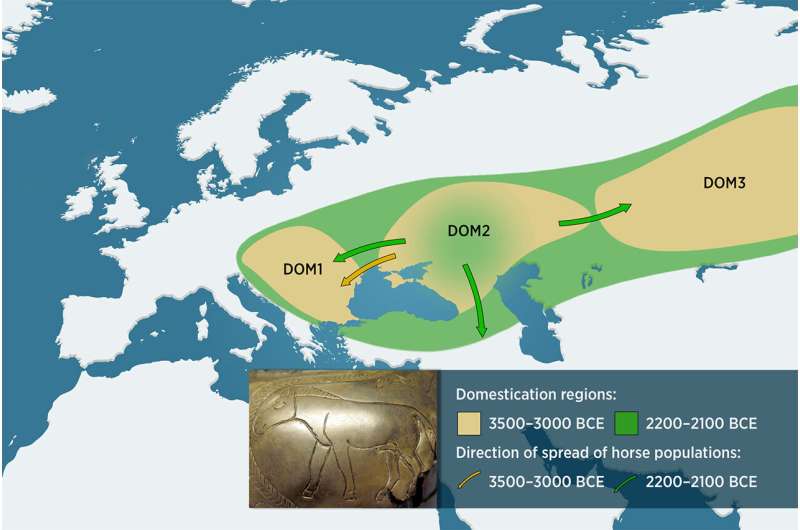
At the center of the debate is timing. Some recent genetic studies have argued that effective domestication only took hold after about 2200 to 2100 BCE. At that time, a lineage known as DOM2 spread quickly across Europe, Anatolia, the Near East, and Central Asia. These horses carried genetic changes linked to fear, anxiety, back endurance, and body form. These traits may have made them calmer and better suited for riding.
That later spread was real and important. But the new analysis says it should not be mistaken for the true beginning of domestication.
Instead, the researchers describe a longer, uneven transition. In their view, horses were already moving away from the status of wild prey well before the DOM2 genetic bottleneck. Across Eurasia, people appear to have been experimenting with horse management in several regional populations. These included DOM1 in Central Asia, DOM2 in the Pontic-Caspian steppes, and a third lineage, labeled DOM3, in parts of Europe and Anatolia.
The authors argue that these horses may have been used with “little regard for their genetic ancestry” during the earlier phases of domestication. That would mean riding and management started before later genetic traits became dominant.
Some of the clearest early evidence comes from Botai in Kazakhstan, dated to roughly 3500 to 3100 BCE. Botai has long stood at the center of horse domestication debates. There, horses made up 99% of the consumed animal remains. The site also has evidence that horses may have been corralled, milked, butchered, and possibly ridden.
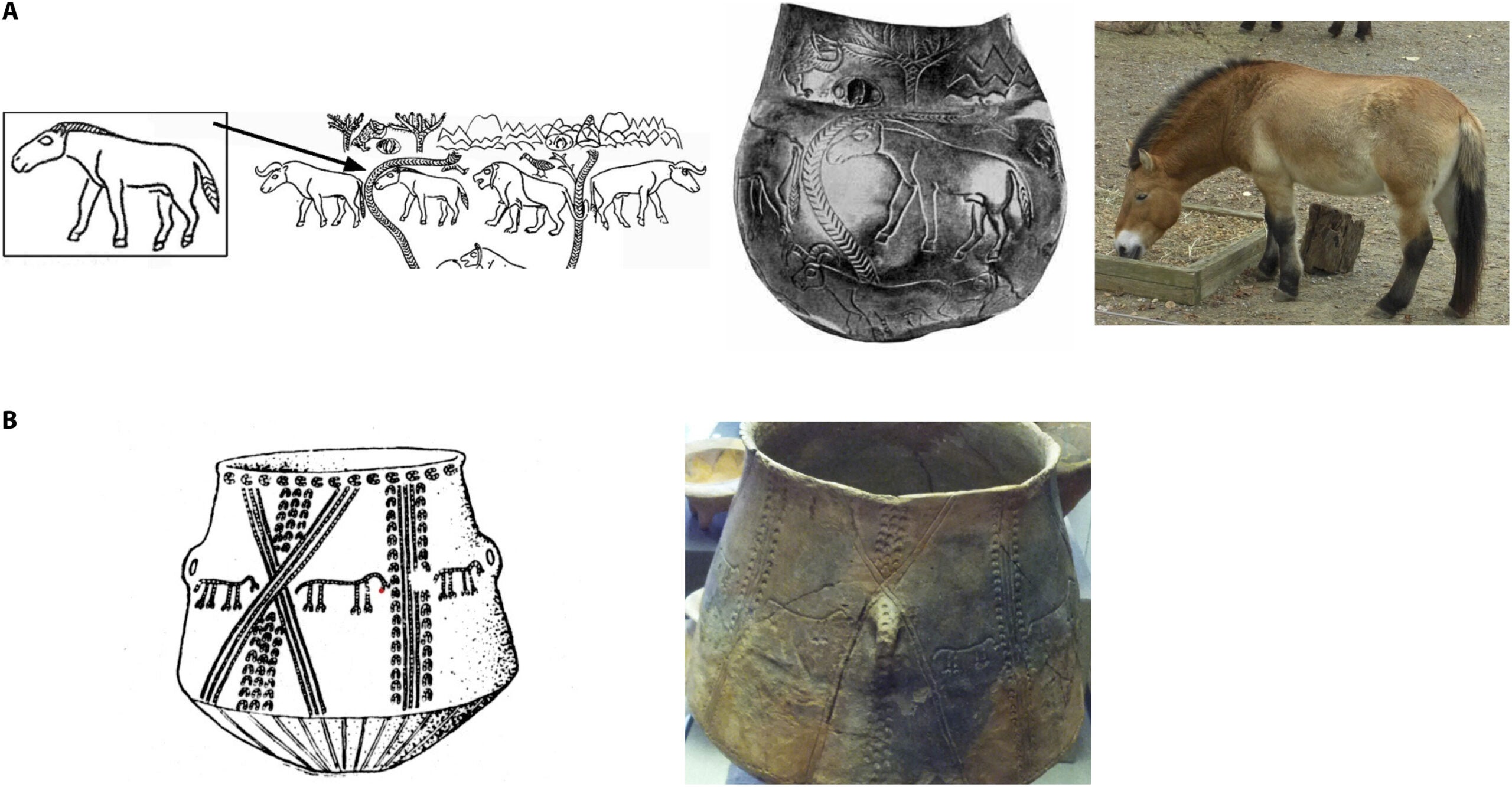
The riding case rests partly on wear marks found on horse premolars. Researchers compared Botai teeth with modern horses that had been ridden using bits, including experimental rope bits, and found similar wear patterns on some Botai specimens. Critics have challenged that interpretation. However, the authors say the dental evidence still fits a picture of early handling and riding.
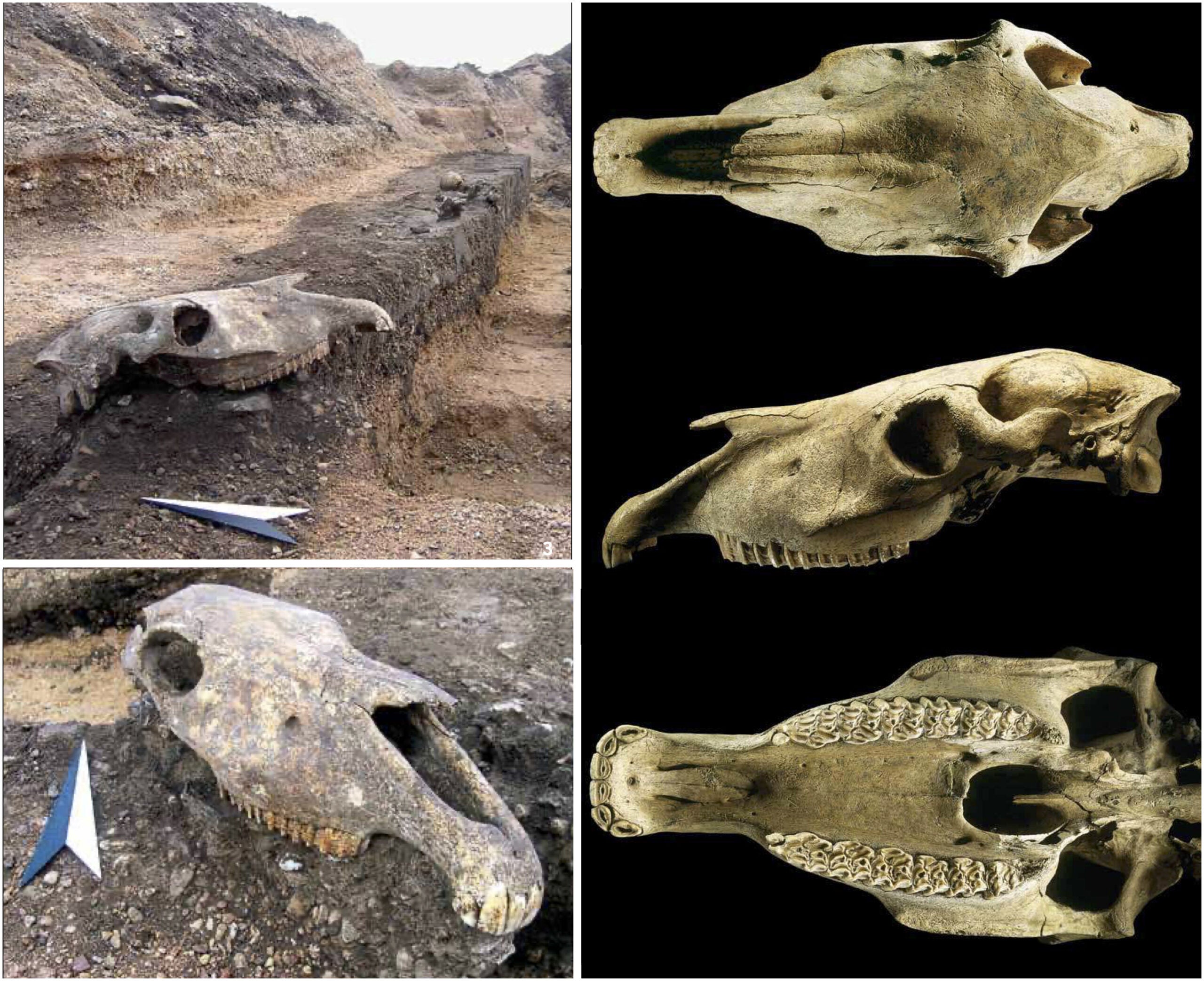
Farther west, the Yamnaya culture of the Pontic-Caspian steppes, dated about 3200 to 2600 BCE, offers a different body of evidence. Horse bones appear in settlements, graves, and kurgan fillings. At Mykhailivka, one major Yamnaya site, horses made up 10% of identified animal bones and 18% of the minimum number of individuals. Horse fats were also detected on 37% of analyzed ceramic sherds from an early Yamnaya level there. This suggests horses may have mattered more in the diet than bones alone indicate.
There is also direct evidence for horse milking. Distinctive horse milk peptides were identified in the dental calculus of two Yamnaya individuals from the lower Don steppes, one dated 3345 to 3096 BCE and the other 2881 to 2633 BCE. The authors argue that even if horse milk use was not widespread, its presence shows that domesticated mares were part of at least some Yamnaya herds.
The case for early riding also extends to human skeletons.
A previous study cited in the new paper examined 217 individuals from 39 sites in Southeast Europe dated between the fifth and second millennia BCE. Using a suite of six skeletal markers tied to habitual riding, researchers identified five Yamnaya individuals dated 3021 to 2501 BCE with four or more riding-related traits, along with two pre-Yamnaya individuals from Hungary and Romania. Fifteen more people, including nine Yamnaya males, showed three such traits.
No single marker proves horseback riding. The argument rests on combinations of traits affecting the thigh, pelvis, femur, and lower spine, along with trauma that fits repeated falls from a moving animal. The researchers estimate that around 20% of the analyzed Yamnaya population may have ridden horses habitually.
That possibility changes the scale of what steppe mobility may have looked like.
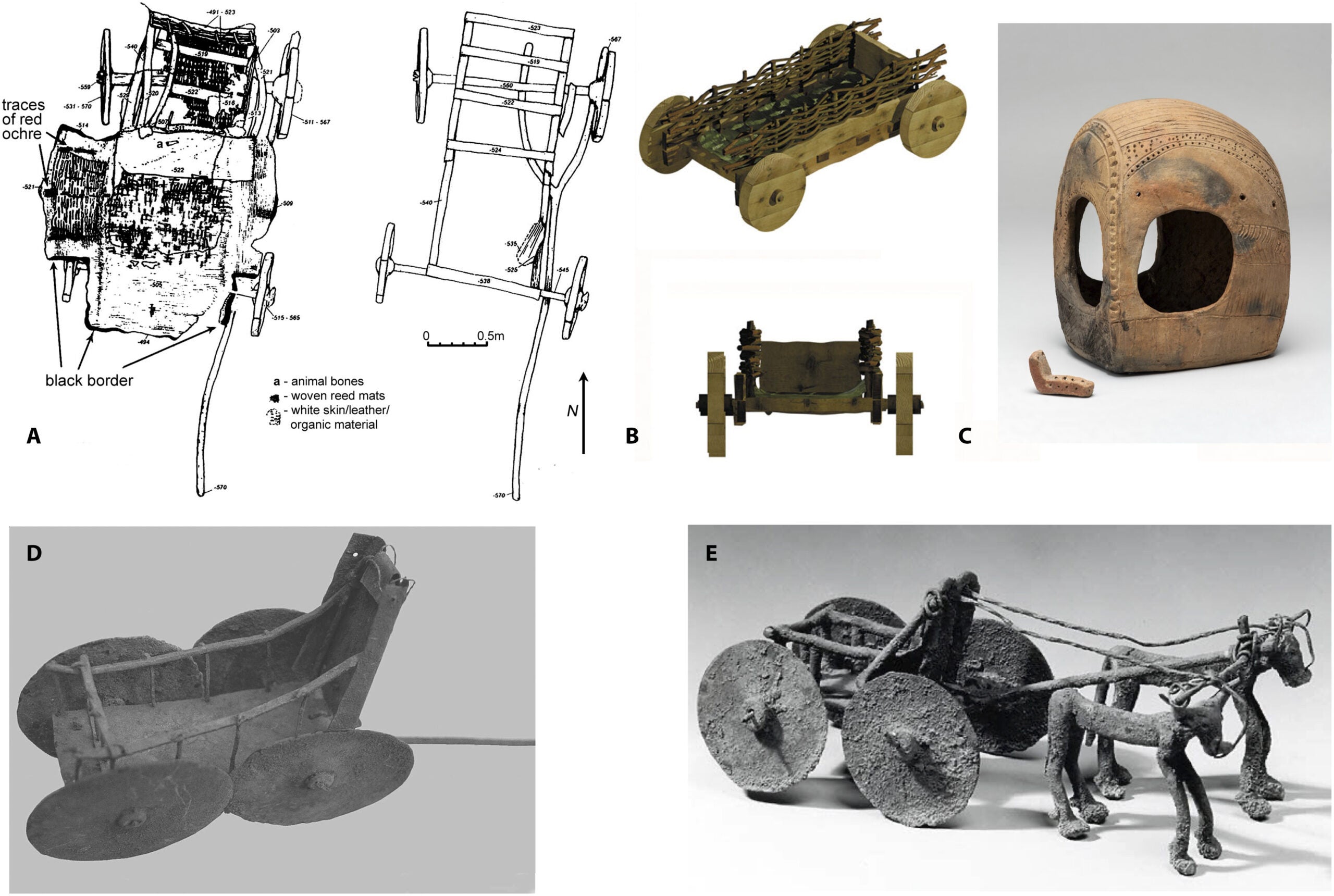
Around 3500 to 3000 BCE, steppe groups were already pushing east and west across Eurasia. They also had wagons, first pulled by cattle. In practical terms, the two technologies did different jobs. Wagons moved heavy loads, households, and supplies. Horses gave speed. A rider could cover ground in hours that a wagon might take days to cross.
The authors argue that this combination opened the Eurasian steppes in a new way. It helped create the highly mobile pastoral system associated with Yamnaya life.
The stakes of this debate extend far beyond animal history.
The migration of Yamnaya and related steppe populations beginning around 3100 BCE had an enormous effect on European human genomes. It was also part of a much broader expansion across about 5000 kilometers of Eurasia between roughly 3200 and 2600 BCE. According to the authors, horse riding may have helped make that movement possible. This is true even if horses were not yet the disciplined, high-endurance animals seen later.
That possibility also feeds into a larger story about language. Researchers increasingly connect this burst of steppe mobility to the spread of Proto-Indo-European languages. This was the ancestral family behind many languages spoken across Europe and large parts of Asia today. In that sense, the horse may have carried not just riders, but vocabulary, grammar, and entire speech worlds.
The team also points to signs of horse management outside the steppes. In Central and Southeast Europe, there were larger horse sizes, greater size variation, occasional complete horse burials, and even an early tobiano spotting gene, which is associated with domesticated horses. These details hint that people were managing local horse populations there before 3100 BCE as well.
All of this supports the researchers’ central claim: domestication was a process, not an event.
That process had false starts, regional differences, and long stretches when humans used horses intensively without yet producing the later genetic profile that came to dominate the domestic horse population.
Today, truly wild horses no longer exist. Even Przewalski’s horse, once treated as a surviving relic of wild ancestry, is now understood to descend from early domesticated populations. The line between wild and domestic, in other words, was already blurring thousands of years ago.
“Today, horses are a source of attraction, companionship, and friendship for many people. Therefore, it is important to learn about the earliest stages of human–horse relationships and how this unique partnership first emerged,” Heyd said.
This research pushes historians and archaeologists to rethink one of the most important human-animal partnerships ever formed. If horse domestication began as a long, patchy process before 2200 BCE, then early mobility, herding, migration, and cultural exchange across Eurasia may need to be reinterpreted.
It also sharpens the case that horses helped support the movement of steppe populations during a key period in the spread of people, technologies, and Indo-European languages.
More broadly, the findings suggest that domestication can unfold gradually, across multiple regions and lineages. Rather than appearing all at once in a single decisive moment, it may proceed over time.
Research findings are available online in the journal Science Advances.
The original story “Giant dark matter ‘sheet’ may shape galactic motion in the Milky Way” is published in The Brighter Side of News.
Like these kind of feel good stories? Get The Brighter Side of News’ newsletter.
The post Long before chariots and empires, humans were already riding horses appeared first on The Brighter Side of News.

