A routine comparison of old and new Moon maps exposed something that should not have been there.
Robert Wagner, an image-processing specialist working with NASA’s Lunar Reconnaissance Orbiter Camera system, noticed an unusually large bright patch surrounded by a dark halo. When he compared newer images with older ones, the explanation became clear: something had slammed into the Moon and excavated a crater hundreds of feet across.
The feature, now named McGetchin crater, formed sometime between April 11 and May 22, 2024. At about 222 meters, or 728 feet, across and 43 meters, or 141 feet, deep, it is the largest contemporary impact crater discovered anywhere in the Solar System.
Researchers describe its structure and enormous disturbance zone in Science Advances. A second paper in the same journal examines an extensive thermal anomaly surrounding the crater.
“I just stopped, dropped everything, and started looking into what that spot was,” Wagner said.
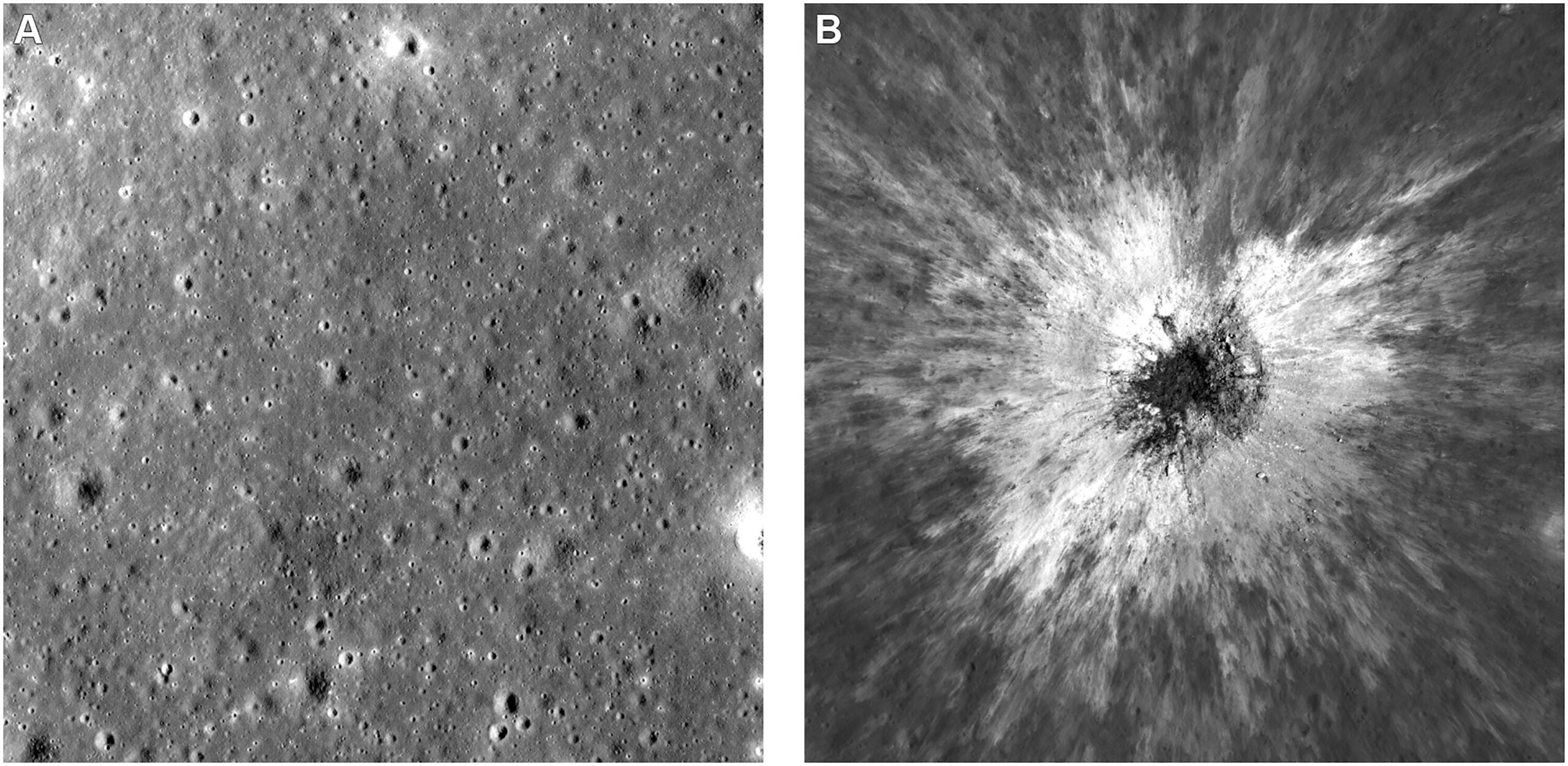
McGetchin crater lies near the Moon’s eastern limb at roughly 1.35 degrees north and 67.18 degrees east.
A cometary or asteroidal fragment struck the surface to create it. NASA estimates the impactor may have been comparable in size to a three- to six-story building.
The resulting crater ranges from 213 to 231 meters across, giving it an average diameter of 222 meters. Its floor sits about 43 meters beneath the median elevation of the rim, producing proportions typical of an extremely fresh crater.
Researchers calculated an impact energy of approximately 6.5 × 10^10 kilojoules. That is more than an order of magnitude greater than the impact that produced the previous largest contemporary lunar crater known from before-and-after observations, which measured about 70 meters across.
Crater-production models suggest an event of McGetchin’s magnitude should occur only about once every 132 years on the Moon.
That rarity makes the site especially valuable. Scientists normally study impact craters long after erosion, later collisions and space weathering have altered their freshest features.
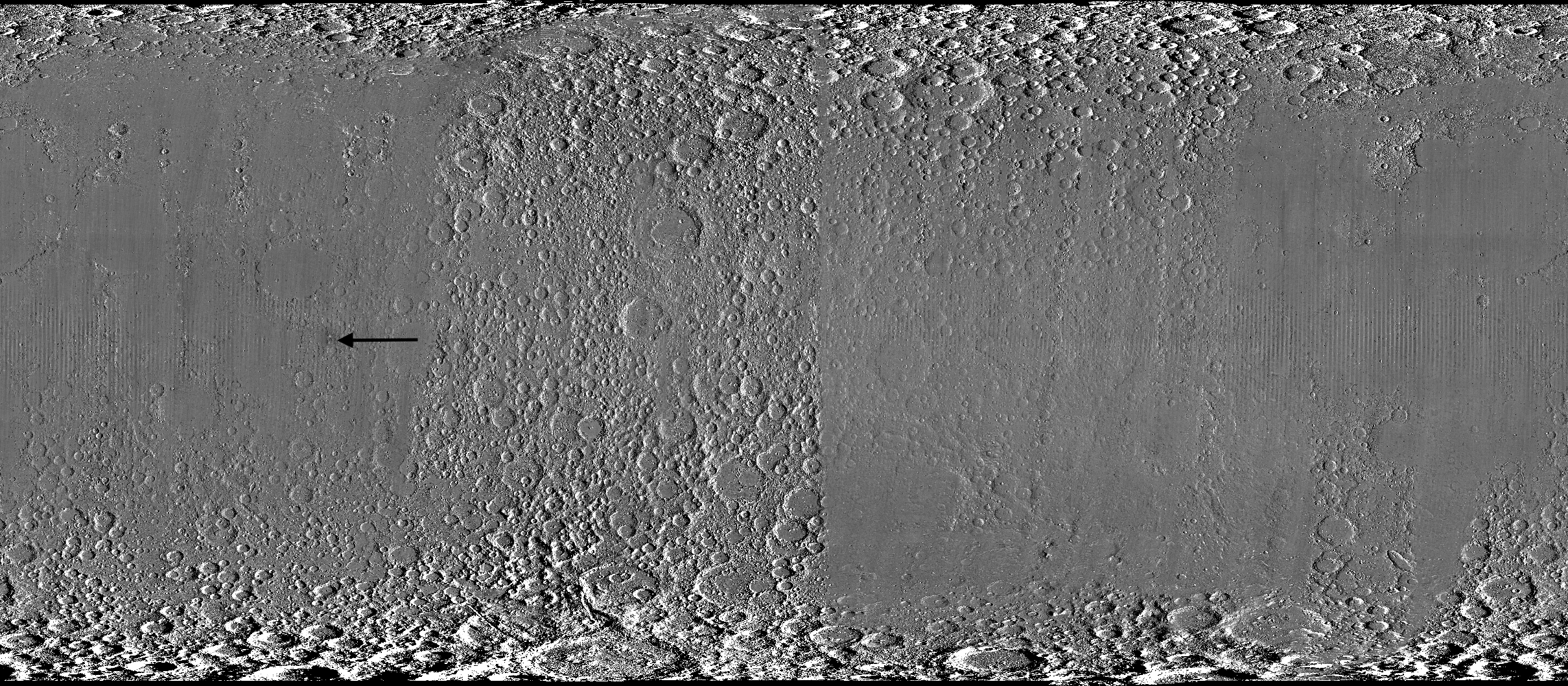
NASA’s Lunar Reconnaissance Orbiter, or LRO, has been mapping the Moon since 2009.
Its camera system repeatedly photographs the lunar surface, creating an enormous archive that lets researchers compare the same locations years apart. Wagner was examining global mosaics on Oct. 24, 2025, as part of a search for large surface changes.
Software aligned and compared hundreds of older and newer Wide-Angle Camera images. Areas that had remained unchanged appeared gray, while altered regions became brighter or darker.
The process generates many false alarms because small differences in illumination can look like genuine changes. McGetchin was different.
“It was by far the most obvious impact debris pattern I’ve ever seen in one of these images,” Wagner said.
Scientists then turned to the orbiter’s Narrow-Angle Camera, which can image the Moon at roughly 1 meter per pixel. Those observations revealed the crater itself along with its rim, ejecta deposits, displaced boulders and disturbed surrounding terrain.
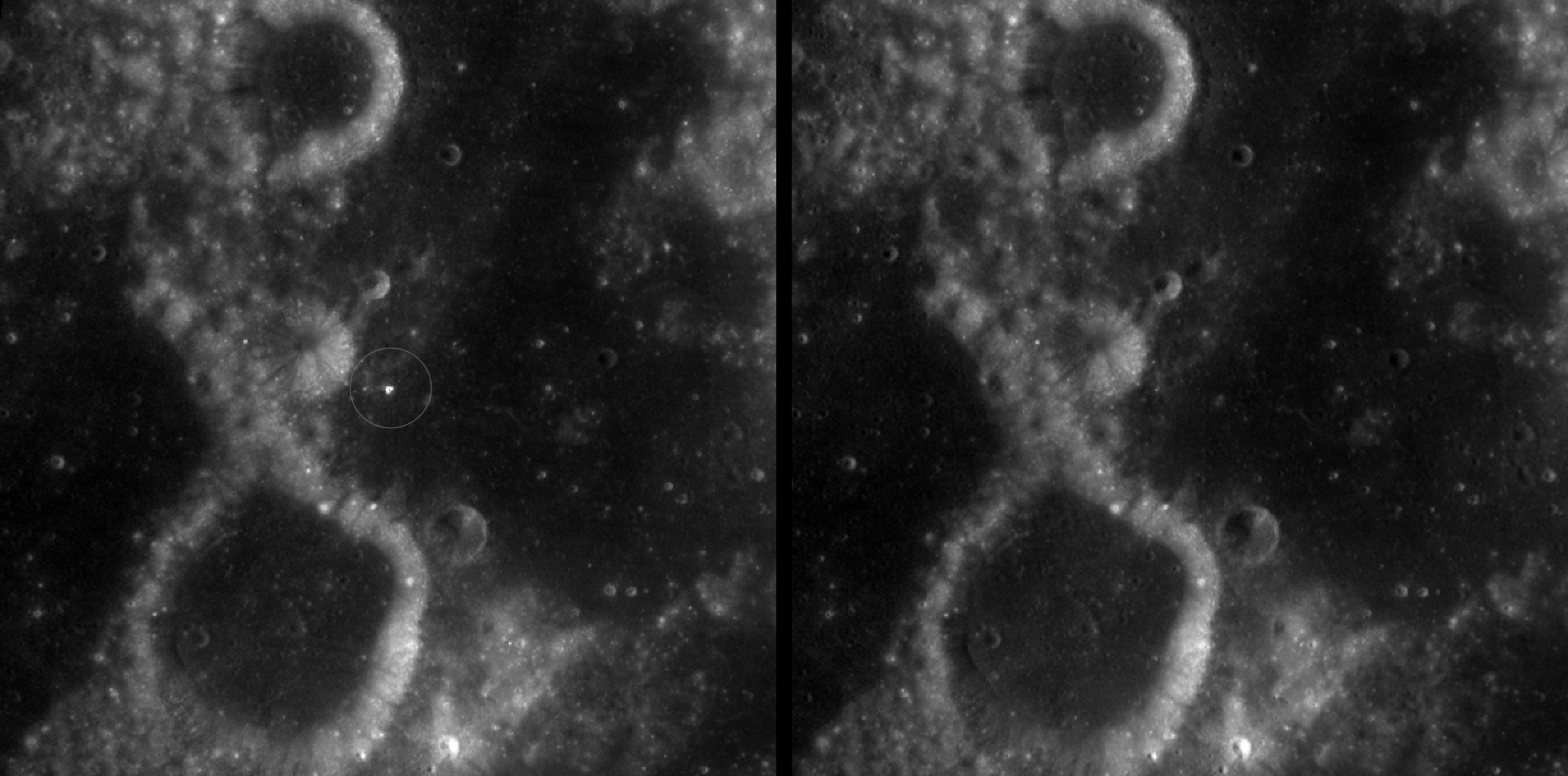
McGetchin did much more than dig a 222-meter hole.
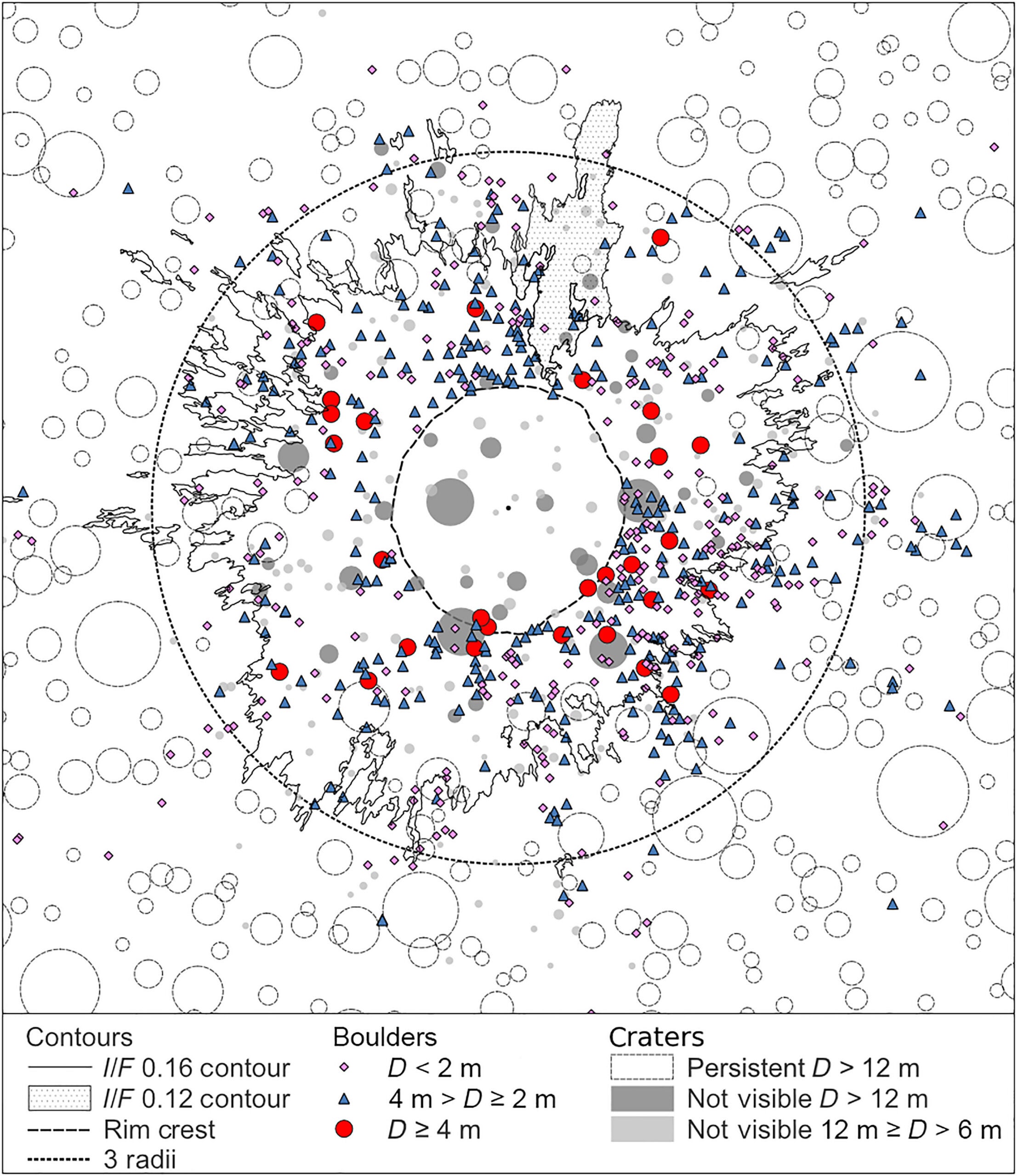
Close to the crater, researchers identified a continuous ejecta blanket containing newly excavated material and large boulders. The largest detected boulder measured approximately 13 by 9 by 3 meters.
The most surprising changes occurred much farther away.
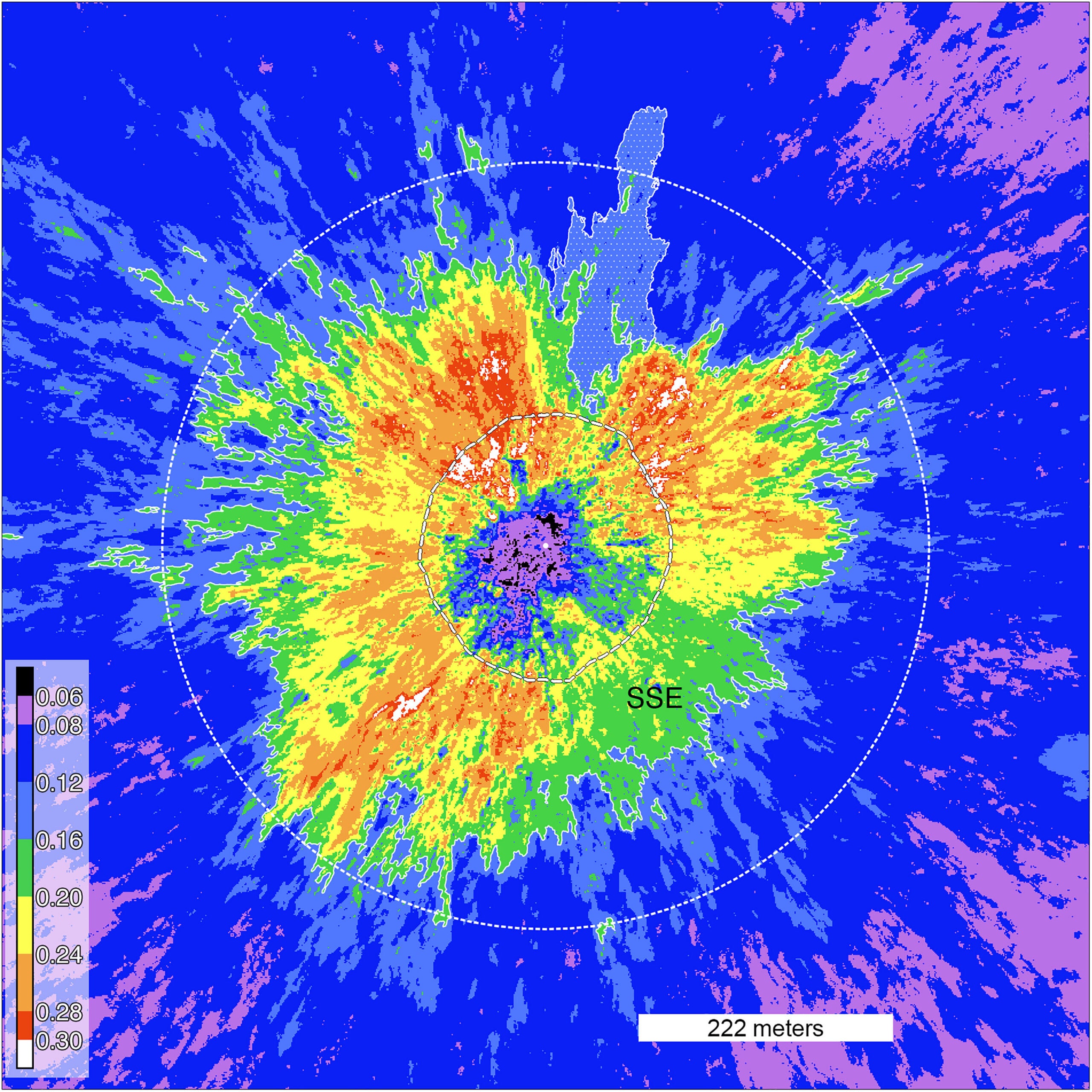
By stacking hundreds of Wide-Angle Camera observations taken before and after the collision, scientists detected faint changes in surface reflectivity extending enormous distances from the crater.
A brighter disturbed zone extended about 15 kilometers from the impact site. A broader, darker and more discontinuous region reached beyond 120 kilometers, with some detectable effects approaching 140 kilometers.
That means subtle surface modification occurred more than 1,000 crater radii away.
The researchers think extremely fast material ejected during the first moments of impact may be responsible. Vapor, melt droplets and fine particles could have traveled outward close to the surface, disturbing the uppermost lunar soil far beyond the conventional ejecta blanket.
![Regional geologic context map. Basemap colors represent WAC normalized reflectance [30° incidence angle, 0° emission angle, and 30° phase angle], 100 m topographic contours (red) from SLDEM.](https://www.thebrighterside.news/uploads/2026/09/moon-impact-4-scaled.jpg)
LRO detected another unexpected consequence using its Diviner Lunar Radiometer Experiment.
Follow-up thermal measurements revealed a roughly 4-mile-wide region around McGetchin that becomes about 16 degrees Fahrenheit colder at night than the surrounding landscape.
The crater itself is not producing cold material. Instead, the collision physically changed the lunar regolith, the loose layer of fragmented rock and dust covering the Moon.
The impact appears to have “fluffed up” parts of that material, lowering its density and changing how effectively it stores heat. Looser regolith sheds heat more rapidly after sunset, producing what researchers call a cold spot.
Similar thermal anomalies have been observed around other young lunar craters. McGetchin provides an unusually well-documented opportunity to investigate how those cold spots form immediately after a known impact.
The thermal effect also shows that relatively small collisions can physically modify the lunar surface far beyond the crater rim.
McGetchin formed near a boundary between ancient lunar highlands and darker volcanic plains.
That mixed geology appears to have influenced its shape.
The crater is not perfectly circular. Its western side extends farther than the eastern side, and several ejecta features align along a similar direction.
Researchers suggest the impact may have excavated different materials on either side. Loose highland regolith could have responded differently from more coherent buried basaltic lava.
The crater interior also contains dark material that may include glassy impact melt, produced when the collision briefly heated lunar rock to extreme temperatures before it cooled rapidly.
Despite those complications, many of McGetchin’s dimensions follow established crater-scaling relationships. That combination of expected and unusual features makes it useful for improving models of how impacts behave in complex lunar terrain.
The Moon has no thick atmosphere to destroy incoming meteoroids before they reach the ground. Impacts therefore remain an active geological process.
LRO researchers have already identified at least 1,000 new craters during the mission and tens of thousands of other surface changes. Most are much smaller than McGetchin.
Understanding how fresh impacts rearrange lunar soil has practical implications as robotic and human activity increases. A collision can alter regolith density, scatter boulders and change surface properties many kilometers from the impact point.
Those changes could influence rover traction, landing-site assessments and interpretation of remotely sensed terrain.
A future rover visit to McGetchin could provide an unusually valuable calibration point. Scientists know approximately when the crater formed, have images from before the collision and can now watch the landscape evolve from almost the beginning.
The Moon may look frozen in time from Earth. McGetchin shows that its surface is still being rewritten.
These resources explore contemporary crater formation, lunar regolith disturbance and the thermal effects of young impacts.
Quantifying crater production and regolith overturn on the Moon with temporal imaging: Before-and-after LRO images identified hundreds of new lunar craters and showed that impacts churn the Moon’s surface much faster than earlier estimates suggested. (Nature, 2016)
Lunar cold spots: Granular flow features and extensive insulating materials surrounding young craters: Diviner observations revealed unusually cold nighttime regions around fresh craters and linked them to impact-driven changes in the structure of lunar regolith. (Icarus, 2014)
The Lunar Reconnaissance Orbiter mission – six years of science and exploration at the Moon: This mission overview describes how LRO’s cameras, thermal instruments and other sensors transformed measurements of the modern lunar surface. (Icarus, 2016)
The global surface temperatures of the Moon as measured by the Diviner Lunar Radiometer Experiment: Global Diviner measurements show how rock abundance, regolith properties and young impact features influence lunar temperatures. (Icarus, 2017)
NASA’s Moon Orbiter Spots New, ‘Once-in-Century’ Moon Crater: NASA explains how LRO discovered McGetchin and why the fresh crater offers an unusually detailed view of ongoing lunar surface change. (NASA, 2026)
Research findings are available online in the journal Science Advances.
The original story “NASA discovers a once-in-a-century impact blasted a 728-foot crater into the Moon” is published in The Brighter Side of News.
Like these kind of feel good stories? Get The Brighter Side of News’ newsletter.
The post NASA discovers a once-in-a-century impact blasted a 728-foot crater into the Moon appeared first on The Brighter Side of News.


Leave a comment
You must be logged in to post a comment.