A distant star briefly brightens. A supernova appears in a galaxy. Somewhere else, an unseen object bends passing starlight. NASA’s Nancy Grace Roman Space Telescope is designed to capture such changes across crowded stretches of sky, then make its observations available for others to investigate.
The challenge will be keeping up. Roman is expected to return about 1.4 terabytes of data daily during operations. Jessica Lu, an astronomy associate professor at the University of California, Berkeley, and David Weinberg of Ohio State University have organized a collaboration of roughly 900 astronomers to prepare.
Their effort connects two ambitions: finding unusual objects in the Milky Way and understanding why the universe’s expansion is accelerating. Both depend on extracting reliable measurements from enormous collections of images.
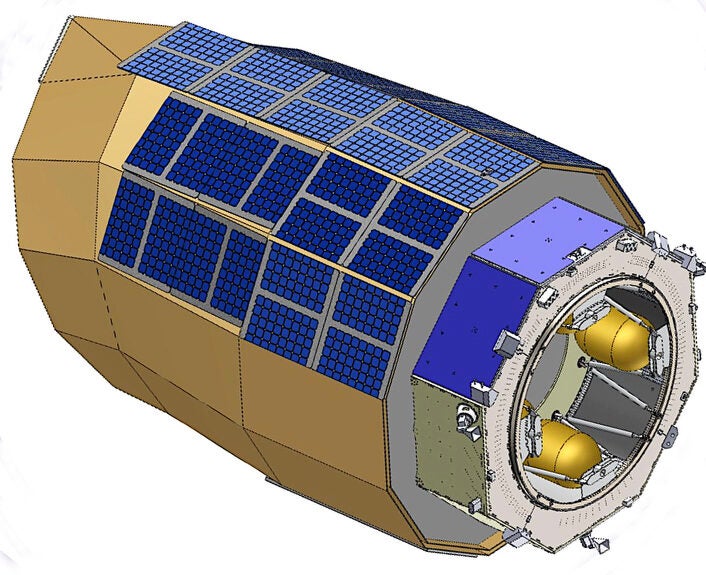
Roman launched August 30, 2026, beginning its journey toward an observing orbit near the Sun–Earth system’s second Lagrange point. This region lies roughly one million miles from Earth. The mission remains in commissioning, with NASA reporting successful checks and improved focusing of its main instrument on October 14.
That distinction matters because the expected torrent of survey observations has not yet become a completed scientific record. Astronomers are preparing analysis tools now so they can identify worthwhile signals once routine observations begin.
“The telescope takes the data, and within 48 hours it’s available to the entire world,” Lu said. Rapid public access means research groups can pursue different questions using the same observations, rather than each needing a separate telescope pointing.
The Roman Science Collaboration brings together people with expertise in planets, stars, black holes and cosmology. A single exposure can contain objects relevant to several of those fields. Sharing methods and comparing results could help scientists notice discoveries outside their own specialties.
Roman’s 2.4-meter mirror feeds a near-infrared camera with 288 million pixels. One major observing program, the Galactic Bulge Time-Domain Survey, will repeatedly examine six fields toward the Milky Way’s crowded center. During its main observing seasons, it will revisit each field about every 12 minutes.
The survey will search for gravitational microlensing, which occurs when a foreground object’s gravity bends a background star’s light. The resulting magnification can temporarily brighten the star. A planet accompanying the foreground object can leave an additional disturbance in that changing brightness.
This technique can reveal objects that would otherwise be too faint to observe directly. Potential targets include planets orbiting other stars, planets without host stars, brown dwarfs and isolated black holes. Their signatures differ, so identifying an object requires modeling rather than simply counting brightening events.
Finding a planet with Earth’s mass would not establish that it resembles Earth in other respects. Microlensing does not automatically reveal its atmosphere, surface conditions or suitability for life. The survey’s value includes measuring how common planets of different masses and orbital separations are, beyond the systems most accessible to other detection methods.
Lu expects Roman to uncover thousands of planets and potentially hundreds of otherwise dark black holes. These are forecasts, not discoveries already made. The final totals will depend on the objects present, the observing schedule and how effectively scientists distinguish their signals.
Her group has advocated observations that improve the black hole search alongside the planet survey. Longer coverage matters because massive lenses can produce events lasting much longer than typical planetary signals. Measurements of shifting stellar positions can also help constrain a lens’s mass.
Roman also carries an ambition that Berkeley physicist Saul Perlmutter helped develop more than a quarter-century ago. After his team found evidence for accelerating cosmic expansion, he and colleagues proposed a dedicated space observatory in 1999. Their concept was called the Supernova Acceleration Probe, or SNAP.
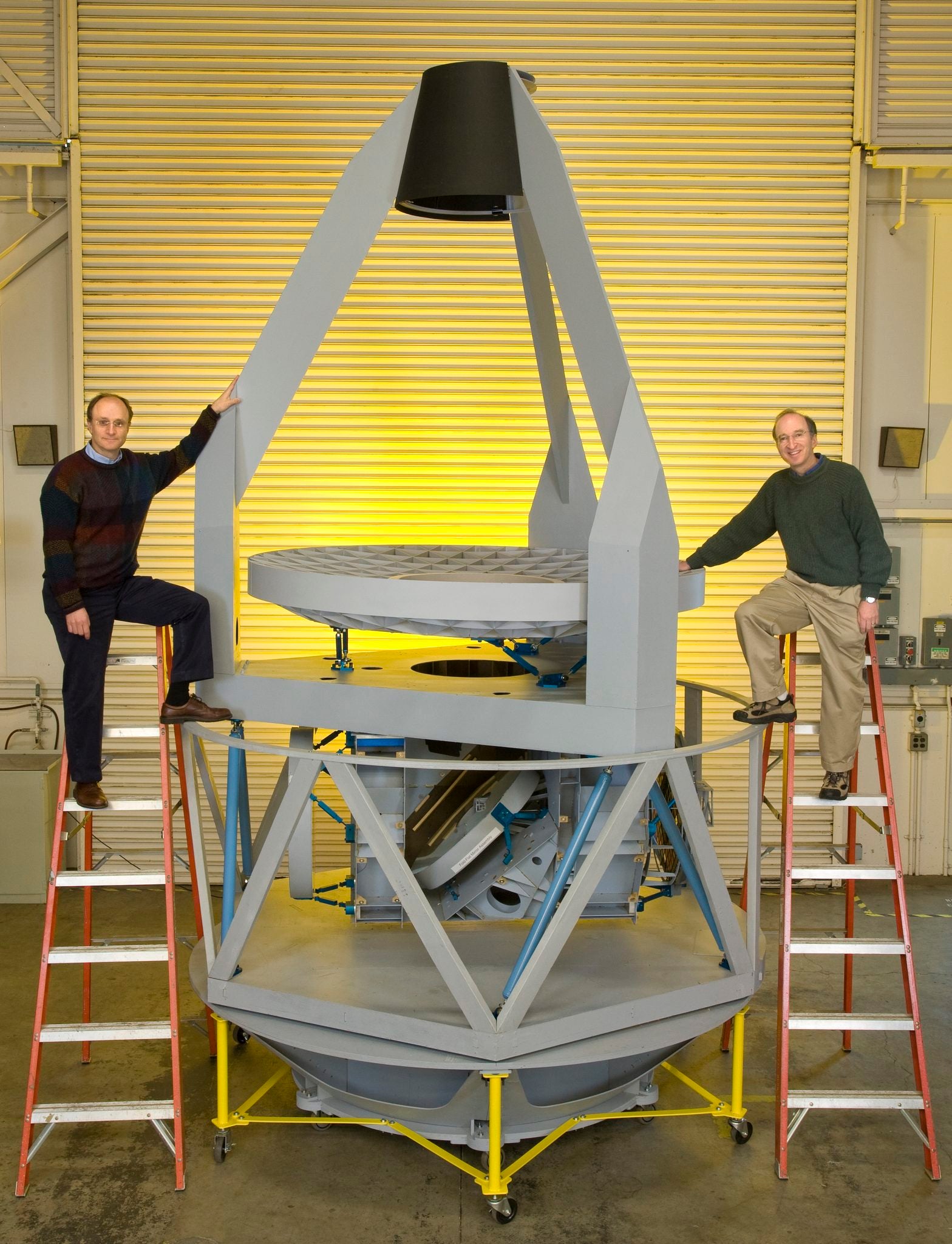
The project changed through several proposed missions and partnerships. The broader Wide Field Infrared Survey Telescope, known as WFIRST, eventually became Roman. Its scientific goals expanded to include exoplanets and other investigations alongside dark energy.
The underlying question remains unresolved: what causes cosmic expansion to accelerate? Dark energy is the name given to the component associated with that acceleration. Naming it has not established its physical identity or demonstrated whether its properties remain constant over time.
Type Ia supernovae offer one way to investigate. After correcting for differences in their light curves and colors, astronomers can use them as standardized distance indicators. Comparing those distances with redshift, the stretching of light during cosmic expansion, helps reconstruct how the universe expanded.
Roman’s repeated observations will find supernovae and follow their changing brightness. Its infrared sensitivity will extend those measurements deep into cosmic history. Reliable calibration will be essential, since small errors could mimic or obscure the changes astronomers hope to measure.
The Dark Energy Spectroscopic Instrument, or DESI, provides a complementary approach from the ground. It measures patterns in the distribution of galaxies and quasars. Those patterns preserve a characteristic scale, originating in the early universe, that astronomers use to trace expansion.
DESI measurements combined with supernova observations and cosmic microwave background data have strengthened hints that dark energy may evolve. The result depends on the datasets and assumptions used. It has not established changing dark energy as a confirmed discovery.
Roman could help test those hints with a new set of observations. Its galaxy surveys will also investigate the distribution of matter and the effects of gravity. Comparing independent measurements gives scientists ways to check explanations that fit one dataset but struggle with another.
A planned privately funded observatory, Lazuli, could complement Roman’s broad surveys with detailed follow-up. Supported by Eric and Wendy Schmidt, the proposed three-meter space telescope includes spectroscopy across visible and near-infrared wavelengths. Its designers aim to support supernova studies among other investigations.
Spectra can help distinguish subtle differences among Type Ia supernovae and improve comparisons across distances. Perlmutter sees the combination as an opportunity to recover capabilities envisioned during the earlier SNAP effort. Lazuli’s deployment and performance remain future milestones, rather than guarantees of a solved cosmological mystery.
For Lu’s team, the immediate work is computational. Software built for individual targets must become efficient enough to handle many simultaneously. Roman’s scientific reach will depend on both the observatory’s measurements and the people able to turn its public archive into tested discoveries.

These resources explain Roman’s observing plans and the research behind its searches for hidden objects and dark energy.
NASA’s Roman Mission Shares Detailed Plans to Scour Skies: Describes the three core surveys and how they divide observing time across the primary mission. (NASA, 2025)
An Isolated Mass-gap Black Hole or Neutron Star Detected with Astrometric Microlensing: Explores how brightness changes and stellar position measurements can constrain an unseen compact object. (The Astrophysical Journal Letters, 2022)
Measurements of Ω and Λ from 42 High-Redshift Supernovae: Presents foundational supernova evidence for the cosmological picture that motivated dedicated dark energy observatories. (The Astrophysical Journal, 1999)
DESI DR2 results. II. Measurements of baryon acoustic oscillations and cosmological constraints: Examines cosmic expansion using galaxy and quasar measurements, including combinations with other cosmological observations. (Physical Review D, 2025)
The Lazuli Space Observatory: Architecture & Capabilities: Outlines the proposed observatory’s instruments and potential contributions to supernova cosmology and other fields. (arXiv preprint, 2026)
The original story “NASA’s Roman Space Telescope prepares to unleash a flood of new cosmic discoveries” is published in The Brighter Side of News.
Like these kind of feel good stories? Get The Brighter Side of News’ newsletter.
The post NASA’s Roman Space Telescope prepares to unleash a flood of new cosmic discoveries appeared first on The Brighter Side of News.


Leave a comment
You must be logged in to post a comment.