Dark matter halos are everywhere in the universe, yet no telescope can see them.
These vast, invisible structures surround galaxies and galaxy clusters, using gravity to hold them together and steer how they grow. In a practical sense, they are the universe’s underlying framework. If astronomers want to understand how galaxies formed, how matter spread across space, and whether today’s cosmological models truly work, they need a reliable count of those halos across time. However, that has been harder than it sounds.
Now a team led by the Institute of Astrophysics of Andalusia and the Institute of Astrophysics of the Canary Islands says it has produced the most accurate census yet of dark matter halos over the universe’s 13.8 billion-year history. The advance comes from a new theoretical model called GPS+. This model predicts how many halos should exist at different masses and at different moments in cosmic history.
“This is important because not all halos are the same: some contain very small galaxies; others contain galaxies like the Milky Way; and the most massive ones can contain enormous clusters with hundreds or thousands of galaxies,” said Elena Fernández García, a researcher at the Institute of Astrophysics of Andalusia and first author of the study, published in Astronomy & Astrophysics Letters.
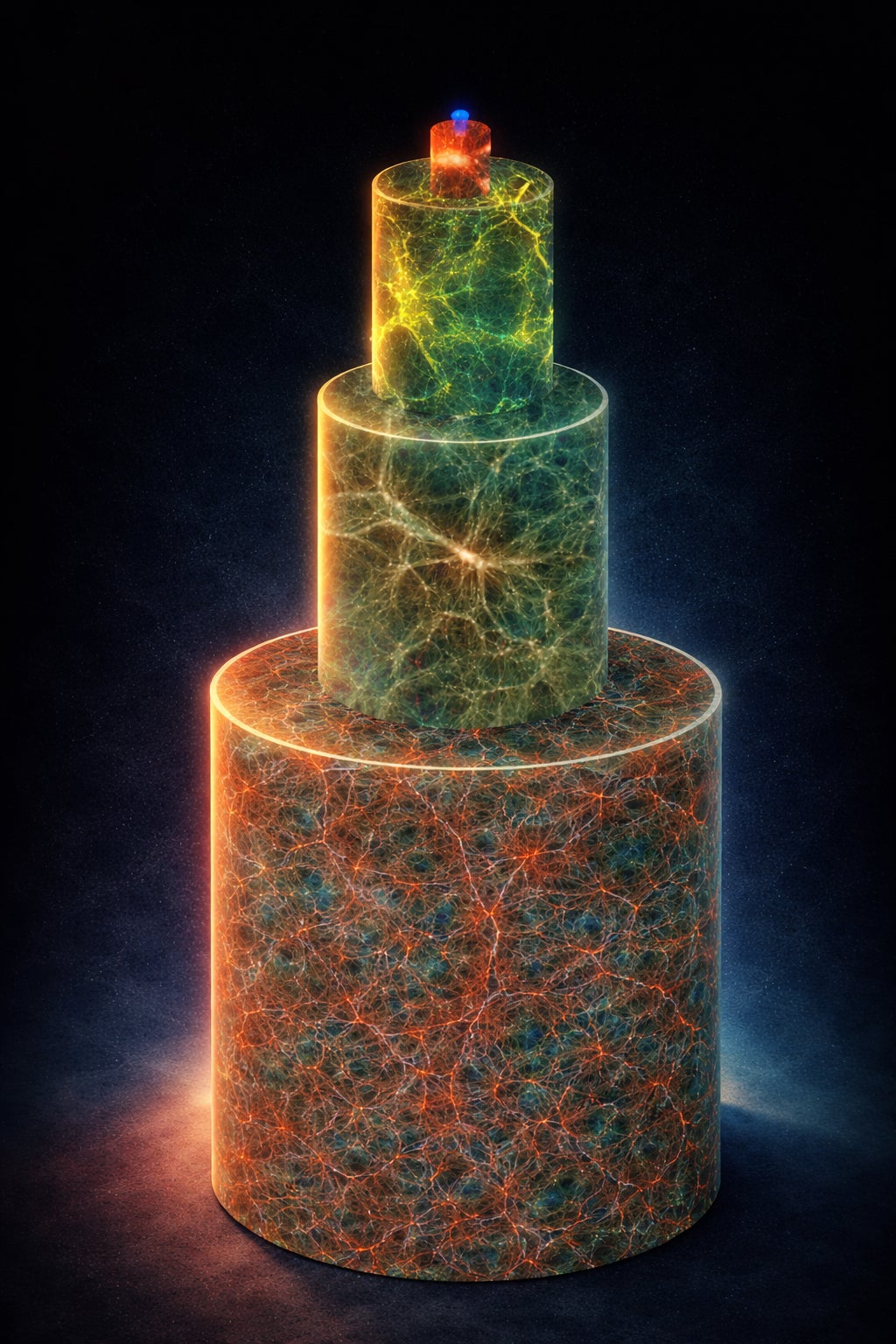
What the team measured is known as the halo mass function. It is not a catalog of individual objects. Instead, it is a mathematical description of how many dark matter halos exist within each mass range at a given epoch. That makes it one of cosmology’s basic tools. Therefore, it links theory, simulations, and real observations.
Older models have long been useful, but they came with important limits. Some worked well only for relatively nearby epochs, or only for halos above a certain mass. Others struggled badly in the early universe. In these cases, errors could swell to 60 to 80 percent for the most massive halos. That left a gap just as astronomers began collecting better data on the distant universe.
The new model was built to close that gap.
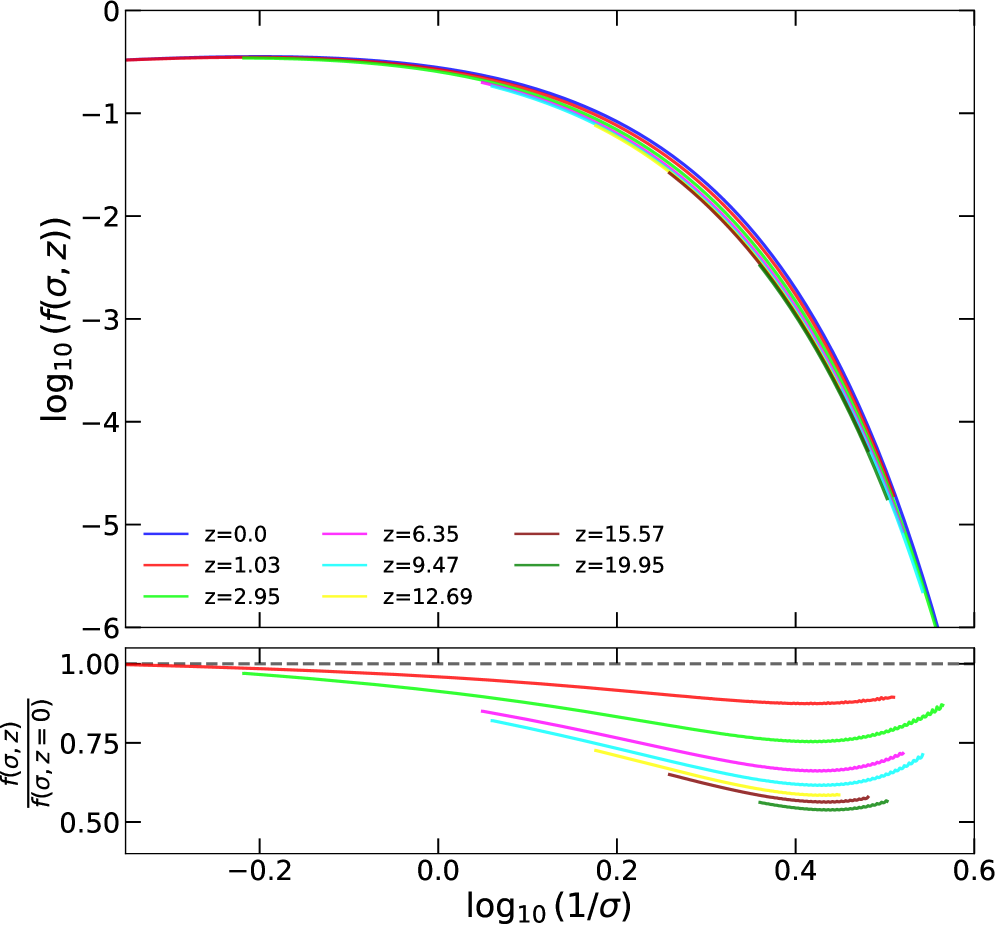
GPS+ describes halo abundances across an unusually wide span of masses, from dwarf-galaxy scales to the biggest galaxy clusters, and across redshifts from 0 to 20. In simpler terms, it aims to track structure formation from the present day back toward the universe’s earliest eras.
The key change is physical rather than cosmetic. Earlier approximations often treated collapse as though matter gathered into neat spherical structures. But that is not how the universe behaves.
“The key lies in a simple idea,” said Juan Bencort Rijo, a researcher at the Institute of Astrophysics of the Canary Islands. “The matter in the universe doesn’t clump together to form perfect spheres, but rather irregular and complex structures. By incorporating this reality and other details of the gravitational collapse process, the GPS+ model more accurately describes how dark matter halos form and, consequently, how galaxies are born and evolve.”
That shift helped the researchers reduce discrepancies, especially at the difficult mass extremes where uncertainty had been highest. According to the team, the new framework brings those errors down to roughly 10 to 20 percent. At the same time, it maintains high accuracy through nearly all of cosmic history.
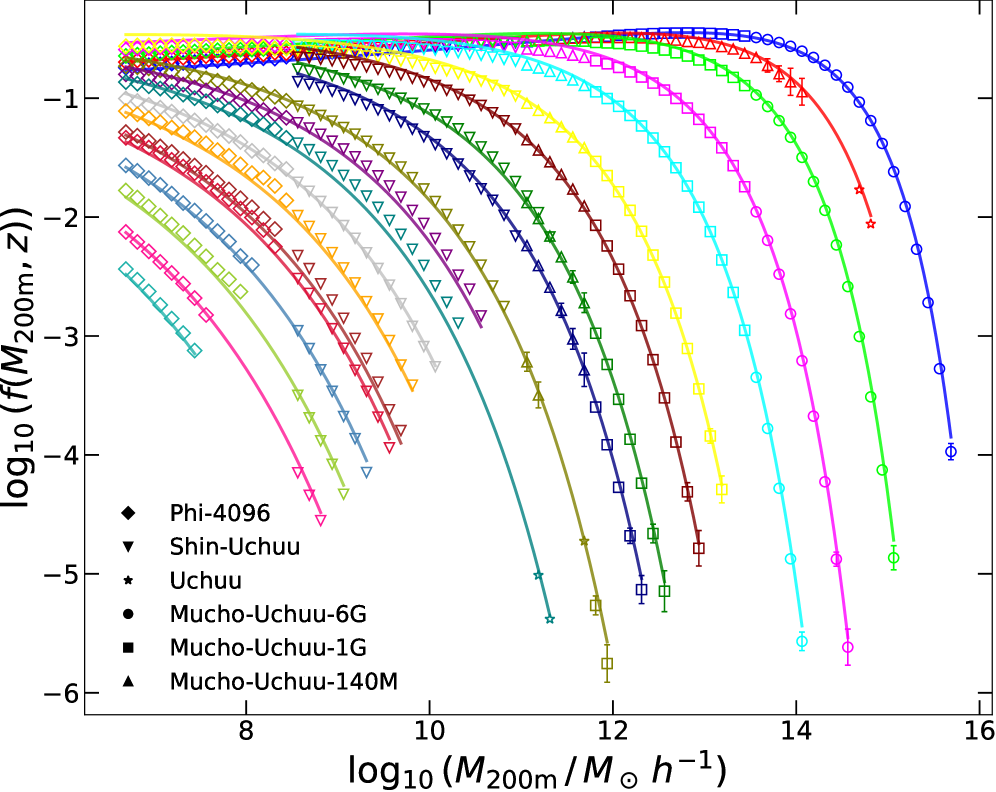
To see whether the model held up, the researchers compared it with the Uchuu simulation suite, a set of major cosmological simulations designed to capture both enormous cosmic volumes and fine mass resolution. Uchuu, which means “universe” in Japanese, includes multiple simulations spanning a wide range of scales. It was used here to measure the halo mass function with high precision.
The work drew on simulations carried out by Tomoaki Ishiyama of Chiba University, a co-author of the study. Some of them were run on Fugaku, one of the world’s most powerful supercomputers, in Japan. The simulations used standard tools to identify halos and trace their histories. Moreover, they combined results across many realizations to reduce cosmic variance.
The scale was enormous. In the total volume covered by 100 Mucho-Uchuu-6G realizations, the most massive halo reached 8.3 × 10^15 solar masses. That is about 13 times the mass of the Virgo cluster.
Those simulations did more than test the theory. They also gave the team a chance to tune GPS+ with relatively little calibration. The resulting fit produced two key parameters, A = 1.089 and B = 0.652. In addition, a third parameter, D, came out close to its predicted theoretical value of 1.
“All the dark matter halo catalogs generated from the Uchuu simulations are available in our Skies & Universes database, developed at the IAA-CSIC,” said José Ruedas, head of that infrastructure and a co-author of the work.
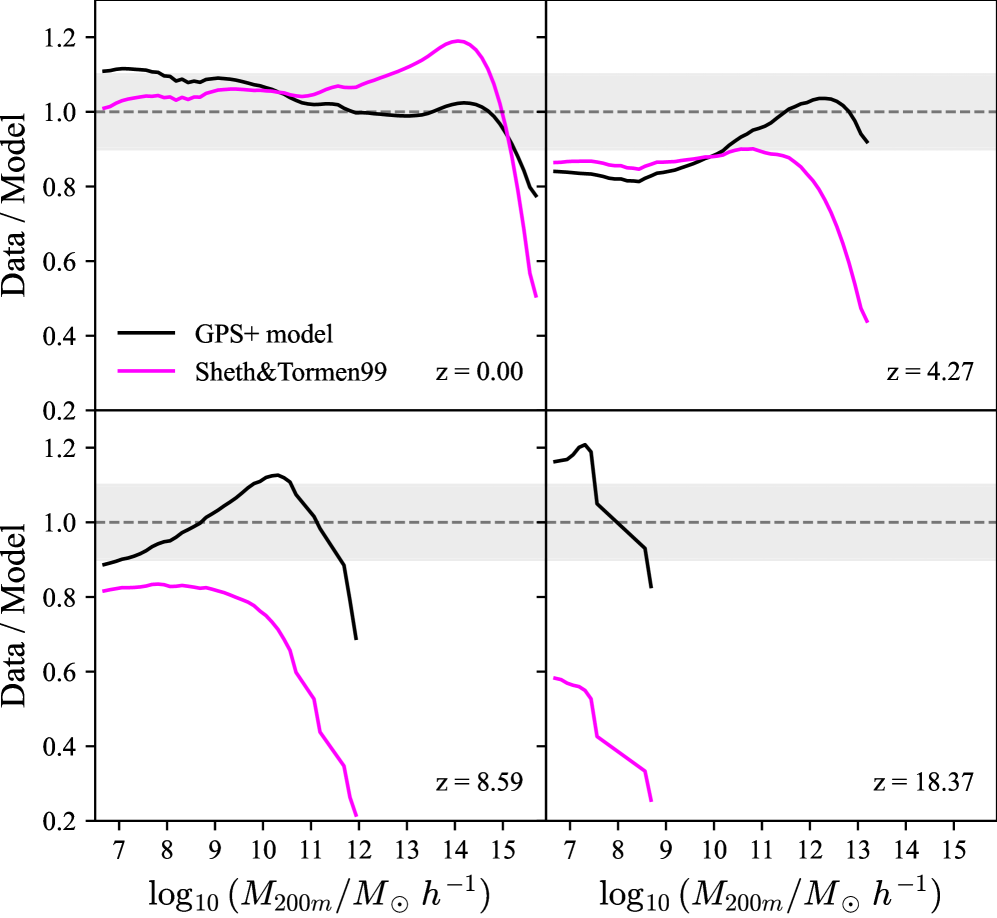
The strongest gains appear at high redshift, where older models tend to break down.
Compared with the widely used Sheth-Tormen model, GPS+ performs similarly at the present epoch. But by redshift 4.27 and beyond, the difference becomes much more noticeable. In fact, at redshift 18.37, the older model deviates by about 60 to 80 percent, while GPS+ stays within about 10 to 20 percent. Across much of the explored mass range at high redshift, the new model keeps deviations below 10 percent.
That matters because astronomers are now looking deeper into the early universe than ever before. Telescopes such as the James Webb Space Telescope are detecting distant galaxies formed in the universe’s first chapters. Large surveys such as DESI are mapping the large-scale distribution of matter to better understand cosmic structure and dark energy.
A more accurate halo mass function gives those observations a firmer theoretical anchor. If astronomers can better estimate how many halos should exist at a given time and mass, they can more reliably test whether their broader description of the universe matches reality.
“Having a more accurate census of dark matter halos is key to connecting these observations with theoretical models and verifying whether our description of the universe, including the nature of dark matter and dark energy, fits the data,” Fernández said.
The team has made GPS+ available to the broader scientific community, which should make it easier to include in future analyses and simulations. The work also adds to a growing international collaboration involving the Andalusian and Canary Islands institutes, Chiba University in Japan, and the University of Virginia in the United States.
A more accurate count of dark matter halos gives astronomers a stronger way to interpret what major observatories and sky surveys are seeing. That is especially important for early galaxies observed by JWST. It is also important for large mapping projects such as DESI, Euclid, Subaru PFS, LSST, and eROSITA.
Better halo predictions can sharpen tests of cosmological models, improve comparisons between simulations and observations, and help researchers check whether current ideas about dark matter, dark energy, and the growth of cosmic structure are consistent with the evidence.
Research findings are available online in the journal Astronomy & Astrophysics Letters.
The original story “New ‘cosmic GPS’ produces the most accurate map of dark matter in the universe” is published in The Brighter Side of News.
Like these kind of feel good stories? Get The Brighter Side of News’ newsletter.
The post New ‘cosmic GPS’ produces the most accurate map of dark matter in the universe appeared first on The Brighter Side of News.


Leave a comment
You must be logged in to post a comment.