A medical patch is supposed to protect skin, not suffocate it.
Yet many of the materials used in modern bandages, wearable sensors, and health-monitoring devices face a stubborn problem. They can hold water well, stick comfortably to the body, and flex with movement, but they often trap heat, sweat, and moisture. Over time, that can irritate skin and interfere with device performance.
Researchers at the Massachusetts Institute of Technology believe they have found a way around that tradeoff. Their solution is a new kind of hydrogel, a soft, water-rich material that behaves much like conventional hydrogels but also allows air to move through it.
The work introduces a material that combines two properties long thought to be difficult to achieve together: hydration and breathability. According to the research team, the new hydrogel remains soft and stretchy while containing a network of microscopic channels that function as pathways for air.
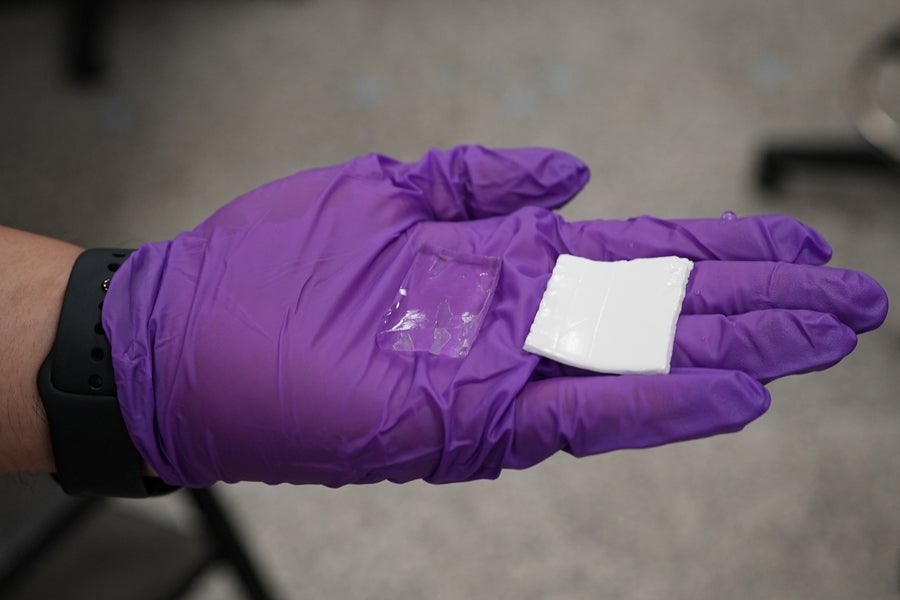
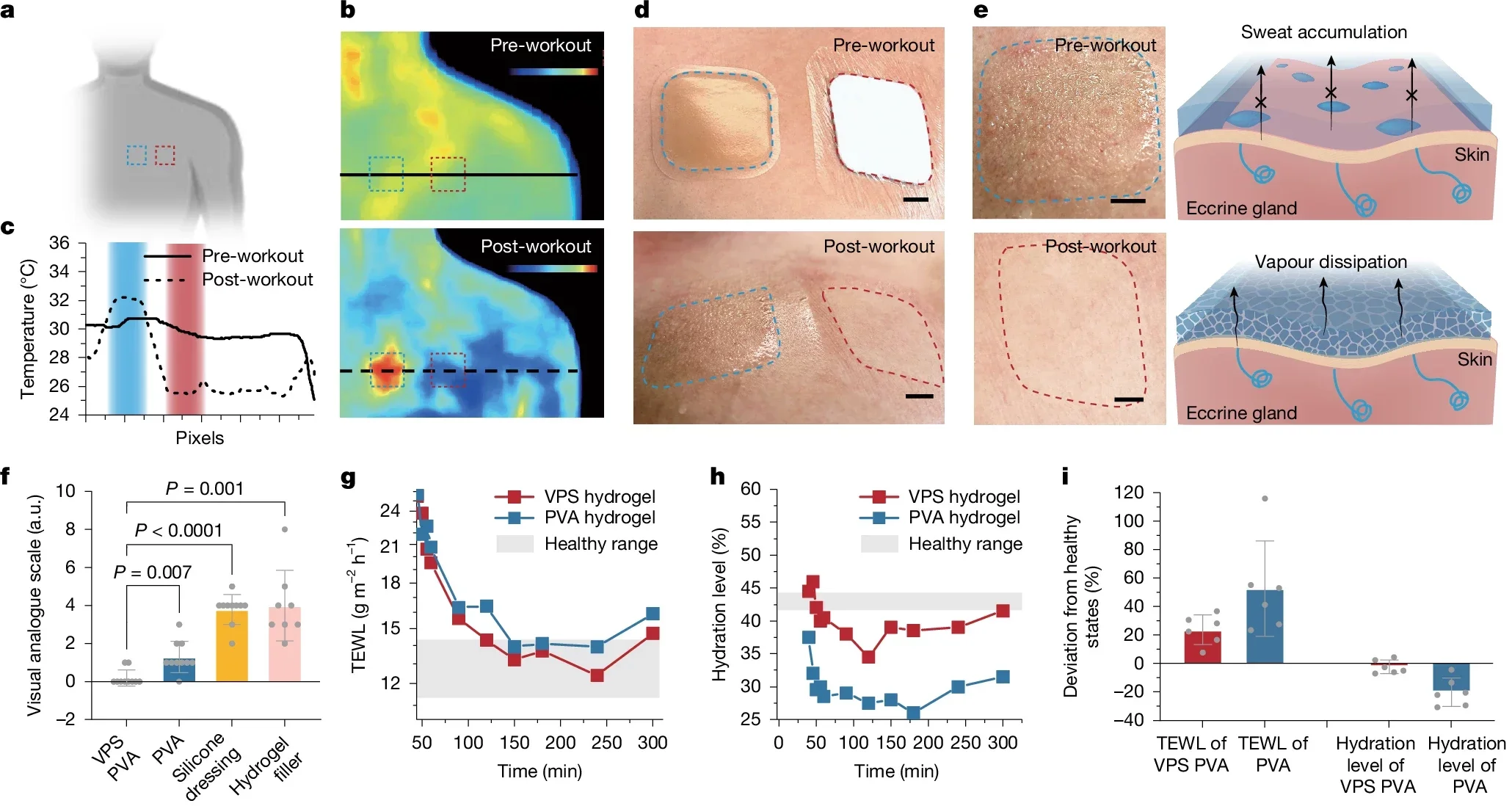
The result is a material that can stay in contact with skin for extended periods without causing the irritation commonly associated with conventional hydrogels. In tests involving wearable heart monitors, volunteers used the material during exercise and over multiple days while maintaining healthy skin and reliable sensor performance.
Hydrogels have become a staple of biomedical engineering.
Made primarily from water held in place by a polymer network, they resemble soft gelatin. Their ability to mimic the properties of biological tissue has made them useful in wound dressings, medical adhesives, implanted devices, drug delivery systems, and wearable electronics.
Water typically accounts for 80 to 90 percent of a hydrogel’s composition. That same characteristic creates a challenge.
“In general, water is not breathable,” said Xiao-Yun Yan, co-lead author of the study. “Hydrogel is 80 to 90 percent water, similar to Jell-O. And you cannot breathe through Jell-O.”
Oxygen and other gases move poorly through water-rich materials. As a result, conventional hydrogels can trap moisture against the skin. Extended use may lead to redness, discomfort, or reduced effectiveness of sensors attached beneath the material. Researchers have tried different strategies to address the issue.
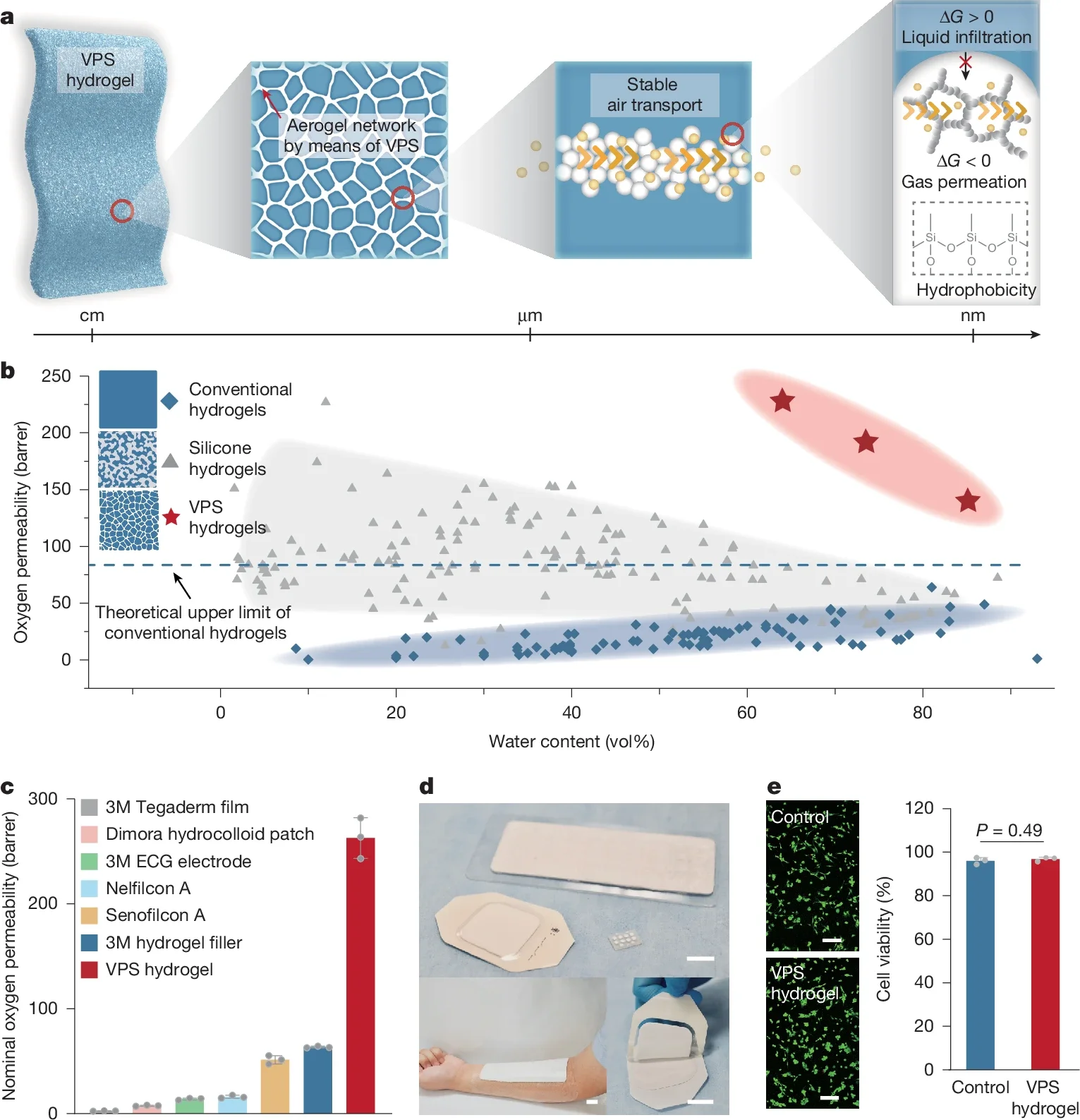
Some groups created microscopic holes throughout hydrogels to allow air passage. Others mixed hydrogels with highly permeable polymers such as silicone. Each approach came with compromises. Air channels could clog when exposed to liquids, while polymer-heavy designs reduced the amount of water retained by the material.
The MIT team sought a different solution.
“We want to have lots of tiny channels to let air through, while also maintaining lots of water in the gel,” said senior author Xuanhe Zhao, the Uncas (1923) and Helen Whitaker Professor of Mechanical Engineering at MIT. “This was a significant challenge, and something that people thought was impossible to do.”
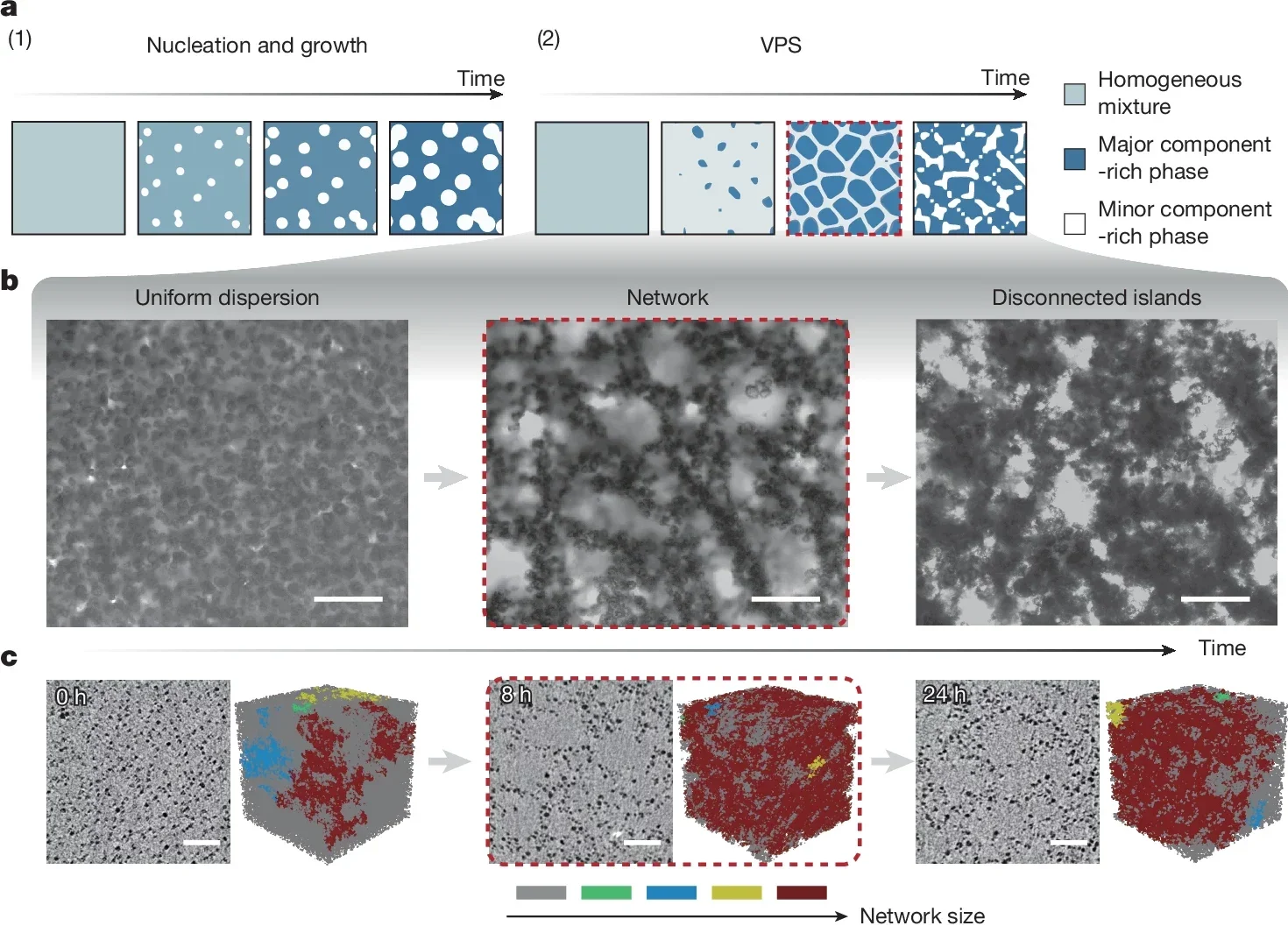
The breakthrough emerged from a phenomenon known as phase separation.
A familiar example occurs when oil and water are mixed. The two substances naturally separate because they do not blend well together.
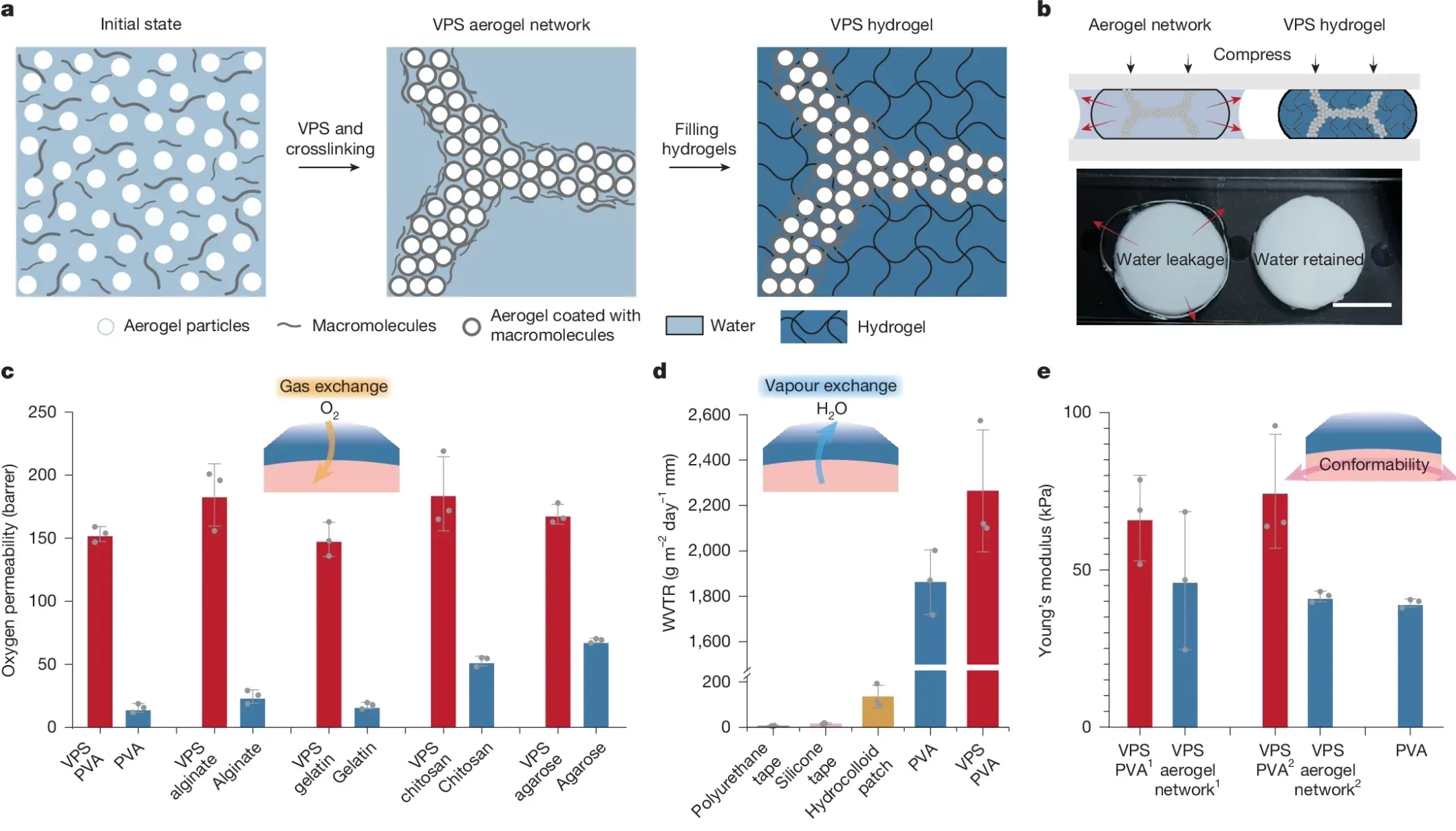
The researchers adapted a related process called viscoelastic phase separation. Their recipe began with a conventional hydrogel mixture. Into that solution they introduced a small quantity of silica aerogel particles. Yan compared the particles to boba pearls.
“They are like boba beads,” Yan said. “The particles are made of silica, which is hydrophobic, meaning that water does not want to leak through them, so they are very stable in water.”
As the mixture evolved, water molecules clustered together while the aerogel particles became squeezed into interconnected structures. Over time, the particles formed long, narrow tunnels.
Those tunnels became permanent air pathways. “It’s as if the particles formed a network of connected tunnels, like air-permeable highways within the hydrated hydrogel,” said co-lead author Shucong Li.
Once the desired structure developed, the team chemically cross-linked the hydrogel, locking the network in place.
The finished material retained its high water content while allowing air to move through microscopic channels embedded throughout the gel.
A new material matters only if it performs outside the laboratory. The researchers therefore tested both breathability and durability.
One experiment focused on wearable electrocardiogram monitors. Volunteers wore wireless ECG devices attached to the chest using the breathable hydrogel. They exercised for 20 minutes while researchers monitored signal quality.
Commercial hydrogel adhesives served as a comparison. During physical activity, the breathable hydrogel maintained a strong ECG signal. Conventional hydrogels displayed noticeable fluctuations.
The team extended the trial.
Several volunteers continued wearing the hydrogel-attached monitors over a period of 10 days. At the end of the test, the researchers reported that signal quality remained strong and that participants showed no noticeable blisters, redness, or skin irritation.
“We reliably saw that after 10 days, the quality of the ECG signal is still pretty good, and after you take off the monitor, there were no noticeable blisters or redness on the skin,” Li said. “This indicates healthy skin conditions.”
The findings suggest that breathability may improve not only comfort but also device reliability. Sweat buildup can interfere with electronic measurements. A material that allows both moisture and air exchange may help sensors maintain stable performance during extended use.
Wearable devices experience constant stress. Every breath, heartbeat, stretch, and step creates small deformations in the materials attached to the body.
To determine whether the hydrogel could withstand that strain, researchers subjected it to repeated cycles of stretching and compression.
The material endured 10,000 cycles. Afterward, the air-channel network remained intact.
Measurements showed less than a 5 percent decline in oxygen permeability even after extensive mechanical testing.
“That matters, because even with your heartbeat, your chest continuously undergoes small strains,” Li said. “So we have to make sure this gel is durable for such daily activity.”
Durability is particularly important for medical monitoring systems designed to remain attached for days rather than hours. The researchers believe the new structure provides a foundation for long-term use without sacrificing comfort.
The implications extend far beyond wearable ECG sensors.
Hydrogels already appear in a wide range of products, from wound dressings and medical adhesives to cosmetic face masks and contact lenses. Any application that benefits from both moisture retention and gas exchange could potentially benefit from a breathable version.
The researchers also see broader value in the manufacturing approach itself.
Rather than creating a single product, they developed a method for producing hydrogels with built-in air transport networks. Zhao describes the work as a platform technology.
“We’ve discovered that this process can create these air-permeable hydrogels, and we demonstrate one application,” he said. “But we think there can be very broad applications. This is a technology platform.”
The new hydrogel could support longer-lasting medical patches, wearable health monitors, wound dressings, implants, contact lenses, and cosmetic products that remain comfortable during extended use.
By allowing air to move through a material that still retains large amounts of water, the approach may help reduce skin irritation, limit sweat accumulation, and improve the long-term performance of devices designed to stay in close contact with the body.
Research findings are available online in the journal Nature.
The original story “New hydrogel could transform wearable medical devices” is published in The Brighter Side of News.
Like these kind of feel good stories? Get The Brighter Side of News’ newsletter.
The post New hydrogel could transform wearable medical devices appeared first on The Brighter Side of News.

