A small device that senses light and reacts like a brain cell could change how machines see and think. Built at the nanoscale, the structure does more than detect light. It processes information at the same time, much like a neuron in the human brain.
Researchers at McGill University say the discovery could reshape fields ranging from artificial vision to computing. Their work shows that complex, neuron-like behavior can emerge directly from the materials themselves, without relying on heavy software or large circuits.
“In our paper, using unique materials and nanostructure, we made for the first time a device that can closely mimic the neuron dynamics we’d see in a biological context,” said Songrui Zhao, the study’s lead author.
Modern vision systems usually separate sensing and processing. Cameras collect data, then send it to another system for analysis.
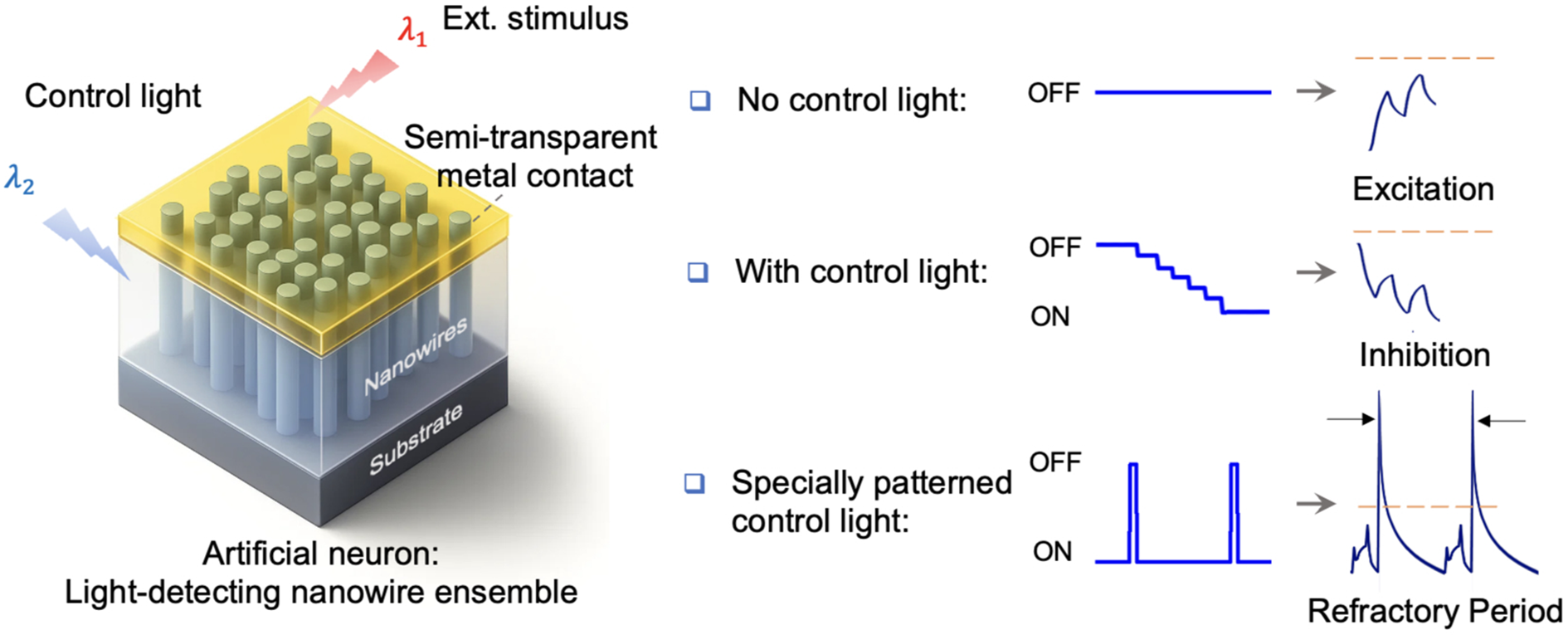
This new device works differently. It detects light and interprets it in the same place. That mirrors how the eye processes visual signals before sending them to the brain.
This approach reduces the need for data transfer. It also lowers energy use, which has become a major challenge in artificial intelligence.
Instead of building large systems to simulate neurons, the researchers created a single structure that behaves like one.
The device was created by stacking layers of atoms using a method called molecular beam epitaxy. Each layer plays a role in how the device responds to light.
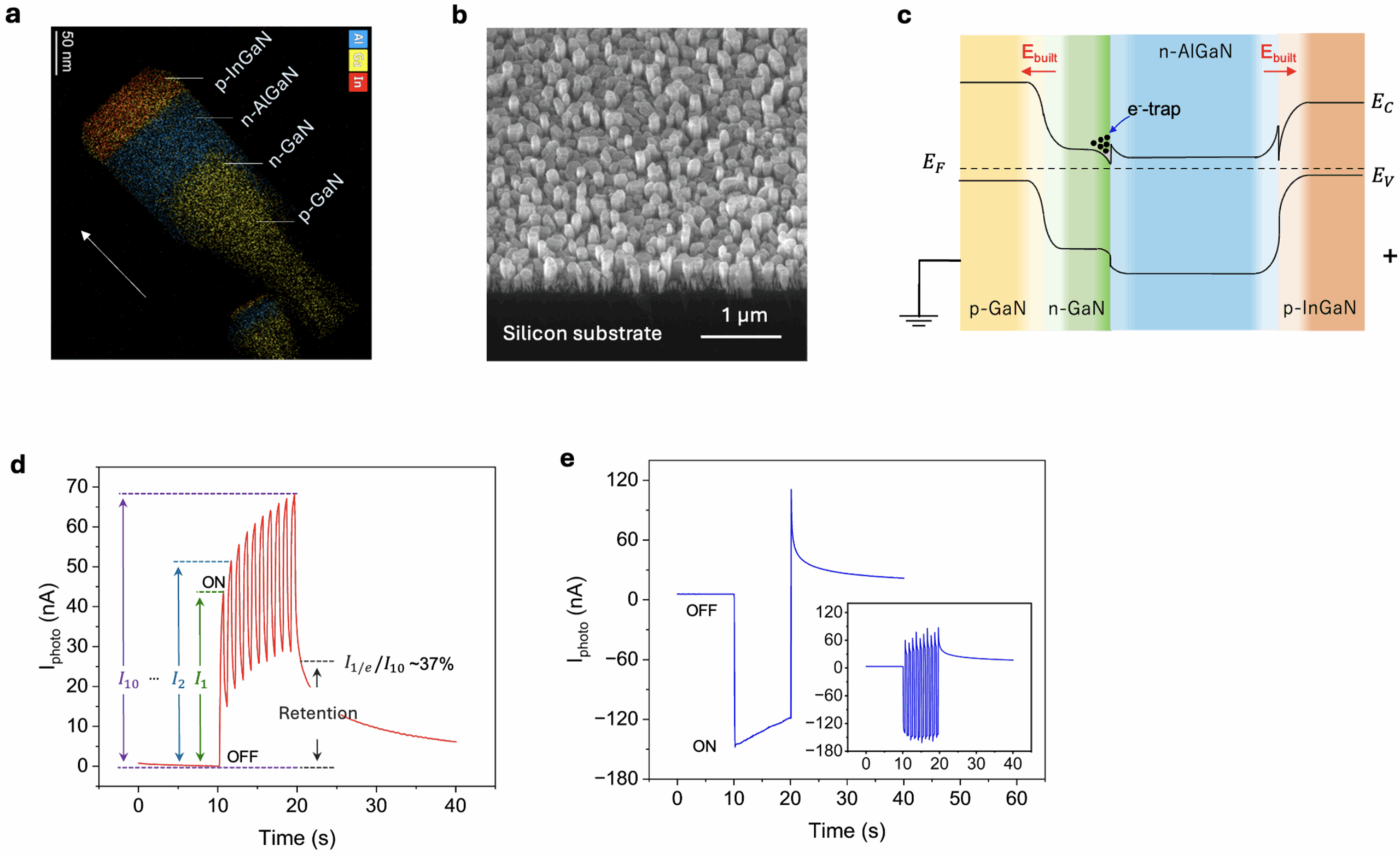
When exposed to different colors and intensities of light, the structure generates electrical signals. These signals change over time in ways that resemble how neurons behave.
By adjusting the layers, researchers controlled how electrical current flows through the device. This allowed them to shape its response to match key features of neural activity.
“By carefully engineering the layers, we created a device with a tunable response to light, which forms the basis for emulating how a single neuron behaves,” Zhao said. “We were able to design the flow of electrical current to produce the behaviour we wanted.”
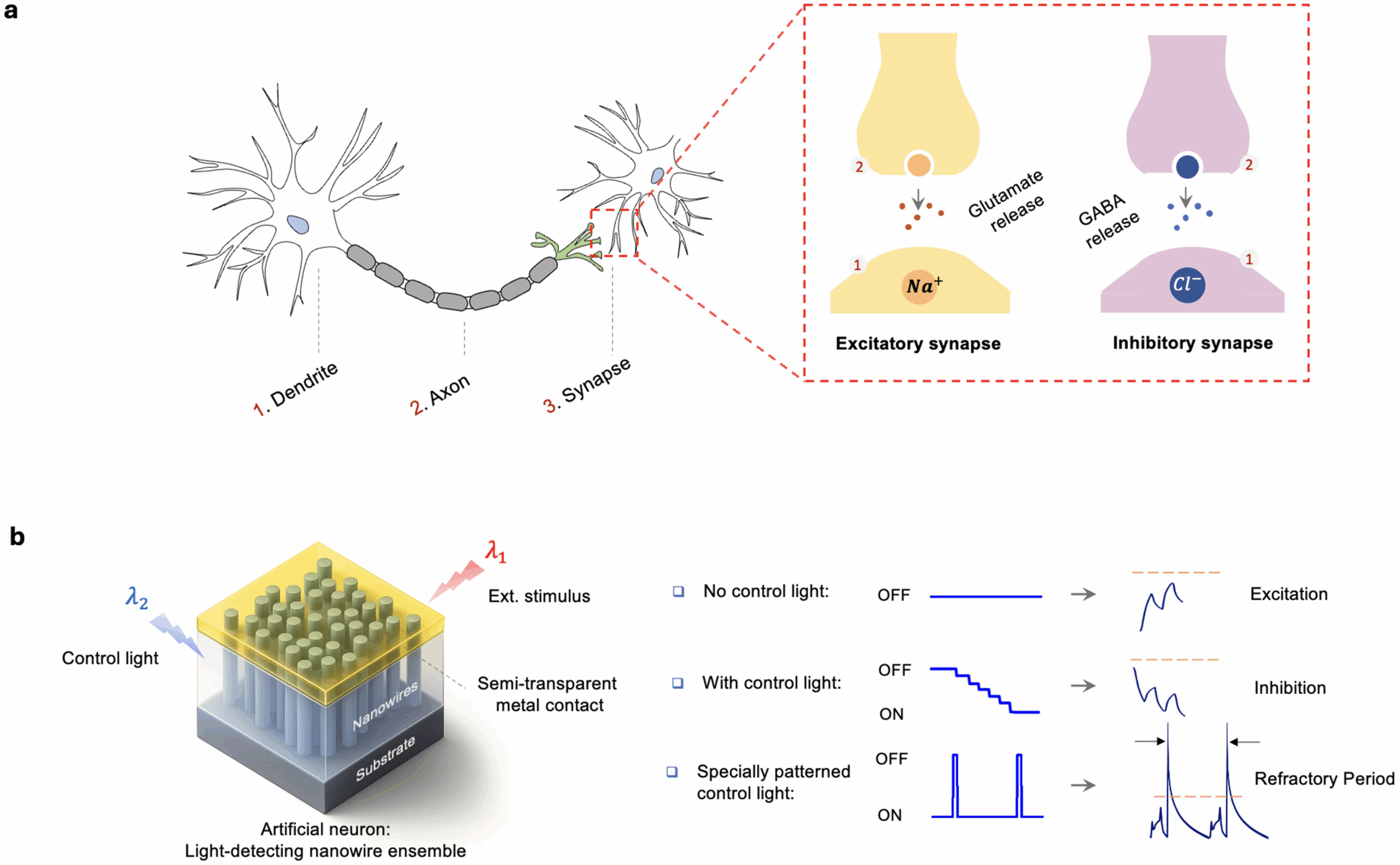
A real neuron receives signals, adds them together, and fires when a threshold is reached. The new device shows similar behavior.
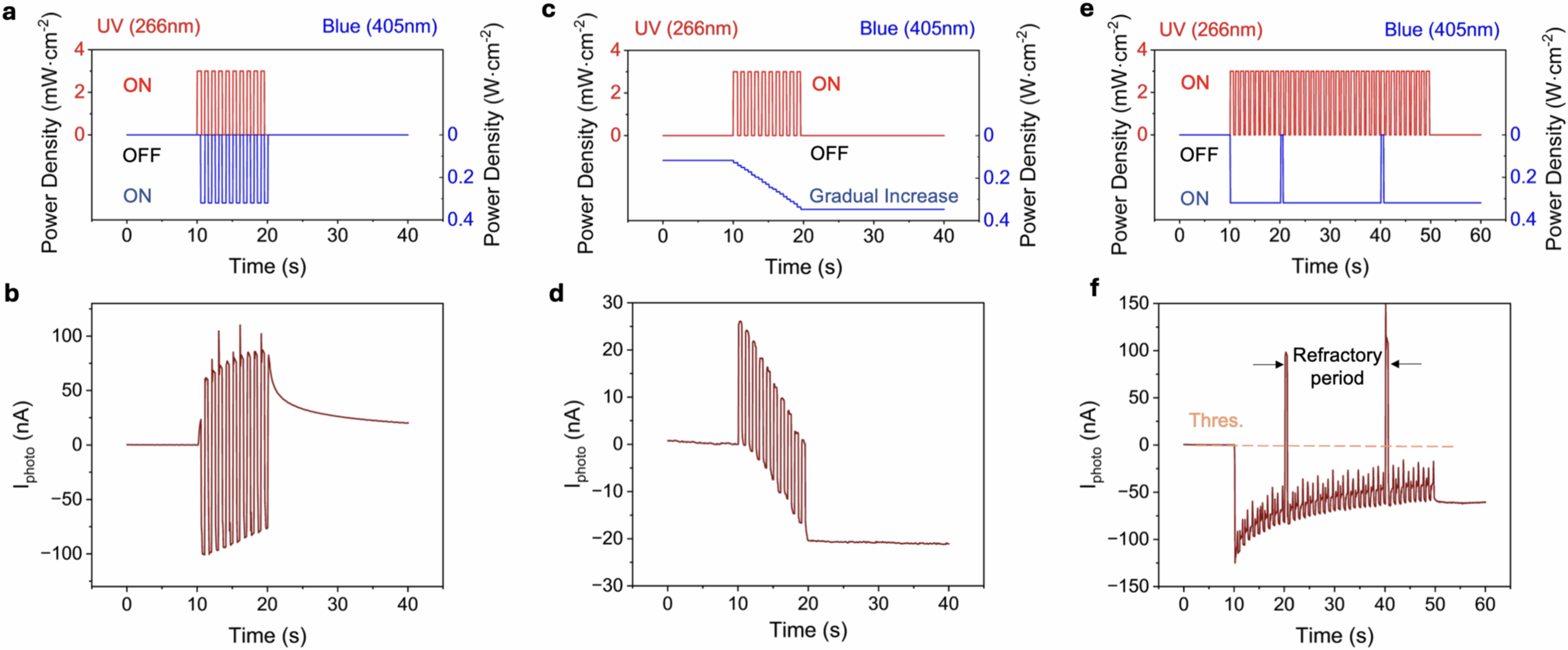
It can combine incoming signals over time. It can briefly store information. It can also trigger a response once a certain level is reached.
These steps are essential for how the brain processes information. They allow neurons to filter noise, detect patterns, and respond to meaningful signals.
The device can also show both excitation and inhibition. Some light inputs increase its response, while others reduce it. This balance is critical for stable and flexible processing.
It even displays short-term memory. After repeated signals, its response changes for a short period. This mirrors how neurons adapt based on recent activity.
One of the most important advantages is efficiency. Traditional artificial neural networks require large amounts of power.
They rely on many layers of computation and constant data transfer. This can slow performance and increase energy demand.
The new system reduces those needs. Because sensing and processing happen in the same place, less energy is required.
The device operates at very low voltages, similar to biological systems. This makes it a promising option for future technologies that need to run continuously.
The research could have a strong impact on vision-based technologies. Artificial retinas, for example, aim to restore sight by replacing damaged parts of the eye.
A device that processes visual signals directly could make these systems more effective. It could also improve smart sensors used in cameras, robotics, and autonomous systems.
By handling information at the point of detection, these devices could respond faster and with greater accuracy.
They could also reduce the amount of data that needs to be transmitted, which is especially useful for portable or remote systems.
Artificial neural networks are built from many connected units that mimic neurons. These units are usually mathematical models rather than physical structures.
The new device offers a different approach. Each unit behaves like a real neuron, making it possible to build networks from physical building blocks.
“A single artificial neuron is like a cell you can use as a building block, allowing us to construct networks from the bottom up,” Zhao said. “It’s a bit of a crazy idea, to create something like a biological system using an inorganic material.”
This could lead to new types of computing systems. Instead of simulating the brain, they could operate in a way that is closer to how it actually works.
Researchers plan to improve the device by expanding its response to a wider range of light. They also aim to enhance its performance and stability.
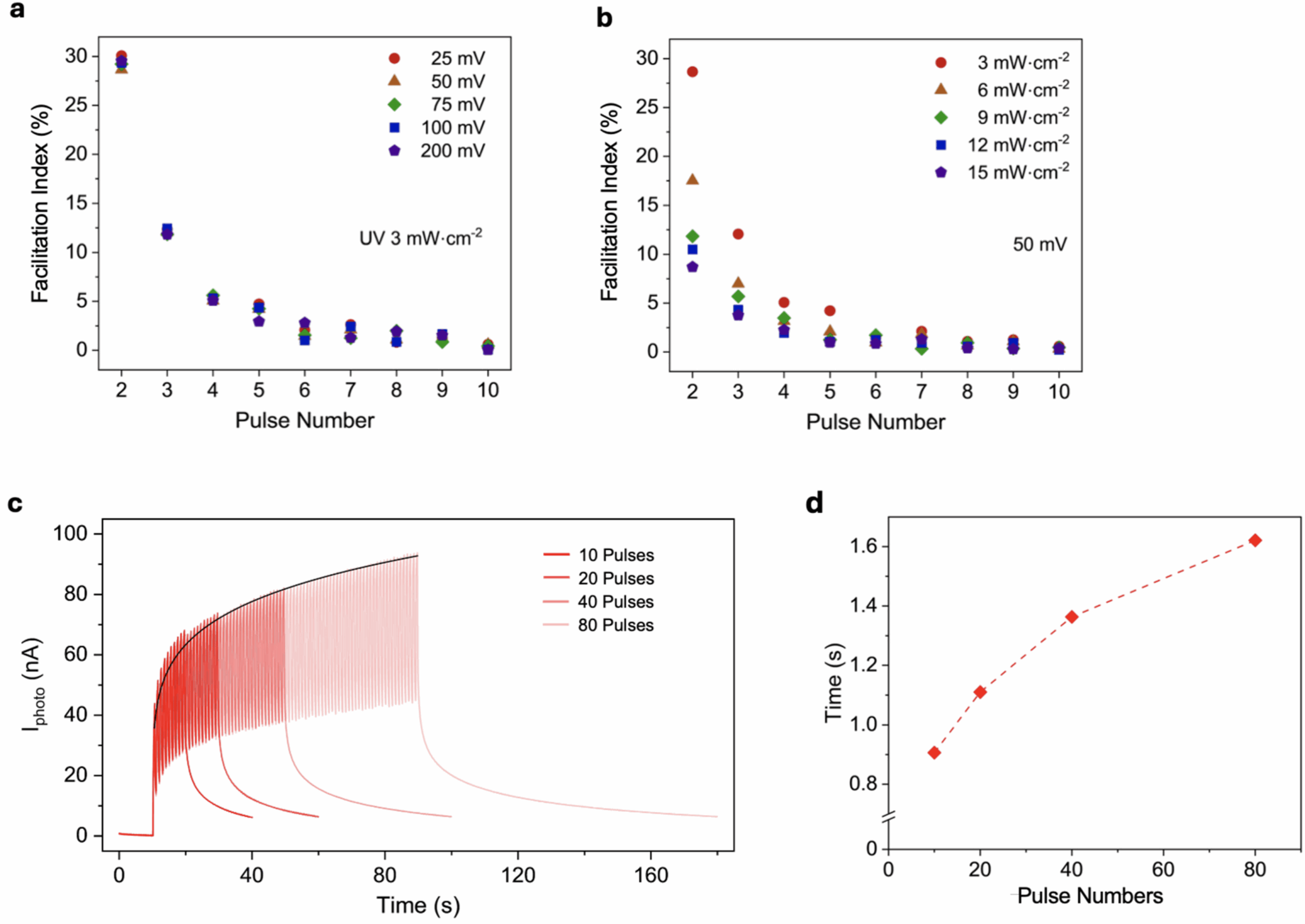
One potential application is data encryption. Processing information directly at the sensor level could make systems more secure by reducing exposure during data transfer.
The flexibility of the design also allows for customization. By changing the materials or structure, scientists can tailor the device for different uses.
This could lead to new tools for sensing, computing, and communication.
The study highlights a shift in how artificial intelligence may be built in the future. Instead of relying on large, energy-intensive systems, researchers are exploring smaller, more efficient designs.
By combining sensing and processing in a single structure, the new device offers a simpler and more natural approach.
It also brings technology closer to the way biological systems operate. This could help bridge the gap between artificial and natural intelligence.
This research could improve how machines process visual information. By combining sensing and processing, devices may become faster and more efficient. This could benefit technologies such as cameras, robotics, and autonomous systems.
In medicine, the findings could support the development of artificial retinas. These systems may help restore vision by processing light in a way that resembles natural eyesight.
The energy efficiency of the device is also important. Lower power requirements could make advanced computing more sustainable and accessible. This is especially valuable for portable devices and large-scale data systems.
In the long term, the ability to build neural networks from physical units may lead to new forms of artificial intelligence. These systems could operate more like the human brain, improving performance and adaptability.
As research continues, this approach may open new paths for both technology and science, bringing machines closer to the efficiency and complexity of living systems.
Research findings are available online in the journal Nanoscale.
The original story “New light-sensing device acts like a neuron in the human brain” is published in The Brighter Side of News.
Like these kind of feel good stories? Get The Brighter Side of News’ newsletter.
The post New light-sensing device acts like a neuron in the human brain appeared first on The Brighter Side of News.

