The oldest question in biology has a trap built into it. DNA holds the instructions for making proteins. Proteins are needed to copy, repair, and read DNA. Each depends on the other, which raises an obvious problem: how did either one get started?
The most popular answer is that neither came first. Before both, there was RNA, a single molecule able to do two jobs at once, storing genetic information like DNA and speeding up chemical reactions like a protein. That idea, the RNA World hypothesis, has one persistent weakness. For an RNA-based lifeform to survive, it needed a way to fix its own genetic material when it broke, and no one had shown that RNA could do that repair job by itself.
A team led by biochemist Saurja DasGupta at the University of Notre Dame now has, published in Nature Communications. And the way they found it was almost entirely by accident.
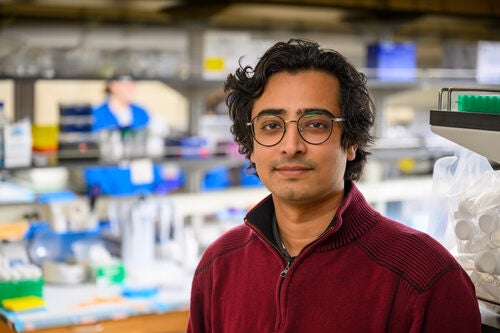
DasGupta’s lab was not searching for a repair enzyme. They were using a technique called in vitro evolution to modify an existing family of RNA catalysts, known as ribozymes. The method works by taking trillions of RNA molecules, applying a selection pressure, and seeing which ones survive and reproduce, a kind of evolution conducted entirely inside test tubes.
It rarely goes exactly as planned.
“The general consensus is that artificial evolution comes down to quite a bit of luck,” DasGupta said. “Sometimes you get what you’re aiming for, sometimes you don’t. And when you don’t, you start over and do it again.”
This time, more than 60 percent of the ribozymes that emerged from the experiment were doing something the researchers had not designed for. Rather than performing the intended reaction, they were seeking out broken pieces of RNA and pasting them back together. The team followed the anomaly instead of throwing it away, and found a reaction that had not been documented before.
“The existence of this ribozyme has interesting implications for our understanding of the origins of life, and we came across it while looking for something else,” DasGupta said. “What I’m most surprised about, actually, is that it wasn’t found sooner.”
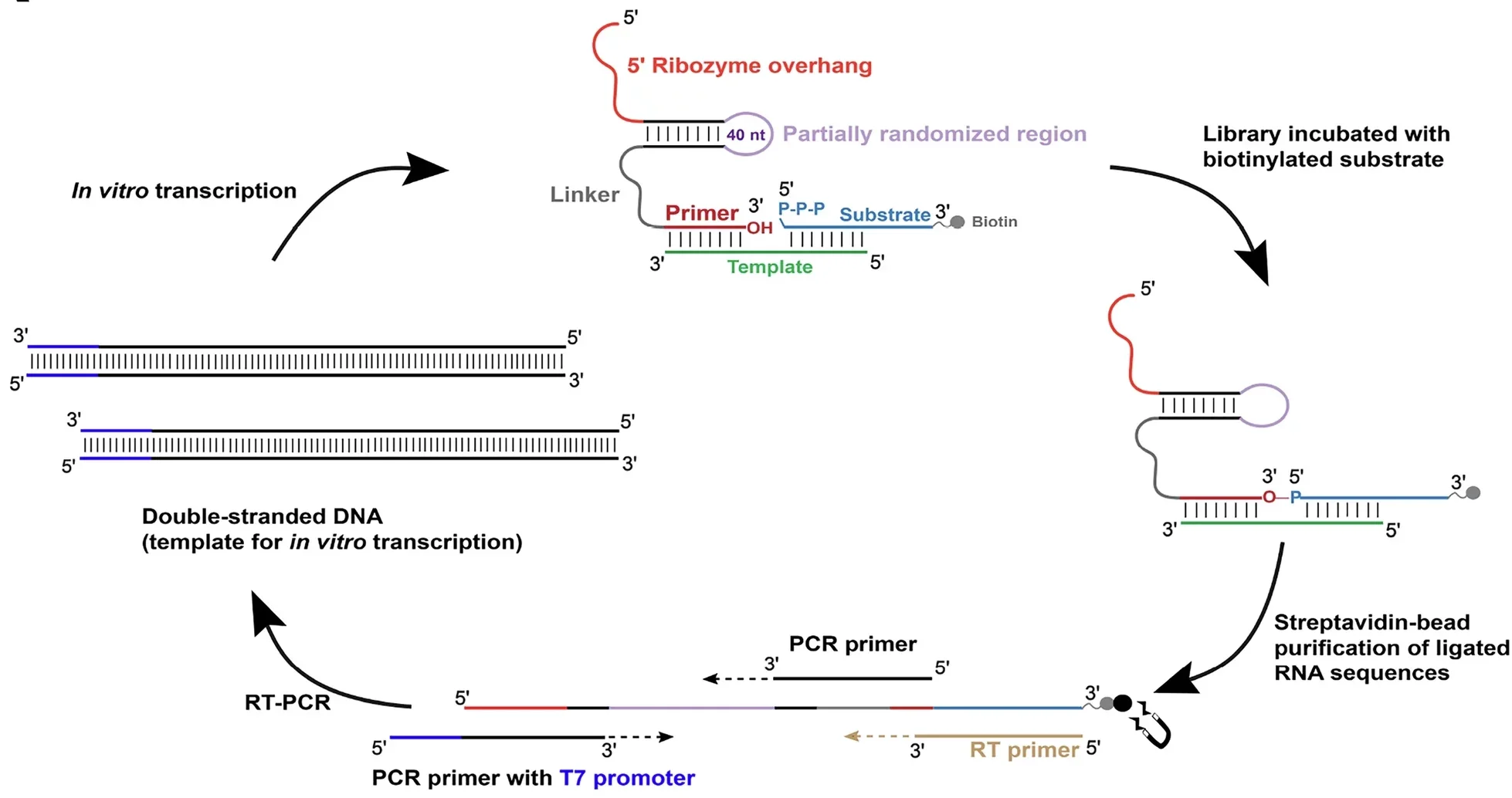
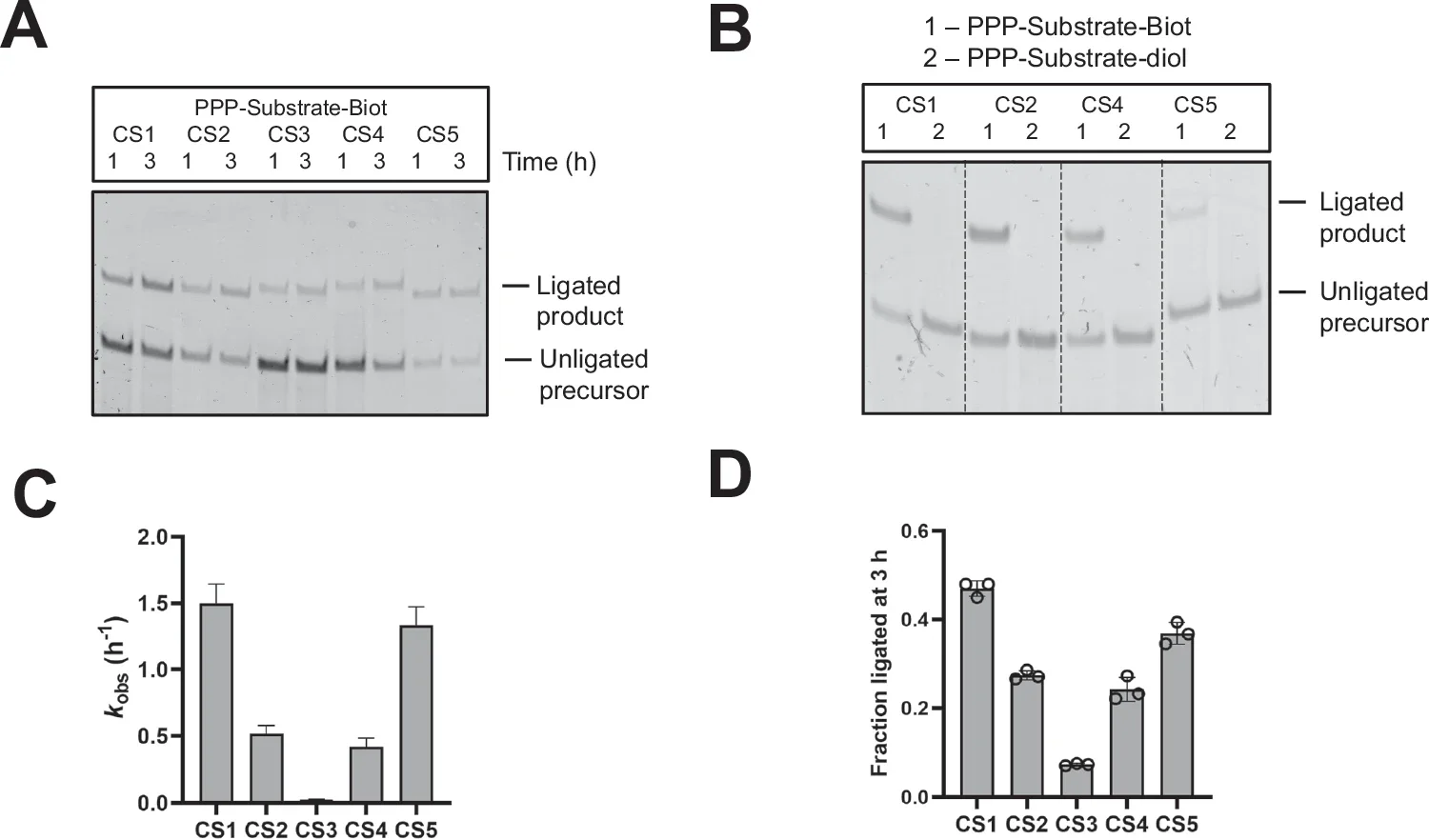
The enzyme’s usefulness comes down to its ability to tell damaged RNA apart from healthy RNA, and it does so by reading a small chemical detail at the end of the strand.
When an RNA molecule breaks, the newly exposed end terminates in a phosphate group, a single phosphorus atom bonded to four oxygens. An intact strand ends differently, in a hydroxyl group made of one oxygen and one hydrogen. The ribozyme is tuned to that difference. It latches onto strands ending in a phosphate, the broken ones, and ignores those ending in the standard hydroxyl.
“The fact that this enzyme seeks out terminal phosphate groups in RNA, and therefore broken RNAs, while ignoring strands that end with standard hydroxyl groups suggests that it could have been important for primordial RNA repair,” said DasGupta, who collaborated on the study with Jack W. Szostak of the University of Chicago.
That selectivity is exactly what a repair system requires. An enzyme that joined RNA strands indiscriminately would create as much disorder as it resolved. One that acts only on broken ends can restore damage without scrambling everything else.
RNA is chemically delicate. Heat, high pH, and other everyday stresses snap its backbone apart. For any organism built on an RNA genome, that fragility poses an existential problem. Every unrepaired break would erase a piece of the genetic record permanently.
“Modern organisms have repair mechanisms to mend broken DNAs; if early life forms carried their genes in RNA, then a similar repair process must have existed,” DasGupta said. “Otherwise, when heat, high pH or other stressors inevitably damaged the RNA genome, the genetic information would have been permanently lost, effectively stopping life in its tracks.”
The new ribozyme shows that RNA alone could have supplied that safeguard. A single RNA molecule, without any protein, can identify broken RNA and rejoin it, filling in one of the RNA World hypothesis’s largest missing pieces.
“Our results suggest that the molecular tools needed to preserve the RNA-based genetic code and pass it on to future generations could have been furnished by RNA alone, no proteins required,” DasGupta said.
There is a suggestive echo in modern biology. Living cells today use protein-based enzymes to perform structurally similar RNA-joining reactions during the maturation of transfer RNA and in response to cellular stress. That the same essential chemistry surfaces in both a protein and an RNA form hints that it may be a fundamental, recurring solution to the problem of keeping genetic material intact.
The discovery did not stay confined to questions about the distant past. It landed on a practical problem in present-day medicine.
Broken RNA is not merely a relic of primordial chemistry. Cells generate it constantly, and elevated levels of it show up in viral infections and in certain cancers, where the normal processes that cut and process RNA go awry. Studying that broken RNA could reveal a great deal about disease. The trouble is that the standard tools for reading RNA cannot see it.
RNA sequencing relies on chemical tags that attach to the ends of RNA strands. Those tags are built to bind to intact, hydroxyl-terminated ends. Broken RNA, capped with a phosphate, goes untagged and therefore uncounted, effectively invisible in the data.
“Broken RNAs are essentially invisible in standard sequencing protocols, which is a barrier to understanding the relationship between RNA cleavage and disease,” said DasGupta, who is a faculty affiliate of the Berthiaume Institute for Precision Health and the Warren Center for Drug Discovery.
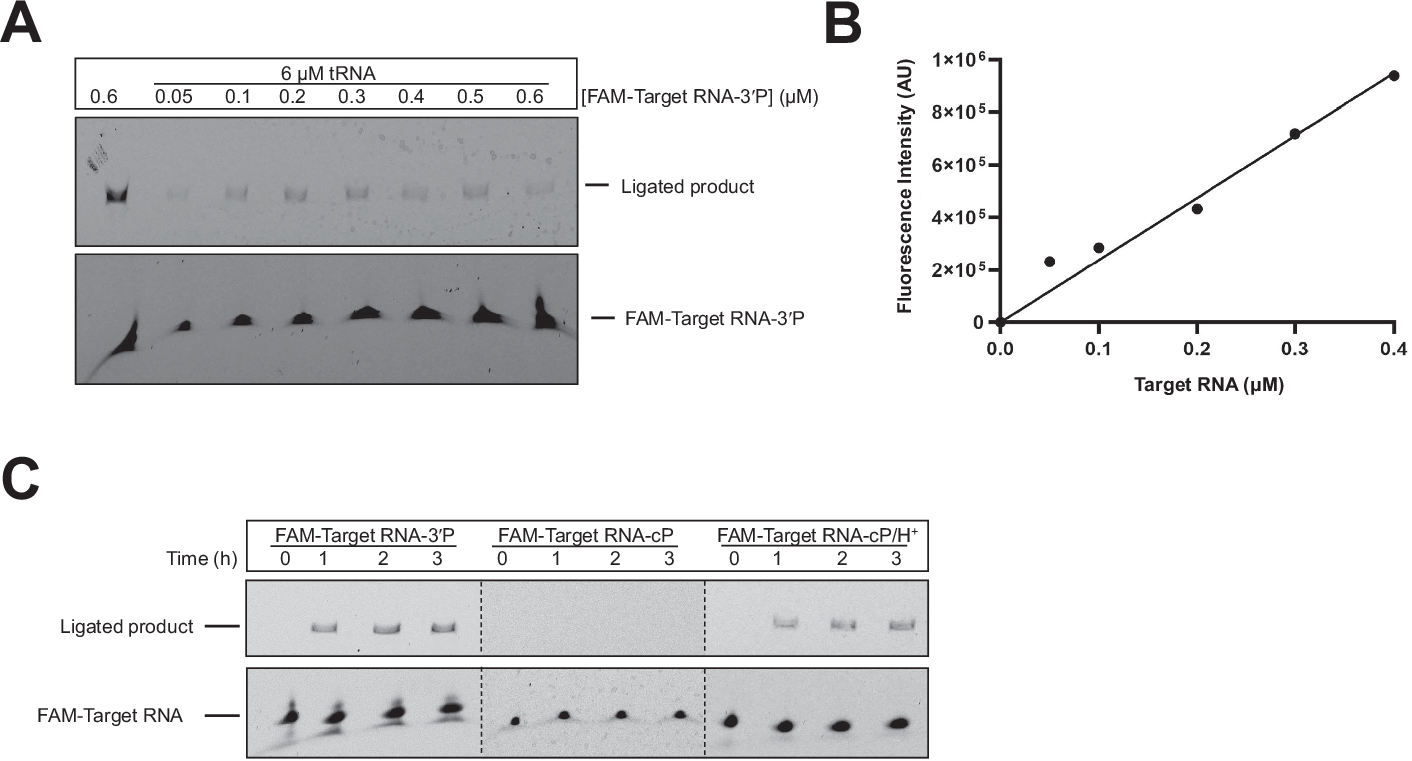
Because the new ribozyme binds specifically to those phosphate-capped broken ends, it can pull broken RNA out of a mixture and prepare it for sequencing, rendering the invisible visible. In early tests, the enzyme captured broken RNA even when intact RNA from bacterial cells outnumbered it 60 to 1, and the amount captured scaled in a clean, linear way with how much broken RNA was present, a sign that the technique could eventually be used for quantitative measurement, not just detection.
The most immediate payoff is in genomics. Broken RNA carrying phosphate ends is a blind spot in current sequencing, and the populations of cleaved RNA in cells under stress, infection, or disease remain poorly mapped. A reagent that selectively captures and amplifies those molecules would open a portion of the transcriptome that researchers have largely been unable to study, potentially surfacing new biomarkers for conditions in which RNA cleavage plays a role.
DasGupta’s lab is now working to improve the ribozyme’s efficiency and widen the range of RNA sequences it can act on, steps toward turning a laboratory curiosity into a usable diagnostic tool.
Reaching further back, the finding strengthens the scientific case for the RNA World. A self-replicating RNA system is only plausible if it can preserve its own genetic information against constant chemical damage. Demonstrating that an RNA molecule can carry out targeted, selective repair, with no protein involved, supplies a credible mechanism for exactly that maintenance, and makes the idea of a purely RNA-based early biology look more workable than it did before.
“What began as a quest for insight into the origins of RNA-based life and ended in an unanticipated finding has also provided a potential solution to a major challenge in biotechnology,” DasGupta said. “We’re excited to continue pursuing these new frontiers in ancient RNA biology and modern diagnostics.”
Research findings are available online in the journal Nature Communications.
The original story “No proteins required: Newly discovered enzyme can hunt and mend broken RNA” is published in The Brighter Side of News.
Like these kind of feel good stories? Get The Brighter Side of News’ newsletter.
The post No proteins required: Newly discovered enzyme can hunt and mend broken RNA appeared first on The Brighter Side of News.

