A crowd does not need a leader to fall into step. In public spaces, people sort themselves into lanes, avoid collisions, and slip through bottlenecks with surprising ease. Now a new study suggests that when people move freely and turn, most lean in one direction: counterclockwise.
That pattern appeared so consistently that it stopped being a curiosity and became the main story.
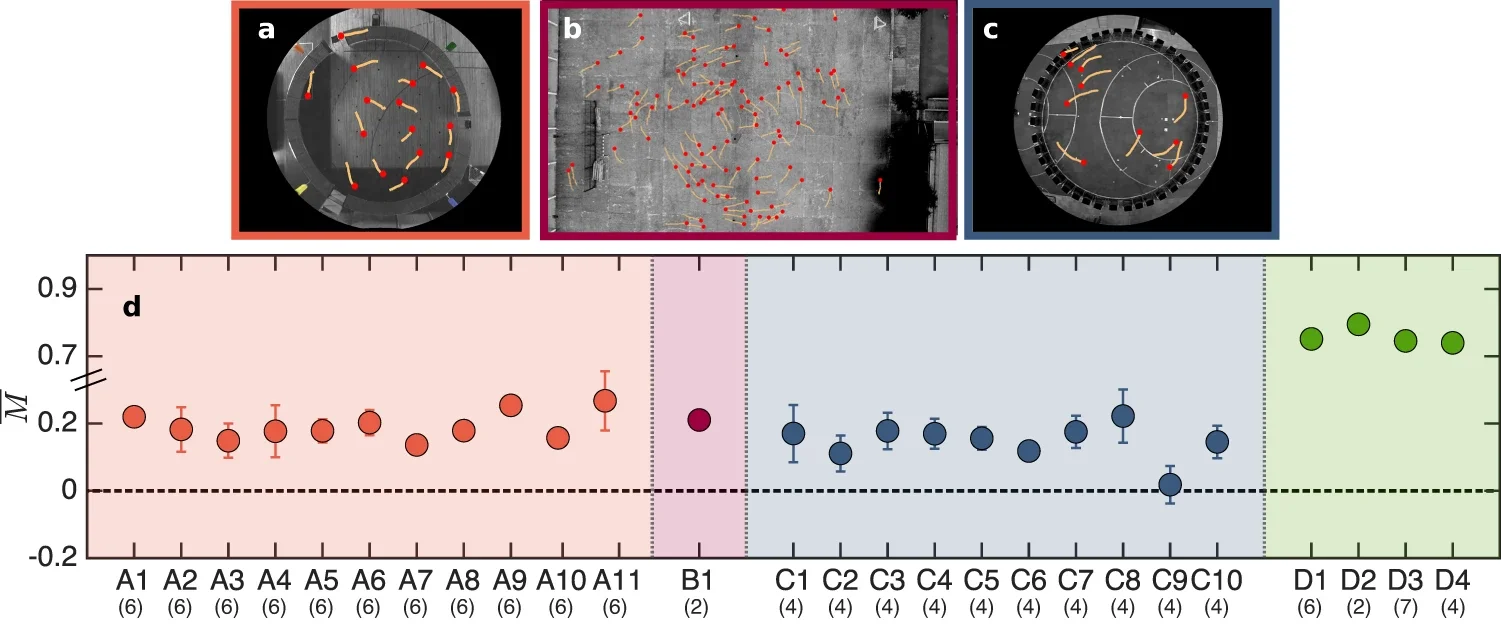
Researchers from the University of Navarra in Spain, working with collaborators at the University of Tokyo in Japan, tested pedestrians in several settings to see whether turning behavior followed any clear rules. Across experiments in both countries, people showed a strong preference for turning counterclockwise rather than clockwise. The findings were published in Nature Communications.
The project began during the COVID-19 pandemic, when scientists were studying how people move through shared spaces and how to preserve social distance of about 2 meters, or 6.6 feet. But while reviewing video from one experiment, the team noticed something unexpected.
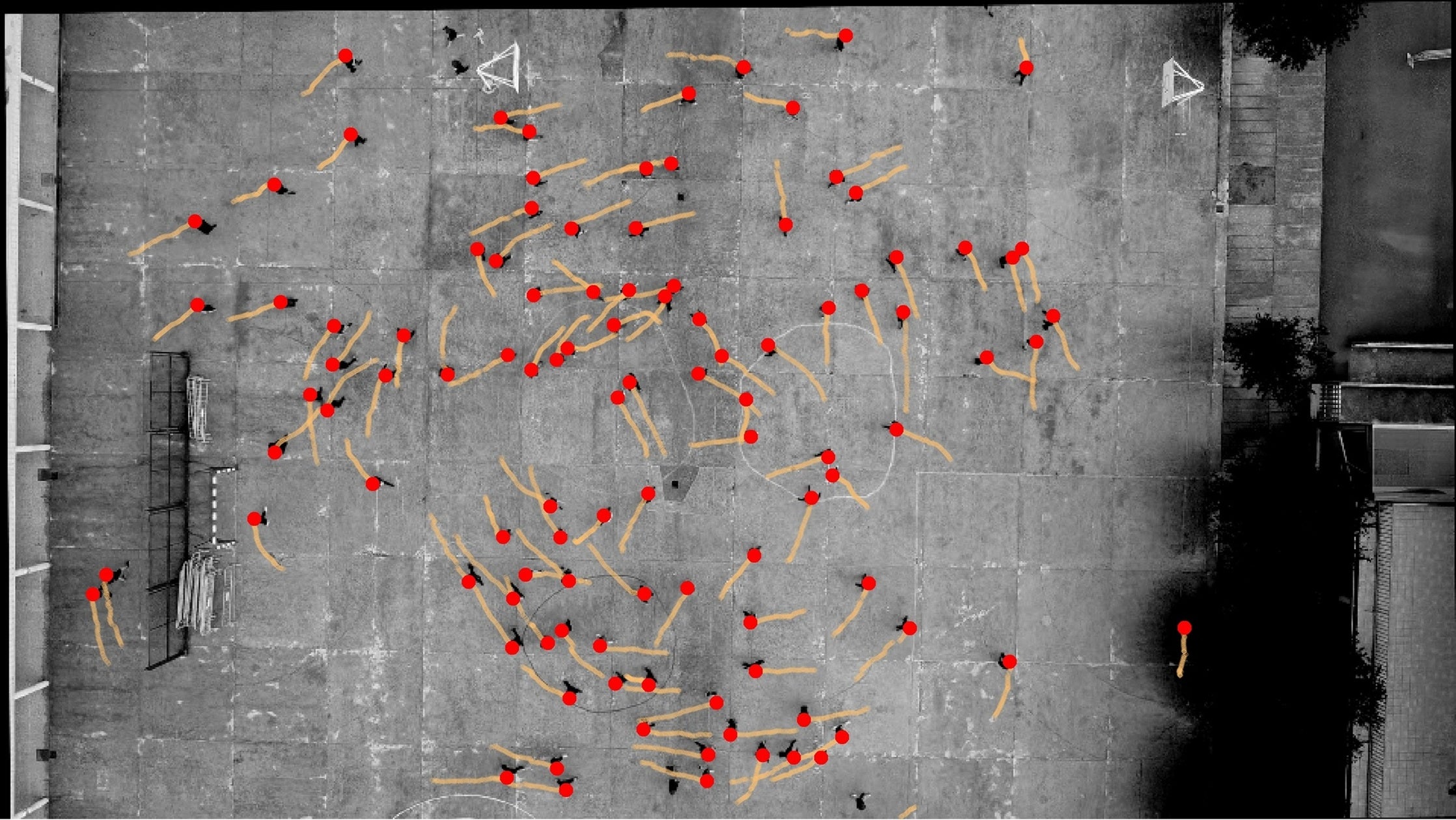
“When analyzing the experiments, my colleagues realized by chance that in 32 out of 33 experimental trials, as people moved and turned, they noticeably preferred to turn counterclockwise,” said Project Associate Professor Claudio Feliciani from the University of Tokyo’s Department of Aeronautics and Astronautics.
“This was completely unexpected as, at least instinctively, when people walk around randomly, you imagine people turn as their needs suit them, with little sign of an overall preference. But there was a definite, measurable tendency for people to turn counterclockwise over clockwise, all things being equal.”
To find out whether this was just a fluke, the researchers widened the experiments. First, they tested pedestrians in enclosed spaces and in an open schoolyard. Then they compared people in Spain and Japan. Finally, they looked at group size, gender, handedness, footedness, eye dominance, and age.
The pattern held.
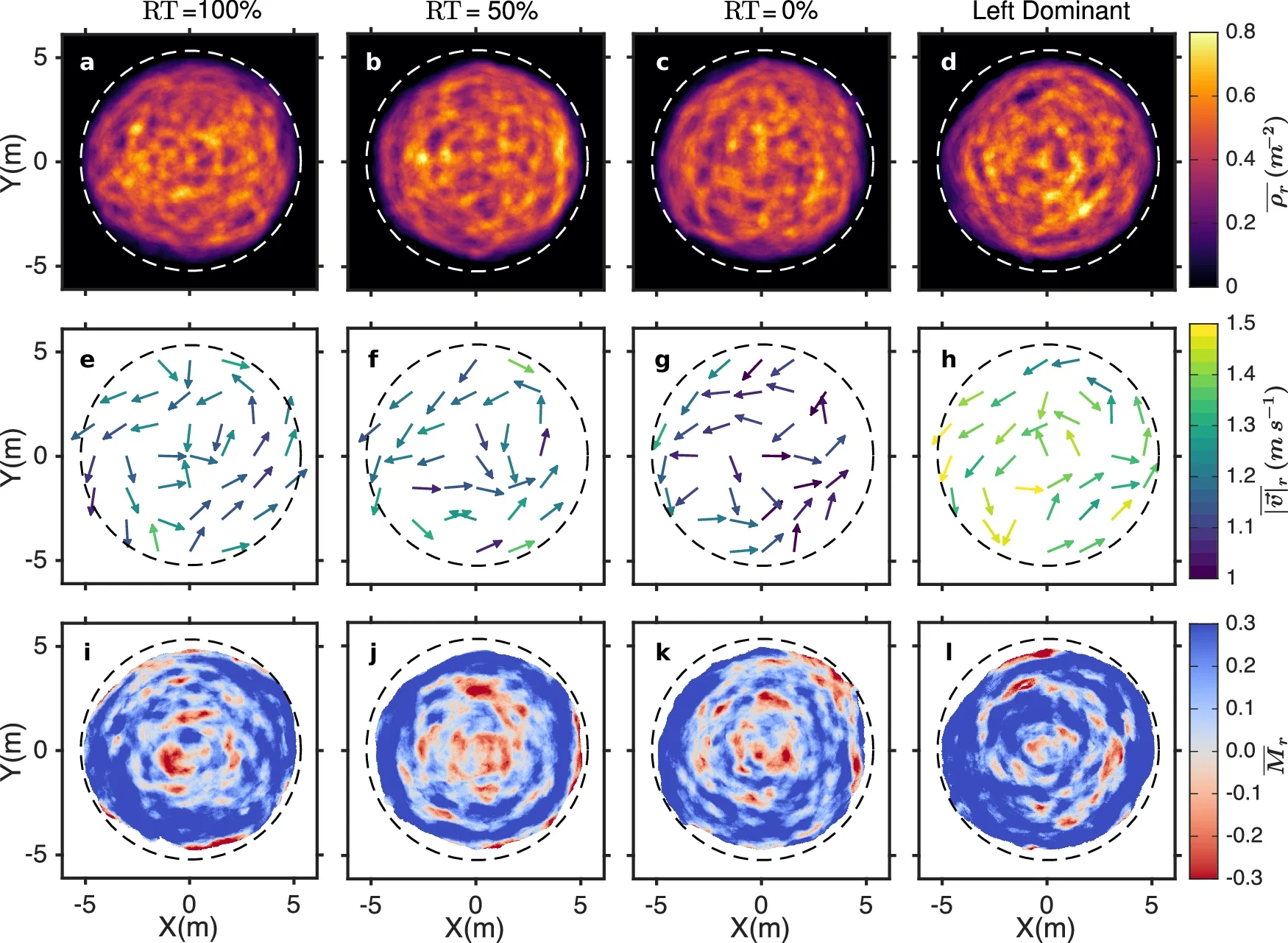
In Spain, volunteers walked inside a circular arena in three crowd sizes: 16, 24, and 32 people. Some groups were made up entirely of right-turners, people who in a separate test preferred to turn right after reaching a wall. One group consisted only of left-dominant participants, defined as both left-handed and left-footed. None of that changed the broader result. The groups still showed a steady counterclockwise bias.
The same thing happened in Japan, where the team wanted to test whether culture might matter. That was a reasonable question. In bidirectional pedestrian traffic, people in Spain and most of Europe tend to dodge to the right, while in Japan they often dodge to the left. If crowd turning were mainly shaped by social habits or avoidance rules, Japan might have produced the opposite pattern.
It did not.
“The team had to understand the reason for this, and all good research practice dictates that you test observations against multiple possible causes to narrow down what’s really going on. And it’s this that led them to contact me in Japan, as initially, it was thought that cultural factors might affect turning preference. So, among other things, we tested that,” Feliciani said.
The researchers also wanted to know whether walls or enclosure shape the movement. In one follow-up test, more than 100 teenagers moved around a 50-by-60-meter schoolyard in Spain, a setting with far fewer boundary effects than the circular arena. The counterclockwise pattern still appeared.
That mattered because it weakened the idea that the bias comes mainly from how pedestrians interact with walls.
The study then pushed further, asking whether the turning tendency might really be a crowd phenomenon at all. To test that, the team examined individual behavior. More than 200 participants walked alone, one at a time, inside an enclosure. Even then, the preference remained. The distribution of individual turning behavior showed a pronounced bias toward counterclockwise motion.
That result cut against the idea that the effect only emerges when people respond to one another in groups. Instead, the study argues that the bias is rooted in individual behavior and only becomes visible at the crowd level because many people bring the same tendency into the same space.
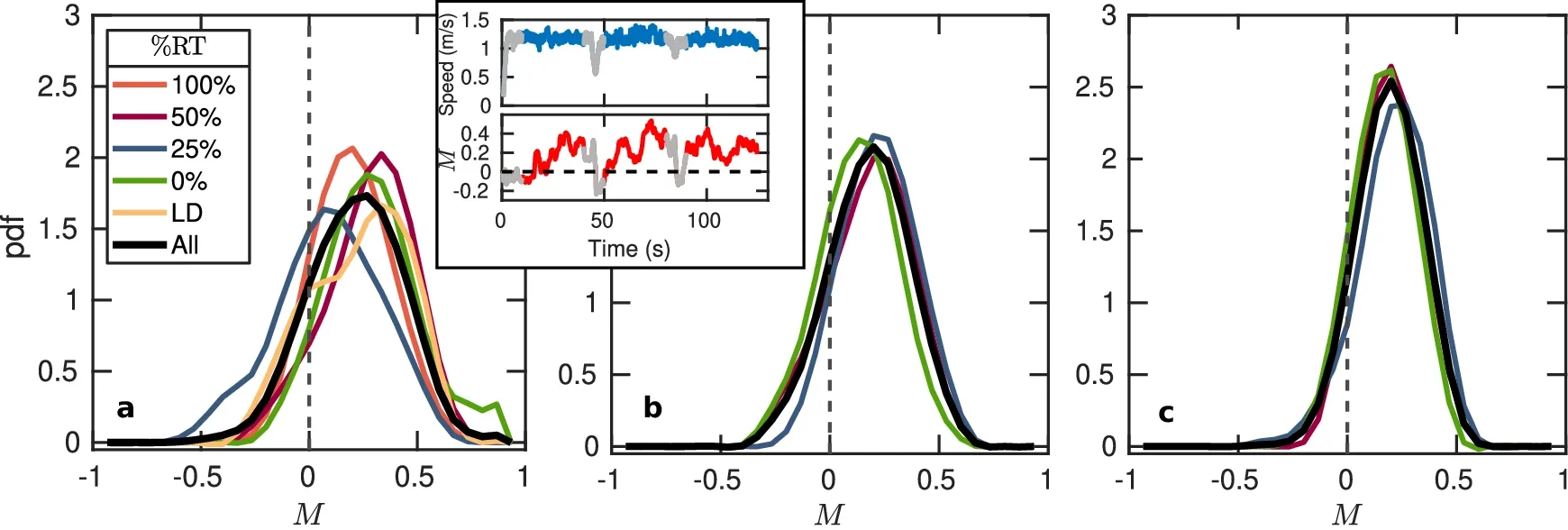
The team also checked several obvious explanations and found little support for them. Handedness, footedness, eye dominance, sex, and even temporarily covering the right eye did not produce statistically significant differences. The researchers noted that some subgroup sizes, especially left-handed and left-footed participants, were small, so they cannot rule out subtle effects. But no strong signal appeared.
“It likely does not come from the eyes, because we tried to patch people’s left or right eyes and the bias was still there. And some people asked us if it might be large-scale phenomena like the Coriolis force or Earth’s magnetic field, but this seems unlikely given what we have managed to point to so far,” Feliciani said.
Age was the only factor that stood out, though only modestly. In nursery school data from Japan, children about 5 years old showed a much stronger counterclockwise pattern than adults. In that setting, the motion sometimes became highly coordinated, with children moving together in a stable vortex-like flow.
“Of all these things, the only thing that stood out was that kids tend to have a stronger bias for the counterclockwise direction, so probably age plays a role in making the effect weaker or stronger,” said Feliciani.
The researchers also tested whether an unspoken social norm might be at work. A survey in Spain found no clear evidence for that. In fact, if anything, the reported expectations leaned slightly clockwise, the opposite of what people actually did in motion experiments.
That left the central question unresolved: why do people do this?
“Our results may appear to be a minor, insignificant discovery, but in nature, most phenomena related to locomotion show that animals mostly walk without directional preference. The strong bias found in people hints at some asymmetry at the biomechanical level,” said Feliciani.
The study does not claim a universal law. The authors note that dense crowds, emergency situations, signage, and architectural constraints could weaken or erase the effect. Their experiments also focused on healthy children, teenagers, and young adults, so it is not yet clear how the pattern might look in older adults or people with mobility limitations.
Still, the finding matters because it shifts the explanation for one kind of crowd behavior away from social emergence and toward a built-in human tendency. That could influence future work in biomechanics, neuroscience, crowd science, and urban design.
Feliciani said the team now wants more detailed experiments with individuals to track down the source of the asymmetry. The answer may lie somewhere in the body’s movement systems, but for now it remains open.
“There are some interesting parallels to certain sports. Some running and driving competitions are always, but inexplicably, held on courses that run counterclockwise. But that’s an investigation for another time.”
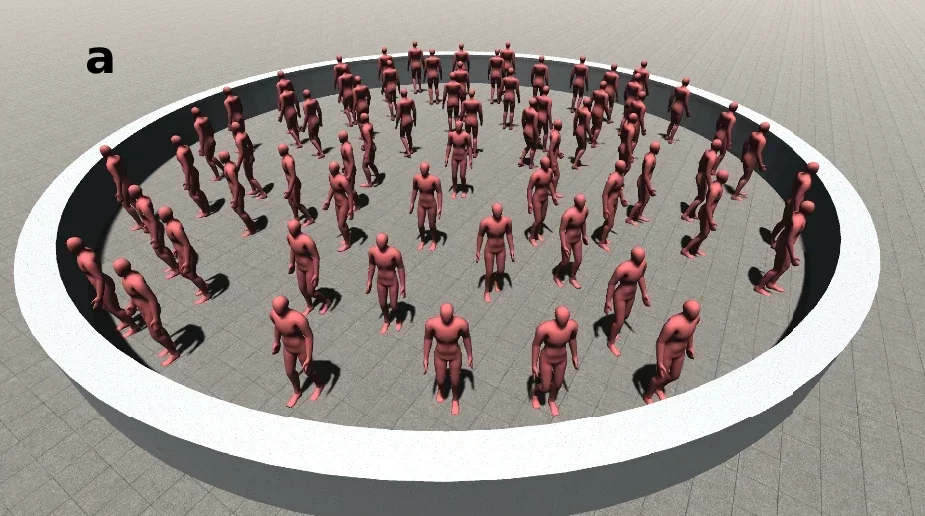
If the counterclockwise bias holds up in more realistic settings, it could help planners shape spaces that feel easier to navigate. Designers of museums, airports, train stations, shopping centers, plazas, and stadium forecourts may eventually be able to route circulation in ways that better match how people naturally move.
Engineers and architects could also use the finding in simulations of crowd flow, especially in places where comfort, efficiency, and collision reduction matter.
For brain and behavior research, the result offers a new clue that subtle asymmetries in human movement may run deeper than habit or culture alone.
Research findings are available online in the journal Nature Communications.
The original story “Researchers find a surprising human bias toward counterclockwise motion” is published in The Brighter Side of News.
Like these kind of feel good stories? Get The Brighter Side of News’ newsletter.
The post Researchers find a surprising human bias toward counterclockwise motion appeared first on The Brighter Side of News.

