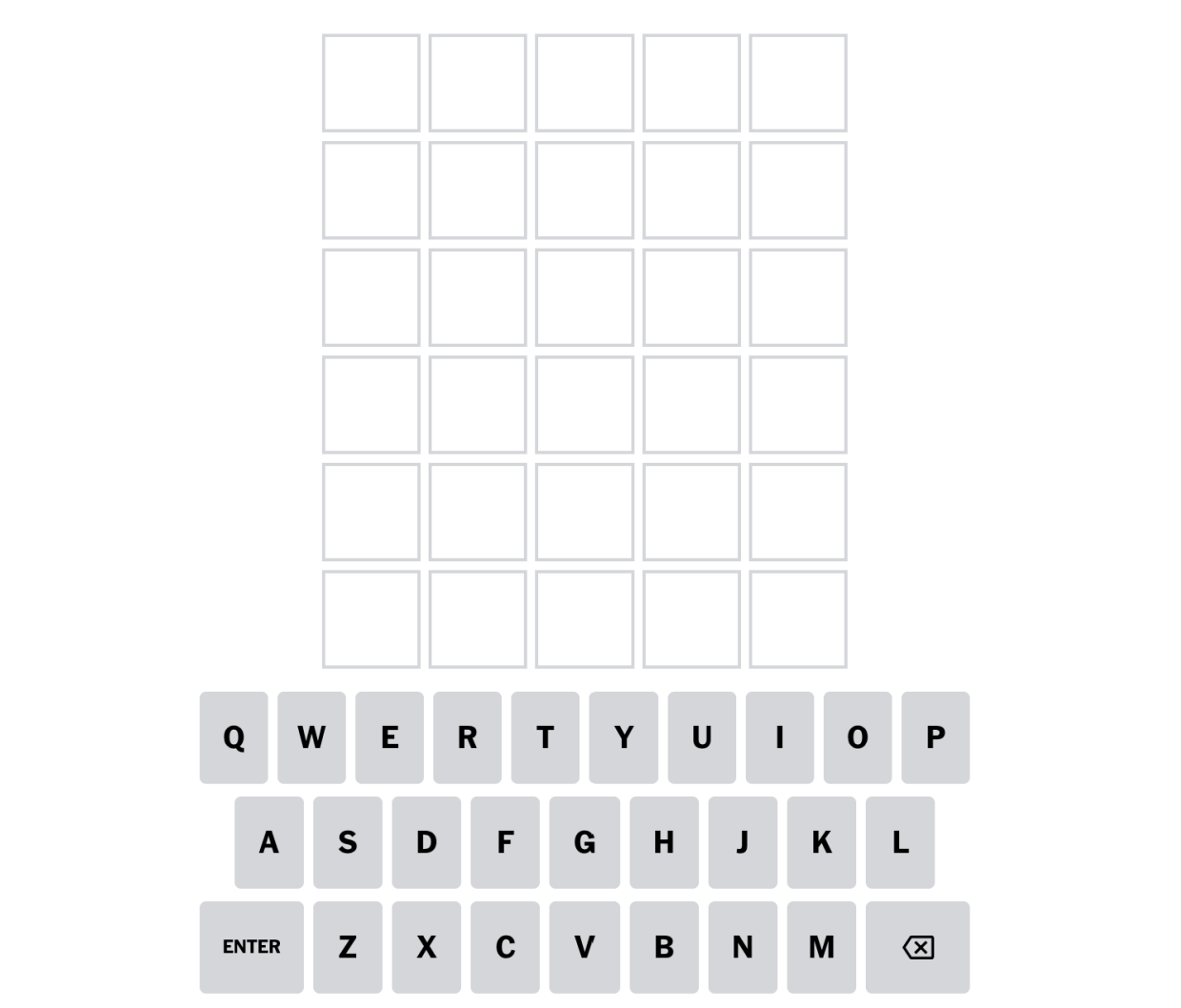
Every day, millions of people open Wordle and stare at five empty boxes, hoping the right first guess will unlock the puzzle. A new study argues that the smartest opening move is not the word that feels most likely, but the one that tells you the most.
That distinction pushed a team at Binghamton University in a different direction. Instead of chasing the answer right away, they built a Wordle strategy around Shannon entropy, the mathematical idea used to measure uncertainty and information. In their version of the game, each guess is judged by how much it can shrink the field of possible answers.
The result was a solver that, in the team’s tests, beat a more familiar letter-frequency approach by a wide margin. Across simulations using all 2,315 possible Wordle solution words, the entropy-based strategy solved almost every puzzle within six tries, while the baseline method succeeded about 90% of the time.
That may sound technical for a word game, but the logic is simple. Wordle is really a feedback system. Every guess gives you new information through gray, yellow, and green tiles, and each clue cuts away part of the search space.
The researchers, led by Assistant Professor Congyu “Peter” Wu, treated Wordle as a problem of information gain.
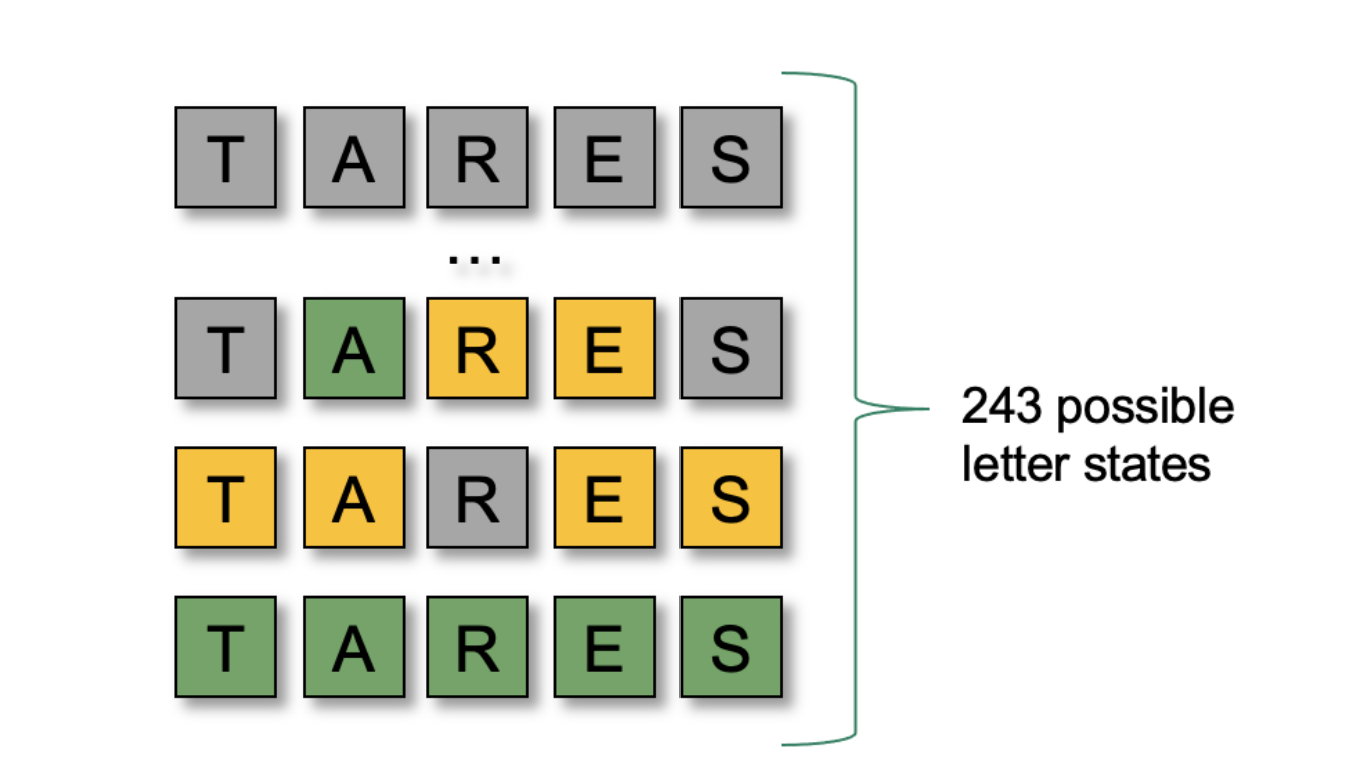
For every possible five-letter guess, they calculated how many different feedback patterns it could produce. Because each of the five letter positions can return one of three outcomes, gray, yellow, or green, a single guess can generate 243 possible states. The team then estimated the probability of each state across Wordle’s 12,972 valid five-letter words and used those probabilities to compute entropy.
In plain terms, the higher the entropy, the more useful the guess is expected to be.
“Let’s say you’re at a certain guess. The previous guesses will eliminate a whole bunch of options, and based on the remaining options, guessing some words will send you into a trajectory where information gain is speedier,” Wu said.
That leads to a subtle shift in strategy. Instead of asking, “What is probably the answer?” the solver asks, “What guess is most likely to teach me something important?”
“A subtle but important insight from the paper is that a guess doesn’t have to be the most likely answer; it simply has to be informative,” said Donald Stephens, a doctoral student at Binghamton University. “By applying Shannon entropy, the objective shifts to maximizing the expected reduction in uncertainty rather than the probability of being right. In practice, this approach can lead to solving the puzzle in fewer guesses.”
The team ranked all 12,972 valid five-letter words by expected information. Their top starting word was “tares,” which also happened to work well for the simpler baseline strategy because it includes common letters.
From there, the entropy solver updates after each round. Once Wordle returns its colored feedback, the program narrows the candidate list to words consistent with that pattern, then selects the next guess with the highest entropy from the remaining pool.
In one example shown in the paper, that process solved the puzzle in four guesses. The path began with “tares,” then moved through more informative guesses until the final word was pinned down.
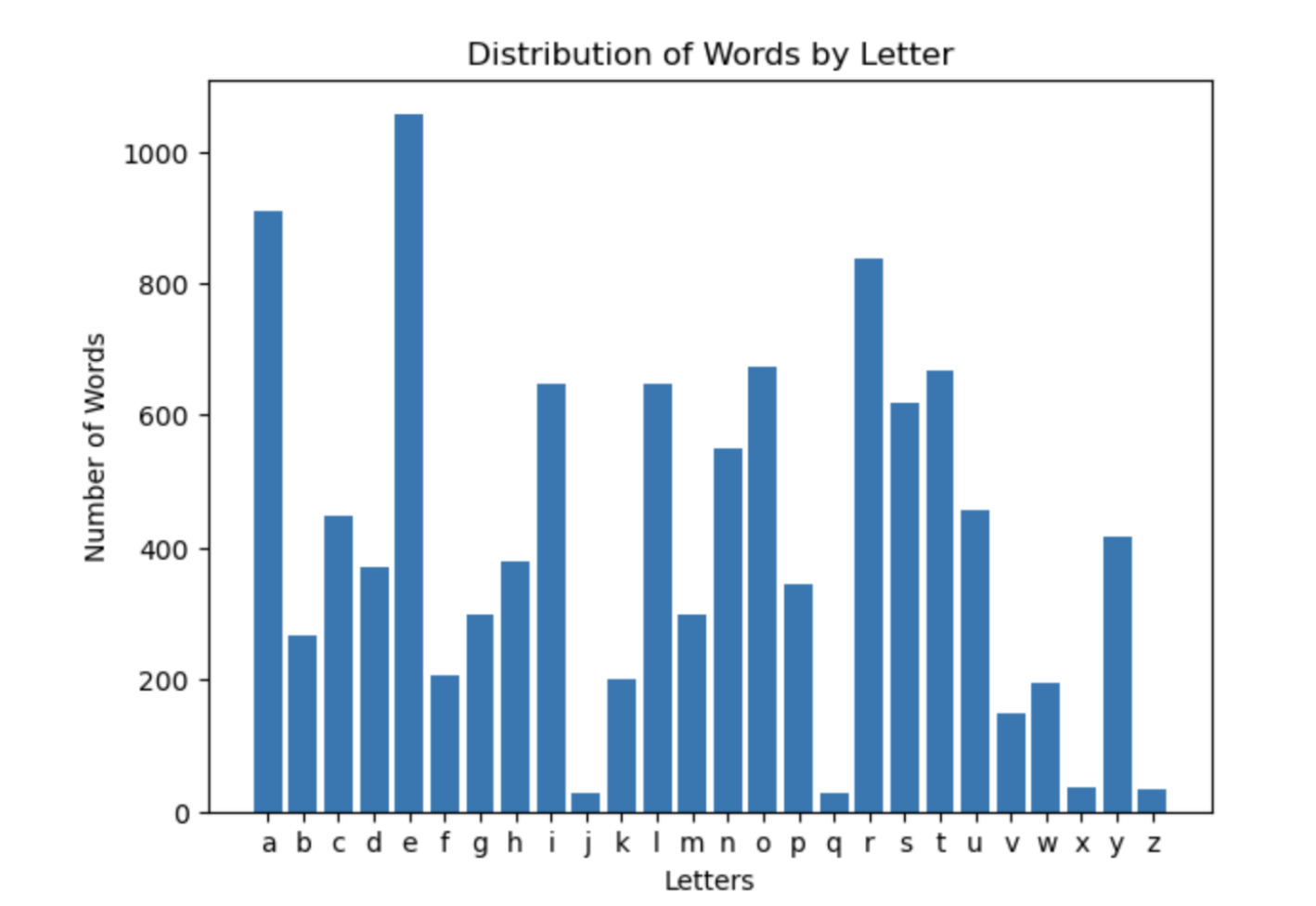
The comparison strategy was more intuitive and closer to how many people already play. It started with common letters such as A, E, and R, then tried to build later guesses around required letters while avoiding invalid ones. That method can work, but it is more likely to get trapped when multiple candidate words share the same letters in different orders.
The paper gives a simple example: words like “least,” “stale,” “slate,” and “steal” can leave a letter-based strategy circling among similar options.
The project began not as a formal lab study, but as a class assignment. Wu asked students to use information theory to solve a real problem, and Wordle gave them a neat, public-facing test case.
Co-author Talal Aladaileh said the paper’s path from coursework to publication reflects the demands of the program. “The courses here don’t just teach concepts; they push you to apply them in ways that have real, lasting impact,” Aladaileh said.
Wu framed the work as a creative application of a well-known concept. “What is especially creative and valuable about the team’s intellectual contribution,” Wu said, “is that it transformed a static measurement (Shannon entropy) in a scientific domain into a dynamic solution that helps accomplish a popular task better, which showcases the team’s deep understanding of class material and their talent as engineers.”
The study’s main claim is that entropy beats the baseline heuristic the team chose. On that point, the evidence is strong. In full simulation, the entropy-driven method performed better in most cases and solved the Wordle answer set at a far higher rate.
Still, the authors do not present it as the best possible solver. They note that more sophisticated approaches, including exact search algorithms and other machine-learning or search-based methods, can do better. The paper cites an optimal dynamic programming approach that can guarantee a solution within five guesses and average about 3.42 guesses with the best starting word.
Their method is also greedy, not farsighted. It chooses the word with the highest expected information at each step, but it does not plan several rounds ahead or learn from earlier games. It also assumes all valid words fitting a pattern are equally weighted, rather than giving extra weight to words more common in everyday English.
And for human players, there is a practical catch. The system is easiest to use with a script running on the side. A player would need to enter Wordle’s color feedback after each guess and let the program recommend the next word.
The study shows how a familiar game can become a clear demonstration of information theory in action. For Wordle players, the takeaway is that informative guesses can outperform intuitive ones, especially early in the game.
More broadly, the work offers an accessible example of how uncertainty can be measured and reduced in step-by-step decision-making.
That makes the project useful beyond puzzles, because it turns an abstract classroom concept into something concrete, testable, and easy to understand.
Research findings are available online in the Northeast Journal of Complex Systems.
The original story “S-M-A-R-T researchers used mathematics to crack Wordle” is published in The Brighter Side of News.
Like these kind of feel good stories? Get The Brighter Side of News’ newsletter.
The post S-M-A-R-T researchers used mathematics to crack Wordle appeared first on The Brighter Side of News.

