A quiet shift in computing is taking shape far from silicon chips and server farms. Inside a small laboratory setup, hundreds of microscopic particles swirl in liquid, moving in response to light and subtle forces. Their motion may look chaotic at first glance. Yet within that motion, scientists have found a new way to compute.
Researchers at the Universities of Konstanz and Stuttgart have demonstrated a computer built not from circuits, but from interacting particles. Their work shows that useful computation can emerge from the natural behavior of physical systems. The findings point toward a future where machines rely less on rigid hardware and more on the dynamics of matter itself.
“Based on such complex data-representations, computation becomes remarkably simple: Selected features of the microparticle dynamics are measured and can then be combined to yield desired outputs,” said first author Veit-Lorenz Heuthe.
Modern computers depend on billions of tiny switches called transistors. These switches turn on and off in precise ways to process information. Even advanced artificial intelligence systems rely on large networks of simple units connected through carefully designed pathways.
As tasks grow more complex, these systems demand more energy and more hardware. Training large models can take enormous computing power and produce significant environmental costs.
The new approach takes a different path. Instead of controlling every step, it lets a physical system do the work. Data is fed into a group of particles, and their interactions create patterns that represent the information.
“Crucially, the reservoir dynamics does not need to be fully understood, in stark contrast to conventional computing, where every operation must be precisely controlled,” said Clemens Bechinger, a professor at the University of Konstanz. “As long as the reservoir responds reliably, its physics can be directly harnessed for computation.”
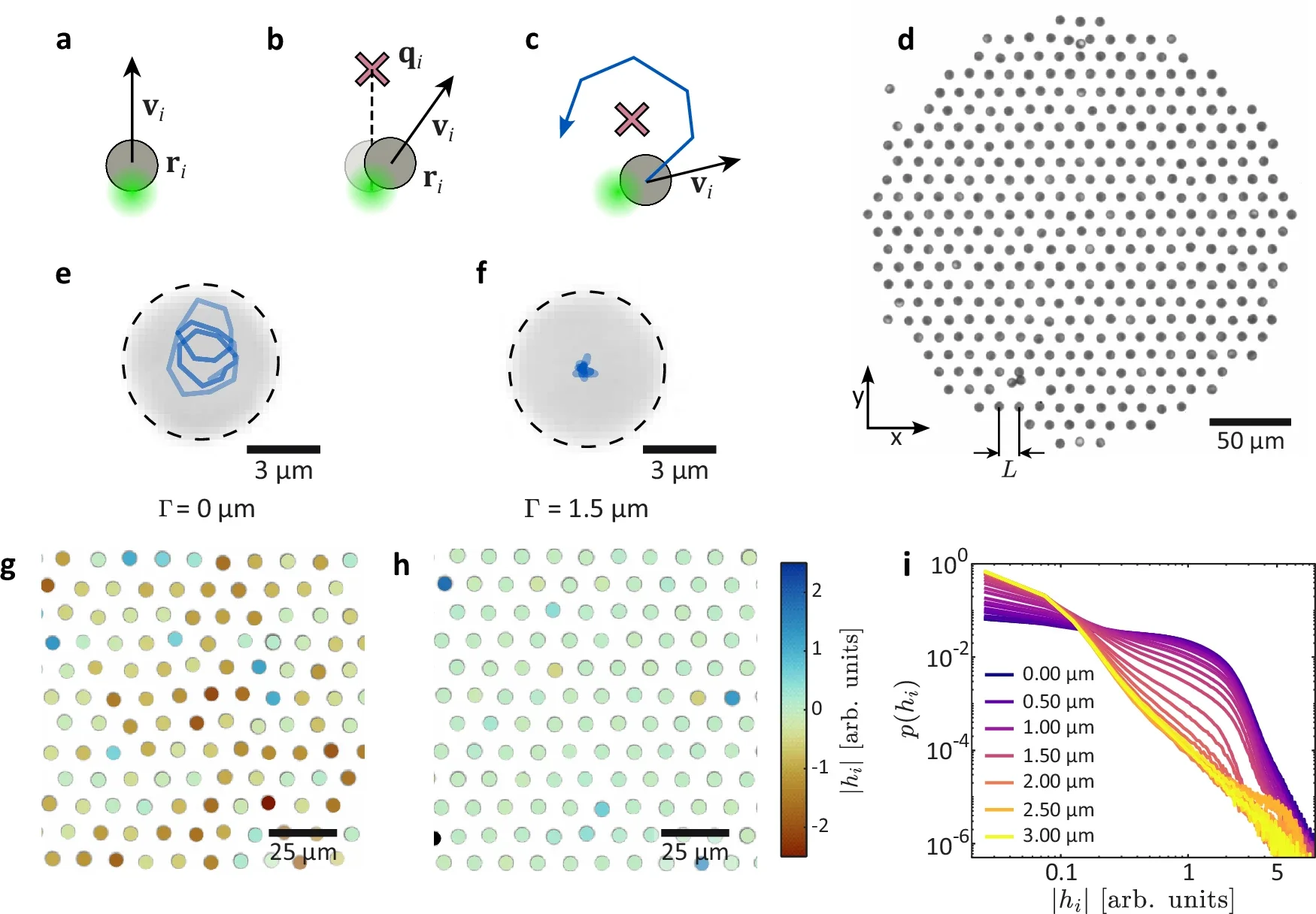
At the center of the system are several hundred microscopic particles suspended in liquid. Each particle moves in a controlled way when exposed to an external signal. Together, they form a network that responds collectively to input data.
The liquid plays a key role. As particles move, they create tiny currents in the fluid. These currents influence nearby particles, linking their behavior. This creates a web of interactions that spreads information across the system.
Instead of processing data step by step, the system transforms it into a complex pattern of motion. This pattern contains rich information that can be used to solve problems.
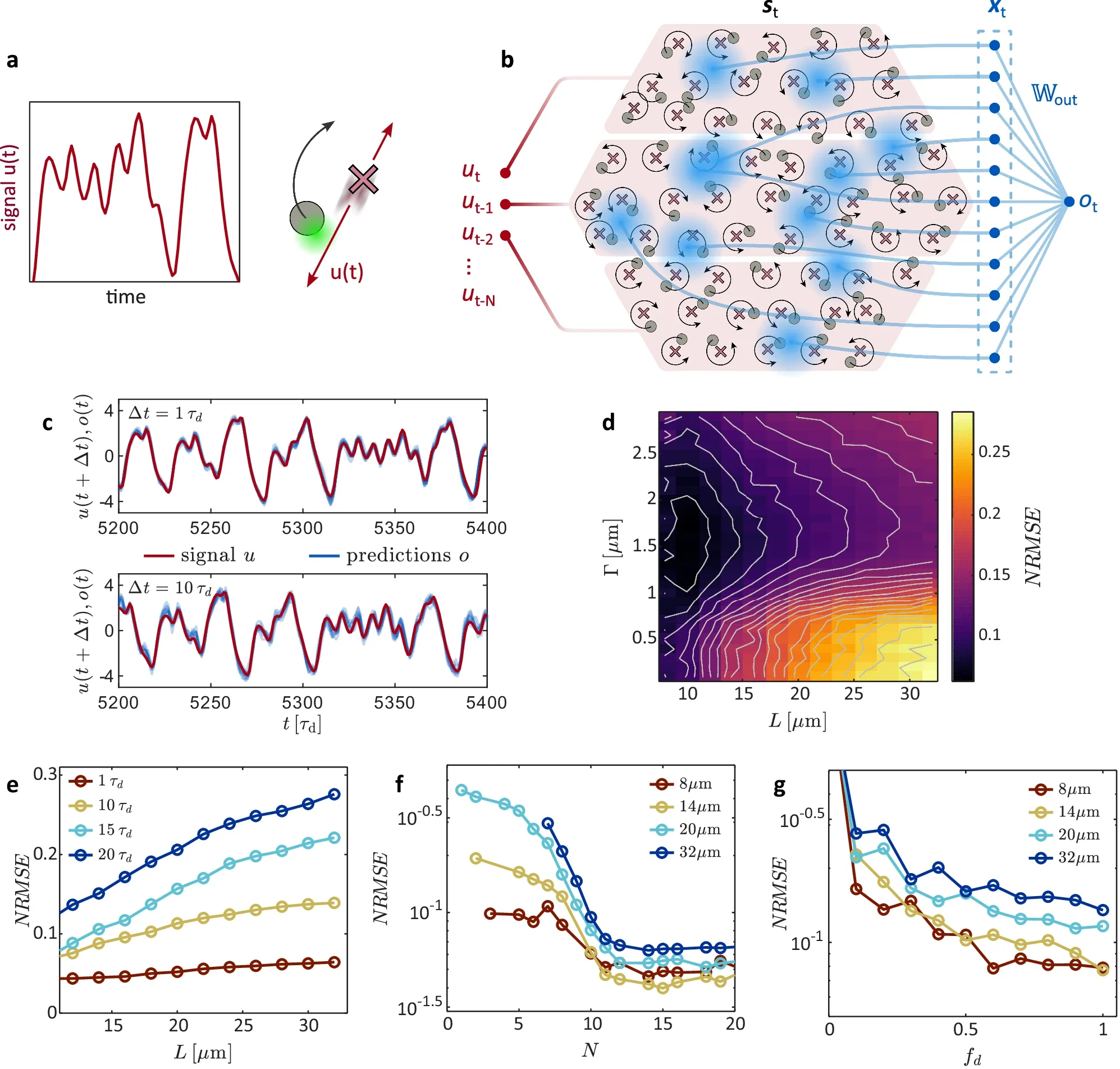
The method used by the researchers is called reservoir computing. It works by feeding input data into a dynamic system, known as a reservoir, which transforms the data into a high-dimensional form.
In traditional systems, this transformation requires many layers of computation. Here, it happens naturally through the physics of the particles.
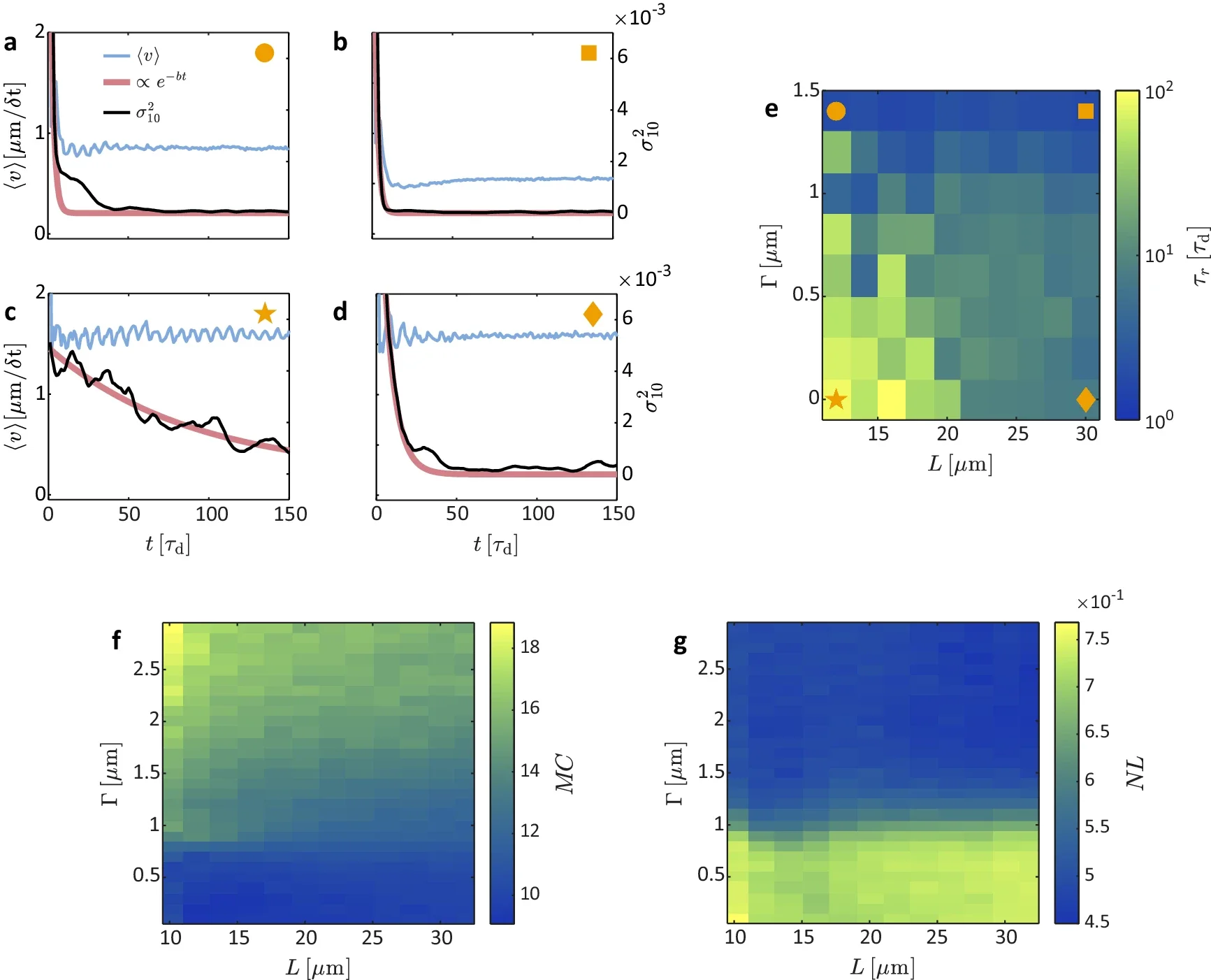
Once the system has responded to the input, scientists measure certain features of the motion. These features are then combined to produce the final output.
This approach simplifies the learning process. Only the final step needs adjustment, while the complex transformation happens automatically.
The system consists of a carefully arranged array of microscopic particles. Each particle acts like a tiny oscillator, moving in a repeating pattern when driven by external signals.
By placing hundreds of these oscillators close together, researchers create a network where motion spreads through fluid interactions. The spacing between particles determines how strongly they influence each other.
This setup allows scientists to tune the system. By adjusting distance and motion, they can control how the reservoir behaves. This flexibility is key to making the system useful for different tasks.
To test the system, researchers used it to predict chaotic time series. These are signals that appear random but follow hidden rules. Predicting them is difficult because small changes can lead to very different outcomes.
The particle system performed well in these tests. It was able to forecast future values with high accuracy, even when the signal changed unpredictably.
This shows that the system can capture complex relationships in data. It does so without the need for detailed programming or heavy computation.
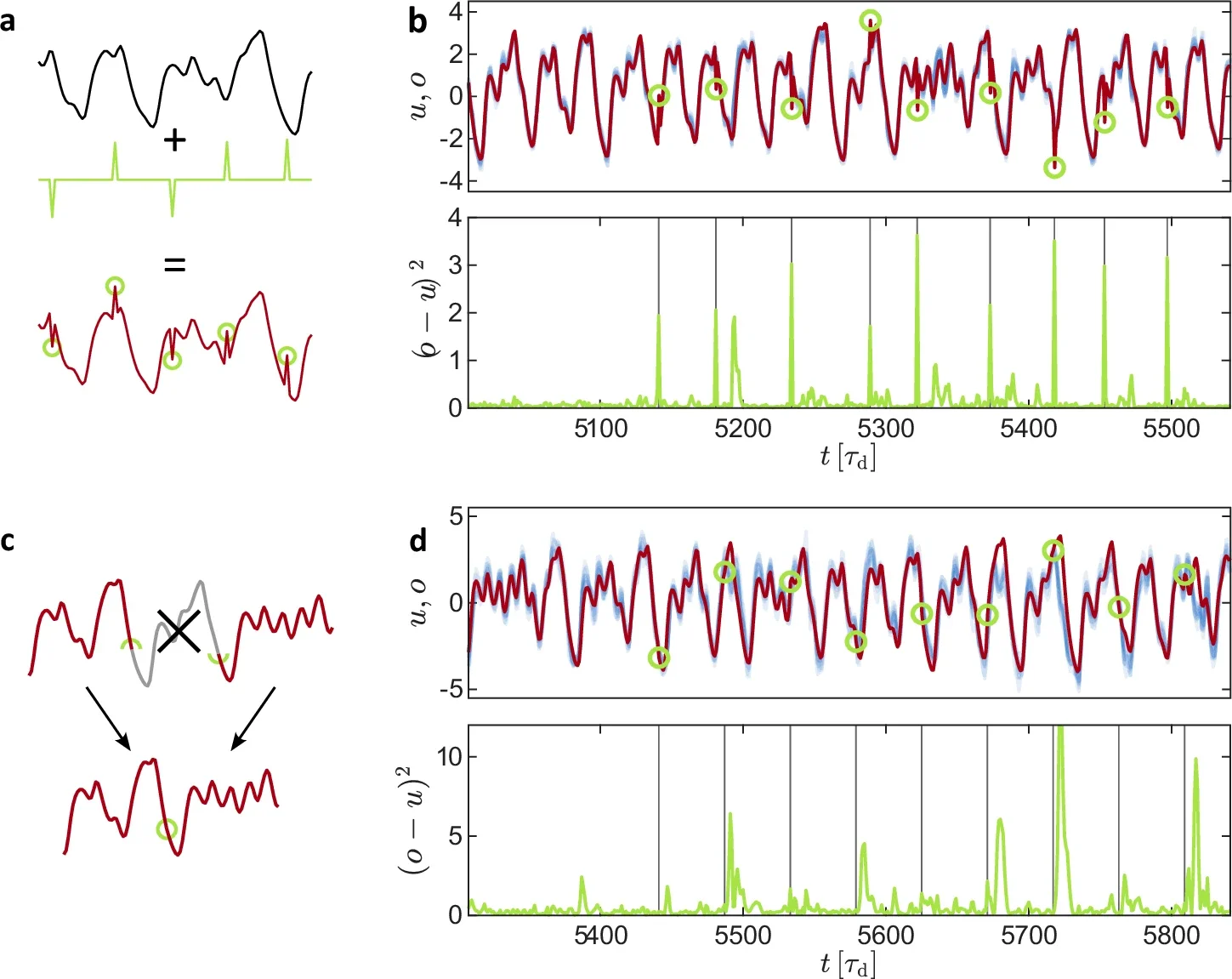
The system also showed strong ability to detect anomalies. These are small changes in data that may signal important events.
In real-world situations, such changes can be early warnings. They may indicate shifts in climate patterns, seismic activity, or mechanical failures.
The particle-based computer detected these subtle signals with high accuracy. Even when changes were hidden within noisy data, the system identified them through shifts in its motion patterns.
One of the most important advantages of this approach is parallel processing. All particles interact at the same time, allowing the system to process information quickly.
Traditional computers often simulate complex systems step by step. This system performs those computations naturally, as part of its physical behavior.
It also shows strong resilience. Even when only part of the system receives input, the interactions between particles spread information across the network. This helps maintain performance under imperfect conditions.
While the results are promising, the system is still at an early stage. It currently serves as a laboratory model rather than a practical computing device.
There are challenges to overcome. Controlling the system precisely in real-world conditions may be difficult. Scaling the technology for larger tasks will also require further research.
Despite these limits, the study provides proof that physical systems can perform meaningful computation. It opens the door to new ways of thinking about how machines process information.
The work suggests a future where computation does not rely entirely on electronics. Instead, physical systems could handle complex tasks through their natural dynamics.
This could lead to new types of devices that are smaller and more energy efficient. Sensors could process data directly, without sending it to distant servers. This would reduce delays and energy use.
The approach may also inspire new designs for artificial intelligence. By using physical systems as part of the computation process, researchers could create models that are faster and more adaptable.
This research could reshape how computing systems are designed and used. By relying on physical dynamics, future devices may require far less energy than traditional systems. This could reduce the environmental impact of large-scale computing and artificial intelligence.
The technology may also support edge computing. Devices could process information locally, without needing constant connection to cloud servers. This would allow faster responses in areas like environmental monitoring, medical devices, and industrial systems.
The system’s ability to detect subtle changes could improve early warning systems. It may help identify signs of earthquakes, climate shifts, or equipment failure before they become serious problems.
For researchers, the work provides a new platform for studying how complex systems process information. It could lead to advances in physics, engineering, and data science.
In the long term, this approach may lead to entirely new forms of computing. Instead of building machines that mimic logic step by step, scientists may design systems where intelligence emerges from motion and interaction.
These resources explore how physical systems can process information, from active microparticles and adaptable materials to chaotic forecasting and emerging reservoir-computing hardware.
Harnessing synthetic active particles for physical reservoir computing
This work demonstrates reservoir computing with self-organizing active microparticles, showing that noisy particle dynamics can perform predictive tasks and providing a close scientific parallel to computation through interacting matter. (Nature Communications, 2024)
Optical next generation reservoir computing
Researchers used light scattering through disordered material to build a physical reservoir capable of forecasting both short-term and long-term chaotic dynamics, illustrating how natural physical transformations can replace parts of conventional computation. (Light: Science & Applications, 2025)
Efficient optimisation of physical reservoir computers using only a delayed input
This experimental study shows that adding a delayed version of an input can increase a physical reservoir’s memory, improve performance and reduce the difficulty of tuning the system, addressing an important challenge in practical reservoir computing. (Communications Engineering, 2025)
Physical reservoir computing with emerging electronics
This review examines electronic implementations of physical reservoir computing, comparing architectures, physical nodes and performance while outlining the technical barriers that must be overcome before such systems can reach larger-scale applications. (Nature Electronics, 2024)
Emerging opportunities and challenges for the future of reservoir computing
This broad expert perspective examines the theory, algorithms and experimental systems behind reservoir computing, including its ability to learn patterns in complex time series and the challenges facing practical, large-scale adoption. (Nature Communications, 2024)
Research findings are available online in the journal Communications AI & Computing.
The original story “Scientists build computer from microscopic particles in liquid” is published in The Brighter Side of News.
Like these kind of feel good stories? Get The Brighter Side of News’ newsletter.
The post Scientists build computer from microscopic particles in liquid appeared first on The Brighter Side of News.


Leave a comment
You must be logged in to post a comment.