Likweli is easy to miss, even for people who know central Africa’s forests well. The small black monkey lives high in dense canopy, moves quietly, and occupies a narrow corner of the Democratic Republic of Congo.
An international research team has now identified it as a new species, Colobus congoensis. It is only the fifth African monkey species discovered from a population previously unknown to science in the past 75 years.
The recommended common name, Likweli, comes from communities living near its range. Its black coat is broken by orange-cream skin around the mouth and nose, along with a white patch beneath the tail.
The study, published in PLOS One, involved Yale University, the Lukuru Wildlife Research Foundation, Lomami National Park, Florida Atlantic University, and Hunter College. The Congolese Institute for Nature Conservation authorized the research.
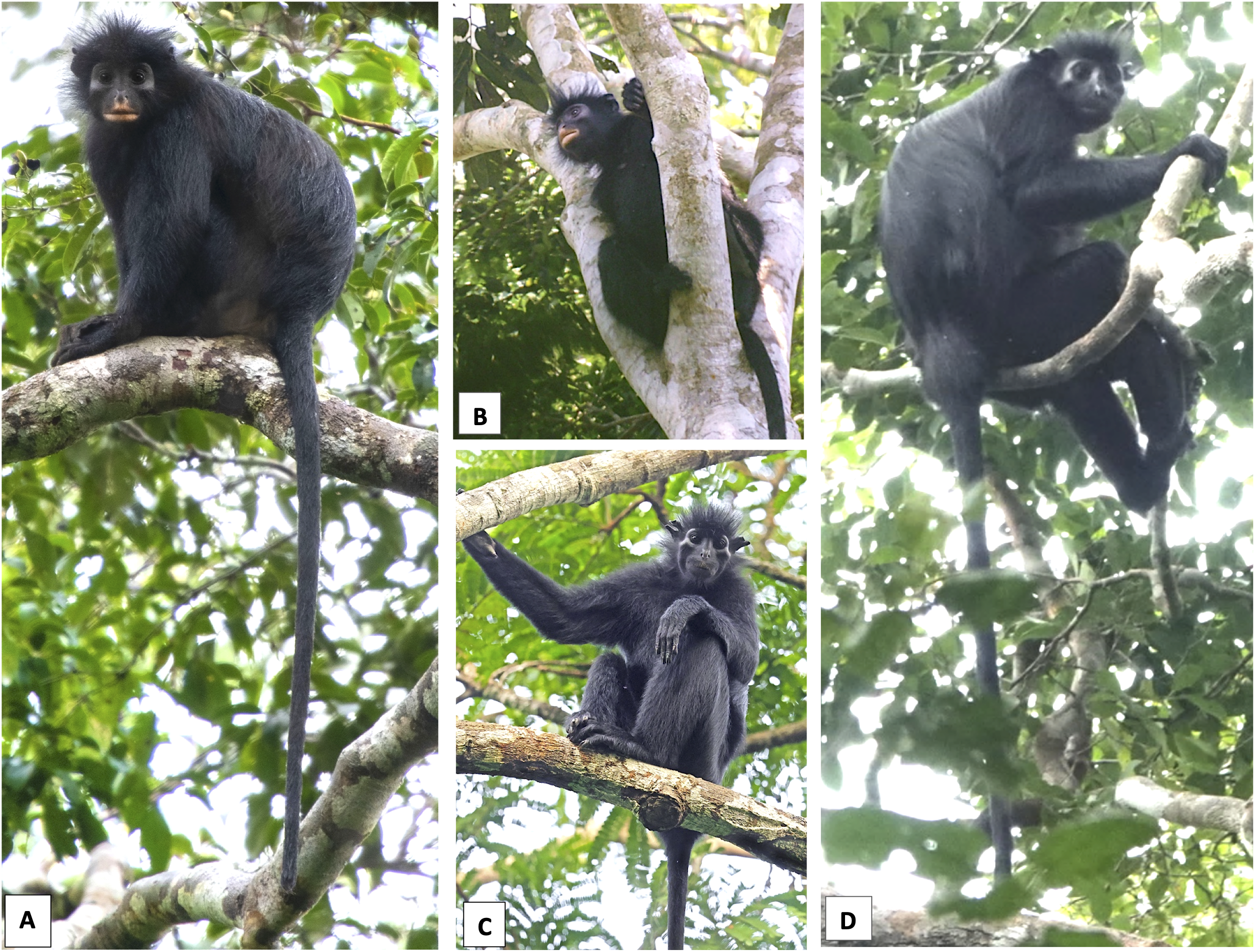
“Our team evaluated multiple datasets that all reached the same conclusion: Likweli is a distinct species of Colobus monkey we haven’t seen before,” said Julia Arenson, a Yale postdoctoral fellow and study coauthor. “Discovering a primate species is exceptionally rare, especially from populations previously unknown to science.”
The first clue appeared in 2008, when a field team photographed an unidentified monkey in what later became Lomami National Park. Only part of the animal was visible, but its appearance did not match known local primates.
Nothing more was documented for a decade. In 2018, a patrol led by Congolese field researcher Jean Pierre Kapale photographed a black monkey with pale facial markings and a white patch beneath its tail.
Over the next 10 months, Kapale’s team recorded the animal seven more times. A review of earlier patrol photographs uncovered another 2018 sighting that had been misidentified.
“Only after 10 years of exploring the Lomami Forest did we have enough clear views and convincing photos to allow us to say that there was yet another new monkey,” said conservation biologist Terese Hart. “This primate was not only new – it was extremely rare and with a limited range.”
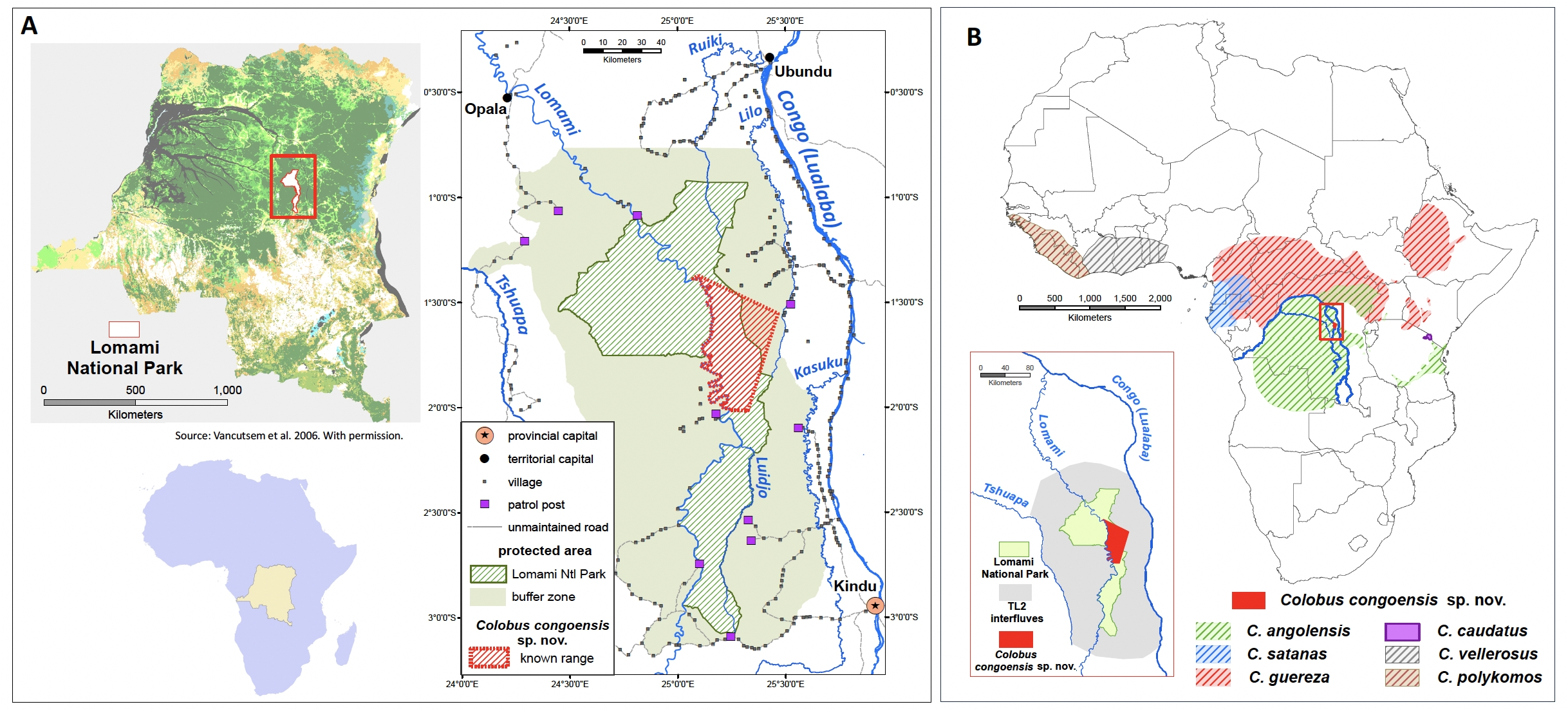
From 2018 through 2022, field teams recorded 114 detections across about 1,700 square kilometers. Most sightings occurred near the Lomami River in mature upland forest with deep clay soils.

The monkeys usually stayed in the canopy or middle forest levels. Observed groups ranged from one to 20 animals, with an average of about six. They often traveled alongside other primate species.
Researchers visited 52 villages within or near the monkey’s range. Residents in only eight communities knew the animal well enough to describe its distinctive markings accurately.
That lack of recognition stood out because people in the region generally hold detailed knowledge of local wildlife. Some described the monkey as quiet, rare, or difficult to locate.
Balanga communities used the name Likweli. Mituku communities called it kasaba nkoni, meaning “the branch shaker.”
“The discovery and documentation of the Likweli never would have happened without our team of Congolese explorer naturalists,” said lead author John Hart. “These field leaders recognized when they were in front of something they did not know. They put in the extra effort needed to document and confirm it.”
Their work involved hundreds of hours and thousands of kilometers of travel through trackless forest.
In April 2021, conservation officers confiscated three dead Likweli from hunters in the park’s buffer zone. The specimens included two adult females and one adult male.
Their skins, skeletons, and tissue samples allowed detailed comparisons with other monkeys. The specimens are now housed in the Yale Peabody Museum’s mammalogy collection.
Likweli is smaller than other known Colobus monkeys. Long black hair frames its forehead and face, while pale skin surrounds the mouth and lower nose. Both sexes carry a white patch beneath the tail.
Its closest relative is the black colobus, Colobus satanas. Both species have nearly all-black coats, but Likweli differs in facial color, body size, skull shape, teeth, and tail markings.
The two species live at least 1,200 kilometers apart. Black colobus populations occur farther west in central Africa and on Bioko Island.
Genetic analysis placed Likweli and the black colobus on separate branches. Depending on the calibration method, their most recent common ancestor lived roughly 4.1 million to 5.8 million years ago.
That separation represents the deepest split between sister species in the Colobus genus. The researchers cautioned that broader genome data would provide more precise estimates.
Vocal recordings added another line of evidence. Likweli roars shared the rapid pulse and high frequency of black colobus calls, but differed in sequence, frequency patterns, and the spacing of snorts.
Together, the physical, genetic, and acoustic evidence supported recognition of a distinct species.
Likweli’s known habitat covers only about 1,700 square kilometers, far less than the ranges of most other Colobus species. Most detections came from a thin band of forest near the Lomami River.
The river appears to block movement to the west. To the east, seasonal flooding and nutrient-poor white-sand forests may form an ecological barrier.
The species depends heavily on mature high-canopy forest. Its small range, low encounter rate, and localized groups leave it vulnerable to habitat disruption.
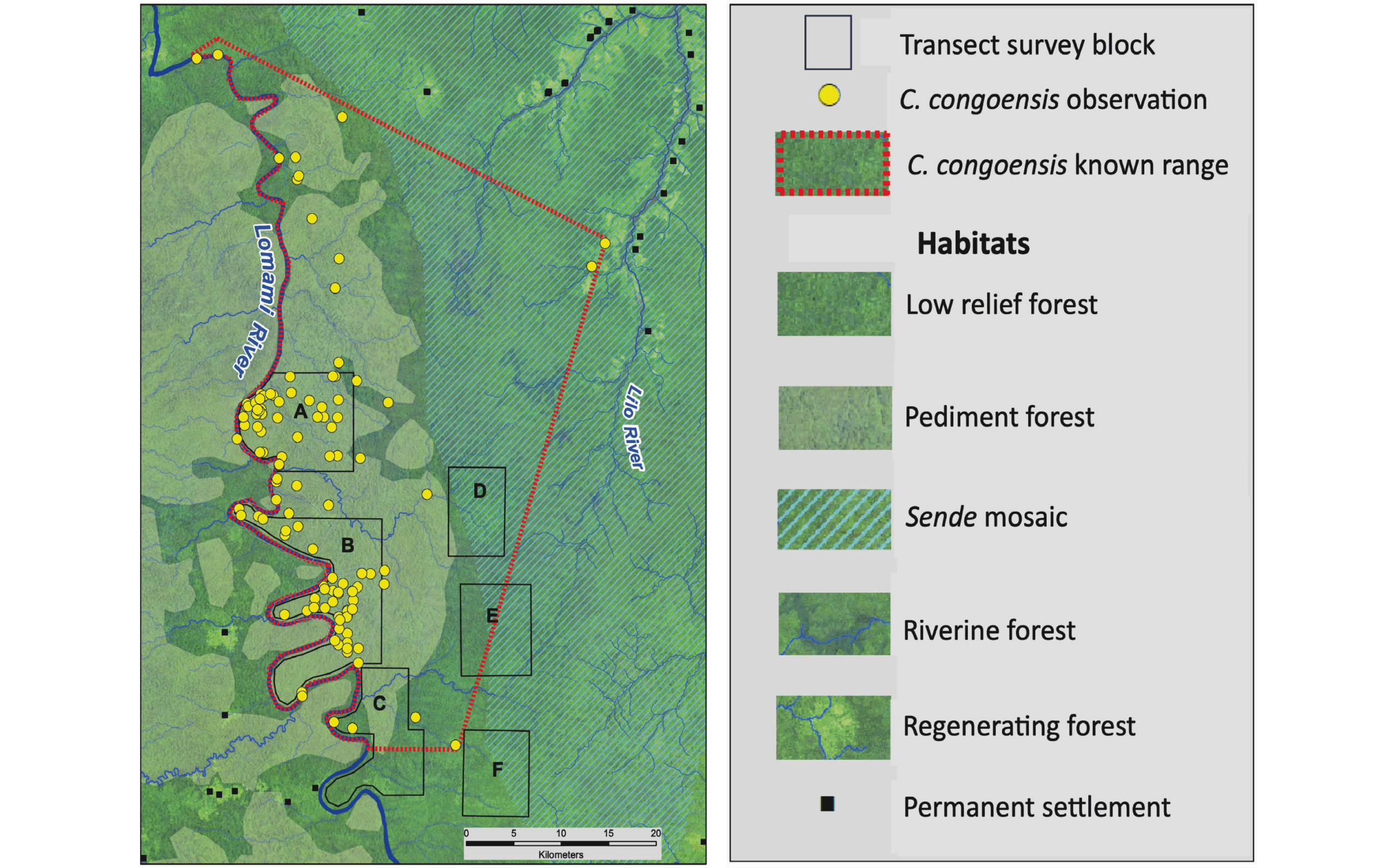
Hunting, settlement growth, and shifting cultivation are increasing around the park’s buffer zone. At least 15 new villages appeared within or near the species’ range between 2015 and 2023.
The researchers recommend a provisional endangered classification. Most known populations live inside Lomami National Park, making the park’s protection central to the monkey’s survival.
“This is a rare discovery with significant conservation implications,” said Yale professor Eric Sargis. “Our analyses provide strong evidence that this is a distinct new species that is endangered.”
Recognizing Likweli as a species gives conservation groups and Congolese authorities a clearer basis for monitoring its population, habitat, and exposure to hunting.
The discovery also expands understanding of Colobus evolution. Its ancient separation from the black colobus suggests that central Africa still holds primate lineages with long, independent histories.
Further field surveys, dietary research, and genome analysis could clarify why Likweli remains confined to such a small landscape. The work may also explain how rivers, soils, and forest types shaped primate diversity across the Congo Basin.
Protecting Lomami National Park will preserve more than one newly named monkey. The park supports 15 known primate species, including several found only, or mainly, in the Democratic Republic of Congo.
Research findings are available online in the journal PLOS One.
The original story “Scientists discover a new monkey species (Likweli) hidden in the Congo rainforest” is published in The Brighter Side of News.
Like these kind of feel good stories? Get The Brighter Side of News’ newsletter.
The post Scientists discover a new monkey species (Likweli) hidden in the Congo rainforest appeared first on The Brighter Side of News.

